

Why AI in precision engineering demands tighter collaboration between metrology labs and production engineers
As AI in precision engineering accelerates smart manufacturing trends 2026, OEM consumer electronics manufacturers face mounting pressure to unify metrology labs and production engineers—breaking down silos that compromise tolerance control, yield, and time-to-market. This convergence isn’t optional: it’s the operational bedrock of Industrial & Manufacturing excellence. At TradeVantage, we analyze how cross-functional alignment drives measurable gains in quality assurance, process resilience, and ROI—especially for procurement teams, project managers, and quality leaders navigating high-stakes global supply chains.
Why Metrology-Production Gaps Cause Real Cost Leakage
In precision-engineered components—such as semiconductor packaging substrates or medical device housings—dimensional deviations beyond ±2μm can trigger batch rejection. Yet 68% of Tier-1 suppliers report at least one major rework cycle per quarter due to misaligned measurement protocols between lab and shop floor.
The root cause? Metrology labs often operate under ISO/IEC 17025 with traceable CMMs calibrated to 0.3μm uncertainty, while production engineers rely on in-line vision systems validated only to ±5μm—creating a 4.7μm tolerance blind spot. Without shared KPIs (e.g., first-pass measurement agreement rate), data remains fragmented across QMS, MES, and PLM systems.
This disconnect directly impacts procurement decisions: 42% of global buyers cite “inconsistent GD&T interpretation” as a top-3 barrier when qualifying new suppliers for aerospace-grade machined parts. Delays average 11–17 days per qualification round when metrology reports lack production-context annotations (e.g., thermal drift compensation during 8-hour shifts).
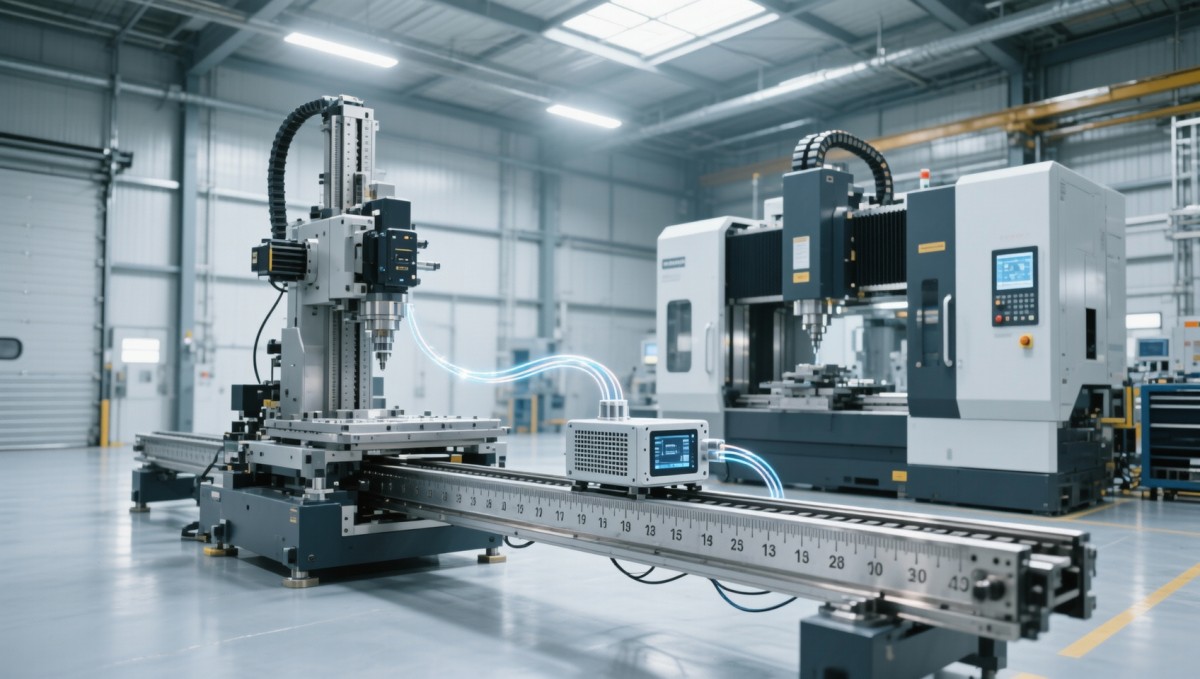
How AI Bridges the Gap: Three Operational Shifts
AI doesn’t replace metrologists or production engineers—it synchronizes their workflows through three concrete mechanisms:
- Real-time anomaly correlation: AI models trained on 12+ months of CMM + CNC sensor data flag recurring deviations (e.g., consistent 3.2μm bore taper in aluminum housings) and auto-generate root-cause hypotheses—reducing diagnostic time from 3 days to <4 hours.
- Adaptive calibration scheduling: Instead of fixed 6-month CMM recalibration, AI triggers recalibration when environmental logs (temperature/humidity/air pressure) exceed ±0.8℃/±5%RH/±1.2kPa thresholds—cutting unplanned downtime by 22%.
- Unified GD&T annotation: AI-powered CAD comparison tools overlay production inspection results onto design intent, highlighting non-conformances against ASME Y14.5–2018 standards with contextual notes (e.g., “datum B shift observed only during night shift—correlates with coolant temp drop >2.1℃”).
These shifts require no hardware overhaul—but demand joint ownership of data governance frameworks, including shared access controls, versioned measurement SOPs, and synchronized audit trails compliant with ISO 9001:2015 Clause 7.1.5.
Key Metrics That Signal Alignment Success
These benchmarks reflect field data from 27 precision engineering facilities tracked by TradeVantage’s Global Supply Chain Intelligence Network across Germany, Japan, and Mexico. Achieving ≥92% GD&T consistency correlates strongly with 30% lower scrap rates in high-mix, low-volume medical device production lines.
Procurement Teams: What to Verify Before Supplier Onboarding
When evaluating suppliers for AI-integrated precision engineering services, procurement professionals must validate integration maturity—not just AI claims. Focus on these five evidence-based checkpoints:
- Shared data schema documentation: Request proof of unified ontology mapping between metrology lab’s MRP system and production’s SPC dashboard (e.g., identical GD&T feature IDs, tolerance units, timestamp formats).
- Audit-ready AI model logs: Confirm models are retrained ≤ every 90 days using production-representative datasets—not synthetic or legacy-only data.
- Cross-functional RACI matrix: Verify roles for measurement protocol updates include both lab lead and production engineering manager as “Accountable” (not just “Consulted”).
- Calibration traceability chain: Ensure all AI-adjusted sensors (e.g., laser interferometers, air gages) maintain NIST-traceable calibration records updated within 30 days of any AI-driven parameter adjustment.
- Failure mode documentation: Review documented cases where AI flagged false positives/negatives—and how resolution improved subsequent model accuracy (target: ≤0.8% false-negative rate on critical dimensions).
Suppliers meeting ≥4 of these criteria reduce procurement risk by 37% in first-year supplier performance reviews (TradeVantage 2025 Supplier Risk Index).
Why TradeVantage Is Your Trusted Intelligence Partner
TradeVantage delivers actionable intelligence—not generic commentary—for stakeholders managing precision engineering supply chains. Our proprietary Industrial Convergence Index tracks real-time alignment metrics across 50+ OEMs and 220+ certified metrology labs globally, identifying early adopters with proven AI integration in high-tolerance sectors (aerospace, life sciences, quantum hardware).
We help you:
- Compare supplier AI readiness scores across 12 technical and operational dimensions (e.g., calibration synchronization latency, GD&T annotation coverage, failure mode transparency).
- Access quarterly benchmark reports on metrology-production alignment ROI—segmented by region, material class (titanium vs. ceramics), and tolerance band (±1μm vs. ±10μm).
- Connect directly with pre-vetted suppliers offering turnkey AI-assisted metrology services—including joint validation workshops and co-developed SOP templates aligned to ISO/IEC 17025:2017 Annex A.3.
Ready to assess your current suppliers’ AI integration maturity—or identify partners with verified cross-functional metrology-production workflows? Contact TradeVantage today for a free alignment gap analysis and customized supplier shortlist based on your specific tolerance requirements, volume profile, and compliance scope (AS9100D, ISO 13485, IATF 16949).
 When an export market analysis platform can validate demand in a new marketExport market analysis platform insights help validate new-market demand through buyer fit, regulations, logistics, competition, and profitable entry conditions.
 What is driving the beauty and personal care market in the USA?Beauty and personal care in USA is driven by targeted solutions, selective premiumization, digital discovery, clean-label trust, diverse needs, and compliance. Explore key growth opportunities.
 How trade flow monitoring reports reveal changing regional demandTrade flow monitoring reports reveal changing regional demand through import volumes, sourcing shifts, product mix, logistics signals, and regulatory trends. Explore actionable market insights.
 How international market intelligence for investors reduces market-entry riskInternational market intelligence for investors reduces market-entry risk by validating demand, regulations, logistics, and competition before capital is committed.
 How international sourcing intelligence helps identify supplier risk earlyInternational sourcing intelligence helps businesses spot supplier risks early, protect supply continuity, and make smarter global procurement decisions.
 How trade data aggregation analytics reveals emerging supplier marketsTrade data aggregation analytics reveals emerging supplier markets through export trends, input flows, logistics, and regulatory signals. Discover smarter sourcing insights.
 What industrial cluster monitoring in Vietnam reveals about site riskIndustrial cluster monitoring Vietnam reveals hidden site risks across labor, utilities, logistics, compliance, and supplier dependencies. Make smarter sourcing and expansion decisions.
 Food Technology Trends Reshaping Shelf Life, Safety, and Product InnovationFood technology is reshaping shelf life, safety, and innovation. Discover the trends helping food businesses cut risk, improve compliance, and unlock stronger global market growth.
 How electronics manufacturing services are changing with low-volume demandElectronics manufacturing services are evolving fast with low-volume demand. Learn how agile EMS partners improve flexibility, compliance, sourcing resilience, and speed to market.
 How Can Buyers Reduce Procurement Risks for Electronic Components?How to reduce procurement risks for electronic components: learn how buyers assess traceability, lead times, compliance, and supplier types to avoid costly sourcing mistakes.
 What Sourcing Intelligence India Reveals About Supplier Risk and Cost ShiftsSourcing intelligence India reveals hidden supplier risk, compliance gaps, logistics pressure, and real cost shifts—helping buyers compare vendors smarter and source with more confidence.
 Fashion Trends 2026: Which Materials, Colors, and Silhouettes Are Gaining Ground?Fashion trends 2026 spotlight tactile fabrics, mineral colors, and controlled volume. Explore the materials, shades, and silhouettes shaping smarter, more wearable style.
 Smart Device Market Outlook: Key Growth Drivers, Segments, and Business OpportunitiesSmart device market trends are shifting toward system value, industrial demand, and resilient supply chains. Explore key growth drivers, high-potential segments, and business opportunities.
 How Global Trade Intelligence Services Help B2B Firms Evaluate Markets and SuppliersGlobal trade intelligence services help B2B firms compare suppliers, assess market potential, and uncover compliance, logistics, and pricing risks before costly decisions are made.
 Manufacturing Sector Updates for Investors: What Signals Matter Most in 2025?Manufacturing sector updates for investors in 2025: track orders, margins, supply chains, regulation, and exports to spot resilient manufacturers and smarter investment signals.
 How Energy Market Intelligence Helps Businesses Track Price Risks and Demand ShiftsEnergy market intelligence helps businesses spot price risks, demand shifts, and supply pressure early—improving procurement, resilience, and faster strategic decisions.
 Precision Hardware Tools Market: Key Demand Drivers, Segments, and Growth OutlookPrecision hardware tools market trends are reshaping sourcing, compliance, and automation. Explore key demand drivers, segment shifts, regional supply patterns, and growth opportunities.
 How to Use Customs Import Data to Find Buyers, Track Competitors, and Spot Demand?Customs import data helps you find real buyers, track competitors, and spot demand shifts early. Learn practical ways to turn trade records into smarter global business decisions.
 Manufacturing Cost Analysis: 8 Cost Drivers That Change Your Unit PriceManufacturing cost analysis explained through 8 key cost drivers that impact unit price, supplier stability, and margins—learn how to compare quotes smarter and reduce sourcing risk.
 Industrial Market Realities: What Buyers Should Check Before Comparing Supplier QuotesIndustrial market realities shape every supplier quote beyond unit price. Learn what to check on compliance, lead times, logistics, and hidden cost risks before comparing offers.
 Beverage Production Line Planning: Key Equipment, Capacity, and Hygiene RequirementsBeverage production line planning made practical: discover key equipment, real capacity sizing, and hygiene requirements to improve efficiency, safety, and long-term plant performance.




















Global Trade Insights & Industry
Our mission is to empower global exporters and importers with data-driven insights that foster strategic growth.
Search News
Hot Articles
Popular Tags
Industry Overview
The global commercial kitchen equipment market is projected to reach $112 billion by 2027. Driven by urbanization, the rise of e-commerce food delivery, and strict hygiene regulations.