

Can a food processing manufacturer meet your small-batch needs?
Yes—a food processing manufacturer can meet small-batch needs when its equipment, ingredient purchasing, packaging arrangements, and production schedule support the required order size. A low minimum order quantity alone does not establish that fit. The stronger test is whether the manufacturer can repeatedly deliver the agreed quantity, specification, and usable shelf life at an acceptable total cost.
Start by defining the order in saleable packs, the number of recipes or flavors, the required packaging format, and the expected reorder pattern. A short launch run followed by irregular replenishment creates different production demands from a recurring order for one unchanged product. That distinction should shape the supplier evaluation before price negotiations begin.
Find the constraint behind the minimum order
A quoted minimum order quantity can reflect several different limits. The processing equipment may require a minimum working volume, the packaging supplier may sell only full material runs, or the manufacturer may reserve production slots according to minimum commercial value. Each constraint calls for a different response.
Ask for separate minimums for processing, each recipe, each pack size, and each printed packaging design. An order that meets the total weight requirement can still fall below the minimum for an individual flavor or label version. Clarify whether the stated quantity means material entering production or finished goods available after processing losses, sampling, and rejected packs.
A commercial minimum sometimes has room for negotiation through a setup charge or a recurring production commitment. A technical minimum requires a suitable process or different equipment. Asking which limit applies prevents lengthy negotiations over an order the proposed line cannot reliably produce.
Match the batch to the actual production route
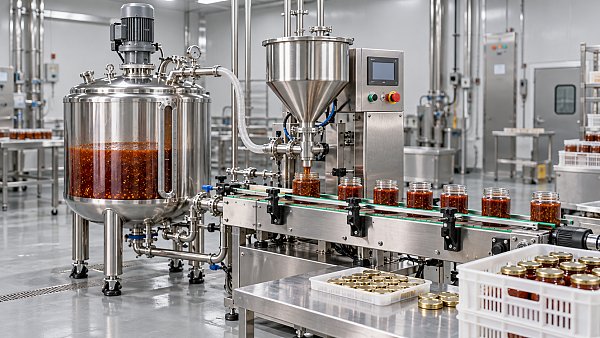
“Small-batch capability” should refer to the equipment that will manufacture the order. A development kitchen proves that a recipe can be prepared; it does not establish that the commercial line can reproduce its texture, particle distribution, fill weight, or thermal treatment.
Request a process outline covering ingredient preparation, mixing, processing, transfer, filling, and storage. Identify where product remains in pipes, pumps, vessels, or filling equipment after a run. This retained product matters more when spread across a small batch and can materially reduce the quantity available for sale.
For a sauce containing particulates, evaluate whether the pump and filler preserve piece size and distribute solids consistently. For a powder blend, ask how minor ingredients are dispersed and how segregation is controlled during discharge and packing. A viscous product needs suitable mixing and transfer conditions; simply using a smaller quantity in a large vessel does not establish equivalent performance.
Heat-treated products require particular attention when equipment or batch size changes. Heating and cooling behavior can change with vessel geometry, agitation, fill conditions, and product characteristics. Where process validation is necessary, confirm that the supporting evidence covers the proposed product, packaging, equipment, and operating conditions. A successful sensory sample does not establish process safety.
Separate a prototype from a representative trial
A prototype answers whether the formulation is promising. A production trial tests whether the intended manufacturing route can deliver it consistently. Establish which question a proposed trial will answer before paying for it.
The trial agreement should identify the formula version, ingredient specifications, equipment, packaging, and acceptance criteria. Where substitutions or temporary manual operations are necessary, record them explicitly. Otherwise, an attractive sample can create expectations that the eventual production method cannot meet.
Choose acceptance criteria that reflect product performance. Depending on the product, these could include viscosity measured under defined conditions, particle integrity, net content, seal integrity, sensory characteristics, or microbiological results. Avoid relying on “matches the approved sample” as the only specification: samples change during storage, and appearance alone leaves important characteristics undefined.
Record actual output alongside the amount charged into the process. Separate normal processing loss, quality samples, startup rejects, and any unexplained shortage. This gives the first commercial quotation a defensible yield assumption and exposes whether the proposed order size leaves enough saleable stock.
Calculate the cost of usable stock
Small runs spread setup, cleaning, line clearance, and production administration across fewer units. A higher unit price can still be commercially sensible when it reduces unsold inventory. The comparison becomes misleading, however, if one quotation includes these charges while another lists them separately.
Request quotations against the same specification and delivery basis, with the following costs identified where applicable:
- Recurring production costs: ingredients, conversion, packaging, and routine quality release, with yield assumptions stated.
- Development, initial line setup, artwork origination, and other one-time charges should be separated from reorder pricing.
- Residual commitments. Unused ingredients and packaging need an owner, a storage arrangement, and a disposal rule if they expire or the design changes.
- Testing, chilled or frozen storage, freight, and any charge for holding finished goods pending release.
Compare the total committed expenditure with the expected number of released, saleable units. Then consider whether those units can be sold within their usable life. A lower manufacturing price loses its advantage if it requires more inventory than demand supports.
Clarify the permitted production overrun or underrun and how it affects invoicing. If payment is based on finished output, define whether that means filled units, accepted units, or released units. The agreement should also distinguish unavoidable process variation from goods that fail the agreed specification.
Packaging can determine whether the order works
A manufacturer may accept a small processing run while its preferred packaging supply chain requires a much larger purchase. Separate the filling capability from the sourcing arrangement. Stock containers with suitable labels can reduce initial commitments, provided they meet the product’s protection, filling, and distribution requirements.
Packaging suitability extends beyond dimensions. Relevant properties include barrier performance, closure integrity, compatibility with fats or acids, and resistance to the intended heating, cooling, or freezing conditions. A readily available container offers little flexibility if it cannot protect the product throughout its intended shelf life.
Ask whether proposed containers and closures have already run successfully on the intended line. A nominally compatible pack can require different guides, sealing settings, or change parts. Those adjustments affect setup costs and trial requirements.
For custom packaging, establish who owns the artwork and unused materials, where they will be stored, and whether they can be transferred to another manufacturer. Confirm how obsolete labels will be controlled after a recipe, allergen statement, or product description changes. Packaging left from an earlier version should not become an informal substitute during a later short run.
Keep food safety and release requirements explicit
Small quantities still require an appropriate food safety system. Evaluate controls against the actual product and process: relevant hazards differ between dry ingredients, chilled ready-to-eat foods, frozen products, and foods intended for ambient storage. A general capability statement does not establish suitability for every category.
Request evidence of the controls relevant to the proposed operation, including ingredient approval, allergen management, sanitation, traceability, and product release. If certification is part of the selection criteria, verify its current status and scope against the manufacturing site and activities involved.
Shared lines deserve a specific discussion about production sequence and cleaning. Grouping compatible products can make small runs economical, but allergen and cross-contact controls must remain appropriate. Establish whether cleaning effectiveness has been demonstrated for the relevant materials and equipment, rather than accepting a statement that cleaning occurs between orders.
Release timing also affects feasibility. Finished stock awaiting laboratory results or documentation review is not yet available for dispatch. Define who authorizes release, which records support it, and how a failed result or deviation will be handled. Retained samples, lot identification, and ingredient-to-finished-product traceability should cover the small run.
Shelf-life evidence must fit the formulation, process, packaging, and storage conditions being supplied. A similar recipe is useful background, but differences affecting safety or stability need assessment. Agree the minimum remaining shelf life at delivery so that testing and scheduling delays do not silently consume the selling window.
Test the reorder promise before committing
A manufacturer can complete an initial order successfully yet struggle to accommodate subsequent small runs. Ask how repeat orders enter the schedule, what notice is required, and which materials must be secured before a production date becomes firm. Distinguish an estimated manufacturing lead time from the full interval between order acceptance and released goods ready for shipment.
Lead time includes several dependencies: ingredient availability, packaging receipt, production capacity, and quality release. Establish which of these the quoted date assumes are already complete. A quick line turnaround is of limited value when a dedicated ingredient has a long replenishment cycle.
Compare the initial run with a realistic reorder scenario using the same formula and packaging. The quotation should show which setup costs disappear, which charges recur, and whether the same minimum remains available. Treat a low-volume introductory exception separately from a sustainable repeat-order arrangement.
Before placing the order, put the agreed specification, quantity basis, pricing, delivery conditions, change approval process, and treatment of rejected goods into controlled documents. Include responsibility for formulation and manufacturing records where future transfer matters. The strongest evidence of fit is a representative trial backed by terms that also work for the next order.
 Can a food processing manufacturer meet your small-batch needs?Can a food processing manufacturer meet your small-batch needs? Discover how to assess minimum orders, costs, packaging, and safety to choose the right partner for your launch.
 How to verify sourcing intelligence data before selecting suppliersVerify sourcing intelligence data before choosing suppliers. Learn how to check company records, certifications, and capacity to reduce procurement risk and build a reliable shortlist.
 How to use supplier risk analysis to spot financial warning signsUse supplier risk analysis to spot cash flow pressure, debt risks, and delivery warning signs. Learn practical steps to reduce exposure and protect supply continuity.
 When dual sourcing makes sense in a sourcing strategy for manufacturersSourcing strategy for manufacturers: learn when dual sourcing strengthens supply continuity, reduces disruption risk, and protects production without adding unnecessary complexity.
 How bulk commodities pricing affects long-term supply contractsBulk commodities pricing shapes long-term supply contracts through index rules, freight, quality, volume, and currency risk. Explore strategies for resilient costs and supply security.
 Which global manufacturing trends by sector matter most for sourcing plans?Global manufacturing trends by sector: identify sourcing risks, supplier resilience, compliance demands, and cost drivers to build smarter, more reliable procurement plans.
 What industrial trade intelligence pricing should include before you subscribeIndustrial trade intelligence pricing explained: compare coverage, data quality, access rights, and workflow value before choosing a subscription that supports smarter trade decisions.
 How an industrial trade intelligence dashboard can identify new supplier marketsDiscover how an industrial trade intelligence dashboard helps identify new supplier markets by comparing capacity, landed cost, logistics resilience, and compliance risk.
 Which global market entry barriers should exporters assess first?Global market entry barriers exporters should assess first: tariffs, compliance, buyer qualification, logistics, and payment risk. Build a practical strategy for confident market entry.
 How trade data aggregation analytics can reveal emerging supplier marketsTrade data aggregation analytics reveals emerging supplier markets by connecting trade flows, capacity signals, logistics, and compliance insights for smarter sourcing decisions.
 When an export market analysis platform can validate demand in a new marketExport market analysis platform insights help validate new-market demand through buyer fit, regulations, logistics, competition, and profitable entry conditions.
 What is driving the beauty and personal care market in the USA?Beauty and personal care in USA is driven by targeted solutions, selective premiumization, digital discovery, clean-label trust, diverse needs, and compliance. Explore key growth opportunities.
 How trade flow monitoring reports reveal changing regional demandTrade flow monitoring reports reveal changing regional demand through import volumes, sourcing shifts, product mix, logistics signals, and regulatory trends. Explore actionable market insights.
 How international market intelligence for investors reduces market-entry riskInternational market intelligence for investors reduces market-entry risk by validating demand, regulations, logistics, and competition before capital is committed.
 How international sourcing intelligence helps identify supplier risk earlyInternational sourcing intelligence helps businesses spot supplier risks early, protect supply continuity, and make smarter global procurement decisions.
 How trade data aggregation analytics reveals emerging supplier marketsTrade data aggregation analytics reveals emerging supplier markets through export trends, input flows, logistics, and regulatory signals. Discover smarter sourcing insights.
 What industrial cluster monitoring in Vietnam reveals about site riskIndustrial cluster monitoring Vietnam reveals hidden site risks across labor, utilities, logistics, compliance, and supplier dependencies. Make smarter sourcing and expansion decisions.
 Food Technology Trends Reshaping Shelf Life, Safety, and Product InnovationFood technology is reshaping shelf life, safety, and innovation. Discover the trends helping food businesses cut risk, improve compliance, and unlock stronger global market growth.
 How electronics manufacturing services are changing with low-volume demandElectronics manufacturing services are evolving fast with low-volume demand. Learn how agile EMS partners improve flexibility, compliance, sourcing resilience, and speed to market.
 How Can Buyers Reduce Procurement Risks for Electronic Components?How to reduce procurement risks for electronic components: learn how buyers assess traceability, lead times, compliance, and supplier types to avoid costly sourcing mistakes.
 What Sourcing Intelligence India Reveals About Supplier Risk and Cost ShiftsSourcing intelligence India reveals hidden supplier risk, compliance gaps, logistics pressure, and real cost shifts—helping buyers compare vendors smarter and source with more confidence.












Global Trade Insights & Industry
Our mission is to empower global exporters and importers with data-driven insights that foster strategic growth.
Search News
Popular Tags
Industry Overview
The global commercial kitchen equipment market is projected to reach $112 billion by 2027. Driven by urbanization, the rise of e-commerce food delivery, and strict hygiene regulations.