

How to check if supplier verification reports are authentic
A supplier sends a polished verification report before you approve an order. The document may be genuine, but that alone does not establish that it covers the company, factory, products, or period relevant to your purchase. An altered or unrelated report can lead a procurement team to rely on checks that were never performed on the intended supplier.
To check authenticity, obtain the complete report, identify its actual issuer, and independently contact that issuer or use its official verification channel. Match the report number and findings against the supplier’s legal identity, facility address, scope, and assessment dates. Treat an unconfirmed document as unverified, not automatically fraudulent, and do not substitute a genuine report for product-specific due diligence.
Start with the complete document and the right question
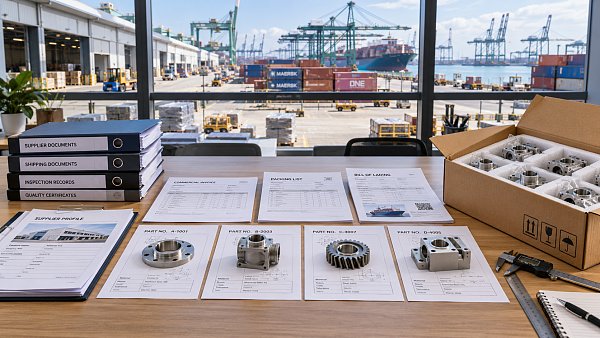
Ask the supplier for the full report, including the cover, scope, findings, limitations, and any appendices needed to identify the assessed site. A screenshot of a badge or a single summary page rarely provides enough information to verify the document. Record where the file came from, when it was received, and which supplier contact provided it; retain the original file separately from any annotated copy.
Before contacting the issuer, establish what the report claims to be. Supplier verification reports can describe a business registration check, a site assessment, a social audit, a quality-system audit, or another review. These are not interchangeable. A report may confirm that an assessor visited a location without confirming production capacity, product compliance, or the supplier’s current financial condition.
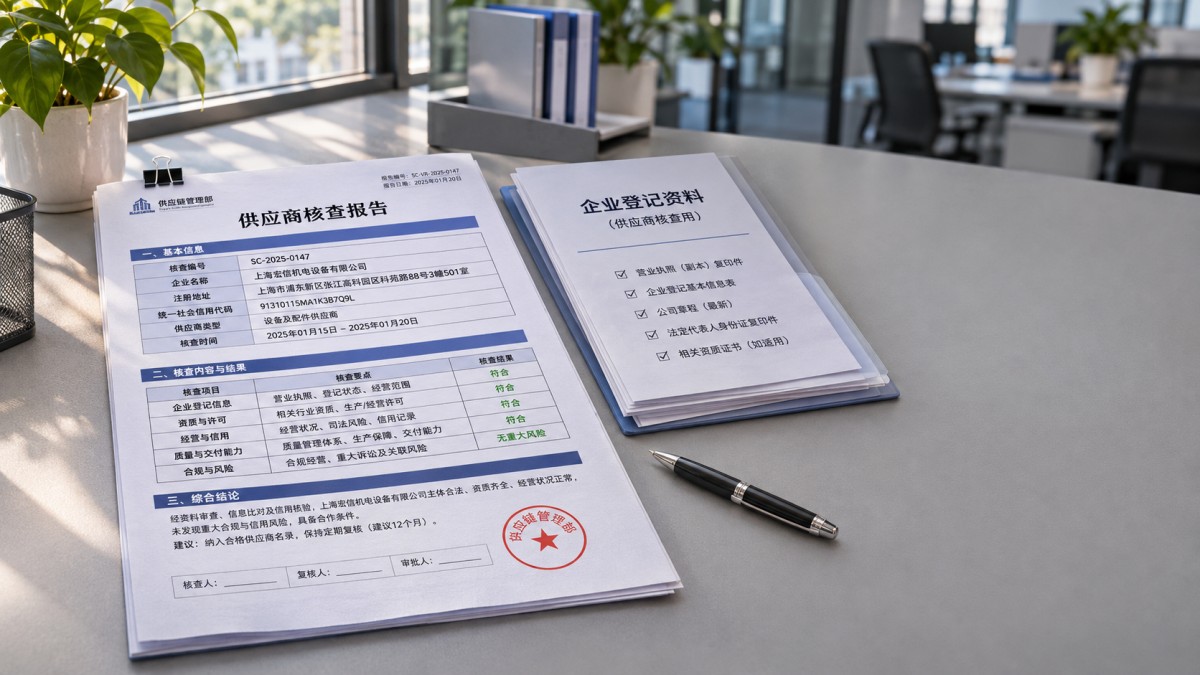
Locate the issuing organization’s name, report or reference number, assessment date, issue date, assessed legal entity, site address, and stated scope. Also note whether the document is marked as a draft, summary, amended version, or confidential report. Those details help the issuer identify the correct record and explain differences between versions.
Verify the issuer without relying on the report’s contact details
Find the issuer’s official contact or verification service independently, rather than using only a phone number, email address, QR code, or link printed on the supplier’s document. A convincing-looking code can lead to a copied page; a report number shown on that page proves little unless the page itself belongs to the real issuer. Type the organization’s known official address into your browser or locate it through a trusted directory, then navigate to its verification channel.
Give the issuer enough information to locate the record, but avoid sending confidential purchasing details that are unnecessary for the check. Ask the issuer to confirm:
- Whether it issued the report and whether the reference number corresponds to its records.
- The assessed legal entity and facility address, subject to disclosure permissions.
- The assessment and issue dates, the type of assessment, and its stated scope.
- Whether the document is the current issued version, has been amended, or has been withdrawn.
- Whether the report or any related certificate has a stated validity period or other restrictions.
Use the issuer’s published verification method where one exists. Some systems confirm only that a reference number exists, while others show the entity, site, scope, or status. A partial match is not confirmation of fields the system does not display. Save the response or record the date, channel, and information confirmed, in line with your organization’s retention rules.
Confidentiality can limit what an issuer will disclose. If it cannot confirm details directly, ask whether it accepts written authorization from the report owner or offers a controlled sharing process. If the supplier declines to provide the necessary permission, record the limitation and assess the report as unverified rather than treating silence as proof of forgery.
Match the report to the supplier you intend to contract
A valid report can belong to a different legal entity from the one named on a quotation, bank account, purchase order, or proposed contract. Compare the registered name, registration number where available, country, and registered address with independently obtained company records. Names may differ because of translation, abbreviations, restructuring, or a legitimate trading name, but the relationship needs an explanation supported by records—not an assumption.
Check the facility address separately from the head office address. A report on a company’s sales office does not establish that its proposed production site was assessed. Likewise, an assessment of one factory does not automatically cover another factory owned by the same group. Compare building, unit, and location details as well as the city; apparently small differences can point to a different operation.
Where the contracting party is a trading company and the report names a manufacturer, ask both parties to explain the relationship and identify which site will produce the order. A genuine manufacturer’s report may still be useful, but it does not verify the trading company’s ownership, ability to supply, or authority to represent that factory. If production is subcontracted, determine whether the assessed site covers the actual subcontractor and activities.
Resolve a mismatch before closing the check
Ask for the specific evidence needed to bridge the gap: for example, an official registration extract showing a name change, documentation connecting two entities, or an updated report for the production site. Check the explanation against independent records where available. Do not edit the supplier name or address in your own assessment to make it match the report; retain the discrepancy and its resolution in the file.
Some information may legitimately be unavailable in public records, particularly across jurisdictions. In that case, distinguish what has been independently confirmed from what rests on supplier-provided documentation, and decide whether that remaining uncertainty is acceptable for the planned order.
Check dates, scope, and the meaning of the findings
The assessment date tells you when observations were made; the issue date tells you when the document was released. Neither guarantees that conditions remain unchanged today. A report may have a stated expiry date, while another may be a point-in-time assessment with no formal expiry. Do not invent a validity period, and do not treat the absence of one as evidence that the findings remain current.
Compare the scope with the purchase: the site, processes, product categories, and activities assessed should be relevant to what you intend to buy. A facility review that covers assembly may not cover upstream material production. A laboratory test on one sample does not establish that every batch complies, and a management-system certificate does not certify a particular product. Check the exact wording rather than relying on a supplier’s summary.
Read the findings and limitations, not just the overall status. Look for exclusions, unresolved nonconformities, restricted access, information supplied only by the supplier, or findings qualified by the assessor. If corrective actions are mentioned, ask for the relevant closure evidence and confirm with the issuer whether closure was independently verified. A supplier’s statement that an issue has been fixed is useful information, but it is not the same as an assessor’s confirmation.
Where the report references a certificate or accreditation, verify that claim separately. A report issuer’s identity, an auditor’s accreditation status, and the validity of a particular certificate are different questions. Even when accreditation is relevant, check that it applies to the issuing body and activity in question; an accreditation logo alone does not establish that the report’s findings are accurate or that the supplier is approved for your order.
Look for signs of alteration, then seek independent confirmation
Formatting problems deserve attention when they occur around material details. Inconsistent fonts near the company name, a cropped report number, misaligned dates, missing pages, or a logo that looks pasted over another element can indicate editing. Unexpected gaps in page numbering or findings that refer to absent appendices also justify a request for the complete issued version.
None of these signs proves fraud on its own. File conversions, translations, redactions, and scanning can produce irregularities. Ask for the original electronic file or a copy shared through the issuer’s authorized process, and compare the disputed fields with the issuer’s record. File properties or a visible digital signature may provide leads, but metadata can be changed and a signature must be validated through the relevant trusted method.
Other concerns are behavioral rather than visual: pressure to approve immediately, refusal to identify the issuer, contradictory explanations about the factory, or repeated changes to the report number. Pause approval while the discrepancy is investigated. Avoid accusing the supplier before the facts are established, but do not allow a commercial deadline to turn an unresolved identity question into an assumed pass.
Decide what the evidence permits
Separate the outcome of document authentication from the supplier approval decision. The following distinctions make the record more useful to the next person reviewing the purchase:
For a new supplier, a critical component, or a large advance payment, an unresolved report may justify stronger controls before commitment. Depending on the risk, these could include an independent site assessment, product testing against agreed specifications, inspection before shipment, or contractual conditions tied to acceptable evidence. These measures answer different questions; none automatically validates the original document.
Record who checked the report, what was confirmed, any unresolved differences, and when the assessment should be revisited under your internal process. Recheck material details when the supplier changes its legal entity, production site, or manufacturing arrangement, or when the report’s stated validity ends. This preserves the distinction between evidence that was reliable at approval and evidence that still applies to the next order.
 South Korea's Car Imports From China and Trade Deficit Hit RecordsSouth Korea’s car imports from China and automotive trade deficit hit records. Explore how Shanghai-made Tesla EVs are reshaping bilateral trade.
 How to check if supplier verification reports are authenticVerify supplier verification reports with confidence. Learn how to confirm the issuer, match supplier details, spot red flags, and reduce purchasing risk.
 Mexico’s President Seeks US Trade Deal at December Miami G20 SummitMexico–US trade deal talks could reach a turning point at the December Miami G20 summit. Explore what a potential agreement may mean for cross-border business.
 How to assess data quality in export market analysis servicesCompare export market analysis services with confidence. Learn how to evaluate data sources, coverage and forecasts before committing to a new market.
 Li Qiang Calls for Digital and Green Cooperation at China-Thailand Business MeetingLi Qiang calls for China-Thailand cooperation in digital and green sectors, highlighting opportunities in AI, new energy and agriculture.
 How are life sciences different from healthcare?Life sciences and healthcare overlap, but how do they differ? Explore their roles, real-world examples, and what the distinction means for sourcing.
 How is resale changing the UK apparel and fashion market?Explore how resale is reshaping apparel and fashion in UK markets, from shifting customer demand to pricing, sourcing and opportunities for brands.
 China's Trade Reaches 44.81 Trillion Yuan in First 10 Months, Up 20%China's trade reportedly reached 44.81 trillion yuan in the first 10 months, up 20%. Explore the implications for sourcing, technology exports and ASEAN markets.
 China Extends Pause on 24% US Tariff as US Extends Product ExclusionsChina-US tariffs: China extends its 24% tariff pause while the US extends 178 product exclusions. Discover what the measures mean for trade costs and planning.
 How to verify a mass production supplier’s capacityVerify a mass production supplier’s true capacity with practical checks for production records, available resources, quality controls and delivery readiness.
 He Lifeng Holds Trade Video Call with US Treasury Secretary and Trade RepresentativeHe Lifeng discusses China-US trade restrictions with US officials. Explore what the call could mean for exporters, buyers and supply chains.
 U.S. Trade Deficit Narrows to $105 Billion in September 2026U.S. trade deficit narrowed to $105 billion in September 2026 as exports rose 1.9%. Explore what the latest figures reveal about trade flows.
 How to verify international trade intelligence updatesVerify international trade intelligence updates with practical checks for sources, regulations, trade data, and disruptions. Turn complex claims into reliable insights.
 How investors can assess cyclicality in the manufacturing industryManufacturing industry analysis for investors: learn to assess cyclical demand, cash flow and downside risks to make more informed investment decisions.
 US ISM Manufacturing PMI Rises to 55.5% in October, Beating ForecastsUS ISM Manufacturing PMI rose to 55.5% in October 2026, beating forecasts. Explore what stronger orders and production could mean for manufacturers.
 China Manufacturing PMI Falls to 49.3 in OctoberChina manufacturing PMI fell to 49.3 in October, signaling renewed contraction. Explore the role of weak export orders and domestic demand.
 Can you trust flexible packaging market intelligence forecasts?Can you trust flexible packaging market intelligence forecasts? Learn how to verify sources, challenge assumptions, and assess demand before making costly investment or sourcing decisions.
 When is supply chain disruption management consulting worth the cost?When is supply chain disruption management consulting worth the cost? Learn how to compare fees, avoidable losses, and recovery options to make a confident investment decision.
 How to use macroeconomic analysis to forecast industrial demandApply an industrial macro analysis methodology to forecast demand, interpret economic signals, and plan inventory and capacity. Discover practical steps for smarter business decisions.
 How to assess Singapore suppliers with global supply chain intelligenceExplore international supply chain intelligence Singapore buyers can use to verify suppliers, assess capabilities and delivery risks, and make confident sourcing decisions.
 Which macroeconomic indicators help forecast U.S. industrial demand?Explore industrial macro analysis USA decision-makers can use to forecast demand. Track new orders, inventories, and credit signals to sharpen procurement and capacity decisions.















Global Trade Insights & Industry
Our mission is to empower global exporters and importers with data-driven insights that foster strategic growth.
Search News
Popular Tags
Industry Overview
The global commercial kitchen equipment market is projected to reach $112 billion by 2027. Driven by urbanization, the rise of e-commerce food delivery, and strict hygiene regulations.