

How to assess Singapore suppliers with global supply chain intelligence
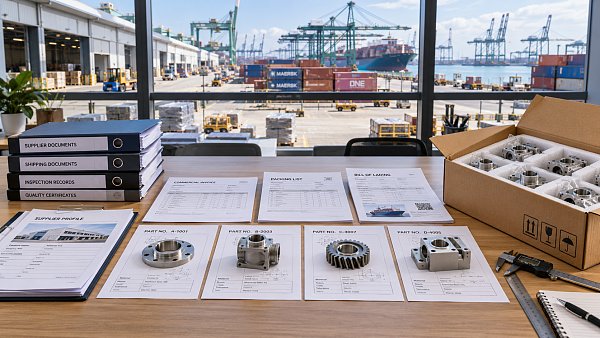
A Singapore supplier belongs on a procurement shortlist when its legal identity, operating role, product capability, and delivery arrangements can be supported by consistent evidence. A competitive quotation and a Singapore business address provide a starting point. They leave open several questions: who makes the goods, where inventory is held, which entity accepts liability, and what happens if the original supply route fails.
Global supply chain intelligence helps buyers connect those questions. Company records establish the contracting entity; shipment information can reveal trading patterns; certification checks test specific claims; and logistics intelligence exposes dependencies beyond the supplier’s office. The depth of investigation should reflect the purchase. A replaceable catalogue item may justify a modest review, while a production-critical component or regulated product requires stronger evidence before approval.
Establish what the Singapore supplier actually controls
Begin by identifying the supplier’s role in the proposed transaction. A manufacturer, authorised distributor, independent trader, and regional sales office can all offer legitimate value, but they control different parts of fulfilment. Your assessment should establish which activities the Singapore entity performs itself and which depend on another company.
A distributor with reliable inventory and a documented manufacturer relationship may be a stronger choice than a factory that cannot support your order size or delivery schedule. Conversely, a trading company offering customised production needs to explain how it controls specifications, factory changes, inspections, and corrective action. The business model becomes a risk when responsibilities remain unclear.
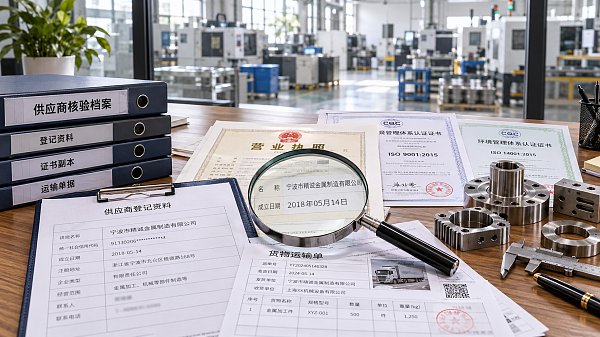
Check the legal name and Unique Entity Number against records available through Singapore’s Accounting and Corporate Regulatory Authority, or ACRA. Match that identity across the quotation, proposed contract, invoice, and payment instructions. Registration supports an identity check; it does not establish manufacturing capability, financial strength, or product quality.
If the beneficiary bank account belongs to another entity, obtain a documented explanation and verify it through an independently established contact channel. Group structures and payment arrangements can be legitimate, but procurement should understand which company receives funds and which remains responsible for performance. A last-minute change in payment instructions deserves a fresh verification before payment.
Ask the supplier to describe the transaction in practical terms:
- Which entity will sign the contract and handle warranty claims?
- Which facility will manufacture, assemble, inspect, or release the goods?
- Where is the quoted stock physically located, and is it allocated to your order?
- Which subcontractors or upstream manufacturers affect quality and delivery?
- Can the supplier change the production site or source without your approval?
These answers also prevent confusion about origin. Goods sold by a Singapore company may be manufactured elsewhere, stored outside Singapore, or shipped directly from another country. A Singapore invoice alone does not establish Singapore origin or eligibility for preferential tariff treatment. Those questions depend on the applicable origin rules and supporting documentation for the goods concerned.
Use trade activity to test the supplier’s account
Trade intelligence becomes useful when it tests a specific claim. If a supplier says it regularly serves overseas buyers with a particular product family, available shipment records may help assess whether its visible activity is consistent with that account. Look for continuity, relevant product descriptions, plausible trading partners, and routes that fit the proposed delivery arrangement.
Read the underlying fields carefully. The named party may be a shipper, consignee, intermediary, or logistics provider. Broad customs classifications can cover products with very different specifications. A record associated with industrial components does not establish experience with your exact material, tolerance, or application.
Coverage also varies between jurisdictions, transport modes, and data providers. Confidentiality restrictions, entity naming differences, and shipments handled through affiliated companies can limit visibility. An absence of records should lead to further investigation rather than an automatic rejection. Equally, a long shipment history cannot prove that the goods met specifications or arrived on time.
Compare the information with the supplier’s explanation. A company claiming to manufacture locally should be able to explain why relevant records appear to show finished goods arriving from an overseas source. That may reflect a legitimate mixed sourcing model. The procurement issue is whether the quotation accurately describes the source and whether that source can change during the contract.
Patterns can help prioritise questions. Concentration around one upstream source suggests a dependency worth investigating. A sudden change in shipping routes may warrant discussion about inventory location or production arrangements. Repeated activity in unrelated categories may indicate a general trading operation, which could still suit a straightforward purchase but require additional controls for technical products.
For procurement teams using international supply chain intelligence in Singapore, the strongest approach combines external signals with transaction-level evidence. Request suitably redacted shipping documents, relevant customer references where available, or records demonstrating comparable fulfilment. Respect commercial confidentiality while ensuring that enough detail remains to connect the evidence to the correct entity, product, facility, and period.
Keep each finding tied to its limits. “Recurring shipments are visible” supports evidence of trading activity. “Qualified to manufacture this component” requires technical evidence. Treating these as separate conclusions prevents a supplier’s commercial footprint from becoming a substitute for capability assessment.
Verify capability against the order you intend to place
Capability review should start with an agreed purchase specification. Without defined materials, dimensions, performance requirements, documentation, packaging, and acceptance criteria, even an extensive supplier file may say little about suitability. The question is whether the supplier can repeatedly deliver the product your operation will accept.
Ask for evidence connected to the actual production site and process. Depending on the purchase, this may include equipment capability, inspection methods, material traceability, calibration records, subcontractor controls, or a process for managing nonconforming goods. A corporate presentation listing many capabilities offers less assurance than records showing how the relevant work is controlled.
Certification deserves a separate check. Establish which legal entity and site a certificate covers, its scope, its validity, and whether the issuing body provides a verification route. A genuine certificate can still be irrelevant to the activity being purchased. A quality management system certificate also does not, by itself, establish that an individual product satisfies every applicable safety or performance requirement.
For regulated goods, map the requirements to the product and destination market. Medical devices, food, chemicals, and electrical equipment can involve different approvals, registrations, tests, labelling duties, and importer obligations. The supplier’s ability to sell a product in one market does not automatically establish its suitability for another. Verify the applicable requirements through the relevant authorities and qualified specialists where necessary.
Samples are useful when their relationship to production is clear. Establish whether the sample came from the intended factory, used the specified materials, and followed the process planned for your order. A specially prepared sample may demonstrate technical possibility while leaving repeatability unresolved.
For a customised or operationally critical purchase, a pilot order can test more than product quality. It can reveal whether drawings are interpreted correctly, inspection records accompany the goods, packaging survives handling, and the supplier resolves discrepancies promptly. Define the acceptance criteria before the pilot begins so that approval rests on an agreed result.
Protect that result through change control. The contract should address changes to materials, manufacturing sites, subcontractors, and other attributes that could affect performance or compliance. Otherwise, an approved sample may provide little protection against a later substitution. Where proprietary tooling or technical files are involved, clarify ownership and access before committing significant funds.
Turn logistics exposure into a purchasing decision
A Singapore contracting entity may coordinate an international chain with several points of failure. Map the proposed physical route from production through storage, export handling, transit, import clearance, and final delivery. Identify which stages the supplier controls and where it depends on factories, warehouses, carriers, or agents.
Separate production lead time from transport time and stock availability. “Available” may refer to unallocated inventory at an upstream warehouse, goods awaiting inspection, or stock that requires further processing. Ask for the location, release conditions, and allocation status relevant to your order. A delivery commitment is more useful when its assumptions are explicit.
Global logistics information can then be applied to the route that matters. Disruption at an upstream production location, restricted transport options, or congestion at a transit point may affect delivery even when the supplier’s Singapore office operates normally. General freight headlines carry less decision value than information linked to the actual origin, mode, and route.
Evaluate alternatives with the same discipline. A proposed backup factory must be able to meet the specification and applicable requirements. An alternative port must be workable for the cargo and schedule. Air freight may be unsuitable because of cost, dimensions, or handling restrictions. Ask what the alternative would cost, how long activation would take, and what approvals it would require.
Commercial terms should reflect the resulting exposure. State the agreed Incoterms rule, version, and named place precisely, then address matters outside those terms separately, including acceptance, payment, warranty, and remedies. Compare suppliers using the cost of getting acceptable goods into operation: purchase price, freight, duties where applicable, inspection, inventory, and the consequences of delay or rejection.
A lower quotation can become unattractive if it requires a large advance payment, uncertain stock allocation, or an unqualified replacement source. A higher-priced distributor may justify its margin through verifiable local stock, technical support, and effective warranty handling. Assess those benefits through evidence and contract commitments.
Bring the findings into a short approval record. Separate conditions that must be met from factors that can be traded against price or convenience. Unresolved legal identity, missing mandatory compliance evidence, or inability to meet a critical specification should block approval for the affected purchase. Other weaknesses may be manageable through a smaller initial order, independent inspection, staged payments, or additional inventory.
For each material concern, record the evidence, the remaining uncertainty, the responsible person, and the condition for proceeding. This makes the shortlist defensible without creating a false impression of precision through a single numerical score.
Approval should also have a defined scope. A supplier qualified for a standard item from one facility has not automatically been approved for a regulated product, a different factory, or a substantially larger order. Revisit the assessment when ownership, production location, certification status, payment instructions, or delivery performance changes. The next order should reflect what the supplier has demonstrated and what the supply chain now requires.
 How to assess Singapore suppliers with global supply chain intelligenceExplore international supply chain intelligence Singapore buyers can use to verify suppliers, assess capabilities and delivery risks, and make confident sourcing decisions.
 Which macroeconomic indicators help forecast U.S. industrial demand?Explore industrial macro analysis USA decision-makers can use to forecast demand. Track new orders, inventories, and credit signals to sharpen procurement and capacity decisions.
 Can a food processing manufacturer meet your small-batch needs?Can a food processing manufacturer meet your small-batch needs? Discover how to assess minimum orders, costs, packaging, and safety to choose the right partner for your launch.
 How to verify sourcing intelligence data before selecting suppliersVerify sourcing intelligence data before choosing suppliers. Learn how to check company records, certifications, and capacity to reduce procurement risk and build a reliable shortlist.
 How to use supplier risk analysis to spot financial warning signsUse supplier risk analysis to spot cash flow pressure, debt risks, and delivery warning signs. Learn practical steps to reduce exposure and protect supply continuity.
 When dual sourcing makes sense in a sourcing strategy for manufacturersSourcing strategy for manufacturers: learn when dual sourcing strengthens supply continuity, reduces disruption risk, and protects production without adding unnecessary complexity.
 How bulk commodities pricing affects long-term supply contractsBulk commodities pricing shapes long-term supply contracts through index rules, freight, quality, volume, and currency risk. Explore strategies for resilient costs and supply security.
 Which global manufacturing trends by sector matter most for sourcing plans?Global manufacturing trends by sector: identify sourcing risks, supplier resilience, compliance demands, and cost drivers to build smarter, more reliable procurement plans.
 What industrial trade intelligence pricing should include before you subscribeIndustrial trade intelligence pricing explained: compare coverage, data quality, access rights, and workflow value before choosing a subscription that supports smarter trade decisions.
 How an industrial trade intelligence dashboard can identify new supplier marketsDiscover how an industrial trade intelligence dashboard helps identify new supplier markets by comparing capacity, landed cost, logistics resilience, and compliance risk.
 Which global market entry barriers should exporters assess first?Global market entry barriers exporters should assess first: tariffs, compliance, buyer qualification, logistics, and payment risk. Build a practical strategy for confident market entry.
 How trade data aggregation analytics can reveal emerging supplier marketsTrade data aggregation analytics reveals emerging supplier markets by connecting trade flows, capacity signals, logistics, and compliance insights for smarter sourcing decisions.
 When an export market analysis platform can validate demand in a new marketExport market analysis platform insights help validate new-market demand through buyer fit, regulations, logistics, competition, and profitable entry conditions.
 What is driving the beauty and personal care market in the USA?Beauty and personal care in USA is driven by targeted solutions, selective premiumization, digital discovery, clean-label trust, diverse needs, and compliance. Explore key growth opportunities.
 How trade flow monitoring reports reveal changing regional demandTrade flow monitoring reports reveal changing regional demand through import volumes, sourcing shifts, product mix, logistics signals, and regulatory trends. Explore actionable market insights.
 How international market intelligence for investors reduces market-entry riskInternational market intelligence for investors reduces market-entry risk by validating demand, regulations, logistics, and competition before capital is committed.
 How international sourcing intelligence helps identify supplier risk earlyInternational sourcing intelligence helps businesses spot supplier risks early, protect supply continuity, and make smarter global procurement decisions.
 How trade data aggregation analytics reveals emerging supplier marketsTrade data aggregation analytics reveals emerging supplier markets through export trends, input flows, logistics, and regulatory signals. Discover smarter sourcing insights.
 What industrial cluster monitoring in Vietnam reveals about site riskIndustrial cluster monitoring Vietnam reveals hidden site risks across labor, utilities, logistics, compliance, and supplier dependencies. Make smarter sourcing and expansion decisions.
 Food Technology Trends Reshaping Shelf Life, Safety, and Product InnovationFood technology is reshaping shelf life, safety, and innovation. Discover the trends helping food businesses cut risk, improve compliance, and unlock stronger global market growth.
 How electronics manufacturing services are changing with low-volume demandElectronics manufacturing services are evolving fast with low-volume demand. Learn how agile EMS partners improve flexibility, compliance, sourcing resilience, and speed to market.
















Global Trade Insights & Industry
Our mission is to empower global exporters and importers with data-driven insights that foster strategic growth.
Search News
Popular Tags
Industry Overview
The global commercial kitchen equipment market is projected to reach $112 billion by 2027. Driven by urbanization, the rise of e-commerce food delivery, and strict hygiene regulations.