

How to Choose Soil Management Products for Yield and Cost Control
Choosing the right soil management products can directly influence yield stability, fertilizer efficiency, and total production cost across agricultural and food supply chains. In practice, the best buying decision is rarely about choosing the cheapest input or the most heavily marketed formula. It depends on field conditions, crop value, irrigation method, climate pressure, and how quickly a product can improve soil structure, nutrient availability, or biological activity. For businesses seeking better cost control, comparing soil management products by application scenario is the fastest path to a more reliable return on investment.
This article explains how to evaluate soil management products in real operating contexts, from open-field row crops to high-value horticulture and degraded land recovery. It also highlights what data to request from suppliers, where cost-saving opportunities usually appear, and which selection mistakes can quietly reduce performance. As a global B2B intelligence platform, GTIIN and TradeVantage continue to track how input decisions affect competitiveness, sourcing efficiency, and long-term trust signals in the international agriculture market.
When the Field Condition Changes, the Right Soil Management Products Change Too
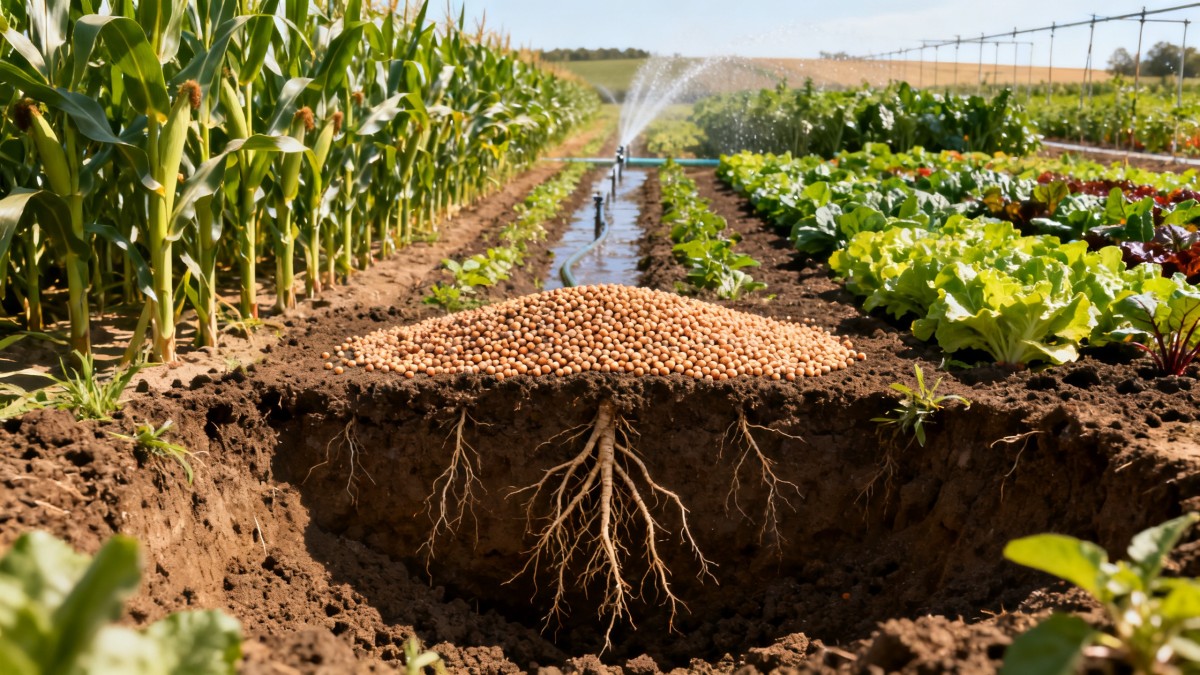
Not all soils fail in the same way. Some lose water too fast, some lock up nutrients, some show compaction after repeated machinery traffic, and others suffer from salinity or declining organic matter. Because of this, soil management products should be selected by use case rather than by generic product category alone. A humic-based amendment may perform well in one region but deliver limited value in another if the real constraint is poor drainage or sodium accumulation.
A practical evaluation starts with three questions: What is limiting yield now? Which problem creates the highest avoidable cost? And how quickly must performance improve? These questions help separate cosmetic solutions from products that can truly support crop output, nutrient efficiency, and manageable input budgets.
Scenario 1: Open-Field Staple Crops Need Broad Efficiency and Stable Cost Control
In cereals, oilseeds, and other large-acreage systems, the most effective soil management products are usually those that improve input efficiency at scale. Buyers often prioritize solutions that support better nutrient retention, reduce leaching, improve soil aggregation, or enhance root development without adding excessive application complexity. In these systems, even a small gain in nutrient-use efficiency can create meaningful savings across large planted areas.
Core judgment points include compatibility with existing fertilizer programs, ease of mechanized application, and consistency across variable field zones. Products such as soil conditioners, organic matter enhancers, pH adjusters, and microbial formulations should be assessed not only for technical claims but also for field-level repeatability. A lower-cost option that requires multiple passes or shows inconsistent results may be more expensive than a premium solution with stronger operational fit.
What to verify in this scenario
- Response under broad-acre application conditions
- Evidence of improved fertilizer efficiency or reduced nutrient loss
- Application rate per hectare and total seasonal cost
- Storage stability and handling requirements
- Performance across different soil textures
Scenario 2: High-Value Fruits and Vegetables Need Precision-Focused Soil Management Products
In fresh produce, protected cultivation, and export-oriented horticulture, the decision logic is different. Yield matters, but uniformity, quality, residue management, and harvest timing can be equally important. Here, soil management products are often chosen to improve root-zone balance, support beneficial microbial activity, optimize cation exchange, and maintain consistent moisture behavior. Because crop value is higher, the acceptable price point for the product may also be higher if quality gains are measurable.
This scenario requires tighter review of formulation quality and supplier transparency. Water-soluble products, bio-stimulant-linked soil amendments, specialty calcium or sulfur inputs, and salinity-management solutions need to fit fertigation systems, greenhouse routines, or intensive field schedules. The best choice is often the one that reduces variability across beds, rows, or greenhouse zones rather than the one with the strongest headline claim.
Core decision points for horticulture systems
Look closely at solubility, residue risk in irrigation lines, interaction with existing nutrient formulations, and crop-stage suitability. In high-value systems, poorly matched soil management products can increase labor, disrupt irrigation schedules, or create root stress at sensitive growth stages. Product trials should be small, measured, and linked to quality indicators such as size uniformity, firmness, shelf life, and marketable yield.
Scenario 3: Degraded, Saline, or Compacted Land Requires Recovery-Oriented Selection
Some operations are not trying to optimize already productive land; they are trying to restore underperforming ground. In these cases, soil management products should be judged by whether they address the root physical or chemical barrier. Compacted soils may need structure-building amendments and biological support. Saline or sodic soils often require calcium-based correction, drainage support, and careful water management. Low-organic-matter land may benefit from carbon-rich inputs and multi-season rehabilitation plans.
The main mistake in this scenario is expecting a short-term product to solve a structural problem alone. Recovery-oriented sourcing should combine product choice with a management plan, including soil testing, water analysis, application timing, and realistic performance windows. The best soil management products for degraded land are those supported by a documented improvement pathway, not just a single-season marketing promise.
How Demand Differs Across Soil Management Scenarios
How to Match Soil Management Products to Real Purchasing Priorities
Once the scenario is clear, product comparison becomes more disciplined. Strong sourcing decisions usually combine agronomic evidence with operational and financial filters. This is where many buyers improve results: not by adding more products, but by screening out poor-fit options early.
- Request verified field data: Ask for trial results under conditions similar to target crops, soil type, and climate.
- Compare cost per effective outcome: Evaluate cost against measurable gains such as nutrient savings, improved water retention, or marketable yield.
- Check formulation fit: Confirm whether the product works with current fertilizer blends, irrigation systems, and seasonal schedules.
- Review logistics: Bulk packaging, shelf life, and regional availability matter as much as technical performance.
- Assess supplier credibility: Documentation, consistency, and after-sales technical support reduce procurement risk.
For international buyers, this is also where trusted industry intelligence becomes valuable. GTIIN and TradeVantage help businesses compare supplier visibility, monitor market movements, and identify signals that support more confident sourcing of soil management products across regions and product categories.
Common Misjudgments That Raise Cost Instead of Cutting It
A frequent error is buying soil management products based only on unit price. Low upfront cost can hide poor concentration, higher transport cost, extra labor, or weak field persistence. Another common issue is selecting a product for a nutrient symptom when the deeper cause is pH imbalance, poor drainage, compaction, or salinity. In that case, even a technically sound product may underperform.
It is also risky to rely on broad marketing language such as “improves soil health” without asking how, under what conditions, and over what time frame. Soil health is a useful goal, but buying decisions need more precise indicators: infiltration, aggregation, nutrient availability, root growth, sodium displacement, or organic matter trend. The more specific the performance target, the easier it is to choose the right soil management products.
Next-Step Actions for Smarter Soil Management Product Selection
A better buying process starts with scenario-based evaluation. Begin by grouping land or production zones according to their primary constraint, then shortlist soil management products that directly address that constraint. Request technical sheets, independent trial data, and recommended application programs. Where possible, compare products through limited field validation tied to one or two measurable outcomes rather than broad expectations.
The most cost-effective decisions are usually made when agronomic fit, logistics practicality, and market intelligence are reviewed together. With stronger visibility into product claims, supplier reliability, and sector trends, businesses can improve yield outcomes while protecting input budgets. For companies seeking better sourcing intelligence and stronger digital credibility in global agriculture markets, GTIIN and TradeVantage offer a high-authority platform for insight discovery, supplier exposure, and data-backed decision support.
 How an industrial trade intelligence dashboard can identify new supplier marketsDiscover how an industrial trade intelligence dashboard helps identify new supplier markets by comparing capacity, landed cost, logistics resilience, and compliance risk.
 Which global market entry barriers should exporters assess first?Global market entry barriers exporters should assess first: tariffs, compliance, buyer qualification, logistics, and payment risk. Build a practical strategy for confident market entry.
 How trade data aggregation analytics can reveal emerging supplier marketsTrade data aggregation analytics reveals emerging supplier markets by connecting trade flows, capacity signals, logistics, and compliance insights for smarter sourcing decisions.
 When an export market analysis platform can validate demand in a new marketExport market analysis platform insights help validate new-market demand through buyer fit, regulations, logistics, competition, and profitable entry conditions.
 What is driving the beauty and personal care market in the USA?Beauty and personal care in USA is driven by targeted solutions, selective premiumization, digital discovery, clean-label trust, diverse needs, and compliance. Explore key growth opportunities.
 How trade flow monitoring reports reveal changing regional demandTrade flow monitoring reports reveal changing regional demand through import volumes, sourcing shifts, product mix, logistics signals, and regulatory trends. Explore actionable market insights.
 How international market intelligence for investors reduces market-entry riskInternational market intelligence for investors reduces market-entry risk by validating demand, regulations, logistics, and competition before capital is committed.
 How international sourcing intelligence helps identify supplier risk earlyInternational sourcing intelligence helps businesses spot supplier risks early, protect supply continuity, and make smarter global procurement decisions.
 How trade data aggregation analytics reveals emerging supplier marketsTrade data aggregation analytics reveals emerging supplier markets through export trends, input flows, logistics, and regulatory signals. Discover smarter sourcing insights.
 What industrial cluster monitoring in Vietnam reveals about site riskIndustrial cluster monitoring Vietnam reveals hidden site risks across labor, utilities, logistics, compliance, and supplier dependencies. Make smarter sourcing and expansion decisions.
 Food Technology Trends Reshaping Shelf Life, Safety, and Product InnovationFood technology is reshaping shelf life, safety, and innovation. Discover the trends helping food businesses cut risk, improve compliance, and unlock stronger global market growth.
 How electronics manufacturing services are changing with low-volume demandElectronics manufacturing services are evolving fast with low-volume demand. Learn how agile EMS partners improve flexibility, compliance, sourcing resilience, and speed to market.
 How Can Buyers Reduce Procurement Risks for Electronic Components?How to reduce procurement risks for electronic components: learn how buyers assess traceability, lead times, compliance, and supplier types to avoid costly sourcing mistakes.
 What Sourcing Intelligence India Reveals About Supplier Risk and Cost ShiftsSourcing intelligence India reveals hidden supplier risk, compliance gaps, logistics pressure, and real cost shifts—helping buyers compare vendors smarter and source with more confidence.
 Fashion Trends 2026: Which Materials, Colors, and Silhouettes Are Gaining Ground?Fashion trends 2026 spotlight tactile fabrics, mineral colors, and controlled volume. Explore the materials, shades, and silhouettes shaping smarter, more wearable style.
 Smart Device Market Outlook: Key Growth Drivers, Segments, and Business OpportunitiesSmart device market trends are shifting toward system value, industrial demand, and resilient supply chains. Explore key growth drivers, high-potential segments, and business opportunities.
 How Global Trade Intelligence Services Help B2B Firms Evaluate Markets and SuppliersGlobal trade intelligence services help B2B firms compare suppliers, assess market potential, and uncover compliance, logistics, and pricing risks before costly decisions are made.
 Manufacturing Sector Updates for Investors: What Signals Matter Most in 2025?Manufacturing sector updates for investors in 2025: track orders, margins, supply chains, regulation, and exports to spot resilient manufacturers and smarter investment signals.
 How Energy Market Intelligence Helps Businesses Track Price Risks and Demand ShiftsEnergy market intelligence helps businesses spot price risks, demand shifts, and supply pressure early—improving procurement, resilience, and faster strategic decisions.
 Precision Hardware Tools Market: Key Demand Drivers, Segments, and Growth OutlookPrecision hardware tools market trends are reshaping sourcing, compliance, and automation. Explore key demand drivers, segment shifts, regional supply patterns, and growth opportunities.
 How to Use Customs Import Data to Find Buyers, Track Competitors, and Spot Demand?Customs import data helps you find real buyers, track competitors, and spot demand shifts early. Learn practical ways to turn trade records into smarter global business decisions.





















Global Trade Insights & Industry
Our mission is to empower global exporters and importers with data-driven insights that foster strategic growth.
Search News
Popular Tags
Industry Overview
The global commercial kitchen equipment market is projected to reach $112 billion by 2027. Driven by urbanization, the rise of e-commerce food delivery, and strict hygiene regulations.