

Are vertical farming systems paying off in high-cost cities?
In high-cost cities, the promise of vertical farming systems goes beyond fresh local produce—it raises a practical investment question. Land is expensive, labor is tight, logistics are volatile, and consumers increasingly value freshness, traceability, and lower food miles. Against that backdrop, indoor stacked cultivation appears attractive: it compresses production into smaller footprints, shortens supply chains, and offers year-round output. Yet the financial reality is more nuanced. Whether vertical farming systems are paying off depends less on the concept itself and more on crop choice, energy strategy, market positioning, utilization rates, and operational discipline.
For the agriculture and food sector, this topic matters because urban food production is no longer just a sustainability story. It is becoming a commercial test of how technology, distribution, and consumer demand interact in dense metropolitan markets. Understanding the economics behind vertical farming systems helps evaluate where the model works, where it struggles, and which signals indicate long-term viability rather than short-lived enthusiasm.
What vertical farming systems include in urban food production
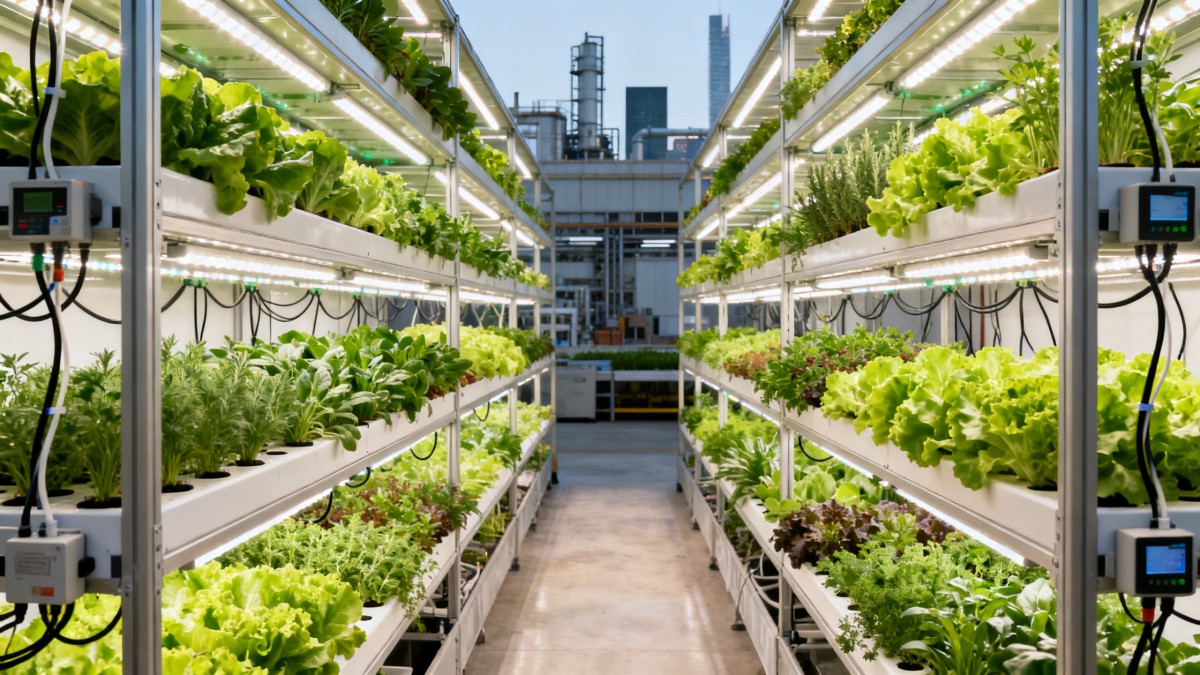
At a basic level, vertical farming systems are controlled-environment agriculture setups that grow crops in vertically stacked layers, often using hydroponics, aeroponics, or aquaponics. They typically rely on LED lighting, sensors, climate control, nutrient dosing, water recirculation, and software-based monitoring. In high-cost cities, these systems are usually installed in warehouses, retrofitted industrial buildings, rooftops, or purpose-built indoor facilities close to end markets.
The core value proposition is simple: produce more output per square meter while reducing weather risk and transportation distance. However, the cost structure is unlike traditional farming. Instead of depending heavily on land and seasonal conditions, vertical farming systems shift the burden toward electricity, equipment depreciation, maintenance, and skilled operations. This means profitability is determined by engineering efficiency and market pricing as much as by agronomy.
Most commercially successful urban facilities focus on leafy greens, herbs, microgreens, and some premium specialty crops. These products have short shelf lives, high spoilage sensitivity, and relatively high per-kilogram value, making them better suited to local indoor production. Staple crops such as wheat, rice, or potatoes remain economically difficult in most city-based vertical farming systems because the revenue per unit area rarely justifies the energy and infrastructure inputs.
Why high-cost cities are paying closer attention
High-cost cities create both the strongest rationale and the biggest pressure for vertical farming systems. On one side, dense urban populations support premium fresh food demand, fast grocery delivery, restaurant sourcing, and local branding. On the other, the same cities present high rent, high wages, strict building compliance requirements, and elevated utility costs. That tension defines the business case.
Several market signals explain why the model remains under close review:
- Growing demand for pesticide-reduced and traceable produce.
- Retail interest in stable year-round supply regardless of climate volatility.
- Urban resilience planning tied to food security and shorter supply chains.
- Rising spoilage and transport costs in conventional fresh produce distribution.
- Pressure to reduce emissions associated with long-distance refrigerated logistics.
Even so, investor sentiment has become more selective. Early optimism around rapid scale gave way to closer scrutiny of unit economics. Many observers now evaluate vertical farming systems through harder metrics: energy cost per kilogram, labor hours per crop cycle, revenue per square meter, offtake agreement quality, and actual sell-through in local retail or foodservice channels.
Whether vertical farming systems are paying off economically
The short answer is: sometimes, but not universally. Vertical farming systems can pay off in high-cost cities when they serve the right product category with disciplined operations. They tend to perform best where local premiums, short lead times, and waste reduction produce measurable financial gains. They struggle when operators chase scale before mastering crop economics or when facilities depend on unrealistic pricing assumptions.
The main revenue advantages include premium freshness, reduced shrink, more harvest cycles per year, and closer integration with urban buyers. A farm located near supermarkets or foodservice hubs may deliver within hours of harvest, extending shelf life and lowering inventory loss. This is especially valuable for tender greens and herbs that degrade quickly during long transport. In such cases, vertical farming systems create economic value not just through yield, but through quality retention and supply reliability.
However, the cost side remains decisive. Capital expenditure can be substantial due to shelving, lighting, irrigation, HVAC, automation, water treatment, and software systems. Operating costs often center on electricity, labor, maintenance, seeds, nutrients, packaging, and facility overhead. If yields are high but energy consumption is poorly managed, the margin can disappear. If production is efficient but sales channels are weak, inventory losses can offset technical success.
In practical terms, profitability often hinges on five questions:
- Is the crop portfolio limited to high-value, high-turnover produce?
- Can energy use be controlled through efficient LEDs, insulation, and load management?
- Are there secured demand channels such as retail contracts, meal kits, or foodservice programs?
- Is the facility running at high utilization rather than underused capacity?
- Can the operation maintain quality consistency at commercial scale?
When these conditions are met, vertical farming systems may achieve attractive returns in selected urban niches. When they are absent, even technically advanced facilities may face cash flow stress.
Business value across common urban operating models
Not all vertical farming systems pursue the same commercial logic. Urban success often depends on aligning the system design with the intended sales model. A facility supplying restaurants differs from one targeting supermarket private labels or direct-to-consumer subscriptions.
This variation matters because “paying off” does not always mean the same thing. In one case, it means pure profit margin. In another, it means strategic resilience, supply assurance, or brand advantage for a retailer or food platform. Some vertical farming systems generate value by reducing volatility rather than maximizing immediate returns. In cities exposed to climate shocks or import disruptions, that stability can carry measurable economic weight.
Key constraints and practical signals to watch
For a grounded evaluation, it is useful to separate promotional claims from operational indicators. Several constraints consistently shape outcomes in high-cost cities. Energy remains the largest structural issue, especially where electricity prices are unstable. Labor efficiency also matters, since repetitive tasks can become expensive without thoughtful workflow design or selective automation. In addition, financing risk increases when expansion is based on projected demand rather than contracted revenue.
Useful signals of a stronger business case include:
- A narrow crop mix with proven local demand.
- Documented reductions in waste, transport time, or stockouts.
- Energy contracts, renewable integration, or off-peak operating strategies.
- Long-term sales agreements with credible buyers.
- Clear data on yield per square meter and labor per harvest cycle.
By contrast, warning signs include oversized facilities chasing low-value crops, weak route-to-market planning, or business models that rely on generalized sustainability messaging without pricing power. Vertical farming systems are not exempt from standard food business realities: customers must buy repeatedly, logistics must work daily, and cost discipline must hold under changing utility and labor conditions.
Practical considerations for future investment and market positioning
The strongest path forward for vertical farming systems in high-cost cities is likely selective specialization rather than broad replacement of conventional agriculture. The model is better understood as a targeted urban production tool for specific fresh categories. It can complement field agriculture by supplying premium, perishable, and highly time-sensitive produce where metropolitan demand supports the economics.
A prudent approach starts with local demand mapping, realistic pricing assumptions, and energy sensitivity analysis. Facility design should reflect crop biology and sales channels rather than headline capacity. Partnerships with retailers, distributors, and urban food programs can improve planning accuracy and help stabilize throughput. In many cases, phased scaling is more defensible than immediate full-capacity buildout.
For market observers tracking agriculture and food opportunities, vertical farming systems deserve attention not because they solve every urban food challenge, but because they reveal how controlled-environment production can create value under the right constraints. The real payoff appears where technology, local demand, and disciplined execution align. In high-cost cities, that alignment is difficult—but far from impossible.
As global trade, sourcing strategy, and urban consumption patterns continue to evolve, monitoring the performance of vertical farming systems can provide useful signals about the future of resilient food supply. For deeper sector intelligence, comparative market tracking, and internationally relevant analysis across agriculture, food, and related supply chains, TradeVantage and GTIIN offer a data-driven foundation for more informed next-step decisions.
 When an export market analysis platform can validate demand in a new marketExport market analysis platform insights help validate new-market demand through buyer fit, regulations, logistics, competition, and profitable entry conditions.
 What is driving the beauty and personal care market in the USA?Beauty and personal care in USA is driven by targeted solutions, selective premiumization, digital discovery, clean-label trust, diverse needs, and compliance. Explore key growth opportunities.
 How trade flow monitoring reports reveal changing regional demandTrade flow monitoring reports reveal changing regional demand through import volumes, sourcing shifts, product mix, logistics signals, and regulatory trends. Explore actionable market insights.
 How international market intelligence for investors reduces market-entry riskInternational market intelligence for investors reduces market-entry risk by validating demand, regulations, logistics, and competition before capital is committed.
 How international sourcing intelligence helps identify supplier risk earlyInternational sourcing intelligence helps businesses spot supplier risks early, protect supply continuity, and make smarter global procurement decisions.
 How trade data aggregation analytics reveals emerging supplier marketsTrade data aggregation analytics reveals emerging supplier markets through export trends, input flows, logistics, and regulatory signals. Discover smarter sourcing insights.
 What industrial cluster monitoring in Vietnam reveals about site riskIndustrial cluster monitoring Vietnam reveals hidden site risks across labor, utilities, logistics, compliance, and supplier dependencies. Make smarter sourcing and expansion decisions.
 Food Technology Trends Reshaping Shelf Life, Safety, and Product InnovationFood technology is reshaping shelf life, safety, and innovation. Discover the trends helping food businesses cut risk, improve compliance, and unlock stronger global market growth.
 How electronics manufacturing services are changing with low-volume demandElectronics manufacturing services are evolving fast with low-volume demand. Learn how agile EMS partners improve flexibility, compliance, sourcing resilience, and speed to market.
 How Can Buyers Reduce Procurement Risks for Electronic Components?How to reduce procurement risks for electronic components: learn how buyers assess traceability, lead times, compliance, and supplier types to avoid costly sourcing mistakes.
 What Sourcing Intelligence India Reveals About Supplier Risk and Cost ShiftsSourcing intelligence India reveals hidden supplier risk, compliance gaps, logistics pressure, and real cost shifts—helping buyers compare vendors smarter and source with more confidence.
 Fashion Trends 2026: Which Materials, Colors, and Silhouettes Are Gaining Ground?Fashion trends 2026 spotlight tactile fabrics, mineral colors, and controlled volume. Explore the materials, shades, and silhouettes shaping smarter, more wearable style.
 Smart Device Market Outlook: Key Growth Drivers, Segments, and Business OpportunitiesSmart device market trends are shifting toward system value, industrial demand, and resilient supply chains. Explore key growth drivers, high-potential segments, and business opportunities.
 How Global Trade Intelligence Services Help B2B Firms Evaluate Markets and SuppliersGlobal trade intelligence services help B2B firms compare suppliers, assess market potential, and uncover compliance, logistics, and pricing risks before costly decisions are made.
 Manufacturing Sector Updates for Investors: What Signals Matter Most in 2025?Manufacturing sector updates for investors in 2025: track orders, margins, supply chains, regulation, and exports to spot resilient manufacturers and smarter investment signals.
 How Energy Market Intelligence Helps Businesses Track Price Risks and Demand ShiftsEnergy market intelligence helps businesses spot price risks, demand shifts, and supply pressure early—improving procurement, resilience, and faster strategic decisions.
 Precision Hardware Tools Market: Key Demand Drivers, Segments, and Growth OutlookPrecision hardware tools market trends are reshaping sourcing, compliance, and automation. Explore key demand drivers, segment shifts, regional supply patterns, and growth opportunities.
 How to Use Customs Import Data to Find Buyers, Track Competitors, and Spot Demand?Customs import data helps you find real buyers, track competitors, and spot demand shifts early. Learn practical ways to turn trade records into smarter global business decisions.
 Manufacturing Cost Analysis: 8 Cost Drivers That Change Your Unit PriceManufacturing cost analysis explained through 8 key cost drivers that impact unit price, supplier stability, and margins—learn how to compare quotes smarter and reduce sourcing risk.
 Industrial Market Realities: What Buyers Should Check Before Comparing Supplier QuotesIndustrial market realities shape every supplier quote beyond unit price. Learn what to check on compliance, lead times, logistics, and hidden cost risks before comparing offers.
 Beverage Production Line Planning: Key Equipment, Capacity, and Hygiene RequirementsBeverage production line planning made practical: discover key equipment, real capacity sizing, and hygiene requirements to improve efficiency, safety, and long-term plant performance.





















Global Trade Insights & Industry
Our mission is to empower global exporters and importers with data-driven insights that foster strategic growth.
Search News
Popular Tags
Industry Overview
The global commercial kitchen equipment market is projected to reach $112 billion by 2027. Driven by urbanization, the rise of e-commerce food delivery, and strict hygiene regulations.