

Precision agriculture technology is changing input decisions fast
Precision agriculture technology is reshaping how agribusiness leaders make input decisions, from seed and fertilizer selection to irrigation and crop protection. As data becomes more actionable and timely, decision-makers can reduce waste, control costs, and improve yields with greater confidence. For enterprises navigating volatile markets, this shift is not just operational—it is becoming a strategic advantage.
For business decision-makers, the central question is no longer whether digital tools can support farm operations. It is whether precision agriculture technology can improve margin control, strengthen forecasting, and make input spending more predictable at scale. In today’s environment of rising costs, climate variability, and tighter sustainability expectations, the answer is increasingly yes.
The fastest change is happening in input decisions. Agribusinesses are moving away from broad, field-wide assumptions and toward zone-specific, data-driven actions. Seed population, nutrient rates, chemical applications, and irrigation timing can now be adjusted using field data, sensor feedback, satellite imagery, equipment telematics, and predictive analytics. That shift matters because input costs are among the largest and most volatile items on the farm balance sheet.
For executives, the real value lies in better decisions rather than more data. Precision systems are only useful when they help answer practical questions: Where are we overspending? Which fields can support premium input programs? Where is risk rising? Which interventions will deliver measurable return this season and over the next three years? Companies that frame adoption around these business questions are seeing faster payback and stronger internal alignment.
Why input decisions are changing so quickly now
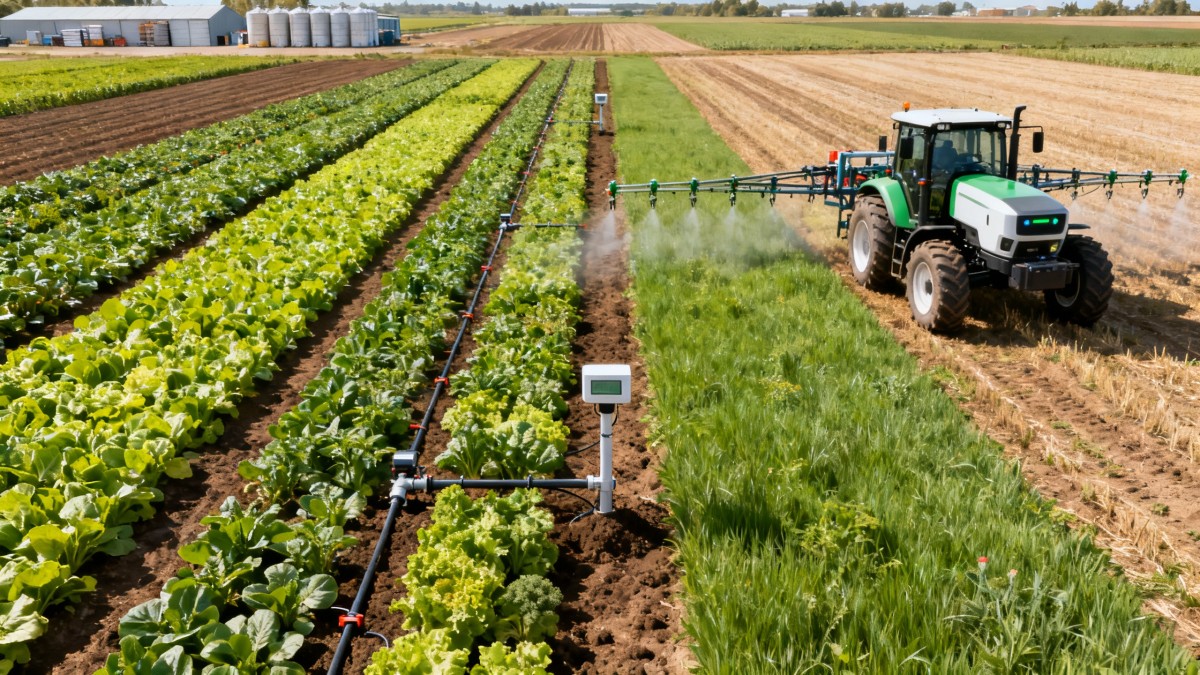
Several market forces are accelerating adoption. First, input prices remain unstable. Fertilizer, crop protection products, fuel, labor, and water all face price pressure in many regions. When costs fluctuate sharply, broad-brush decision-making becomes too expensive. Precision agriculture technology gives managers a way to apply inputs more selectively and defend margins without relying on across-the-board cuts.
Second, data has become more available and easier to use. A few years ago, many precision tools generated information that was difficult to integrate into day-to-day decisions. Today, cloud-based farm management platforms, connected machinery, mobile dashboards, and improved analytics make data faster to interpret and act on. The result is a shorter path from observation to recommendation.
Third, risk management has become more important than maximizing output alone. Extreme weather, shifting pest pressure, and variable soil moisture are making standard input programs less reliable. Enterprises want systems that help them respond in-season instead of waiting until harvest to assess what went wrong. Precision agriculture technology supports more agile decisions by revealing field variability earlier and more clearly.
Finally, sustainability and compliance pressures are growing. Buyers, regulators, lenders, and downstream supply chain partners increasingly expect proof of responsible input use. Precision tools can help document application rates, support nutrient stewardship, reduce unnecessary chemical use, and create a stronger audit trail. For many agribusinesses, that reporting value is becoming nearly as important as the operational benefit.
What enterprise decision-makers care about most
Corporate leaders do not invest in agricultural technology simply because it is innovative. They invest when it solves a costly problem or creates a durable advantage. In the case of precision agriculture technology, the main concerns usually fall into five areas: return on investment, speed of implementation, data reliability, interoperability, and scalability across locations.
Return on investment is the first filter. Decision-makers want to know whether the technology can reduce input waste, improve yield consistency, or strengthen gross margin per hectare or acre. They are also looking beyond a single season. A credible investment case should include direct savings, productivity gains, risk reduction, and possible commercial benefits such as stronger sustainability positioning or better supplier relationships.
Implementation speed matters because agribusiness calendars are unforgiving. If a solution requires extensive setup, specialized staff, or major equipment changes, adoption slows. Leaders tend to favor tools that fit current operational workflows and can begin delivering value within one season. That is particularly true in large farming groups, contract farming networks, and input distribution businesses where timing is critical.
Data reliability is another major concern. Executives need confidence that the recommendations are based on sound agronomic logic and high-quality data inputs. Poor sensor calibration, inconsistent field mapping, or weak data interpretation can reduce trust quickly. In practice, technology adoption succeeds when digital recommendations are validated against local field knowledge and translated into clear action thresholds.
Interoperability is often underestimated at the buying stage. Many enterprises already use machinery from multiple manufacturers, separate ERP systems, procurement software, and agronomic service providers. If a precision solution cannot connect easily with existing systems, the cost of operational friction may outweigh the expected benefit. That is why platform openness and data compatibility should be treated as strategic criteria, not technical footnotes.
Where precision agriculture technology creates the clearest value
The strongest use cases are often the most practical ones. Variable-rate fertilizer application remains one of the clearest examples. Instead of applying a uniform rate across an entire field, growers can adjust rates according to soil conditions, yield potential, nutrient variability, and crop needs. This can lower waste in low-response zones while preserving or improving performance in high-potential areas.
Seed placement and population management also offer major value. Different field zones do not always support the same plant population or hybrid choice. By aligning seeding decisions more closely with soil characteristics, water availability, and historical performance, enterprises can avoid overinvesting in weaker zones and improve productivity where conditions justify higher input intensity.
Irrigation is another fast-moving area. With water costs rising and climate uncertainty increasing, decision-makers need more precise control over when and where water is applied. Soil moisture sensors, weather-based models, and remote monitoring tools help avoid both under-irrigation and over-irrigation. The business impact can include lower pumping costs, reduced crop stress, and better resource allocation across farms.
Crop protection decisions are also evolving. Precision agriculture technology can support targeted spraying, pest hotspot identification, and better timing based on weather and disease models. This does not only reduce chemical use. It can also improve efficacy by ensuring that applications are made when and where they are most needed. For enterprises operating under residue standards or environmental scrutiny, that precision carries additional value.
Perhaps most importantly, precision technology improves prioritization. Large farm businesses cannot inspect every hectare with equal intensity every day. By highlighting anomalies and response zones, digital tools help managers allocate attention, labor, and capital where they are most likely to produce a return. In complex operations, that management focus is a competitive asset in itself.
How to evaluate ROI without oversimplifying the business case
A common mistake is to assess precision agriculture technology only through immediate input savings. While those savings are important, the full business case is broader. A more useful framework includes four value layers: cost efficiency, yield optimization, operational speed, and strategic resilience.
Cost efficiency is the most visible layer. Reduced fertilizer use, fewer unnecessary passes, lower water consumption, and better chemical targeting can all support margin improvement. These gains are especially meaningful when applied across large acreages or across contract grower networks where even small percentage improvements can translate into substantial annual savings.
Yield optimization is more nuanced. Precision systems do not guarantee higher yields in every field or every season. However, they often improve yield consistency by reducing underperformance in weaker zones and protecting high-potential areas from generic input programs. For enterprise planning, consistency can be just as valuable as peak performance because it improves forecasting and contract reliability.
Operational speed is often overlooked. Faster access to field insights can shorten the time between issue detection and corrective action. In-season responsiveness matters when weather windows are narrow or pest outbreaks are moving quickly. A solution that helps managers make timely decisions may generate more value than one that produces highly detailed reports after the optimal intervention window has passed.
Strategic resilience is the longest-term value layer. Enterprises that use data-driven input strategies tend to become better at planning under uncertainty. They build more accurate field histories, improve supplier discussions, refine budget assumptions, and strengthen scenario analysis. Over time, this can support better capital allocation and more disciplined expansion decisions.
To assess ROI credibly, leaders should compare technology performance across field types, crops, and management zones rather than relying on headline averages. They should also separate first-year implementation effects from normalized performance. A pilot that includes baseline measurement, control blocks, and clear financial metrics will provide a more realistic picture than a broad rollout without structured evaluation.
Key adoption risks and how to reduce them
Despite the promise, adoption can fail if enterprises treat precision agriculture technology as a simple software purchase. One major risk is fragmented deployment. If agronomy teams, machinery operators, procurement managers, and finance leaders do not share the same objectives, the organization may collect data without changing decisions. In that case, the technology becomes a reporting layer rather than a performance driver.
Another risk is choosing tools that are too complex for the operation’s actual needs. Some businesses invest in advanced analytics before establishing clean field boundaries, accurate historical records, or reliable machine data capture. The result is low utilization and internal skepticism. In most cases, it is better to start with a limited number of high-value use cases and expand after early wins are proven.
Vendor dependency is also a concern. Proprietary systems can create lock-in, especially when data portability is limited. Enterprises should ask whether data ownership is clear, whether export options are available, and whether the system can integrate with future tools. Flexibility matters because digital agriculture is evolving quickly, and today’s leading feature may become tomorrow’s baseline expectation.
Human capability cannot be ignored. Even the best recommendations have little value if field teams do not trust them or know how to act on them. Training should focus not only on platform use but also on decision logic. When teams understand why a variable-rate map differs from standard practice and how that links to business outcomes, adoption becomes more durable.
Cybersecurity and data governance are emerging issues as well. Connected equipment, cloud systems, and remote monitoring tools increase digital exposure. Enterprises should include data security, access control, and system reliability in procurement reviews, especially when operating across multiple geographies or managing commercially sensitive production data.
What a practical implementation roadmap looks like
For most agribusinesses, the best implementation strategy is staged rather than all-at-once. The first step is to identify the input categories with the largest cost exposure or the greatest variability in performance. For some operations, that may be fertilizer. For others, water management or crop protection may offer the fastest business return.
The second step is to define decision points clearly. Technology should support a specific operational choice, such as adjusting nitrogen rates, changing irrigation schedules, or targeting fungicide applications. If the decision itself is vague, the data strategy will also become vague. Clear decision points make it easier to evaluate whether the technology is actually improving performance.
The third step is to choose pilot sites that reflect real operational diversity. A pilot should include representative field conditions rather than only high-performing locations. This helps leadership understand where precision agriculture technology works best, where it needs adaptation, and what level of organizational support is required for scaling.
The fourth step is measurement discipline. Enterprises should track baseline input use, yields, timing, labor demands, and gross margin outcomes before and after adoption. They should also document non-financial outcomes such as faster reporting, reduced dispute risk, or improved sustainability documentation. These softer benefits often influence board-level decisions even when they are harder to quantify precisely.
The fifth step is governance. Someone must own the link between data and action. In successful programs, that role is often shared between agronomy leadership, operations management, and finance. Cross-functional review ensures that recommendations are agronomically sound, operationally feasible, and economically justified.
Why this matters for competitive positioning in global agribusiness
Precision agriculture technology is no longer just a farm management tool. It is becoming part of how agribusinesses position themselves in a supply chain that values transparency, efficiency, and resilience. Enterprises that can document smarter input use are often better placed to meet buyer expectations, support ESG narratives, and strengthen commercial relationships with downstream partners.
There is also a trade and market intelligence dimension. As global commodity markets become more sensitive to weather shocks, policy changes, and sustainability standards, businesses with better field-level visibility are more likely to adapt quickly. They can revise sourcing plans earlier, communicate supply expectations with more confidence, and reduce the uncertainty that often weakens pricing and partnership decisions.
For exporters and internationally connected agricultural companies, this capability can support trust. Buyers increasingly want evidence that production systems are modern, traceable, and disciplined. Precision-driven input management contributes to that trust by showing that decisions are based on measurable conditions rather than routine assumptions.
In that sense, the importance of precision agriculture technology goes beyond agronomy. It supports a broader business model in which operational intelligence strengthens market credibility. For companies competing across regions and supply chains, that is a meaningful strategic advantage.
Conclusion: faster input decisions, better business outcomes
Precision agriculture technology is changing input decisions fast because the economics of farming now demand greater precision, speed, and accountability. For business leaders, the opportunity is not simply to digitize field activity. It is to turn variable field conditions into clearer, more profitable decisions about seed, fertilizer, water, and crop protection.
The companies gaining the most value are those that focus on business outcomes first. They prioritize use cases with clear financial impact, build adoption around practical workflows, validate data carefully, and scale only after proving results. In a volatile agricultural environment, that disciplined approach can improve margins, reduce waste, and strengthen strategic resilience.
For enterprise decision-makers, the takeaway is clear: precision agriculture technology should be evaluated not as a standalone innovation, but as a decision system. When implemented well, it helps agribusinesses spend inputs more intelligently, respond to risk earlier, and compete more effectively in both production and global trade.
 How an industrial trade intelligence dashboard can identify new supplier marketsDiscover how an industrial trade intelligence dashboard helps identify new supplier markets by comparing capacity, landed cost, logistics resilience, and compliance risk.
 Which global market entry barriers should exporters assess first?Global market entry barriers exporters should assess first: tariffs, compliance, buyer qualification, logistics, and payment risk. Build a practical strategy for confident market entry.
 How trade data aggregation analytics can reveal emerging supplier marketsTrade data aggregation analytics reveals emerging supplier markets by connecting trade flows, capacity signals, logistics, and compliance insights for smarter sourcing decisions.
 When an export market analysis platform can validate demand in a new marketExport market analysis platform insights help validate new-market demand through buyer fit, regulations, logistics, competition, and profitable entry conditions.
 What is driving the beauty and personal care market in the USA?Beauty and personal care in USA is driven by targeted solutions, selective premiumization, digital discovery, clean-label trust, diverse needs, and compliance. Explore key growth opportunities.
 How trade flow monitoring reports reveal changing regional demandTrade flow monitoring reports reveal changing regional demand through import volumes, sourcing shifts, product mix, logistics signals, and regulatory trends. Explore actionable market insights.
 How international market intelligence for investors reduces market-entry riskInternational market intelligence for investors reduces market-entry risk by validating demand, regulations, logistics, and competition before capital is committed.
 How international sourcing intelligence helps identify supplier risk earlyInternational sourcing intelligence helps businesses spot supplier risks early, protect supply continuity, and make smarter global procurement decisions.
 How trade data aggregation analytics reveals emerging supplier marketsTrade data aggregation analytics reveals emerging supplier markets through export trends, input flows, logistics, and regulatory signals. Discover smarter sourcing insights.
 What industrial cluster monitoring in Vietnam reveals about site riskIndustrial cluster monitoring Vietnam reveals hidden site risks across labor, utilities, logistics, compliance, and supplier dependencies. Make smarter sourcing and expansion decisions.
 Food Technology Trends Reshaping Shelf Life, Safety, and Product InnovationFood technology is reshaping shelf life, safety, and innovation. Discover the trends helping food businesses cut risk, improve compliance, and unlock stronger global market growth.
 How electronics manufacturing services are changing with low-volume demandElectronics manufacturing services are evolving fast with low-volume demand. Learn how agile EMS partners improve flexibility, compliance, sourcing resilience, and speed to market.
 How Can Buyers Reduce Procurement Risks for Electronic Components?How to reduce procurement risks for electronic components: learn how buyers assess traceability, lead times, compliance, and supplier types to avoid costly sourcing mistakes.
 What Sourcing Intelligence India Reveals About Supplier Risk and Cost ShiftsSourcing intelligence India reveals hidden supplier risk, compliance gaps, logistics pressure, and real cost shifts—helping buyers compare vendors smarter and source with more confidence.
 Fashion Trends 2026: Which Materials, Colors, and Silhouettes Are Gaining Ground?Fashion trends 2026 spotlight tactile fabrics, mineral colors, and controlled volume. Explore the materials, shades, and silhouettes shaping smarter, more wearable style.
 Smart Device Market Outlook: Key Growth Drivers, Segments, and Business OpportunitiesSmart device market trends are shifting toward system value, industrial demand, and resilient supply chains. Explore key growth drivers, high-potential segments, and business opportunities.
 How Global Trade Intelligence Services Help B2B Firms Evaluate Markets and SuppliersGlobal trade intelligence services help B2B firms compare suppliers, assess market potential, and uncover compliance, logistics, and pricing risks before costly decisions are made.
 Manufacturing Sector Updates for Investors: What Signals Matter Most in 2025?Manufacturing sector updates for investors in 2025: track orders, margins, supply chains, regulation, and exports to spot resilient manufacturers and smarter investment signals.
 How Energy Market Intelligence Helps Businesses Track Price Risks and Demand ShiftsEnergy market intelligence helps businesses spot price risks, demand shifts, and supply pressure early—improving procurement, resilience, and faster strategic decisions.
 Precision Hardware Tools Market: Key Demand Drivers, Segments, and Growth OutlookPrecision hardware tools market trends are reshaping sourcing, compliance, and automation. Explore key demand drivers, segment shifts, regional supply patterns, and growth opportunities.
 How to Use Customs Import Data to Find Buyers, Track Competitors, and Spot Demand?Customs import data helps you find real buyers, track competitors, and spot demand shifts early. Learn practical ways to turn trade records into smarter global business decisions.





















Global Trade Insights & Industry
Our mission is to empower global exporters and importers with data-driven insights that foster strategic growth.
Search News
Popular Tags
Industry Overview
The global commercial kitchen equipment market is projected to reach $112 billion by 2027. Driven by urbanization, the rise of e-commerce food delivery, and strict hygiene regulations.