

Where agricultural technology is seeing the fastest commercial adoption
Agricultural technology is moving from pilot projects to measurable business adoption, but the pace is not uniform across regions or product categories. For commercial evaluators, understanding where agricultural technology is scaling fastest helps identify stronger demand signals, supplier readiness, investment priorities, and trade opportunities. This article examines the market segments, operational drivers, and supply chain conditions behind the most rapid commercial uptake.
Where Is Agricultural Technology Scaling Fastest in Commercial Terms?
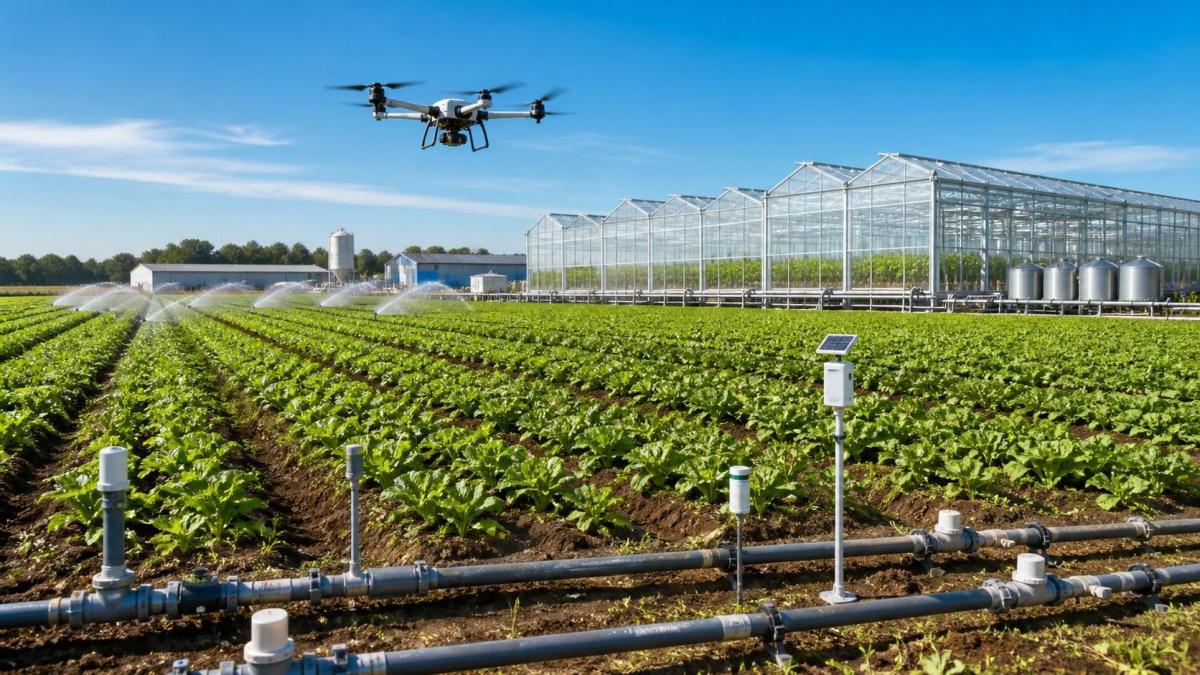
The fastest commercial adoption in agricultural technology is happening where products solve urgent operating problems and deliver clear payback within one or two seasons.
That means adoption is strongest in precision irrigation, controlled environment farming, livestock monitoring, agricultural drones, and digital farm management platforms linked to input efficiency.
These categories are moving faster than more experimental technologies because buyers can connect them directly to labor savings, yield protection, compliance support, and resource control.
For business evaluators, the main conclusion is straightforward. Agricultural technology scales fastest when it reduces uncertainty in production, not when it only promises long-term innovation potential.
Why Some Agricultural Technology Segments Are Commercializing Faster Than Others
Not all agricultural technology categories move at the same speed because farm operators, distributors, and agribusiness investors evaluate them through practical operating economics.
The strongest adoption usually appears in technologies with measurable gains in water use, fertilizer efficiency, crop visibility, labor management, or disease control.
These are not abstract benefits. They affect production costs, input planning, insurance exposure, and the ability to maintain stable output under weather pressure.
Commercial uptake also depends on how easily a technology fits existing farm systems. Equipment and software that integrate into current workflows face fewer barriers.
Where installation, training, or maintenance requirements are too complex, adoption slows even if the technical concept looks strong on paper.
This matters for trade and sourcing decisions. A segment may receive media attention, but that does not mean it has reached broad purchasing readiness.
Business users should therefore distinguish between innovation visibility and procurement reality. The fastest commercial adoption usually happens in solutions already supported by service networks and financing channels.
Precision Irrigation Is One of the Clearest Commercial Winners
Among all agricultural technology categories, precision irrigation shows some of the strongest and most repeatable commercial adoption across different farming regions.
The reason is simple. Water pressure is now a financial issue, a regulatory issue, and a crop reliability issue at the same time.
Systems such as drip irrigation controls, soil moisture sensors, fertigation platforms, and remote irrigation scheduling tools address all three concerns together.
For growers, the value is visible in lower water waste, tighter input control, and better crop consistency. For commercial evaluators, that creates easier return-on-investment analysis.
In regions facing drought, water pricing changes, or export quality pressure, these technologies move from optional upgrades to operating necessities.
Suppliers in this segment also benefit from relatively mature manufacturing and distribution ecosystems. That reduces buyer hesitation and improves project execution.
From a trade intelligence perspective, strong adoption in irrigation-related agricultural technology often signals broader modernization in high-value crops and greenhouse production.
Controlled Environment Agriculture Is Expanding Where Supply Stability Matters Most
Controlled environment agriculture, including greenhouse automation, vertical farming systems, climate controls, and sensor-based crop monitoring, is seeing fast uptake in selected markets.
This does not mean all indoor farming models are scaling equally. The strongest commercial adoption appears where supply stability and land constraints justify higher capital intensity.
Examples include urban food systems, premium produce supply chains, and regions with severe climate volatility or limited arable land.
What makes this agricultural technology commercially attractive is not only productivity. It also supports predictable output, quality consistency, and traceability.
Those attributes matter to retailers, foodservice buyers, and import-dependent markets that cannot tolerate frequent supply swings.
For evaluators, the key is to separate infrastructure-heavy concepts from commercially disciplined operating models. Faster adoption tends to favor modular greenhouse systems and automation components with proven deployment history.
That includes lighting controls, nutrient dosing systems, environmental sensors, ventilation automation, and crop management software tied to measurable operating benchmarks.
Livestock Technology Is Advancing Quickly Because It Protects Margin and Biosecurity
In livestock systems, agricultural technology is gaining commercial traction because disease risk, feed cost, and labor shortages have become more difficult to manage manually.
Rapidly adopted solutions include animal health sensors, automated feeding systems, climate monitoring, milking automation, and traceability tools.
These systems help operators detect health issues earlier, improve feed conversion oversight, and maintain more stable production performance.
Commercial adoption is especially strong in poultry, dairy, and swine sectors where scale, biosecurity, and performance metrics are closely monitored.
For business buyers and market analysts, livestock technology often has a clearer purchasing logic than many crop-side innovations because operational data is easier to standardize.
There is also strong regulatory relevance. Traceability and animal welfare expectations are shaping investment decisions across many export-oriented livestock supply chains.
As a result, agricultural technology vendors serving livestock markets often benefit from both productivity demand and compliance-driven demand at the same time.
Agricultural Drones and Remote Sensing Are Growing Fast Where Labor and Visibility Are Constraints
Agricultural drones have moved beyond demonstration status in many crop systems, especially where field coverage, spraying precision, and scouting efficiency matter commercially.
The strongest adoption is appearing in large farms, specialty crops, and regions where labor access is unreliable or costly.
Drones are being used for crop imaging, variable application support, field surveillance, and in some markets, direct spraying operations.
The reason this agricultural technology is commercializing faster than expected is that it solves a visibility problem. Operators can inspect more land with less delay.
That creates practical value during pest outbreaks, irrigation failures, uneven growth conditions, and harvest planning periods.
However, adoption speed is highly sensitive to regulation, pilot certification, local service availability, and battery or payload performance.
For commercial evaluators, this is a category where regional policy conditions matter as much as product capability. Market attractiveness depends on the full operating environment, not only the hardware.
Digital Farm Management Platforms Are Scaling When They Connect to Input and Procurement Decisions
Farm software is often discussed as a broad digital trend, but commercial adoption is strongest in platforms linked to actual purchasing and operating decisions.
That includes tools for field records, input planning, traceability, equipment scheduling, compliance reporting, and yield mapping linked to agronomic actions.
Software adoption accelerates when it helps users reduce waste, prepare audits, document production history, or coordinate with suppliers and buyers.
By contrast, systems offering only general dashboards without workflow relevance tend to face weaker long-term engagement.
For business audiences, this distinction matters. A digital platform becomes commercially valuable when it supports decisions across seed, fertilizer, crop protection, irrigation, logistics, and sales planning.
That makes digital agricultural technology more attractive in markets where export standards, retailer reporting, or contract farming structures require better documentation.
It also creates trade opportunities for integrated vendors that can connect software with equipment, sensors, or advisory services rather than selling a standalone application.
What Commercial Evaluators Should Watch Beyond Technology Claims
For a business evaluator, the critical question is not whether a technology appears advanced. The real question is whether adoption conditions support sustained purchasing.
Several signals are especially useful. One is repeat ordering from distributors or farm groups rather than one-time project installations.
Another is after-sales capability. Agricultural technology with weak training, spare parts access, or local maintenance support often struggles to scale commercially.
Financing structure is another indicator. Technologies adopted through leasing, service contracts, or input-linked financing often gain traction faster than products requiring large upfront payments.
Buyers should also assess interoperability. Products that connect with existing irrigation systems, machinery fleets, livestock operations, or data platforms usually face lower market resistance.
In international trade, certification and regulatory alignment are equally important. Importers increasingly look for product reliability, safety documentation, environmental performance, and installation support.
These factors help distinguish commercially durable agricultural technology from categories that are growing mainly through short-term policy attention or marketing momentum.
Regional Differences Matter More Than General Market Narratives
Commercial adoption of agricultural technology is not moving uniformly across the global market. Regional operating conditions shape demand far more than broad global headlines suggest.
Water-stressed regions often prioritize irrigation and moisture management systems. Labor-constrained markets may move faster on automation, drones, and livestock monitoring.
Import-dependent food systems may invest more aggressively in greenhouse technologies and controlled production environments. Export-oriented producers may prioritize traceability and compliance tools.
Infrastructure also affects adoption. Markets with stronger dealer networks, technician availability, and financing channels can commercialize technology faster even when farm conditions are similar.
For GTIIN-style business analysis, this means agricultural technology should be evaluated through specific regional demand structures rather than through a single global growth narrative.
The most useful market judgments come from connecting farm economics, regulatory pressure, logistics support, and supplier readiness into one commercial picture.
How to Evaluate the Strongest Trade and Investment Opportunities
For sourcing teams, investors, distributors, and industrial market analysts, the best opportunities are usually found where adoption speed meets operational repeatability.
That means focusing on categories with proven demand, clear service models, replacement cycles, and growing buyer sophistication.
Precision irrigation components, livestock monitoring systems, greenhouse automation equipment, drone service ecosystems, and compliance-linked farm software fit that profile in many markets.
Evaluation should include more than sales growth. Teams should review manufacturing depth, spare parts logic, technical training requirements, warranty structure, and regional channel strength.
It is also useful to examine whether demand comes from subsidy dependence or from direct operating need. The latter usually creates more resilient long-term business value.
Companies entering this space should pay close attention to buyer language. Commercial buyers respond better to cost control, reliability, labor efficiency, and compliance readiness than to broad innovation branding.
In other words, the strongest agricultural technology opportunities are usually explained through business outcomes, not through technology vocabulary alone.
Conclusion
The fastest commercial adoption in agricultural technology is concentrated in categories that solve immediate production and operating problems with visible economic returns.
Precision irrigation, controlled environment systems, livestock monitoring, agricultural drones, and decision-linked digital platforms are leading because they address real commercial pressure.
For business evaluators, the central task is to identify where market demand is supported by supplier readiness, financing access, service capability, and regulatory fit.
That approach leads to more reliable judgments than following innovation headlines alone. In agricultural technology, the strongest market signals come from practical deployment conditions and repeatable user value.
As global food systems face tighter resource constraints, higher compliance expectations, and greater supply uncertainty, the commercial role of agricultural technology will continue to expand.
The best opportunities will emerge in segments where technology is already proving its value in day-to-day operations and where cross-border trade can support broader market scaling.
 What industrial trade intelligence pricing should include before you subscribeIndustrial trade intelligence pricing explained: compare coverage, data quality, access rights, and workflow value before choosing a subscription that supports smarter trade decisions.
 How an industrial trade intelligence dashboard can identify new supplier marketsDiscover how an industrial trade intelligence dashboard helps identify new supplier markets by comparing capacity, landed cost, logistics resilience, and compliance risk.
 Which global market entry barriers should exporters assess first?Global market entry barriers exporters should assess first: tariffs, compliance, buyer qualification, logistics, and payment risk. Build a practical strategy for confident market entry.
 How trade data aggregation analytics can reveal emerging supplier marketsTrade data aggregation analytics reveals emerging supplier markets by connecting trade flows, capacity signals, logistics, and compliance insights for smarter sourcing decisions.
 When an export market analysis platform can validate demand in a new marketExport market analysis platform insights help validate new-market demand through buyer fit, regulations, logistics, competition, and profitable entry conditions.
 What is driving the beauty and personal care market in the USA?Beauty and personal care in USA is driven by targeted solutions, selective premiumization, digital discovery, clean-label trust, diverse needs, and compliance. Explore key growth opportunities.
 How trade flow monitoring reports reveal changing regional demandTrade flow monitoring reports reveal changing regional demand through import volumes, sourcing shifts, product mix, logistics signals, and regulatory trends. Explore actionable market insights.
 How international market intelligence for investors reduces market-entry riskInternational market intelligence for investors reduces market-entry risk by validating demand, regulations, logistics, and competition before capital is committed.
 How international sourcing intelligence helps identify supplier risk earlyInternational sourcing intelligence helps businesses spot supplier risks early, protect supply continuity, and make smarter global procurement decisions.
 How trade data aggregation analytics reveals emerging supplier marketsTrade data aggregation analytics reveals emerging supplier markets through export trends, input flows, logistics, and regulatory signals. Discover smarter sourcing insights.
 What industrial cluster monitoring in Vietnam reveals about site riskIndustrial cluster monitoring Vietnam reveals hidden site risks across labor, utilities, logistics, compliance, and supplier dependencies. Make smarter sourcing and expansion decisions.
 Food Technology Trends Reshaping Shelf Life, Safety, and Product InnovationFood technology is reshaping shelf life, safety, and innovation. Discover the trends helping food businesses cut risk, improve compliance, and unlock stronger global market growth.
 How electronics manufacturing services are changing with low-volume demandElectronics manufacturing services are evolving fast with low-volume demand. Learn how agile EMS partners improve flexibility, compliance, sourcing resilience, and speed to market.
 How Can Buyers Reduce Procurement Risks for Electronic Components?How to reduce procurement risks for electronic components: learn how buyers assess traceability, lead times, compliance, and supplier types to avoid costly sourcing mistakes.
 What Sourcing Intelligence India Reveals About Supplier Risk and Cost ShiftsSourcing intelligence India reveals hidden supplier risk, compliance gaps, logistics pressure, and real cost shifts—helping buyers compare vendors smarter and source with more confidence.
 Fashion Trends 2026: Which Materials, Colors, and Silhouettes Are Gaining Ground?Fashion trends 2026 spotlight tactile fabrics, mineral colors, and controlled volume. Explore the materials, shades, and silhouettes shaping smarter, more wearable style.
 Smart Device Market Outlook: Key Growth Drivers, Segments, and Business OpportunitiesSmart device market trends are shifting toward system value, industrial demand, and resilient supply chains. Explore key growth drivers, high-potential segments, and business opportunities.
 How Global Trade Intelligence Services Help B2B Firms Evaluate Markets and SuppliersGlobal trade intelligence services help B2B firms compare suppliers, assess market potential, and uncover compliance, logistics, and pricing risks before costly decisions are made.
 Manufacturing Sector Updates for Investors: What Signals Matter Most in 2025?Manufacturing sector updates for investors in 2025: track orders, margins, supply chains, regulation, and exports to spot resilient manufacturers and smarter investment signals.
 How Energy Market Intelligence Helps Businesses Track Price Risks and Demand ShiftsEnergy market intelligence helps businesses spot price risks, demand shifts, and supply pressure early—improving procurement, resilience, and faster strategic decisions.
 Precision Hardware Tools Market: Key Demand Drivers, Segments, and Growth OutlookPrecision hardware tools market trends are reshaping sourcing, compliance, and automation. Explore key demand drivers, segment shifts, regional supply patterns, and growth opportunities.





















Global Trade Insights & Industry
Our mission is to empower global exporters and importers with data-driven insights that foster strategic growth.
Search News
Popular Tags
Industry Overview
The global commercial kitchen equipment market is projected to reach $112 billion by 2027. Driven by urbanization, the rise of e-commerce food delivery, and strict hygiene regulations.