

How wastewater treatment equipment sizing affects operating cost
Choosing the right wastewater treatment equipment size is not just an engineering issue—it directly shapes energy use, chemical consumption, maintenance frequency, and long-term operating cost. For business decision-makers, understanding how wastewater treatment equipment sizing affects efficiency, compliance, and capacity planning is essential to avoiding overspending while maintaining reliable treatment performance.
Why Equipment Sizing Has a Direct Impact on Operating Cost
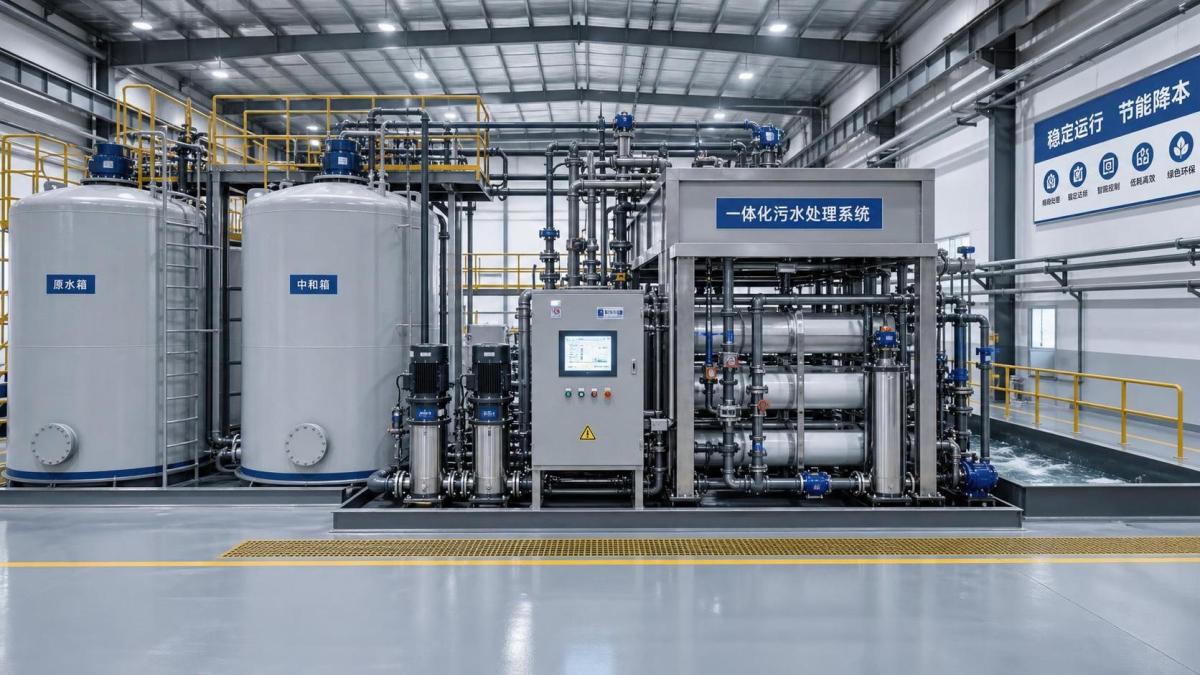
When companies evaluate wastewater treatment equipment, purchase price often gets more attention than lifecycle cost. In practice, however, sizing decisions strongly influence the daily economics of the entire treatment system.
An undersized system typically runs close to its maximum limit for long periods. That raises energy demand, increases component wear, reduces treatment stability, and leaves little buffer for production peaks or influent changes.
An oversized system creates a different problem. It may appear safer during procurement, but it often leads to low-load operation, wasted pumping energy, poor process efficiency, and unnecessary capital tied up in idle capacity.
For business decision-makers, the key point is straightforward: wastewater treatment equipment sizing is not only about whether the system can treat water, but whether it can do so economically over time.
What Business Buyers Are Really Trying to Avoid
Most enterprise buyers are not searching for sizing theory alone. They want to avoid expensive mistakes that continue long after installation and affect operating budgets, compliance risk, and production continuity.
One common concern is paying for capacity that the facility may never use. Another is selecting a smaller system based on average flow, only to face discharge violations during high-load periods.
Decision-makers also worry about hidden operating costs. These include electricity, chemical dosing, sludge handling, membrane cleaning, spare parts, labor time, and emergency service when equipment is stressed beyond its intended range.
In many cases, the wrong size does not fail immediately. Instead, it creates a pattern of recurring inefficiency that slowly increases cost per cubic meter of treated water.
How Undersized Wastewater Treatment Equipment Increases Cost
Undersizing usually begins with an incomplete view of plant conditions. A system may be selected using average daily flow while ignoring peak discharge, seasonal variation, contaminant spikes, or future production expansion.
Once installed, undersized wastewater treatment equipment often operates with longer run times and more frequent cycling. Pumps, blowers, and dosing systems work harder, which increases electricity consumption and accelerates maintenance needs.
Process performance can also become unstable. Biological treatment may not have enough retention time. Filtration stages may clog faster. Clarification quality may decline when hydraulic loading rises above design assumptions.
That instability affects more than utility bills. It can lead to off-spec discharge, higher surcharge fees, permit violations, emergency outsourcing, or unplanned production slowdowns if wastewater cannot be processed reliably.
In sectors with fluctuating output, such as food processing, chemical manufacturing, metal finishing, and textile production, undersizing can become especially expensive because wastewater quality changes as production changes.
How Oversized Systems Also Create Inefficiency
Some companies assume it is safer to buy a much larger system than needed. This can reduce short-term anxiety, but it does not always produce lower operating cost or better treatment performance.
Oversized tanks, pumps, and blowers may consume more energy than necessary, especially when they are not equipped with effective variable-speed control. A larger footprint also increases installation, cleaning, inspection, and replacement cost.
In biological treatment, low-load conditions can reduce process efficiency. Microbial systems perform best within a reasonable design window. If loading remains too low, treatment stability can suffer rather than improve.
Oversizing can also distort return on investment. The business pays upfront for capacity that may remain unused for years, while maintenance teams still need to service equipment across the full installed system.
For capital-intensive operations, that matters. Money tied up in unnecessary wastewater treatment equipment could have been allocated to production upgrades, energy efficiency projects, or supply chain resilience investments.
The Cost Drivers That Sizing Decisions Influence Most
To evaluate sizing properly, decision-makers should focus on the cost categories most affected by system scale and load matching. These drivers shape the true operating profile more than nameplate capacity alone.
Energy is usually the first major factor. Pumps, aeration systems, mixers, presses, and membrane units all respond to hydraulic and contaminant loading. Poor sizing often means these assets operate outside their efficient range.
Chemical consumption is another major variable. Coagulants, flocculants, pH control agents, antiscalants, and cleaning chemicals often rise when process conditions are unstable or when treatment stages are forced to compensate for poor sizing.
Maintenance cost follows closely. Equipment that cycles too frequently or operates continuously near capacity typically requires more repairs, more downtime, and faster replacement of wear components.
Sludge management should not be overlooked. Inefficient process control can increase solids production, dewatering demand, hauling frequency, and disposal expense. These downstream costs are often underestimated during purchasing.
Labor efficiency also changes with sizing quality. A well-matched system usually needs less operator intervention, fewer manual adjustments, and fewer emergency responses, which improves total operating discipline.
How to Size for Real Operating Conditions, Not Just Design Numbers
Companies make better decisions when they size systems around actual operating patterns instead of simplified averages. That requires a more practical data set during supplier evaluation and project planning.
Start with flow profile, not only daily volume. Peak hourly discharge, shift-based variation, cleaning cycles, batch discharge, and stormwater interaction can all affect how wastewater treatment equipment should be selected.
Then assess wastewater composition in realistic terms. Chemical oxygen demand, biological oxygen demand, suspended solids, oil, grease, heavy metals, salinity, temperature, and pH variation all influence process design and equipment loading.
Future capacity should also be handled carefully. Expansion planning is valid, but it should be based on probable production scenarios rather than broad assumptions that automatically push the project toward oversizing.
In many cases, modular design is a more economical answer than installing full future capacity on day one. This approach supports expansion while keeping current operating cost aligned with present demand.
Questions Decision-Makers Should Ask Equipment Suppliers
Enterprise buyers do not need to perform detailed engineering themselves, but they do need enough commercial and technical clarity to judge whether a sizing proposal is credible.
Ask suppliers which operating assumptions were used. Clarify whether sizing is based on average flow, peak flow, peak contaminant load, or a combination of all three.
Request an estimate of operating cost under different load conditions. A serious supplier should be able to explain expected energy use, chemical demand, sludge output, and maintenance frequency across a realistic operating range.
It is also useful to ask how the system performs below design load. This is especially important for facilities with seasonal output, phased production ramp-up, or uncertain near-term utilization.
Buyers should also ask whether the proposed wastewater treatment equipment can be expanded modularly, integrated with automation, or optimized with variable-frequency drives and control systems.
Finally, request references from facilities with a similar wastewater profile rather than only a similar industry name. Two factories in the same sector may produce very different hydraulic and contaminant loads.
Balancing Compliance, Cost, and Growth
For many businesses, compliance is the non-negotiable boundary. The system must meet discharge requirements consistently, even when operating conditions fluctuate. But compliance alone is not a complete procurement strategy.
The stronger objective is to meet compliance with the lowest sustainable lifecycle cost. That means building enough resilience for peaks and variability without locking the business into structurally inefficient daily operation.
In sectors exposed to changing regulation, export customer audits, or ESG reporting pressure, wastewater treatment equipment sizing also affects how credibly a company can demonstrate environmental control and operating discipline.
This is particularly relevant for manufacturers serving international buyers. Environmental performance increasingly influences supplier qualification, customer confidence, and long-term access to regulated markets.
When the Lowest Purchase Price Becomes the Highest Long-Term Cost
Low-price quotations can look attractive during procurement, especially when wastewater treatment is treated as a support function rather than a strategic operating asset. That is often where sizing mistakes begin.
A lower-priced system may reflect smaller tanks, reduced treatment stages, lower-grade components, or narrow operating assumptions. Those choices can reduce initial capital cost while increasing long-term operating burden.
Over time, the cost gap may reverse completely. Higher energy use, extra chemicals, unplanned service, compliance issues, and early retrofits can make a cheaper system far more expensive than a better-sized alternative.
For decision-makers, the more reliable comparison is not bid price alone, but total cost of ownership across expected operating conditions over several years.
Conclusion: Good Sizing Protects Both Margins and Reliability
How wastewater treatment equipment sizing affects operating cost comes down to one principle: treatment systems perform best when their capacity matches real operating conditions with a sensible margin for variation and growth.
If the system is too small, businesses pay through stress, instability, and compliance risk. If it is too large, they pay through idle capacity, lower efficiency, and unnecessary capital and maintenance expense.
For enterprise decision-makers, the best approach is to evaluate wastewater treatment equipment through lifecycle economics, process stability, and realistic production scenarios rather than simple nameplate size or lowest purchase price.
That shift in perspective leads to better supplier discussions, stronger investment decisions, and a treatment system that supports both operational control and long-term business competitiveness.
 Which global manufacturing trends by sector matter most for sourcing plans?Global manufacturing trends by sector: identify sourcing risks, supplier resilience, compliance demands, and cost drivers to build smarter, more reliable procurement plans.
 What industrial trade intelligence pricing should include before you subscribeIndustrial trade intelligence pricing explained: compare coverage, data quality, access rights, and workflow value before choosing a subscription that supports smarter trade decisions.
 How an industrial trade intelligence dashboard can identify new supplier marketsDiscover how an industrial trade intelligence dashboard helps identify new supplier markets by comparing capacity, landed cost, logistics resilience, and compliance risk.
 Which global market entry barriers should exporters assess first?Global market entry barriers exporters should assess first: tariffs, compliance, buyer qualification, logistics, and payment risk. Build a practical strategy for confident market entry.
 How trade data aggregation analytics can reveal emerging supplier marketsTrade data aggregation analytics reveals emerging supplier markets by connecting trade flows, capacity signals, logistics, and compliance insights for smarter sourcing decisions.
 When an export market analysis platform can validate demand in a new marketExport market analysis platform insights help validate new-market demand through buyer fit, regulations, logistics, competition, and profitable entry conditions.
 What is driving the beauty and personal care market in the USA?Beauty and personal care in USA is driven by targeted solutions, selective premiumization, digital discovery, clean-label trust, diverse needs, and compliance. Explore key growth opportunities.
 How trade flow monitoring reports reveal changing regional demandTrade flow monitoring reports reveal changing regional demand through import volumes, sourcing shifts, product mix, logistics signals, and regulatory trends. Explore actionable market insights.
 How international market intelligence for investors reduces market-entry riskInternational market intelligence for investors reduces market-entry risk by validating demand, regulations, logistics, and competition before capital is committed.
 How international sourcing intelligence helps identify supplier risk earlyInternational sourcing intelligence helps businesses spot supplier risks early, protect supply continuity, and make smarter global procurement decisions.
 How trade data aggregation analytics reveals emerging supplier marketsTrade data aggregation analytics reveals emerging supplier markets through export trends, input flows, logistics, and regulatory signals. Discover smarter sourcing insights.
 What industrial cluster monitoring in Vietnam reveals about site riskIndustrial cluster monitoring Vietnam reveals hidden site risks across labor, utilities, logistics, compliance, and supplier dependencies. Make smarter sourcing and expansion decisions.
 Food Technology Trends Reshaping Shelf Life, Safety, and Product InnovationFood technology is reshaping shelf life, safety, and innovation. Discover the trends helping food businesses cut risk, improve compliance, and unlock stronger global market growth.
 How electronics manufacturing services are changing with low-volume demandElectronics manufacturing services are evolving fast with low-volume demand. Learn how agile EMS partners improve flexibility, compliance, sourcing resilience, and speed to market.
 How Can Buyers Reduce Procurement Risks for Electronic Components?How to reduce procurement risks for electronic components: learn how buyers assess traceability, lead times, compliance, and supplier types to avoid costly sourcing mistakes.
 What Sourcing Intelligence India Reveals About Supplier Risk and Cost ShiftsSourcing intelligence India reveals hidden supplier risk, compliance gaps, logistics pressure, and real cost shifts—helping buyers compare vendors smarter and source with more confidence.
 Fashion Trends 2026: Which Materials, Colors, and Silhouettes Are Gaining Ground?Fashion trends 2026 spotlight tactile fabrics, mineral colors, and controlled volume. Explore the materials, shades, and silhouettes shaping smarter, more wearable style.
 Smart Device Market Outlook: Key Growth Drivers, Segments, and Business OpportunitiesSmart device market trends are shifting toward system value, industrial demand, and resilient supply chains. Explore key growth drivers, high-potential segments, and business opportunities.
 How Global Trade Intelligence Services Help B2B Firms Evaluate Markets and SuppliersGlobal trade intelligence services help B2B firms compare suppliers, assess market potential, and uncover compliance, logistics, and pricing risks before costly decisions are made.
 Manufacturing Sector Updates for Investors: What Signals Matter Most in 2025?Manufacturing sector updates for investors in 2025: track orders, margins, supply chains, regulation, and exports to spot resilient manufacturers and smarter investment signals.
 How Energy Market Intelligence Helps Businesses Track Price Risks and Demand ShiftsEnergy market intelligence helps businesses spot price risks, demand shifts, and supply pressure early—improving procurement, resilience, and faster strategic decisions.





















Global Trade Insights & Industry
Our mission is to empower global exporters and importers with data-driven insights that foster strategic growth.
Search News
Popular Tags
Industry Overview
The global commercial kitchen equipment market is projected to reach $112 billion by 2027. Driven by urbanization, the rise of e-commerce food delivery, and strict hygiene regulations.