

How to Choose Educational Toys by Age and Skill Level
[Technical Procurement Intelligence Summary]:Choosing the right Educational Toys is easier when you match play to a child’s age, interests, and developing abilities. From sensory toys for toddlers to STEM kits for older kids, the best options encourage learning without causing frustration. This guide will help parents and gift buyers understand how skill level, safety, and play value work together to support confident, meaningful growth.
For families, that decision often feels simple until they face dozens of options claiming to boost creativity, logic, language, or motor development. In reality, strong toy selection depends on 3 connected factors: age suitability, current skill level, and safe, durable design.
For buyers in the wider consumer goods and educational supplies market, Educational Toys also reflect broader concerns such as product safety, material quality, realistic learning outcomes, and long-term play value. A good choice is not always the most complex toy. It is the one a child can use with confidence, interest, and room to grow.
Why Age and Skill Level Matter When Choosing Educational Toys
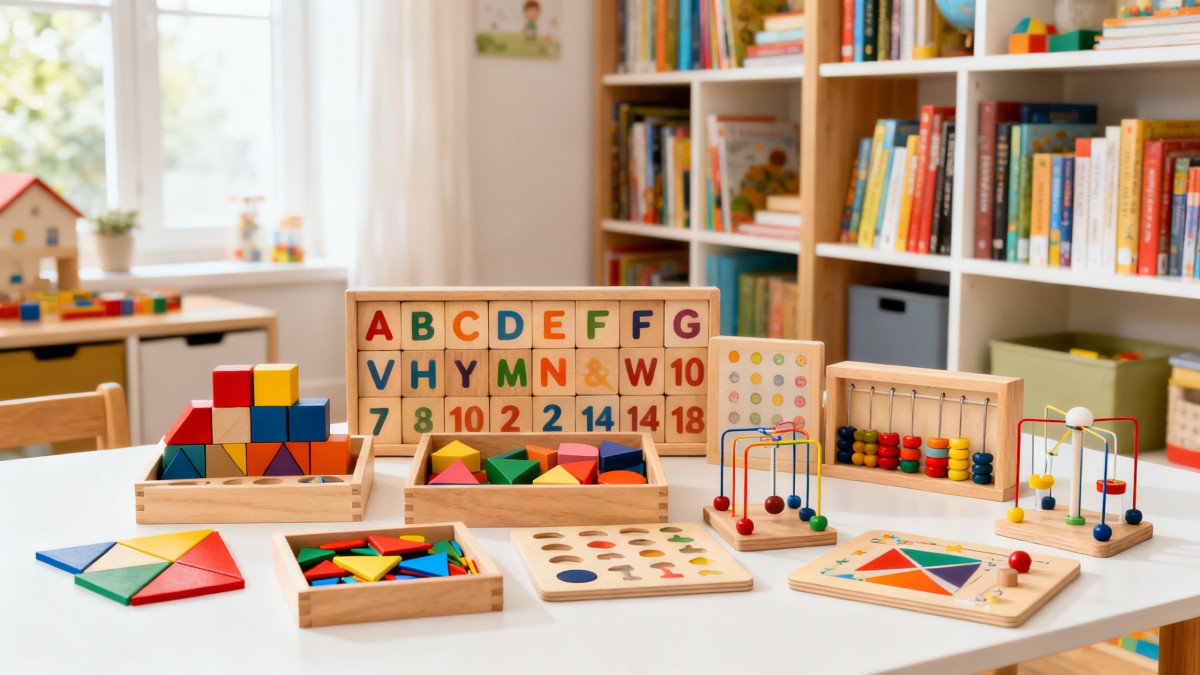
Children do not learn in a straight line. Two 4-year-olds may differ widely in language, focus, hand strength, or problem-solving ability. That is why Educational Toys should be chosen by both age range and observed readiness, not by packaging claims alone.
A toy designed for an older child may create frustration within 5 to 10 minutes if the instructions, parts, or challenges are too advanced. On the other hand, a toy that is too easy may lose its value after 2 or 3 uses. The best learning tools sit in the middle: challenging enough to build skills, but accessible enough to keep play enjoyable.
Development Is Not the Same at Every Stage
In early childhood, toy value often depends on sensory exploration, repetition, and basic cause-and-effect. Between ages 1 and 3, children usually benefit from simple stacking, shape matching, push-and-pull action, and sound response. These functions support coordination, attention span, and early vocabulary.
From ages 4 to 6, many children begin handling more structured tasks, such as counting, letter recognition, sorting by rule, and following 2-step to 3-step instructions. At this stage, Educational Toys often work best when they combine learning with visible goals, such as completing a puzzle, building a scene, or matching patterns.
By ages 7 to 9, children usually show stronger concentration and can manage multi-part construction, beginner science kits, coding logic games, and board games with rules. From 10 years and up, many are ready for STEM kits, advanced craft systems, robotics, strategic thinking games, and deeper subject-based learning.
Key Signs a Toy Matches a Child Well
- They can begin playing within 3 to 8 minutes with light guidance.
- They stay engaged for at least 10 to 20 minutes, depending on age.
- They can repeat the activity and still discover a new outcome.
- They feel challenged, but not defeated, by the task.
- They use the toy in more than 1 way, showing flexible thinking.
The table below shows a practical age-and-skill framework that can help parents and gift buyers narrow down Educational Toys by real-world developmental use rather than marketing language.
The main lesson is simple: age labels provide a starting point, but actual skill readiness gives the better final answer. In most cases, the strongest Educational Toys offer 1 core skill, 1 stretch skill, and enough replay value to remain useful for 6 to 12 months.
Common Buying Mistakes to Avoid
Choosing for ambition instead of ability
Many adults buy for the skill they want a child to develop next, rather than the one the child can practice now. Stretching ability is helpful, but too large a gap can reduce confidence and make learning feel like pressure.
Focusing only on academic labels
A toy does not need to display math, literacy, or science branding to be educational. Open-ended building sets, pretend play kits, and pattern games can improve planning, language, memory, and social interaction just as effectively.
Ignoring safety details
Children under 3 need special attention to small parts, detachable magnets, sharp edges, and fragile components. Even for older children, battery access, material finish, and structural strength should be checked before purchase.
How to Evaluate Educational Toys Before You Buy
Whether shopping online, in-store, or comparing products across consumer goods suppliers, buyers can use a 5-point evaluation method. This reduces guesswork and helps separate toys with real educational value from items that only look impressive in packaging photos.
The 5-Point Selection Method
- Check the age recommendation and compare it with the child’s current ability.
- Look for 1 or 2 clear learning outcomes, not a long list of vague claims.
- Review material quality, edge finish, part size, and durability.
- Estimate likely engagement time, such as 10 minutes, 20 minutes, or repeated sessions.
- Ask whether the toy supports solo play, guided play, or group play.
This method works well because it balances development, safety, and actual household use. A toy may be beautifully designed, but if setup takes 15 steps, needs constant adult correction, or breaks after a few sessions, its long-term value drops quickly.
Materials, Construction, and Safety Priorities
In the gifts, toys, and educational supplies segment, material quality has a direct impact on user trust. Parents typically expect smooth edges, secure joints, clear instructions, and easy cleaning. Wooden Educational Toys should have consistent finishing without splinters, while plastic items should feel sturdy rather than brittle.
For young children, larger pieces are often safer and easier to manipulate. For older age groups, parts can be smaller and more technical, but they still need organized packaging and clear assembly logic. In practical terms, a toy with 20 to 50 pieces should include a straightforward sorting system or labeled steps.
The following comparison table helps families and gift buyers assess Educational Toys through purchase-focused criteria that matter in real use, not just on product pages.
A useful buying rule is to prioritize toys that perform well across at least 4 criteria: age fit, safety, replay value, and skill relevance. If one of these is weak, the toy may still be attractive, but it is less likely to remain meaningful after the first week.
How Interests Change the Right Choice
Skill level matters, but motivation drives repeated play. A child who loves animals may learn counting faster through sorting farm figures than through flashcards. A child who enjoys building may practice spatial reasoning more willingly through blocks or magnetic construction than through a workbook.
That is why Educational Toys should connect learning goals with visible interest areas such as vehicles, art, music, nature, cooking, stories, or science. When a toy matches both interest and ability, engagement often doubles compared with a purely age-matched but emotionally neutral option.
Best Educational Toys by Age Group and Use Scenario
Different family situations require different toy profiles. Some buyers want quiet, independent play. Others need travel-friendly items, sibling-sharing options, or gifts that feel substantial without being too advanced. Looking at use scenarios helps refine the final decision.
Toddlers Ages 1–3: Sensory and Motor Foundations
At this stage, Educational Toys should focus on touch, movement, sound, and simple problem solving. Good choices include stackers, nesting toys, soft activity boards, large knobs, and push toys. Sessions are usually short, often 5 to 15 minutes, so simplicity supports success.
Avoid products with too many lights, layered instructions, or fragile parts. Children in this group learn best through direct repetition and sensory consistency rather than feature-heavy design.
Preschoolers Ages 4–6: Language, Counting, and Imagination
This is often the strongest market for Educational Toys because children are ready for structured play but still enjoy hands-on discovery. Look for letter puzzles, sequencing cards, pretend play kits, beginner board games, and construction sets with 10 to 30 pieces.
A good preschool toy should support at least 2 learning modes, such as counting and sorting, or storytelling and memory. This improves value and keeps the toy relevant as skills develop over the next 6 to 9 months.
School-Age Children 7–9: Logic and Independent Practice
Many children in this range benefit from more challenge-based Educational Toys. Strong options include beginner science kits, map puzzles, coding games, engineering builds, and cooperative strategy games. Attention span may extend to 20 to 40 minutes when the task feels achievable.
Parents should still check whether instructions are visual enough and whether adult support is needed. A toy that claims independence but requires constant setup may disappoint both child and buyer.
Ages 10 and Up: Deeper STEM, Strategy, and Creative Systems
Older children often want Educational Toys that feel more like projects than toys. Robotics, advanced craft kits, circuit activities, model design, and strategy games work well when they offer visible progress over several sessions instead of one quick outcome.
At this level, challenge becomes a selling point, but clarity still matters. Kits with 30 to 100 parts should include step-by-step logic, durable storage, and enough guidance to avoid early abandonment.
Buying Tips for Parents, Gift Buyers, and Consumer Product Decision-Making
In the broader gifts and toys market, purchasing Educational Toys is not only about developmental theory. It is also about usability, budget efficiency, and confidence in product claims. Buyers can improve decisions by using a short screening process before checkout.
A Practical 4-Step Screening Process
- Start with the child’s current age band and strongest interest category.
- Check whether the toy trains 1 priority skill and 1 support skill.
- Review safety, materials, and part complexity within 2 minutes of product inspection.
- Choose items with repeat use potential over one-time novelty appeal.
This process is especially useful when buying for birthdays, holidays, or school-related gifting, where the buyer may not know the child’s exact developmental stage. It reduces mismatch risk and increases the chance that the toy will be opened, used, and remembered.
When Price and Value Do Not Mean the Same Thing
Higher price does not always mean better educational impact. A well-designed sorting set or storytelling game may outperform a more expensive electronic product if it offers clearer skill practice and better replay. Value should be measured across 3 points: learning depth, durability, and reuse frequency.
As a practical benchmark, a toy used once a week for 6 months usually provides stronger value than a flashy item used intensely for 2 days and then forgotten. This is one reason many experienced buyers favor open-ended, modular Educational Toys over fixed single-outcome products.
Questions to Ask Before Final Purchase
- Will the child understand the main task without heavy adult correction?
- Does the toy support growth over at least 2 skill stages?
- Is it safe for the intended age group in everyday home use?
- Can it be used alone, with siblings, or with a parent?
- Does it match the child’s real interests rather than adult assumptions?
The best Educational Toys do more than teach facts. They build confidence, focus, creativity, and independence through repeated, meaningful play. When age fit, skill level, and product quality align, families gain a learning tool that feels natural rather than forced.
For parents, gift buyers, and consumer product decision-makers, the safest path is to choose clearly designed toys with realistic developmental targets, durable materials, and strong replay value. If you want help identifying better product options, comparing toy categories, or understanding educational supplies trends in the global market, contact GTIIN to learn more solutions, request tailored guidance, or explore deeper consumer goods insights.
 When dual sourcing makes sense in a sourcing strategy for manufacturersSourcing strategy for manufacturers: learn when dual sourcing strengthens supply continuity, reduces disruption risk, and protects production without adding unnecessary complexity.
 How bulk commodities pricing affects long-term supply contractsBulk commodities pricing shapes long-term supply contracts through index rules, freight, quality, volume, and currency risk. Explore strategies for resilient costs and supply security.
 Which global manufacturing trends by sector matter most for sourcing plans?Global manufacturing trends by sector: identify sourcing risks, supplier resilience, compliance demands, and cost drivers to build smarter, more reliable procurement plans.
 What industrial trade intelligence pricing should include before you subscribeIndustrial trade intelligence pricing explained: compare coverage, data quality, access rights, and workflow value before choosing a subscription that supports smarter trade decisions.
 How an industrial trade intelligence dashboard can identify new supplier marketsDiscover how an industrial trade intelligence dashboard helps identify new supplier markets by comparing capacity, landed cost, logistics resilience, and compliance risk.
 Which global market entry barriers should exporters assess first?Global market entry barriers exporters should assess first: tariffs, compliance, buyer qualification, logistics, and payment risk. Build a practical strategy for confident market entry.
 How trade data aggregation analytics can reveal emerging supplier marketsTrade data aggregation analytics reveals emerging supplier markets by connecting trade flows, capacity signals, logistics, and compliance insights for smarter sourcing decisions.
 When an export market analysis platform can validate demand in a new marketExport market analysis platform insights help validate new-market demand through buyer fit, regulations, logistics, competition, and profitable entry conditions.
 What is driving the beauty and personal care market in the USA?Beauty and personal care in USA is driven by targeted solutions, selective premiumization, digital discovery, clean-label trust, diverse needs, and compliance. Explore key growth opportunities.
 How trade flow monitoring reports reveal changing regional demandTrade flow monitoring reports reveal changing regional demand through import volumes, sourcing shifts, product mix, logistics signals, and regulatory trends. Explore actionable market insights.
 How international market intelligence for investors reduces market-entry riskInternational market intelligence for investors reduces market-entry risk by validating demand, regulations, logistics, and competition before capital is committed.
 How international sourcing intelligence helps identify supplier risk earlyInternational sourcing intelligence helps businesses spot supplier risks early, protect supply continuity, and make smarter global procurement decisions.
 How trade data aggregation analytics reveals emerging supplier marketsTrade data aggregation analytics reveals emerging supplier markets through export trends, input flows, logistics, and regulatory signals. Discover smarter sourcing insights.
 What industrial cluster monitoring in Vietnam reveals about site riskIndustrial cluster monitoring Vietnam reveals hidden site risks across labor, utilities, logistics, compliance, and supplier dependencies. Make smarter sourcing and expansion decisions.
 Food Technology Trends Reshaping Shelf Life, Safety, and Product InnovationFood technology is reshaping shelf life, safety, and innovation. Discover the trends helping food businesses cut risk, improve compliance, and unlock stronger global market growth.
 How electronics manufacturing services are changing with low-volume demandElectronics manufacturing services are evolving fast with low-volume demand. Learn how agile EMS partners improve flexibility, compliance, sourcing resilience, and speed to market.
 How Can Buyers Reduce Procurement Risks for Electronic Components?How to reduce procurement risks for electronic components: learn how buyers assess traceability, lead times, compliance, and supplier types to avoid costly sourcing mistakes.
 What Sourcing Intelligence India Reveals About Supplier Risk and Cost ShiftsSourcing intelligence India reveals hidden supplier risk, compliance gaps, logistics pressure, and real cost shifts—helping buyers compare vendors smarter and source with more confidence.
 Fashion Trends 2026: Which Materials, Colors, and Silhouettes Are Gaining Ground?Fashion trends 2026 spotlight tactile fabrics, mineral colors, and controlled volume. Explore the materials, shades, and silhouettes shaping smarter, more wearable style.
 Smart Device Market Outlook: Key Growth Drivers, Segments, and Business OpportunitiesSmart device market trends are shifting toward system value, industrial demand, and resilient supply chains. Explore key growth drivers, high-potential segments, and business opportunities.
 How Global Trade Intelligence Services Help B2B Firms Evaluate Markets and SuppliersGlobal trade intelligence services help B2B firms compare suppliers, assess market potential, and uncover compliance, logistics, and pricing risks before costly decisions are made.





















Global Trade Insights & Industry
Our mission is to empower global exporters and importers with data-driven insights that foster strategic growth.
Search News
Popular Tags
Industry Overview
The global commercial kitchen equipment market is projected to reach $112 billion by 2027. Driven by urbanization, the rise of e-commerce food delivery, and strict hygiene regulations.