

Aesthetic Medicine Training: Online, Hands-On, or Hybrid?
Choosing the right aesthetic medicine training pathway can shape both clinical confidence and career growth. Whether you are comparing online courses, hands-on workshops, or hybrid programs, understanding the strengths, limits, and practical outcomes of each format is essential.
This guide explores how different training models meet the needs of modern practitioners and informed industry researchers alike. The short answer is simple: no single format is best for everyone, but hybrid training often delivers the strongest balance of theory, safety, skill transfer, and scheduling flexibility.
What Searchers Usually Want to Know Before Choosing a Training Format
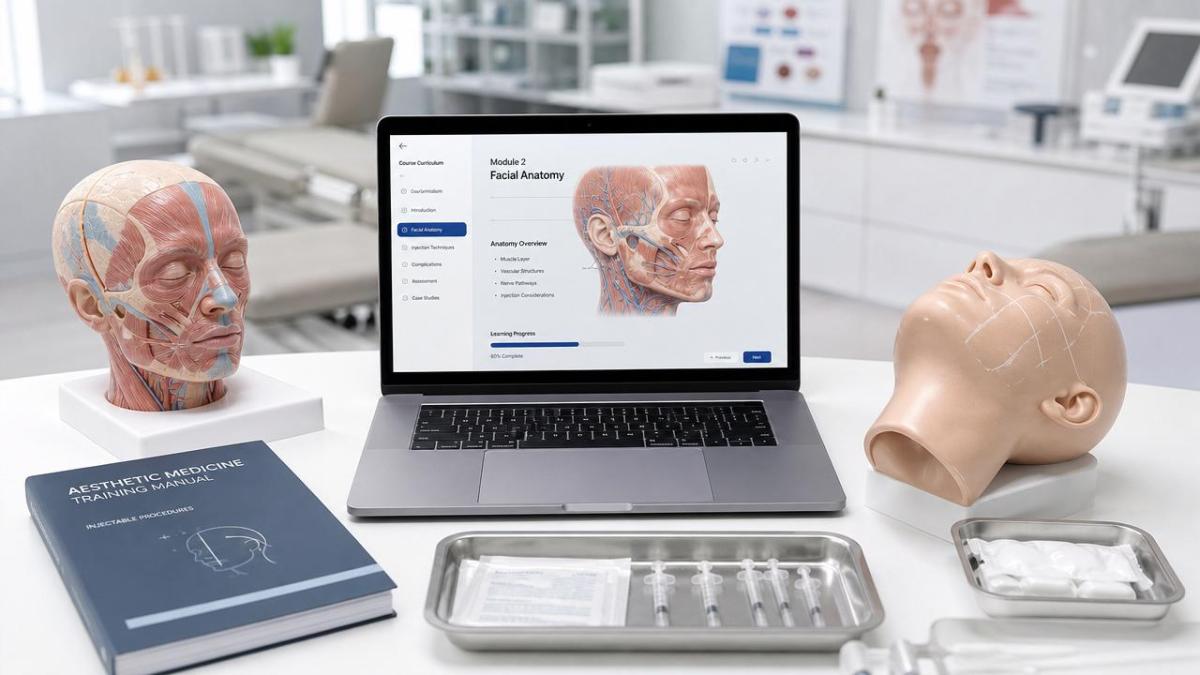
People searching for aesthetic medicine training usually are not looking for a generic definition. They want to know which format leads to real competence, what risks come with weak training, and how to judge whether a course is worth the time and cost.
For information researchers, the decision lens is slightly different. They often compare program quality, market relevance, accessibility, and practical outcomes. They want to understand where online learning works well, where hands-on teaching is non-negotiable, and why hybrid models are gaining traction globally.
This makes the comparison more than a classroom preference. It is really about clinical readiness, patient safety, professional credibility, and return on educational investment. Those factors should shape any serious evaluation of an aesthetic medicine training program.
Why the Format Matters More in Aesthetic Medicine Than in Many Other Fields
Aesthetic medicine sits at the intersection of medical judgment, technical precision, anatomy knowledge, communication skill, and complication management. Unlike purely academic subjects, learners must develop both cognitive understanding and tactile confidence to perform safely and consistently.
A practitioner may fully understand facial anatomy in theory yet still struggle with injection depth, product placement, patient positioning, or asymmetry correction. That gap explains why training format matters so much. Knowledge alone does not equal procedural competence.
The field also changes quickly. New products, evolving protocols, changing patient expectations, and stricter compliance pressures mean training must help learners stay current. A format that teaches fast but fails to build sound technique can create long-term problems for practitioners and patients alike.
For this reason, the most useful programs do more than deliver content. They build judgment, reinforce safety habits, and create opportunities for supervised skill application. That is the standard readers should use when comparing online, hands-on, and hybrid pathways.
When Online Aesthetic Medicine Training Makes Sense
Online training has become far more sophisticated. Good programs can deliver excellent foundational knowledge in facial anatomy, consultation workflow, patient assessment, treatment planning, product science, and complication awareness. For theory-heavy learning, digital formats can be highly efficient.
They also offer clear logistical advantages. Learners can study on their own schedule, revisit modules, reduce travel costs, and access international instructors who might otherwise be unavailable. For busy clinicians or global audiences, this flexibility is a major benefit.
Online aesthetic medicine training is especially useful for beginners who need structured orientation before touching patients. It can also support experienced practitioners adding a new modality, refreshing safety protocols, or monitoring market trends without pausing clinical operations.
Another strength is standardization. High-quality online courses often provide repeatable lectures, recorded demonstrations, downloadable references, and assessment checkpoints. That consistency can be valuable for organizations comparing providers or analyzing how educational products scale across regions.
However, online-only learning has clear limits. Watching a demonstration is not the same as feeling tissue resistance, adjusting needle angle, or responding to live patient movement. Learners may overestimate readiness if they confuse intellectual familiarity with hands-on capability.
That is the key caution. Online learning is powerful for understanding concepts, but limited for validating real procedural skill. It works best as a foundation, a supplement, or part of a larger pathway rather than a complete substitute for supervised practical training.
Where Hands-On Workshops Deliver the Most Value
Hands-on training remains the gold standard for translating theory into clinical action. In aesthetic medicine, many critical skills are tactile, visual, and situational. Learners must observe, practice, receive immediate correction, and adapt in real time.
In a live workshop, instructors can correct posture, injection angle, hand stability, product handling, mapping technique, and patient communication on the spot. That kind of feedback is hard to replicate through remote learning, especially for first-time procedural learners.
Hands-on settings also expose participants to variation. Real patients do not match textbook diagrams. Anatomy differs, pain tolerance varies, expectations shift, and facial asymmetries complicate treatment planning. Practical sessions help learners build judgment under realistic conditions.
Another major advantage is confidence building. Many practitioners know the theory but hesitate during first procedures. Supervised clinical experience reduces that gap. It allows learners to connect knowledge with action while staying inside a safer educational environment.
Yet hands-on training also has drawbacks. It is often more expensive, geographically limited, and time-bound. A one-day workshop can be inspiring, but not always enough to create mastery, especially if learners arrive without strong theoretical preparation.
Quality can also vary widely. Some workshops offer extensive supervised practice and low learner-to-trainer ratios. Others are more like demonstrations with minimal participant involvement. That is why hands-on alone is not automatically superior unless the instructional design is robust.
Why Hybrid Training Is Often the Strongest Option
Hybrid training combines the scalability of online education with the practical power of supervised in-person learning. For many learners, this is the most effective pathway because it matches how procedural competence actually develops.
The online component can cover anatomy, patient selection, contraindications, documentation, consultation, ethics, and product fundamentals before the practical session begins. This means live workshop time can focus on high-value activities that truly require physical presence.
Instead of spending in-person hours on basic theory, hybrid learners arrive prepared to ask better questions, interpret demonstrations more effectively, and spend more time practicing techniques under guidance. That improves efficiency for both learners and trainers.
Hybrid design also supports reinforcement after the workshop. Learners can revisit videos, review protocols, and continue structured study while integrating new skills into practice. That post-training access is important because retention often drops without continued review.
From a program quality perspective, hybrid models can create a more measurable learning journey. There may be pre-course modules, practical checkpoints, post-course assessments, and ongoing mentorship. This layered approach tends to produce stronger outcomes than a single-format experience.
For researchers and decision-makers, the rise of hybrid aesthetic medicine training also reflects broader educational and market trends. Professionals increasingly expect flexibility, but they still recognize the need for safe, supervised skill acquisition. Hybrid meets both expectations better than most alternatives.
How to Evaluate Training Quality Beyond the Delivery Format
Format matters, but it should never be the only filter. A mediocre hybrid course may still underperform compared with an excellent hands-on workshop or a rigorous online theory program. Readers should therefore assess quality through several deeper criteria.
First, review instructor credibility. Relevant clinical experience, active practice, teaching history, and complication management expertise matter more than marketing language. In aesthetic medicine, trainers should be able to explain not only ideal technique but also how to respond when treatments do not go as planned.
Second, examine the curriculum structure. Strong programs clearly separate beginner, intermediate, and advanced content. They define learning outcomes, cover patient safety thoroughly, and avoid presenting complex procedures as quick-win skills.
Third, look at supervised practice intensity. If practical training is included, ask how many learners each trainer oversees, whether participants perform procedures themselves, and how much corrective feedback they receive. Observation alone is not the same as guided practice.
Fourth, check for complication management training. This is one of the clearest signs of program seriousness. A course that focuses only on ideal outcomes but ignores vascular risks, adverse events, informed consent, or emergency response is incomplete.
Fifth, consider post-course support. Learners benefit from follow-up mentoring, refresher access, case discussion, and continuing education pathways. Aesthetic practice develops over time, so strong providers create learning continuity rather than one-time exposure.
Finally, assess whether the program aligns with local regulations, clinical scope, and ethical standards. Training that is technically impressive but poorly matched to jurisdictional rules or professional licensing requirements may create more risk than value.
Common Mistakes People Make When Comparing Online, Hands-On, and Hybrid Options
One common mistake is assuming convenience equals effectiveness. Online access is attractive, but easy enrollment does not guarantee clinical readiness. If a learner needs procedural competence, convenience must be balanced with supervised application.
Another mistake is believing one workshop is enough for mastery. A short practical course can build momentum, but aesthetic medicine usually requires staged development. Foundational knowledge, supervised repetition, and ongoing refinement are all part of safe progression.
Some learners also focus too heavily on certificates. Credentials may support credibility, but they do not replace real capability. Patients, employers, and partners ultimately value outcomes, safety, and consistency more than course branding alone.
Price comparison can be misleading as well. A low-cost course that leaves major skill gaps may become expensive if it leads to retraining, poor results, or reputational damage. Total value should include readiness, support, and risk reduction, not just tuition.
Finally, people may overlook fit. The best training pathway for a complete beginner is not the same as the best pathway for an experienced injector adding a niche treatment. Context matters, and good decisions come from matching format to actual learning needs.
Which Training Pathway Fits Different Learner Profiles?
For beginners entering the field, a hybrid pathway is often the safest choice. It offers structured theory, time to absorb terminology and anatomy, and practical supervision before independent work. This reduces the risk of rushing from information to intervention.
For experienced medical professionals exploring aesthetic services, online study can be a useful first filter. It helps them understand market relevance, treatment categories, and foundational protocols before committing to advanced practical sessions.
For practitioners already performing procedures and seeking refinement, targeted hands-on workshops may deliver the best incremental value. They can focus on advanced technique, troubleshooting, or newer treatment approaches while skipping introductory theory already mastered.
For organizations or researchers mapping training trends, hybrid models often represent the most scalable and commercially sustainable structure. They expand access, improve educational efficiency, and align with modern expectations for flexible professional development.
In short, the right choice depends on baseline experience, desired skill depth, time availability, budget, and regulatory context. But if the question is which format most consistently supports both learning and practical application, hybrid has the strongest all-around case.
Final Takeaway: Choose the Format That Builds Safe Competence, Not Just Fast Access
The debate around online, hands-on, or hybrid aesthetic medicine training should not be reduced to preference alone. The real issue is whether a program helps learners build usable knowledge, practical skill, sound judgment, and patient-safe habits.
Online learning is valuable for theory, accessibility, and continuous education. Hands-on training is essential for tactile skills, corrective feedback, and confidence under supervision. Hybrid programs often perform best because they combine these strengths in a more complete learning journey.
For information researchers, that means the strongest programs are not simply the most visible or affordable. They are the ones designed around outcome quality, safety, and long-term capability. Delivery format matters, but educational integrity matters more.
If readers keep that principle in view, they can evaluate aesthetic medicine training more clearly and make better-informed decisions for career planning, provider comparison, or industry analysis. In this field, the best training is the one that turns knowledge into safe, repeatable clinical performance.
 When dual sourcing makes sense in a sourcing strategy for manufacturersSourcing strategy for manufacturers: learn when dual sourcing strengthens supply continuity, reduces disruption risk, and protects production without adding unnecessary complexity.
 How bulk commodities pricing affects long-term supply contractsBulk commodities pricing shapes long-term supply contracts through index rules, freight, quality, volume, and currency risk. Explore strategies for resilient costs and supply security.
 Which global manufacturing trends by sector matter most for sourcing plans?Global manufacturing trends by sector: identify sourcing risks, supplier resilience, compliance demands, and cost drivers to build smarter, more reliable procurement plans.
 What industrial trade intelligence pricing should include before you subscribeIndustrial trade intelligence pricing explained: compare coverage, data quality, access rights, and workflow value before choosing a subscription that supports smarter trade decisions.
 How an industrial trade intelligence dashboard can identify new supplier marketsDiscover how an industrial trade intelligence dashboard helps identify new supplier markets by comparing capacity, landed cost, logistics resilience, and compliance risk.
 Which global market entry barriers should exporters assess first?Global market entry barriers exporters should assess first: tariffs, compliance, buyer qualification, logistics, and payment risk. Build a practical strategy for confident market entry.
 How trade data aggregation analytics can reveal emerging supplier marketsTrade data aggregation analytics reveals emerging supplier markets by connecting trade flows, capacity signals, logistics, and compliance insights for smarter sourcing decisions.
 When an export market analysis platform can validate demand in a new marketExport market analysis platform insights help validate new-market demand through buyer fit, regulations, logistics, competition, and profitable entry conditions.
 What is driving the beauty and personal care market in the USA?Beauty and personal care in USA is driven by targeted solutions, selective premiumization, digital discovery, clean-label trust, diverse needs, and compliance. Explore key growth opportunities.
 How trade flow monitoring reports reveal changing regional demandTrade flow monitoring reports reveal changing regional demand through import volumes, sourcing shifts, product mix, logistics signals, and regulatory trends. Explore actionable market insights.
 How international market intelligence for investors reduces market-entry riskInternational market intelligence for investors reduces market-entry risk by validating demand, regulations, logistics, and competition before capital is committed.
 How international sourcing intelligence helps identify supplier risk earlyInternational sourcing intelligence helps businesses spot supplier risks early, protect supply continuity, and make smarter global procurement decisions.
 How trade data aggregation analytics reveals emerging supplier marketsTrade data aggregation analytics reveals emerging supplier markets through export trends, input flows, logistics, and regulatory signals. Discover smarter sourcing insights.
 What industrial cluster monitoring in Vietnam reveals about site riskIndustrial cluster monitoring Vietnam reveals hidden site risks across labor, utilities, logistics, compliance, and supplier dependencies. Make smarter sourcing and expansion decisions.
 Food Technology Trends Reshaping Shelf Life, Safety, and Product InnovationFood technology is reshaping shelf life, safety, and innovation. Discover the trends helping food businesses cut risk, improve compliance, and unlock stronger global market growth.
 How electronics manufacturing services are changing with low-volume demandElectronics manufacturing services are evolving fast with low-volume demand. Learn how agile EMS partners improve flexibility, compliance, sourcing resilience, and speed to market.
 How Can Buyers Reduce Procurement Risks for Electronic Components?How to reduce procurement risks for electronic components: learn how buyers assess traceability, lead times, compliance, and supplier types to avoid costly sourcing mistakes.
 What Sourcing Intelligence India Reveals About Supplier Risk and Cost ShiftsSourcing intelligence India reveals hidden supplier risk, compliance gaps, logistics pressure, and real cost shifts—helping buyers compare vendors smarter and source with more confidence.
 Fashion Trends 2026: Which Materials, Colors, and Silhouettes Are Gaining Ground?Fashion trends 2026 spotlight tactile fabrics, mineral colors, and controlled volume. Explore the materials, shades, and silhouettes shaping smarter, more wearable style.
 Smart Device Market Outlook: Key Growth Drivers, Segments, and Business OpportunitiesSmart device market trends are shifting toward system value, industrial demand, and resilient supply chains. Explore key growth drivers, high-potential segments, and business opportunities.
 How Global Trade Intelligence Services Help B2B Firms Evaluate Markets and SuppliersGlobal trade intelligence services help B2B firms compare suppliers, assess market potential, and uncover compliance, logistics, and pricing risks before costly decisions are made.





















Global Trade Insights & Industry
Our mission is to empower global exporters and importers with data-driven insights that foster strategic growth.
Search News
Popular Tags
Industry Overview
The global commercial kitchen equipment market is projected to reach $112 billion by 2027. Driven by urbanization, the rise of e-commerce food delivery, and strict hygiene regulations.