

Aesthetic Medicine Training Credentials That Employers Notice
In a competitive hiring market, the right aesthetic medicine training can do more than build technical confidence—it can directly influence how employers assess your credibility and readiness.
For practitioners and operators seeking stronger career opportunities, understanding which credentials stand out is essential to proving competence, safety awareness, and long-term value in modern aesthetic clinics.
What Employers Actually Look for in Aesthetic Medicine Training
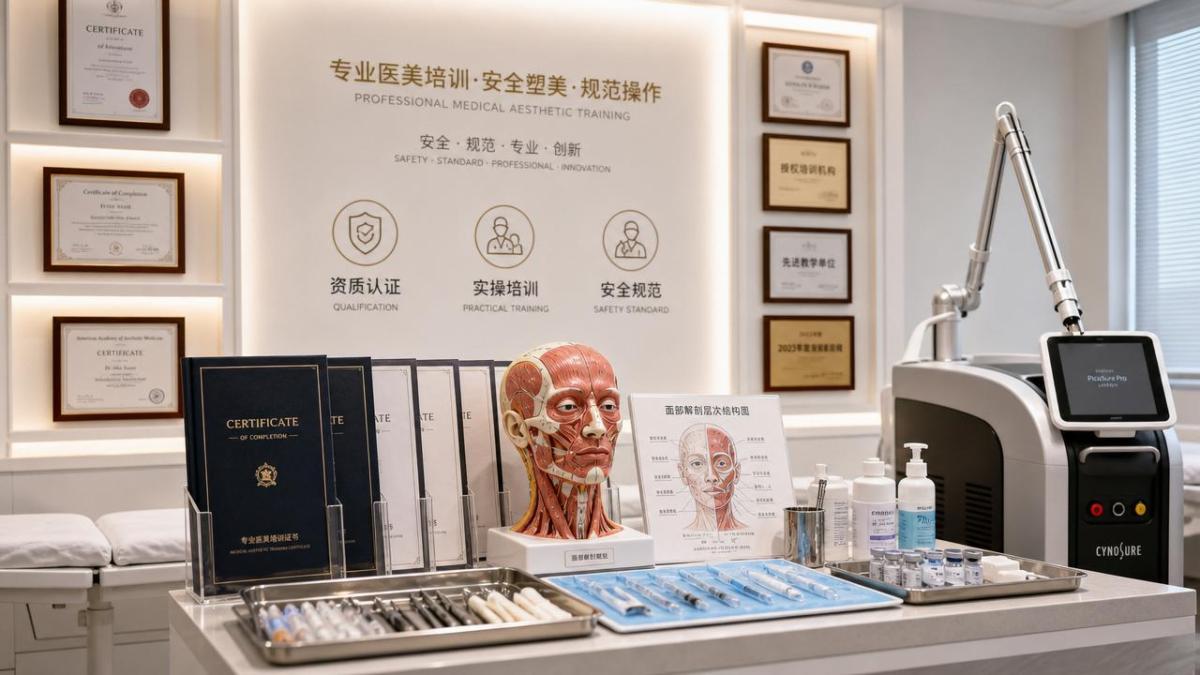
If you are applying for roles in aesthetic clinics, med spas, or cosmetic practices, employers rarely judge training by the certificate name alone.
They want evidence that your aesthetic medicine training prepared you to work safely, follow protocols, communicate with patients, and perform consistently under supervision.
In practice, the most noticeable credentials are those tied to recognized institutions, structured clinical learning, supervised hands-on experience, and clear relevance to the treatments employers offer.
A short course can help, but employers usually value training that shows depth, clinical responsibility, and a realistic understanding of aesthetic outcomes and complication management.
This is the key point for job seekers: employers do not simply ask whether you trained. They ask whether your training reduces hiring risk.
That means the strongest credentials are the ones that signal patient safety, legal awareness, procedural competence, and readiness to integrate into an established practice quickly.
Why Recognized Credentials Matter More Than Generic Certificates
Many candidates complete introductory workshops and assume any completion certificate will strengthen their profile. Employers often take a more selective view.
A generic certificate may show interest, but it does not always show competence. Hiring managers look for the quality, structure, and credibility behind the document.
Recognized credentials matter because they help employers verify three things fast: who trained you, what standards were used, and how your skills were assessed.
When a training provider has a strong reputation, a defined curriculum, and industry visibility, your certificate carries more weight during screening and interviews.
This is especially important in aesthetic medicine, where employers are balancing commercial performance with clinical safety, patient trust, and brand reputation.
If a provider is unknown, lacks transparent faculty details, or offers vague learning outcomes, employers may question whether the training has practical value.
By contrast, training linked to established medical education bodies, respected academies, or well-known clinical educators tends to stand out immediately.
Which Types of Training Credentials Tend to Impress Employers Most
Not every employer hires for the same services, but several categories of credentials are commonly viewed as valuable across the sector.
First, foundation training in facial anatomy, patient assessment, infection control, consent, and complication awareness is highly respected because it supports safe practice.
Even when employers want someone skilled in injectables or device-based treatments, they still prioritize clinicians who understand anatomy and risk prevention thoroughly.
Second, hands-on injectable training in botulinum toxin and dermal fillers often attracts attention, especially when it includes supervised patient work rather than mannequin-only practice.
Employers notice whether your training covered consultation methods, treatment planning, product selection principles, documentation standards, and post-procedure follow-up.
Third, advanced certificates in complication management can significantly strengthen your profile. They signal maturity, judgment, and preparedness beyond basic treatment delivery.
Fourth, laser and energy-based device training can be valuable when clinics offer skin rejuvenation, hair removal, pigment correction, or resurfacing services.
In these roles, employers want to see device-specific education, skin typing knowledge, contraindication awareness, and confidence with safety protocols.
Fifth, credentials in patient communication, consultation ethics, and photographic documentation can be more useful than many candidates expect.
Aesthetic medicine is not only procedural. It is also expectation management, treatment suitability, informed consent, and protecting both patient satisfaction and clinic reputation.
Hands-On Experience Often Matters as Much as the Credential Itself
One of the most common employer concerns is the gap between theoretical learning and real-world treatment readiness.
For that reason, the strongest aesthetic medicine training programs usually include practical sessions with live models, supervised assessments, and direct instructor feedback.
Employers know that clinical judgment is difficult to develop through slides, recordings, or observation alone. They look for signs that you practiced under real conditions.
When reviewing your CV, they may ask how many supervised cases you completed, which procedures you observed, and what treatment planning responsibilities you had.
This means a smaller number of high-quality, practical courses can sometimes be more impressive than a long list of online attendance certificates.
If you have completed practical training, make that visible. Mention supervised hours, treatment areas covered, patient interaction experience, and any documented competency checks.
Specificity helps. “Advanced filler course” is weaker than “supervised dermal filler training covering lips, nasolabial folds, consultation, consent, and complication protocols.”
Safety, Compliance, and Complication Training Are Major Hiring Signals
Employers in aesthetic settings are under pressure from patients, regulators, insurers, and reputation-driven online reviews. Because of this, safety credentials stand out strongly.
Training in infection prevention, sharps handling, emergency response, anaphylaxis awareness, and adverse event recognition can meaningfully improve your employability.
So can education in documentation standards, patient selection, contraindications, consent procedures, and escalation pathways when results do not go as planned.
From an employer perspective, these credentials suggest that you are less likely to create preventable incidents, legal issues, or patient dissatisfaction.
They also show that you understand aesthetic medicine as a clinical responsibility, not simply a beauty service with quick commercial appeal.
If your course portfolio is heavily focused on treatment techniques but light on safety and governance, employers may view your preparation as incomplete.
That is why candidates with balanced aesthetic medicine training often outperform those who only chase glamorous or advanced-sounding procedural titles.
How Employers Judge the Training Provider Behind the Credential
In many hiring decisions, the provider matters nearly as much as the course. Employers often research where you trained before deciding how much trust to place in it.
They may look at faculty credentials, whether instructors are active practitioners, how transparent the syllabus is, and whether post-course support exists.
Well-regarded providers usually publish clear learning objectives, hands-on ratios, assessment methods, and the clinical backgrounds of their teaching staff.
Employers also notice whether a provider is connected to broader professional communities, conferences, continuing education networks, or established clinical environments.
This does not mean only large brands matter. Smaller providers can still be respected if they show rigor, transparency, and strong practitioner outcomes.
Before enrolling, ask yourself a practical question: if a hiring manager searches this training provider, will the results increase confidence or create doubts?
That simple test can help you avoid low-value courses that consume money without improving your job prospects in a meaningful way.
What to Put on Your CV So Your Training Gets Taken Seriously
Even strong credentials can be overlooked if they are presented poorly. Employers scan quickly, so clarity and relevance matter.
List your aesthetic medicine training in a structured way. Include provider name, course title, completion date, supervised practical elements, and core competencies covered.
If a credential included live patient practice, formal assessment, or complication training, mention that clearly. Those details answer employer concerns immediately.
It is also helpful to group training by category, such as foundations, injectables, skin treatments, laser devices, and patient safety.
This makes your development path easier to understand and helps employers match your training to their current service lines.
Avoid exaggeration. If you are newly trained, do not imply independent mastery. Employers prefer honest candidates who understand the difference between certification and experience.
In interviews, be ready to explain what you learned, how the training was assessed, and where you still want supervised development.
That honesty often creates a stronger impression than trying to sound more advanced than you really are.
How to Choose Training That Improves Employability, Not Just Knowledge
For many practitioners and operators, the biggest challenge is deciding which course will actually lead to better job opportunities.
The best approach is to reverse the decision process. Start with the type of employer or clinic you want to work for, then assess their service model.
If they focus on injectables, anatomy, consultation, and complication management should be central to your training pathway.
If they specialize in skin and devices, prioritize laser safety, skin analysis, treatment planning, and manufacturer-supported device education.
Also consider whether the employer values ongoing development. Many clinics prefer candidates who show a commitment to continuous education rather than one-time certification collecting.
That means your training plan should look progressive and intentional. Foundation first, then practical application, then advanced areas relevant to the role.
Another smart step is reviewing job descriptions in your target market. Look at repeated requirements, then compare them against your current qualifications.
This turns course selection into a hiring strategy instead of a guesswork exercise.
Red Flags That Make Employers Question a Candidate’s Training
Understanding what weakens a credential is just as useful as knowing what strengthens one.
Employers may hesitate when they see too many short courses with no clear progression, especially if advanced treatment titles appear before basic clinical foundations.
They may also question credentials from providers that promise unrealistic expertise after a single day or fail to explain practical supervision standards.
Another red flag is training that appears disconnected from legal scope, clinical governance, or professional ethics.
In aesthetic medicine, speed and marketing language can be attractive, but serious employers still prioritize safe, defensible, evidence-aware preparation.
If your portfolio includes only promotional masterclasses and no formal anatomy, safety, or consultation training, expect follow-up questions.
The goal is not to collect the highest number of certificates. It is to build a training profile that makes sense clinically and commercially.
Building a Credential Path That Employers Can Trust
The most effective aesthetic medicine training path is usually not the fastest one. It is the one that shows credibility, progression, and readiness for real patient care.
Employers notice credentials that combine recognized education, practical supervision, anatomy knowledge, patient communication, and complication awareness.
They also notice whether your training decisions look thoughtful. A coherent development path suggests professionalism and long-term value to the clinic.
If you are deciding where to invest next, choose courses that strengthen employability signals: reputable providers, practical exposure, safety standards, and role-specific relevance.
In a crowded market, these are the credentials that help you move beyond interest and into opportunity.
Ultimately, the best training is not simply the one that teaches a procedure. It is the one that gives employers confidence that you can deliver care safely, represent the clinic well, and keep developing.
That is what makes aesthetic medicine training worth noticing—and worth investing in.
 When an export market analysis platform can validate demand in a new marketExport market analysis platform insights help validate new-market demand through buyer fit, regulations, logistics, competition, and profitable entry conditions.
 What is driving the beauty and personal care market in the USA?Beauty and personal care in USA is driven by targeted solutions, selective premiumization, digital discovery, clean-label trust, diverse needs, and compliance. Explore key growth opportunities.
 How trade flow monitoring reports reveal changing regional demandTrade flow monitoring reports reveal changing regional demand through import volumes, sourcing shifts, product mix, logistics signals, and regulatory trends. Explore actionable market insights.
 How international market intelligence for investors reduces market-entry riskInternational market intelligence for investors reduces market-entry risk by validating demand, regulations, logistics, and competition before capital is committed.
 How international sourcing intelligence helps identify supplier risk earlyInternational sourcing intelligence helps businesses spot supplier risks early, protect supply continuity, and make smarter global procurement decisions.
 How trade data aggregation analytics reveals emerging supplier marketsTrade data aggregation analytics reveals emerging supplier markets through export trends, input flows, logistics, and regulatory signals. Discover smarter sourcing insights.
 What industrial cluster monitoring in Vietnam reveals about site riskIndustrial cluster monitoring Vietnam reveals hidden site risks across labor, utilities, logistics, compliance, and supplier dependencies. Make smarter sourcing and expansion decisions.
 Food Technology Trends Reshaping Shelf Life, Safety, and Product InnovationFood technology is reshaping shelf life, safety, and innovation. Discover the trends helping food businesses cut risk, improve compliance, and unlock stronger global market growth.
 How electronics manufacturing services are changing with low-volume demandElectronics manufacturing services are evolving fast with low-volume demand. Learn how agile EMS partners improve flexibility, compliance, sourcing resilience, and speed to market.
 How Can Buyers Reduce Procurement Risks for Electronic Components?How to reduce procurement risks for electronic components: learn how buyers assess traceability, lead times, compliance, and supplier types to avoid costly sourcing mistakes.
 What Sourcing Intelligence India Reveals About Supplier Risk and Cost ShiftsSourcing intelligence India reveals hidden supplier risk, compliance gaps, logistics pressure, and real cost shifts—helping buyers compare vendors smarter and source with more confidence.
 Fashion Trends 2026: Which Materials, Colors, and Silhouettes Are Gaining Ground?Fashion trends 2026 spotlight tactile fabrics, mineral colors, and controlled volume. Explore the materials, shades, and silhouettes shaping smarter, more wearable style.
 Smart Device Market Outlook: Key Growth Drivers, Segments, and Business OpportunitiesSmart device market trends are shifting toward system value, industrial demand, and resilient supply chains. Explore key growth drivers, high-potential segments, and business opportunities.
 How Global Trade Intelligence Services Help B2B Firms Evaluate Markets and SuppliersGlobal trade intelligence services help B2B firms compare suppliers, assess market potential, and uncover compliance, logistics, and pricing risks before costly decisions are made.
 Manufacturing Sector Updates for Investors: What Signals Matter Most in 2025?Manufacturing sector updates for investors in 2025: track orders, margins, supply chains, regulation, and exports to spot resilient manufacturers and smarter investment signals.
 How Energy Market Intelligence Helps Businesses Track Price Risks and Demand ShiftsEnergy market intelligence helps businesses spot price risks, demand shifts, and supply pressure early—improving procurement, resilience, and faster strategic decisions.
 Precision Hardware Tools Market: Key Demand Drivers, Segments, and Growth OutlookPrecision hardware tools market trends are reshaping sourcing, compliance, and automation. Explore key demand drivers, segment shifts, regional supply patterns, and growth opportunities.
 How to Use Customs Import Data to Find Buyers, Track Competitors, and Spot Demand?Customs import data helps you find real buyers, track competitors, and spot demand shifts early. Learn practical ways to turn trade records into smarter global business decisions.
 Manufacturing Cost Analysis: 8 Cost Drivers That Change Your Unit PriceManufacturing cost analysis explained through 8 key cost drivers that impact unit price, supplier stability, and margins—learn how to compare quotes smarter and reduce sourcing risk.
 Industrial Market Realities: What Buyers Should Check Before Comparing Supplier QuotesIndustrial market realities shape every supplier quote beyond unit price. Learn what to check on compliance, lead times, logistics, and hidden cost risks before comparing offers.
 Beverage Production Line Planning: Key Equipment, Capacity, and Hygiene RequirementsBeverage production line planning made practical: discover key equipment, real capacity sizing, and hygiene requirements to improve efficiency, safety, and long-term plant performance.





















Global Trade Insights & Industry
Our mission is to empower global exporters and importers with data-driven insights that foster strategic growth.
Search News
Popular Tags
Industry Overview
The global commercial kitchen equipment market is projected to reach $112 billion by 2027. Driven by urbanization, the rise of e-commerce food delivery, and strict hygiene regulations.