

Organic farming supplies that support certification compliance
For quality control and safety managers, choosing the right organic farming supplies is critical to maintaining certification compliance, product integrity, and audit readiness. From approved inputs to traceable sourcing and documentation support, every supply decision can affect inspection outcomes and market access. This guide explores how compliant supply choices help reduce risk, strengthen operational control, and support long-term success in organic agriculture.
Why organic farming supplies need a structured compliance review
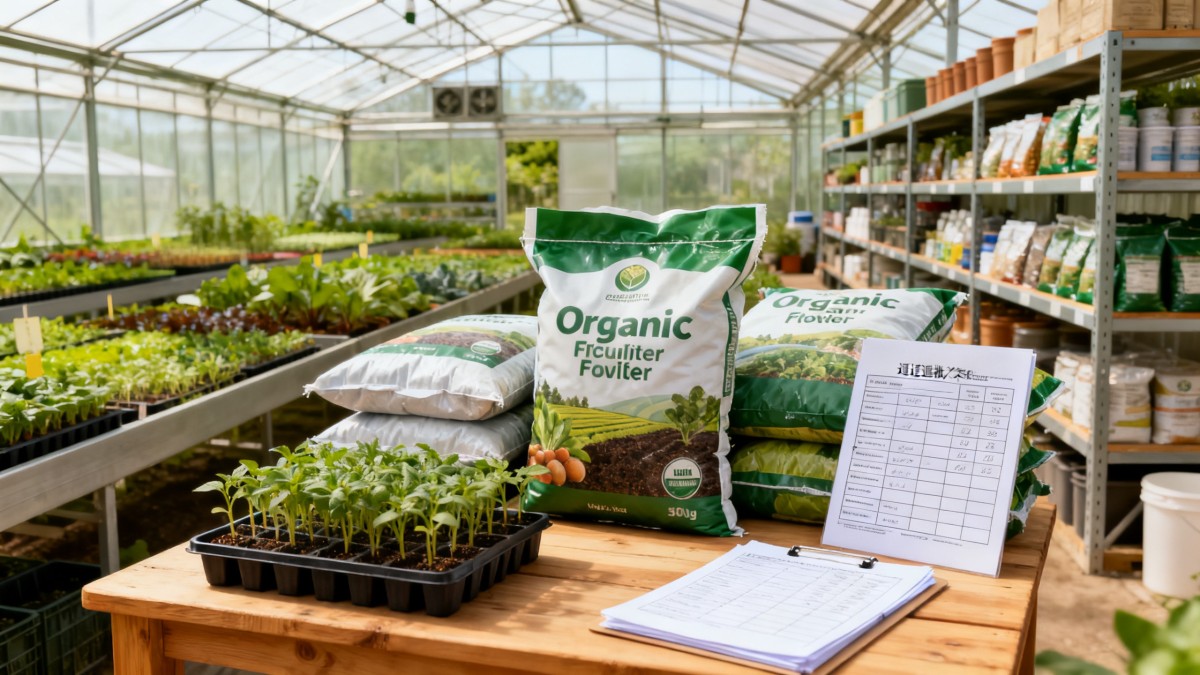
Organic certification is not based on end-product claims alone. It depends on whether every input, material, and handling aid used in production aligns with the applicable organic standard, certification scope, and recordkeeping expectations. That is why organic farming supplies should never be selected only for price, availability, or agronomic performance. They must also support documented compliance.
A structured review helps prevent common failures such as using unapproved fertilizers, applying pesticides with restricted inert ingredients, storing compliant and non-compliant materials together, or missing supplier affidavits during inspection. In practical terms, a clear evaluation process protects farm status, reduces corrective actions, and improves confidence when responding to certifiers, buyers, and export market requirements.
For operations managing multiple fields, seasonal input changes, and different crop programs, a checklist-driven approach also improves consistency. It turns organic farming supplies from a purchasing task into a controlled compliance function supported by traceability, specification review, and timely approval workflows.
Core points to verify before approving organic farming supplies
The following checks help evaluate whether organic farming supplies are suitable for certified production and whether they can stand up to documentation review during audits or annual inspections.
- Confirm the product is allowed under the relevant organic standard and is consistent with the farm’s certification scope, crop type, and intended field application.
- Request a full specification sheet listing active and inert ingredients, processing aids, carriers, and formulation details that may affect organic approval status.
- Verify third-party input approval, OMRI listing, or equivalent documentation, but do not treat logos alone as a substitute for internal review.
- Check supplier traceability records, lot coding, manufacturing location, and batch-level documentation to support recall readiness and inspection transparency.
- Review contamination risk, especially for compost, manure-based fertilizers, seed treatments, and packaging-related materials that may introduce prohibited substances.
- Ensure storage, labeling, and segregation procedures prevent mixing organic farming supplies with conventional inputs, cleaners, or restricted application chemicals.
- Match application instructions, pre-harvest intervals, and use rates with the organic system plan and field-level operating procedures already approved.
- Document supplier declarations, purchase records, delivery dates, and actual usage logs so each supply can be linked to a crop block or production lot.
- Review any product reformulation history and require notification controls, because approved organic farming supplies can become non-compliant after composition changes.
- Confirm emergency substitution procedures are defined in advance, reducing the risk of unreviewed purchases during pest outbreaks or seasonal shortages.
Which supply categories deserve the closest attention
Fertilizers, soil amendments, and compost inputs
Among all organic farming supplies, fertility products often create the highest compliance risk because they may contain prohibited synthetic additives, contamination from heavy metals, or insufficient source documentation. Materials such as compost, manure derivatives, fish emulsions, and mined minerals require closer review than marketing claims suggest.
Check source origin, treatment process, pathogen controls, and restrictions related to raw manure timing. If a product includes blended ingredients, request the full ingredient breakdown rather than relying on abbreviated commercial labels. This is especially important for export-oriented production where market access may depend on stronger documentation than local retail channels provide.
Crop protection materials
Biologicals, mineral-based sprays, adjuvants, and trap products are frequently marketed for organic use, but not all are universally acceptable. Some crop protection organic farming supplies are approved only under certain conditions, while others become problematic because of undisclosed inert ingredients or unverified stabilizers.
The review should include not only the active ingredient but also adjuvants, surfactants, wetting agents, and compatibility tank mixes. A compliant material can become a non-compliant application if mixed with an unapproved spray aid. Keeping application logs aligned with approved product lists is essential for audit defense.
Seeds, planting materials, and propagation supplies
Seeds and transplants are a major inspection focus. Organic farming supplies in this category include seed stock, propagation media, seedling trays, and permitted treatment materials. Records should show efforts to source organic seed when required and explain any exceptions according to the applicable standard.
Propagation media also need close examination. Some mixes contain synthetic wetting agents, non-permitted fertilizers, or treated wood residues. The safest practice is to maintain approved formulas and supplier documentation for every propagation input used across the season.
Cleaning, handling, and post-harvest materials
Organic compliance does not stop in the field. Cleaning agents, food-contact lubricants, bin sanitizers, and post-harvest handling materials can influence certification status and food safety outcomes. These organic farming supplies should be reviewed for residue risk, rinse verification, and compatibility with packinghouse procedures.
Where production and packing occur in shared facilities, segregation and sanitation validation become even more important. Documentation should demonstrate that organic product integrity remains protected after harvest, especially when export buyers request traceable process controls.
How requirements shift across different operating scenarios
Small diversified farms
Smaller operations often use a wider mix of organic farming supplies across vegetables, herbs, orchards, and rotational fields. The risk is not always product selection itself, but inconsistent documentation. A simple approved-input register, supported by purchase invoices and use logs, can significantly reduce inspection stress.
Large-scale row crop operations
Larger farms typically face complexity in volume control, lot traceability, and decentralized storage. Here, organic farming supplies should be reviewed through formal approval steps, batch tracking, and field assignment records. Internal alignment across agronomy, warehousing, and application teams matters as much as product compliance.
Greenhouse and protected cultivation
Greenhouse systems often depend on concentrated nutrient products, sanitation materials, and substrate components. Because these systems are input-intensive, even small non-compliant additions can create major certification issues. Organic farming supplies for greenhouse use should be cross-checked against irrigation programs, mixing procedures, and substrate formulations.
Export-oriented supply chains
When crops move into global trade, organic farming supplies must support not just farm inspection but also buyer due diligence and destination market expectations. Additional scrutiny may include document translation, supplier qualification files, residue risk assessments, and evidence that all inputs align with the target market’s accepted standards.
Commonly overlooked issues that can trigger non-compliance
One frequent problem is assuming a product sold in an agricultural channel is automatically suitable for organic use. Many inputs are marketed with natural language but still contain prohibited components. Every organic farming supplies decision should be verified against documentation, not packaging language.
Another overlooked issue is reformulation drift. A fertilizer or biological product used successfully for years may change composition without clear field-level awareness. Annual recertification cycles should include a review of all recurring organic farming supplies, even if they were previously accepted.
Storage controls are also underestimated. Approved and non-approved materials placed in the same shed, shelf, or transfer container can create confusion and accidental misuse. Clear labels, separation barriers, and inventory discipline reduce this risk substantially.
Finally, incomplete usage records can undermine otherwise compliant practices. If inspectors cannot match purchased organic farming supplies to where, when, and how they were used, certification confidence weakens. Traceability is not administrative overhead; it is evidence of operational control.
Practical steps to strengthen control over organic farming supplies
Build a master list of approved organic farming supplies and assign a review date for each item. Include product name, supplier, approval basis, intended use, storage location, and expiration or revalidation timing. This creates a reliable reference point before purchasing or application decisions are made.
Standardize intake procedures for new materials. No input should enter production without a specification review, supplier declaration, and confirmation against the organic system plan. If a substitute is needed urgently, use a temporary hold process until approval is documented.
Maintain records in a format that supports fast retrieval. During inspections, the ability to produce organized files for organic farming supplies can be as important as the approval itself. Digital folders, batch logs, and seasonal application summaries help reduce audit friction.
It is also valuable to monitor broader supply chain intelligence. Platforms such as GTIIN and TradeVantage can support awareness of sourcing shifts, regulatory developments, market expectations, and supplier credibility across the agriculture and food sector. In a global trade environment, better information improves supply confidence and strengthens the trust signal needed for long-term commercial growth.
FAQ about organic farming supplies and certification support
Is an OMRI-listed product always enough for compliance?
No. OMRI or similar listings are helpful, but organic farming supplies still need to fit the applicable standard, crop use, and farm-level certification scope. Internal review and documented approval remain necessary.
How often should approved input lists be reviewed?
At minimum, review all organic farming supplies before each production season and whenever a supplier, formula, label, or manufacturing site changes. High-risk categories may require more frequent checks.
What records matter most during inspection?
Key records include specifications, approval evidence, invoices, lot numbers, storage controls, application logs, and links between organic farming supplies and the fields or lots where they were used.
Conclusion and next actions
Choosing organic farming supplies is ultimately a compliance decision with direct effects on certification security, operational discipline, and market access. The strongest programs do not rely on memory or supplier claims. They use documented approval criteria, disciplined storage and traceability, and periodic revalidation of every critical input.
The next practical step is to review current organic farming supplies against a single approval checklist, identify documentation gaps, and remove any products lacking clear support. From there, align purchasing, application, and recordkeeping procedures so every input used in the season can be defended with confidence during inspection and trade review.
 How an industrial trade intelligence dashboard can identify new supplier marketsDiscover how an industrial trade intelligence dashboard helps identify new supplier markets by comparing capacity, landed cost, logistics resilience, and compliance risk.
 Which global market entry barriers should exporters assess first?Global market entry barriers exporters should assess first: tariffs, compliance, buyer qualification, logistics, and payment risk. Build a practical strategy for confident market entry.
 How trade data aggregation analytics can reveal emerging supplier marketsTrade data aggregation analytics reveals emerging supplier markets by connecting trade flows, capacity signals, logistics, and compliance insights for smarter sourcing decisions.
 When an export market analysis platform can validate demand in a new marketExport market analysis platform insights help validate new-market demand through buyer fit, regulations, logistics, competition, and profitable entry conditions.
 What is driving the beauty and personal care market in the USA?Beauty and personal care in USA is driven by targeted solutions, selective premiumization, digital discovery, clean-label trust, diverse needs, and compliance. Explore key growth opportunities.
 How trade flow monitoring reports reveal changing regional demandTrade flow monitoring reports reveal changing regional demand through import volumes, sourcing shifts, product mix, logistics signals, and regulatory trends. Explore actionable market insights.
 How international market intelligence for investors reduces market-entry riskInternational market intelligence for investors reduces market-entry risk by validating demand, regulations, logistics, and competition before capital is committed.
 How international sourcing intelligence helps identify supplier risk earlyInternational sourcing intelligence helps businesses spot supplier risks early, protect supply continuity, and make smarter global procurement decisions.
 How trade data aggregation analytics reveals emerging supplier marketsTrade data aggregation analytics reveals emerging supplier markets through export trends, input flows, logistics, and regulatory signals. Discover smarter sourcing insights.
 What industrial cluster monitoring in Vietnam reveals about site riskIndustrial cluster monitoring Vietnam reveals hidden site risks across labor, utilities, logistics, compliance, and supplier dependencies. Make smarter sourcing and expansion decisions.
 Food Technology Trends Reshaping Shelf Life, Safety, and Product InnovationFood technology is reshaping shelf life, safety, and innovation. Discover the trends helping food businesses cut risk, improve compliance, and unlock stronger global market growth.
 How electronics manufacturing services are changing with low-volume demandElectronics manufacturing services are evolving fast with low-volume demand. Learn how agile EMS partners improve flexibility, compliance, sourcing resilience, and speed to market.
 How Can Buyers Reduce Procurement Risks for Electronic Components?How to reduce procurement risks for electronic components: learn how buyers assess traceability, lead times, compliance, and supplier types to avoid costly sourcing mistakes.
 What Sourcing Intelligence India Reveals About Supplier Risk and Cost ShiftsSourcing intelligence India reveals hidden supplier risk, compliance gaps, logistics pressure, and real cost shifts—helping buyers compare vendors smarter and source with more confidence.
 Fashion Trends 2026: Which Materials, Colors, and Silhouettes Are Gaining Ground?Fashion trends 2026 spotlight tactile fabrics, mineral colors, and controlled volume. Explore the materials, shades, and silhouettes shaping smarter, more wearable style.
 Smart Device Market Outlook: Key Growth Drivers, Segments, and Business OpportunitiesSmart device market trends are shifting toward system value, industrial demand, and resilient supply chains. Explore key growth drivers, high-potential segments, and business opportunities.
 How Global Trade Intelligence Services Help B2B Firms Evaluate Markets and SuppliersGlobal trade intelligence services help B2B firms compare suppliers, assess market potential, and uncover compliance, logistics, and pricing risks before costly decisions are made.
 Manufacturing Sector Updates for Investors: What Signals Matter Most in 2025?Manufacturing sector updates for investors in 2025: track orders, margins, supply chains, regulation, and exports to spot resilient manufacturers and smarter investment signals.
 How Energy Market Intelligence Helps Businesses Track Price Risks and Demand ShiftsEnergy market intelligence helps businesses spot price risks, demand shifts, and supply pressure early—improving procurement, resilience, and faster strategic decisions.
 Precision Hardware Tools Market: Key Demand Drivers, Segments, and Growth OutlookPrecision hardware tools market trends are reshaping sourcing, compliance, and automation. Explore key demand drivers, segment shifts, regional supply patterns, and growth opportunities.
 How to Use Customs Import Data to Find Buyers, Track Competitors, and Spot Demand?Customs import data helps you find real buyers, track competitors, and spot demand shifts early. Learn practical ways to turn trade records into smarter global business decisions.





















Global Trade Insights & Industry
Our mission is to empower global exporters and importers with data-driven insights that foster strategic growth.
Search News
Popular Tags
Industry Overview
The global commercial kitchen equipment market is projected to reach $112 billion by 2027. Driven by urbanization, the rise of e-commerce food delivery, and strict hygiene regulations.