

Hydroponic Farming Systems: ROI Factors Before You Invest
Before capital moves into hydroponic farming systems, the most important question is not whether the technology is modern, but whether the economics are durable under real operating conditions. Rising pressure on land use, water efficiency, food security, and urban supply chains has made hydroponic farming systems more visible across the agriculture and food sector. Yet visibility does not guarantee profitability. Return on investment depends on how well a system converts infrastructure, energy, labor, and crop strategy into predictable output and premium market access over time.
The current market environment is creating both opportunity and scrutiny. Controlled-environment agriculture is gaining attention because climate volatility, water scarcity, and shifting retailer expectations are increasing the appeal of stable, traceable, year-round production. At the same time, inflation in electricity, equipment, financing, and logistics has tightened margins. That means investment evaluation for hydroponic farming systems now requires a sharper focus on payback period, utilization rates, crop selection, and local demand instead of broad assumptions about “future farming.”
Why hydroponic farming systems are attracting capital—and more careful due diligence
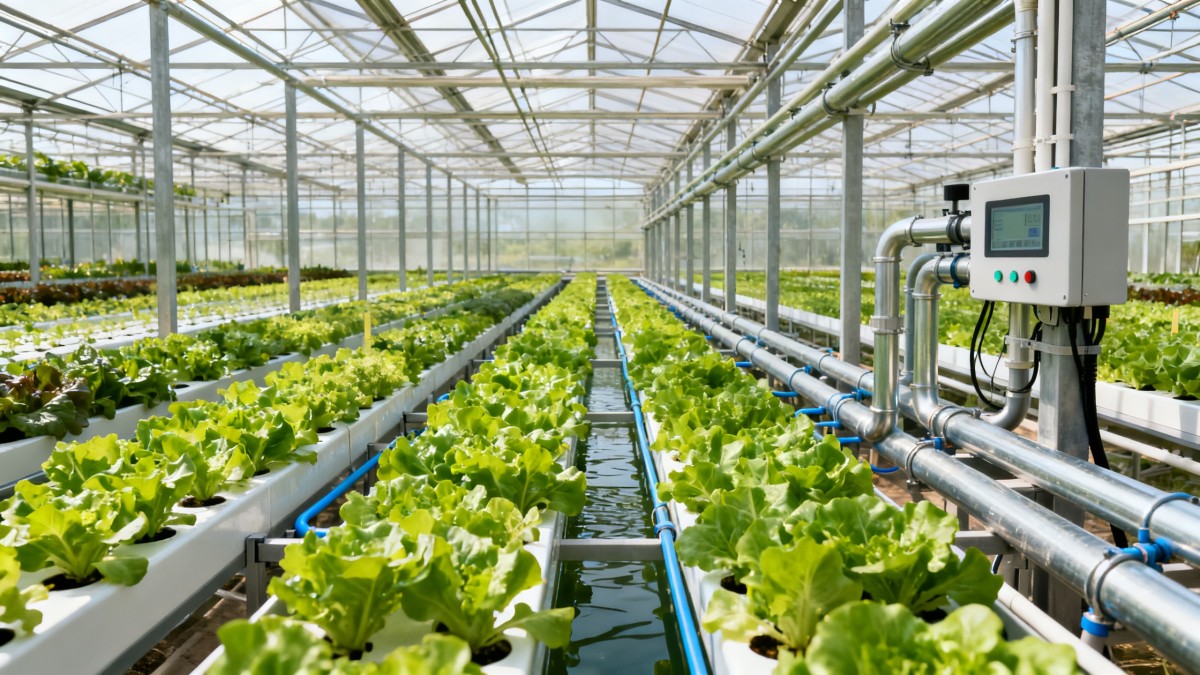
Interest in hydroponic farming systems is growing because the model addresses several structural agricultural constraints at once. Compared with conventional cultivation, hydroponic production can reduce water use, improve nutrient precision, shorten crop cycles, and support production closer to end markets. These advantages are especially relevant where arable land is limited, weather risk is high, or premium fresh produce demand is rising.
However, the same strengths that make hydroponic farming systems attractive also raise the threshold for execution. The technology compresses biological risk into a more engineered environment, where small failures in climate control, nutrient management, sanitation, or energy planning can quickly affect yield and quality. As a result, ROI is shaped less by the concept itself and more by system design discipline, operational capability, and sales strategy.
The main ROI drivers are shifting from yield potential to cost control and market fit
A few years ago, many discussions around hydroponic farming systems centered on high productivity per square meter. That still matters, but investors are increasingly evaluating whether that productivity can be maintained at a cost structure the market will support. In practice, ROI is usually determined by the interaction of six factors: upfront capex, energy intensity, labor efficiency, crop pricing power, biosecurity discipline, and sales consistency.
This shift in emphasis reflects a broader reality: hydroponic farming systems perform best when matched to crops and markets that reward consistency, freshness, traceability, and local sourcing. If the output competes only on bulk price, the investment case often becomes fragile.
System choice changes the risk profile more than many forecasts assume
Not all hydroponic farming systems behave the same financially. Nutrient Film Technique, deep water culture, drip-based greenhouse systems, and vertical farming configurations each come with different infrastructure loads, crop suitability, maintenance requirements, and energy demands. ROI analysis should compare system architecture against local conditions rather than treat hydroponics as one category.
- Greenhouse hydroponics: Often offers a more balanced capex-to-output profile, especially in regions with favorable sunlight and moderate climate control requirements.
- Indoor vertical systems: Can deliver high output density and strong biosecurity but usually face greater pressure from lighting and HVAC costs.
- Simple modular systems: Lower entry cost, but scalability and product consistency may depend heavily on operator skill and process discipline.
A common mistake is to choose the most technologically advanced configuration without validating whether local electricity pricing, labor availability, customer expectations, and financing terms support that complexity. In many cases, a less intensive hydroponic farming system with strong utilization and lower downtime can outperform a more sophisticated design with unstable operating costs.
The strongest profitability cases usually start with crop economics, not equipment enthusiasm
The best-performing hydroponic farming systems are usually built around crops that turn quickly, command a premium, and fit controlled production well. Leafy greens, herbs, microgreens, strawberries, and some vine crops can align with hydroponic advantages, but each category has different margin logic. Fast-cycle crops can improve cash rotation, while premium crops may offer better revenue per square meter but higher quality sensitivity.
Market demand must be tested beyond top-line volume. Useful questions include: Are buyers paying more for pesticide-reduced, local, year-round supply? Is shelf-life performance better than field-grown alternatives? Can harvest scheduling match retail or foodservice replenishment needs? Are buyers willing to commit to recurring contracts? These questions often matter more than theoretical yield benchmarks.
Hydroponic farming systems also benefit from post-harvest discipline. Packaging, cold chain timing, and quality grading directly influence realized selling price. A technically productive farm can still underperform financially if post-harvest handling erodes premium positioning.
Operational efficiency is becoming the key separator between promising projects and weak returns
As the sector matures, ROI is increasingly linked to repeatable execution. Hydroponic farming systems require continuous monitoring of water chemistry, nutrient balance, temperature, humidity, sanitation, and pest prevention. The investment case improves significantly when these variables are standardized through training, automation where justified, and measurable operating procedures.
The following operating priorities usually deserve close attention before investment:
- Energy model: baseline power demand, seasonal variation, backup systems, and potential renewable integration.
- Water strategy: filtration, recirculation efficiency, discharge management, and local compliance requirements.
- Labor design: seeding, transplanting, harvesting, cleaning, and packing workflows.
- Maintenance planning: spare parts, sensor calibration, pump redundancy, and failure response times.
- Data visibility: crop performance tracking, yield variance analysis, and cost-per-kilogram monitoring.
These factors affect not only cost control but also investor confidence. Hydroponic farming systems become easier to finance and scale when performance data shows stable output, manageable variance, and a clear route to process optimization.
What the current shift means across the agriculture and food value chain
The expansion of hydroponic farming systems is influencing more than primary production. Input suppliers are seeing demand for nutrient formulations, sensors, greenhouse materials, and water treatment equipment tailored to controlled growing. Distributors and retailers gain access to more predictable local supply windows. Food brands can use traceability, freshness, and lower water-use narratives to strengthen positioning where consumers value transparency.
At the same time, the shift raises competitive expectations. Buyers increasingly compare hydroponic produce not only on sustainability claims but also on taste, shelf performance, consistency, and reliability of weekly supply. This means hydroponic farming systems must be assessed as business models embedded in a supply chain, not just as production technologies. The closer the alignment between production planning and downstream demand, the stronger the long-term ROI outlook.
The smartest pre-investment checks focus on resilience, not just optimistic payback models
Before committing capital to hydroponic farming systems, several practical checks can improve decision quality:
A resilient investment thesis for hydroponic farming systems should show acceptable returns not only under ideal output assumptions, but also under moderate stress. If margins disappear after a temporary utility spike or a short yield disruption, the project may need redesign before launch.
A grounded next step is to compare hydroponic farming systems through a market-first lens
Hydroponic farming systems can create strong value when they are tailored to the right crop, region, buyer network, and operating model. The most credible ROI cases are usually built on disciplined capex, energy-aware design, reliable process control, and realistic pricing assumptions. In today’s agriculture and food landscape, the opportunity is real—but so is the need for sharper evaluation.
The practical next move is to benchmark multiple system options against local cost structures and actual demand channels, then stress-test the numbers using conservative assumptions. For organizations tracking global agriculture, controlled-environment innovation, and supply chain shifts, consistent industry intelligence can help identify where hydroponic farming systems are becoming commercially viable and where the risks remain too high. A decision grounded in verified market signals will outperform one based on technology momentum alone.
 When an export market analysis platform can validate demand in a new marketExport market analysis platform insights help validate new-market demand through buyer fit, regulations, logistics, competition, and profitable entry conditions.
 What is driving the beauty and personal care market in the USA?Beauty and personal care in USA is driven by targeted solutions, selective premiumization, digital discovery, clean-label trust, diverse needs, and compliance. Explore key growth opportunities.
 How trade flow monitoring reports reveal changing regional demandTrade flow monitoring reports reveal changing regional demand through import volumes, sourcing shifts, product mix, logistics signals, and regulatory trends. Explore actionable market insights.
 How international market intelligence for investors reduces market-entry riskInternational market intelligence for investors reduces market-entry risk by validating demand, regulations, logistics, and competition before capital is committed.
 How international sourcing intelligence helps identify supplier risk earlyInternational sourcing intelligence helps businesses spot supplier risks early, protect supply continuity, and make smarter global procurement decisions.
 How trade data aggregation analytics reveals emerging supplier marketsTrade data aggregation analytics reveals emerging supplier markets through export trends, input flows, logistics, and regulatory signals. Discover smarter sourcing insights.
 What industrial cluster monitoring in Vietnam reveals about site riskIndustrial cluster monitoring Vietnam reveals hidden site risks across labor, utilities, logistics, compliance, and supplier dependencies. Make smarter sourcing and expansion decisions.
 Food Technology Trends Reshaping Shelf Life, Safety, and Product InnovationFood technology is reshaping shelf life, safety, and innovation. Discover the trends helping food businesses cut risk, improve compliance, and unlock stronger global market growth.
 How electronics manufacturing services are changing with low-volume demandElectronics manufacturing services are evolving fast with low-volume demand. Learn how agile EMS partners improve flexibility, compliance, sourcing resilience, and speed to market.
 How Can Buyers Reduce Procurement Risks for Electronic Components?How to reduce procurement risks for electronic components: learn how buyers assess traceability, lead times, compliance, and supplier types to avoid costly sourcing mistakes.
 What Sourcing Intelligence India Reveals About Supplier Risk and Cost ShiftsSourcing intelligence India reveals hidden supplier risk, compliance gaps, logistics pressure, and real cost shifts—helping buyers compare vendors smarter and source with more confidence.
 Fashion Trends 2026: Which Materials, Colors, and Silhouettes Are Gaining Ground?Fashion trends 2026 spotlight tactile fabrics, mineral colors, and controlled volume. Explore the materials, shades, and silhouettes shaping smarter, more wearable style.
 Smart Device Market Outlook: Key Growth Drivers, Segments, and Business OpportunitiesSmart device market trends are shifting toward system value, industrial demand, and resilient supply chains. Explore key growth drivers, high-potential segments, and business opportunities.
 How Global Trade Intelligence Services Help B2B Firms Evaluate Markets and SuppliersGlobal trade intelligence services help B2B firms compare suppliers, assess market potential, and uncover compliance, logistics, and pricing risks before costly decisions are made.
 Manufacturing Sector Updates for Investors: What Signals Matter Most in 2025?Manufacturing sector updates for investors in 2025: track orders, margins, supply chains, regulation, and exports to spot resilient manufacturers and smarter investment signals.
 How Energy Market Intelligence Helps Businesses Track Price Risks and Demand ShiftsEnergy market intelligence helps businesses spot price risks, demand shifts, and supply pressure early—improving procurement, resilience, and faster strategic decisions.
 Precision Hardware Tools Market: Key Demand Drivers, Segments, and Growth OutlookPrecision hardware tools market trends are reshaping sourcing, compliance, and automation. Explore key demand drivers, segment shifts, regional supply patterns, and growth opportunities.
 How to Use Customs Import Data to Find Buyers, Track Competitors, and Spot Demand?Customs import data helps you find real buyers, track competitors, and spot demand shifts early. Learn practical ways to turn trade records into smarter global business decisions.
 Manufacturing Cost Analysis: 8 Cost Drivers That Change Your Unit PriceManufacturing cost analysis explained through 8 key cost drivers that impact unit price, supplier stability, and margins—learn how to compare quotes smarter and reduce sourcing risk.
 Industrial Market Realities: What Buyers Should Check Before Comparing Supplier QuotesIndustrial market realities shape every supplier quote beyond unit price. Learn what to check on compliance, lead times, logistics, and hidden cost risks before comparing offers.
 Beverage Production Line Planning: Key Equipment, Capacity, and Hygiene RequirementsBeverage production line planning made practical: discover key equipment, real capacity sizing, and hygiene requirements to improve efficiency, safety, and long-term plant performance.




















Global Trade Insights & Industry
Our mission is to empower global exporters and importers with data-driven insights that foster strategic growth.
Search News
Popular Tags
Industry Overview
The global commercial kitchen equipment market is projected to reach $112 billion by 2027. Driven by urbanization, the rise of e-commerce food delivery, and strict hygiene regulations.