

Which Renewable Energy System Suits Small Farms Best?
Choosing the right energy solution can reshape how small farms manage costs, resilience, and long-term productivity. If you are asking which renewable energy system suits small farms best, the answer depends on land size, power demand, climate conditions, and investment capacity. This guide explores practical options such as solar, wind, and bioenergy to help farmers and agricultural businesses identify the most suitable system for sustainable operations.
For most small farms, solar is the best starting point
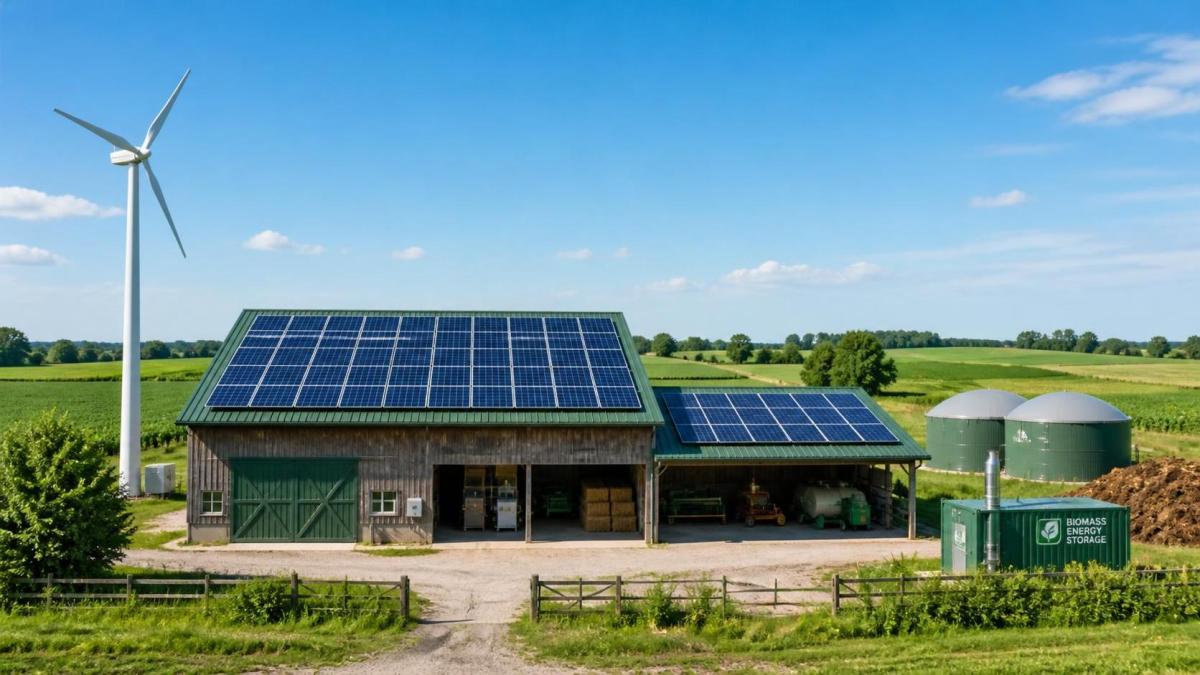
For most small farms, solar photovoltaic systems are the most practical and cost-effective renewable energy option. They are easier to install, simpler to maintain, and more predictable than wind or bioenergy.
If your main goal is to reduce electricity bills, protect against rising utility prices, and improve operating stability, solar usually delivers the clearest return with the lowest complexity.
That does not mean solar is always the perfect answer. Farms with strong wind resources, high organic waste output, or off-grid water pumping needs may benefit more from a different setup.
The better question is not only which renewable energy system suits small farms best, but which one fits your farm’s energy profile, resources, and financial plan most effectively.
What small farm owners usually need to decide first
Before comparing technologies, farm operators should understand where energy is used and which costs matter most. Many poor energy investments happen because equipment is chosen before demand is properly assessed.
Start with four practical questions. How much electricity does the farm use each month? When is that power used? Which processes are essential? How often do outages affect operations?
A dairy farm with cooling equipment has a different energy pattern from a crop farm using seasonal irrigation. A poultry farm with ventilation and heating needs a different system than a greenhouse operation.
Decision-makers also need to define their main objective. Some farms want lower operating costs. Others want backup power resilience, fuel replacement, emissions reduction, or better eligibility for green supply chain programs.
When the business target is clear, the technology comparison becomes more useful. Without that clarity, renewable energy systems can look attractive on paper but underperform in real farm conditions.
Why solar works well for many small agricultural operations
Solar power suits many small farms because electricity demand often matches daylight farm activity. Water pumps, fans, processing equipment, workshop tools, and office loads can all benefit from daytime generation.
Rooftop solar on barns, sheds, packing stations, and storage facilities is especially attractive because it uses existing structures. That reduces land competition and helps farms avoid giving productive fields to energy infrastructure.
Ground-mounted solar can also work well where land is available and shading is limited. It offers easier maintenance access and flexible system sizing for farms planning future expansion.
Another advantage is low maintenance. Compared with turbines or digesters, solar systems have fewer moving parts, lower servicing needs, and more straightforward performance monitoring.
Solar is also modular. A farm can begin with a smaller installation and expand later. That matters for growers and livestock operators who want to control upfront capital exposure.
In markets where net metering, feed-in tariffs, tax credits, or equipment subsidies exist, solar economics become even more attractive. Policy support can significantly shorten payback periods.
The main limitations are equally important. Solar output drops at night and weakens during prolonged cloudy periods. Farms with critical overnight loads may need batteries, grid support, or hybrid backup systems.
When wind energy makes sense for a small farm
Small wind systems can perform well, but only under the right local conditions. The biggest mistake is assuming open farmland automatically means strong, bankable wind resources.
Wind energy becomes more viable when the site has consistently high average wind speeds, minimal turbulence, and enough clearance from trees, buildings, and terrain obstacles that disrupt airflow.
Compared with solar, wind systems are usually more site-sensitive and more maintenance-intensive. Towers, moving parts, noise concerns, and permitting requirements can all complicate smaller projects.
However, in windy rural regions, a properly sized wind turbine may generate useful power across more hours of the day, including evenings and winter periods when solar performance is lower.
This makes wind worth considering for farms with stable year-round demand, remote locations, and land conditions that support safe turbine placement. The strongest cases usually depend on measured wind data, not assumptions.
For many small farms, wind is less attractive as a standalone system than as part of a hybrid setup. Pairing wind and solar can improve seasonal and daily generation balance.
Where bioenergy can offer the highest operational value
Bioenergy is often overlooked in general discussions, but for some farms it can be extremely effective. Its value depends less on weather and more on whether the farm generates usable organic feedstock.
Livestock farms, mixed agricultural operations, and food-processing sites may produce manure, crop residues, and organic waste streams that can support biogas or biomass-based systems.
If a farm already has a steady waste management challenge, bioenergy can solve two problems at once. It can reduce disposal pressure while creating heat, electricity, or usable fuel.
This is especially relevant for dairy, poultry, swine, and agro-processing businesses with consistent material volume. In those cases, energy production becomes part of broader operational efficiency.
Bioenergy systems can also provide firmer output than solar or wind because energy generation is controlled by feedstock supply and plant operation rather than weather alone.
Still, these systems are usually more complex. They require feedstock handling, technical oversight, emissions compliance, and stronger maintenance capability than a standard solar installation.
For a small farm without enough organic material, bioenergy is rarely the best first investment. For farms with substantial waste and thermal demand, it may offer the best long-term value.
How to compare renewable systems based on real farm conditions
To answer which renewable energy system suits small farms best, compare technologies against actual operating conditions instead of generic performance claims. Practical fit matters more than headline efficiency figures.
First, map your annual energy consumption by use category. Separate irrigation, refrigeration, lighting, ventilation, heating, machinery, and processing loads. Then identify which loads are daily, seasonal, or mission-critical.
Second, review your site resources. Measure sunlight exposure, shading, wind patterns, roof condition, available land, water access, and organic waste volume. Local climate data should guide this assessment.
Third, examine economics beyond purchase cost. Include installation, grid connection, maintenance, financing, downtime risk, replacement cycles, and available incentives in the calculation.
Fourth, assess operational capacity. A system that needs regular technical management may not be suitable for a farm with limited labor, limited service access, or no interest in running energy equipment closely.
Finally, consider future business direction. Farms planning cold storage, processing, electric machinery, or climate-controlled production may benefit from a system designed to scale with higher energy demand.
Cost, payback, and return should be judged carefully
Many buyers focus only on equipment price, but renewable energy decisions should be based on lifecycle value. The cheapest system is not always the best investment, and the largest system is not always the smartest one.
Solar usually has the clearest and easiest-to-model payback for small farms because generation estimates, maintenance expectations, and component lifespans are relatively well understood.
Wind payback can be highly attractive at excellent sites, but weak resource assessment can quickly damage expected returns. Poor siting is one of the most common reasons small wind projects disappoint.
Bioenergy economics depend heavily on feedstock consistency, labor, heat demand, and whether waste treatment savings are included in the model. It is often a stronger fit for integrated farm businesses.
Readers should also consider financing structure. Leasing, power purchase agreements, cooperative ownership, and agricultural lending programs can change the affordability of a project significantly.
For farms selling into export-oriented food or agricultural supply chains, renewable energy can also support commercial positioning. Buyers increasingly value traceability, emissions reduction, and production resilience.
Common mistakes small farms should avoid
One common mistake is oversizing a system based on optimistic future demand. This can increase payback time and tie up capital that might be more useful in irrigation, storage, or production upgrades.
Another mistake is ignoring load timing. A system may generate enough annual electricity on paper while failing to support the periods when the farm actually needs power most.
Farm owners also underestimate maintenance and service access. This matters especially for wind and bioenergy systems, where technical interruptions can reduce savings and create operational stress.
Some projects move ahead without checking permits, grid connection rules, export limitations, or incentive conditions. Administrative barriers can affect both project timing and final economics.
Finally, many small farms choose technology before defining business priorities. Renewable energy works best when it supports a clear operational need, not simply because the equipment category is trending.
A practical decision framework for small farm buyers
If your farm has reliable sun exposure, moderate to high daytime electricity use, limited technical labor, and a need for manageable payback, solar is usually the best first choice.
If your site has verified strong wind resources and fewer siting restrictions, small wind can be valuable, especially where seasonal solar output is weaker or grid service is less dependable.
If your farm produces significant manure, crop residue, or organic processing waste, and also needs heat or continuous energy, bioenergy may offer stronger integrated value than intermittent generation systems.
Hybrid systems deserve attention when operational resilience matters. Solar plus battery storage, or solar combined with wind or generator backup, can improve reliability for essential agricultural loads.
The best answer often comes from matching one primary system to one clear operational priority. Lower bills, better energy security, waste utilization, and sustainability goals each point toward different choices.
Final answer: the best system is the one that matches farm demand and business reality
So, which renewable energy system suits small farms best? In most cases, solar is the leading option because it offers the best balance of affordability, simplicity, scalability, and predictable returns.
Wind becomes attractive where local resource conditions are genuinely strong. Bioenergy becomes highly valuable where farms already manage substantial organic waste and need steady heat or power output.
For small farm operators and agricultural businesses, the smartest path is to start with an energy-use review, compare resources honestly, and evaluate the project as an operational investment rather than a technology purchase.
That approach leads to better budgeting, more reliable performance, and clearer long-term value. In renewable energy for agriculture, fit matters more than popularity, and practical alignment matters more than theory.
 How an industrial trade intelligence dashboard can identify new supplier marketsDiscover how an industrial trade intelligence dashboard helps identify new supplier markets by comparing capacity, landed cost, logistics resilience, and compliance risk.
 Which global market entry barriers should exporters assess first?Global market entry barriers exporters should assess first: tariffs, compliance, buyer qualification, logistics, and payment risk. Build a practical strategy for confident market entry.
 How trade data aggregation analytics can reveal emerging supplier marketsTrade data aggregation analytics reveals emerging supplier markets by connecting trade flows, capacity signals, logistics, and compliance insights for smarter sourcing decisions.
 When an export market analysis platform can validate demand in a new marketExport market analysis platform insights help validate new-market demand through buyer fit, regulations, logistics, competition, and profitable entry conditions.
 What is driving the beauty and personal care market in the USA?Beauty and personal care in USA is driven by targeted solutions, selective premiumization, digital discovery, clean-label trust, diverse needs, and compliance. Explore key growth opportunities.
 How trade flow monitoring reports reveal changing regional demandTrade flow monitoring reports reveal changing regional demand through import volumes, sourcing shifts, product mix, logistics signals, and regulatory trends. Explore actionable market insights.
 How international market intelligence for investors reduces market-entry riskInternational market intelligence for investors reduces market-entry risk by validating demand, regulations, logistics, and competition before capital is committed.
 How international sourcing intelligence helps identify supplier risk earlyInternational sourcing intelligence helps businesses spot supplier risks early, protect supply continuity, and make smarter global procurement decisions.
 How trade data aggregation analytics reveals emerging supplier marketsTrade data aggregation analytics reveals emerging supplier markets through export trends, input flows, logistics, and regulatory signals. Discover smarter sourcing insights.
 What industrial cluster monitoring in Vietnam reveals about site riskIndustrial cluster monitoring Vietnam reveals hidden site risks across labor, utilities, logistics, compliance, and supplier dependencies. Make smarter sourcing and expansion decisions.
 Food Technology Trends Reshaping Shelf Life, Safety, and Product InnovationFood technology is reshaping shelf life, safety, and innovation. Discover the trends helping food businesses cut risk, improve compliance, and unlock stronger global market growth.
 How electronics manufacturing services are changing with low-volume demandElectronics manufacturing services are evolving fast with low-volume demand. Learn how agile EMS partners improve flexibility, compliance, sourcing resilience, and speed to market.
 How Can Buyers Reduce Procurement Risks for Electronic Components?How to reduce procurement risks for electronic components: learn how buyers assess traceability, lead times, compliance, and supplier types to avoid costly sourcing mistakes.
 What Sourcing Intelligence India Reveals About Supplier Risk and Cost ShiftsSourcing intelligence India reveals hidden supplier risk, compliance gaps, logistics pressure, and real cost shifts—helping buyers compare vendors smarter and source with more confidence.
 Fashion Trends 2026: Which Materials, Colors, and Silhouettes Are Gaining Ground?Fashion trends 2026 spotlight tactile fabrics, mineral colors, and controlled volume. Explore the materials, shades, and silhouettes shaping smarter, more wearable style.
 Smart Device Market Outlook: Key Growth Drivers, Segments, and Business OpportunitiesSmart device market trends are shifting toward system value, industrial demand, and resilient supply chains. Explore key growth drivers, high-potential segments, and business opportunities.
 How Global Trade Intelligence Services Help B2B Firms Evaluate Markets and SuppliersGlobal trade intelligence services help B2B firms compare suppliers, assess market potential, and uncover compliance, logistics, and pricing risks before costly decisions are made.
 Manufacturing Sector Updates for Investors: What Signals Matter Most in 2025?Manufacturing sector updates for investors in 2025: track orders, margins, supply chains, regulation, and exports to spot resilient manufacturers and smarter investment signals.
 How Energy Market Intelligence Helps Businesses Track Price Risks and Demand ShiftsEnergy market intelligence helps businesses spot price risks, demand shifts, and supply pressure early—improving procurement, resilience, and faster strategic decisions.
 Precision Hardware Tools Market: Key Demand Drivers, Segments, and Growth OutlookPrecision hardware tools market trends are reshaping sourcing, compliance, and automation. Explore key demand drivers, segment shifts, regional supply patterns, and growth opportunities.
 How to Use Customs Import Data to Find Buyers, Track Competitors, and Spot Demand?Customs import data helps you find real buyers, track competitors, and spot demand shifts early. Learn practical ways to turn trade records into smarter global business decisions.





















Global Trade Insights & Industry
Our mission is to empower global exporters and importers with data-driven insights that foster strategic growth.
Search News
Popular Tags
Industry Overview
The global commercial kitchen equipment market is projected to reach $112 billion by 2027. Driven by urbanization, the rise of e-commerce food delivery, and strict hygiene regulations.