

When battery management systems need cell balancing and when they do not
In battery projects, cell balancing is often treated like a default requirement. A specification sheet mentions a battery management system, and people assume balancing must be part of it. But that assumption can lead to poor technical judgments. In some battery packs, balancing is essential to protect performance, usable capacity, and service life. In others, it adds complexity without solving a real problem.
For technical evaluators, the real question is not whether battery management systems can balance cells. It is whether the chemistry, pack architecture, operating window, and application profile create enough cell divergence to justify balancing hardware and control logic. That distinction matters in energy storage, industrial equipment, backup systems, mobility platforms, and even smaller embedded electronics.
Knowing when balancing is necessary also affects sourcing and lifecycle cost. A pack designed for long-duration operation, deep cycling, or limited maintenance has different needs from a tightly controlled pack operating in a narrow state-of-charge window. Evaluating that difference early can prevent overdesign, underprotection, and avoidable field issues.
What cell balancing actually does
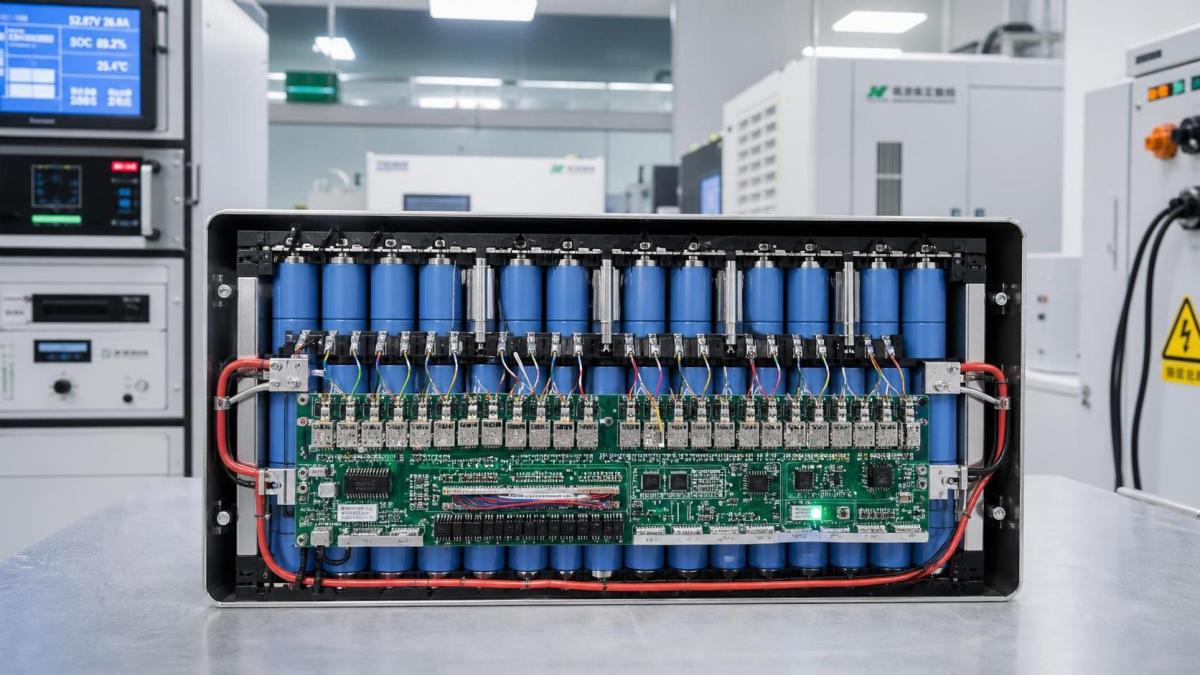
Cell balancing is used in series-connected battery packs where individual cells do not remain perfectly matched over time. Even if cells leave the factory with similar voltage and capacity, they gradually drift because of small variations in internal resistance, self-discharge, temperature exposure, aging rate, and charge throughput.
In a series string, the weakest or fullest cell limits the whole pack. During charging, one cell may reach its upper voltage limit before the others are full. During discharge, one cell may hit the lower cutoff first even when the rest still have usable energy. Balancing helps reduce that mismatch so the pack can operate closer to its intended capacity and with lower risk of cell overstress.
There are two broad balancing approaches. Passive balancing bleeds energy from higher-voltage cells, usually as heat, to let lower cells catch up. Active balancing transfers energy between cells or modules through more complex circuits. Passive methods are common because they are simpler and less expensive. Active methods are more attractive in large packs, high-value systems, or applications where efficiency and imbalance severity justify the extra design effort.
When battery management systems clearly need cell balancing
There are several situations where balancing should be considered a practical requirement rather than an optional feature.
Large series cell counts
The more cells connected in series, the greater the chance that small differences accumulate into meaningful pack imbalance. A 2-cell or 3-cell pack may tolerate mild mismatch if well controlled. A 16S, 48S, or 100-plus-cell system has a much narrower margin for ignoring divergence. In high-voltage battery systems, balancing supports both capacity utilization and safe voltage distribution across the string.
Applications with frequent full charge cycles
Balancing becomes more important when the pack regularly approaches its upper voltage limit. That is where cell differences become most visible. If the system is charged fully on a routine basis, a higher-voltage cell can hit cutoff early and force the charger to stop before lower cells are filled. Over time, the usable pack capacity shrinks even though most cells are still healthy.
This is common in residential and commercial energy storage, electric mobility, warehouse equipment, and backup systems that cycle deeply or recharge to high state of charge after every use.
Long service life expectations
When a battery pack is expected to operate for many years, small imbalances matter more. Drift that seems trivial in the first months can become operationally significant later. A BMS with balancing is often justified not because the pack begins badly matched, but because the system must remain stable through aging, seasonal temperature changes, and thousands of operating hours.
Wide temperature variation across the pack
Cells age and perform differently when their thermal conditions differ. Packs installed in outdoor cabinets, mobile machinery, marine enclosures, or unevenly ventilated housings often develop temperature gradients. Those gradients can accelerate mismatch. In such cases, balancing compensates for divergence that thermal design alone cannot fully eliminate.
Cells with broader production variation or mixed aging behavior
Not every battery project uses ultra-tight cell matching. Cost pressure, supply chain substitutions, or second-life battery strategies may introduce greater variation at the cell or module level. Balancing does not make poor cells good, but it can help manage moderate inconsistency in packs where replacement or rematching is difficult.
When battery management systems may not need balancing
There are also valid cases where balancing offers limited benefit.
Single-cell systems or packs without series imbalance risk
If there is only one cell, there is nothing to balance. The BMS may still need protection, current control, temperature monitoring, and communication features, but balancing is irrelevant. This point sounds obvious, yet balancing is still sometimes listed in generic requirements where it has no technical purpose.
Very small series packs with tightly matched cells
In low-cell-count products, especially where cells are well matched and the pack is not heavily stressed, imbalance may remain small across the intended life. Consumer electronics, certain handheld devices, and some compact industrial instruments can perform well without dedicated balancing if charge control is conservative and the duty cycle is light.
Narrow state-of-charge operating windows
Some systems intentionally avoid both full charge and deep discharge. If the battery spends most of its life in a middle operating band, cell voltage divergence has less impact on immediate usability. This is common in standby systems, hybridized equipment, or applications optimized for longevity rather than maximum capacity extraction. In these cases, balancing may be infrequent or omitted entirely depending on pack design margins.
Short-life or replaceable battery products
Where the battery is not expected to stay in service for many years and is easy to replace, the economics may not favor balancing. The added circuitry, control strategy, validation time, and thermal considerations of passive bleed resistors can outweigh the practical gain, especially in lower-cost devices.
Highly controlled manufacturing with strong pack-level matching
Some premium systems rely on strict cell grading, module matching, and process control to minimize imbalance from the start. That does not always eliminate the need for balancing, but it can reduce how aggressive the balancing function must be. In a few specialized designs, the pack architecture and operating profile keep drift low enough that balancing has marginal value.
The common mistake: confusing protection with balancing
A battery management system can monitor cell voltages and shut down charging or discharging without actively balancing the cells. That means a pack may still be safe from obvious overvoltage or undervoltage events while gradually losing usable capacity because one cell reaches the limits first.
This distinction matters in technical evaluation. A supplier may state that the BMS includes cell voltage monitoring, high/low cutoff, and thermal protection. Those are important functions, but they do not automatically indicate any balancing capability. Buyers and engineers should ask more specific questions:
- Is balancing present at all?
- If yes, is it passive or active?
- At what voltage or state-of-charge condition does balancing begin?
- What is the balancing current?
- Can balancing operate during charging only, or also during rest/discharge?
- How does the control logic respond to persistent weak-cell behavior?
Without those details, the phrase “BMS included” says much less than many procurement documents assume.
How chemistry and application change the answer
Not all battery chemistries show imbalance in the same way. Lithium iron phosphate, nickel manganese cobalt, lead-acid derivatives, and other chemistries have different voltage curves, thermal sensitivities, and aging patterns. A flat voltage curve can make state-of-charge estimation harder and may affect how imbalance is detected and corrected. Chemistries with tighter voltage tolerance near full charge may make balancing more operationally important.
Application context matters just as much. An energy storage cabinet cycling daily, a telecom backup rack waiting months between events, and an automated guided vehicle working every shift may all use battery management systems, but their balancing needs are not equal. The correct evaluation depends on how often the pack reaches charge endpoints, how much downtime is acceptable, whether service access is easy, and what failure mode is most costly.
Balancing is not a cure for bad system design
Another useful caution: balancing should not be used to hide weak cell selection, poor thermal layout, or unrealistic control thresholds. If one section of the pack consistently runs hotter, or if cells are mixed beyond reasonable tolerance, balancing may only delay visible problems. The result can be a battery that looks acceptable in early testing but develops growing spread under real operating conditions.
For that reason, balancing should be evaluated alongside mechanical design, thermal management, charge strategy, and maintenance assumptions. A technically sound pack usually combines reasonable initial matching, stable temperature control, clear voltage protection, and balancing only where the operating profile truly requires it.
A practical evaluation framework for sourcing and technical review
For procurement teams, integrators, and technical assessors working across global battery supply chains, the best approach is not to demand balancing in every request for quotation. It is to define the operating conditions that make balancing necessary.
A practical review usually starts with five checks:
- Series count: Higher series count generally increases balancing relevance.
- Charge behavior: Regular full charging raises the need for balancing.
- Cycle depth and frequency: Deep and repeated cycling increases drift exposure.
- Lifetime expectation: Long service intervals favor balancing.
- Thermal and manufacturing consistency: Greater variation increases the value of balancing.
If several of those factors point in the same direction, balancing is likely warranted. If most of them do not, a simpler BMS design may be technically adequate and commercially smarter.
This is where structured market and technical intelligence becomes useful. In cross-border sourcing, battery packs that appear similar on paper can differ significantly in BMS architecture, balancing thresholds, and long-term field behavior. Comparing only nominal voltage, capacity, and price often misses the design choices that affect reliability later. A platform such as GTIIN is valuable in that context because technical buyers rarely need isolated specs alone; they need product interpretation in relation to application risk, supplier capability, and broader industry practice.
The decision is about fit, not feature count
Battery management systems need cell balancing when cell mismatch is likely to grow enough to reduce usable capacity, stress individual cells, or undermine long-term reliability. They may not need it when the pack is simple, tightly controlled, lightly stressed, or operated within a narrow range that avoids meaningful divergence.
That answer is less dramatic than a blanket rule, but it is more useful. For technical evaluators, the smartest decision is usually not to ask, “Does this BMS have balancing?” It is to ask, “What operating conditions make balancing necessary here, and what happens if it is absent?” Once that question is answered clearly, the right architecture is usually easier to justify.
 What industrial trade intelligence pricing should include before you subscribeIndustrial trade intelligence pricing explained: compare coverage, data quality, access rights, and workflow value before choosing a subscription that supports smarter trade decisions.
 How an industrial trade intelligence dashboard can identify new supplier marketsDiscover how an industrial trade intelligence dashboard helps identify new supplier markets by comparing capacity, landed cost, logistics resilience, and compliance risk.
 Which global market entry barriers should exporters assess first?Global market entry barriers exporters should assess first: tariffs, compliance, buyer qualification, logistics, and payment risk. Build a practical strategy for confident market entry.
 How trade data aggregation analytics can reveal emerging supplier marketsTrade data aggregation analytics reveals emerging supplier markets by connecting trade flows, capacity signals, logistics, and compliance insights for smarter sourcing decisions.
 When an export market analysis platform can validate demand in a new marketExport market analysis platform insights help validate new-market demand through buyer fit, regulations, logistics, competition, and profitable entry conditions.
 What is driving the beauty and personal care market in the USA?Beauty and personal care in USA is driven by targeted solutions, selective premiumization, digital discovery, clean-label trust, diverse needs, and compliance. Explore key growth opportunities.
 How trade flow monitoring reports reveal changing regional demandTrade flow monitoring reports reveal changing regional demand through import volumes, sourcing shifts, product mix, logistics signals, and regulatory trends. Explore actionable market insights.
 How international market intelligence for investors reduces market-entry riskInternational market intelligence for investors reduces market-entry risk by validating demand, regulations, logistics, and competition before capital is committed.
 How international sourcing intelligence helps identify supplier risk earlyInternational sourcing intelligence helps businesses spot supplier risks early, protect supply continuity, and make smarter global procurement decisions.
 How trade data aggregation analytics reveals emerging supplier marketsTrade data aggregation analytics reveals emerging supplier markets through export trends, input flows, logistics, and regulatory signals. Discover smarter sourcing insights.
 What industrial cluster monitoring in Vietnam reveals about site riskIndustrial cluster monitoring Vietnam reveals hidden site risks across labor, utilities, logistics, compliance, and supplier dependencies. Make smarter sourcing and expansion decisions.
 Food Technology Trends Reshaping Shelf Life, Safety, and Product InnovationFood technology is reshaping shelf life, safety, and innovation. Discover the trends helping food businesses cut risk, improve compliance, and unlock stronger global market growth.
 How electronics manufacturing services are changing with low-volume demandElectronics manufacturing services are evolving fast with low-volume demand. Learn how agile EMS partners improve flexibility, compliance, sourcing resilience, and speed to market.
 How Can Buyers Reduce Procurement Risks for Electronic Components?How to reduce procurement risks for electronic components: learn how buyers assess traceability, lead times, compliance, and supplier types to avoid costly sourcing mistakes.
 What Sourcing Intelligence India Reveals About Supplier Risk and Cost ShiftsSourcing intelligence India reveals hidden supplier risk, compliance gaps, logistics pressure, and real cost shifts—helping buyers compare vendors smarter and source with more confidence.
 Fashion Trends 2026: Which Materials, Colors, and Silhouettes Are Gaining Ground?Fashion trends 2026 spotlight tactile fabrics, mineral colors, and controlled volume. Explore the materials, shades, and silhouettes shaping smarter, more wearable style.
 Smart Device Market Outlook: Key Growth Drivers, Segments, and Business OpportunitiesSmart device market trends are shifting toward system value, industrial demand, and resilient supply chains. Explore key growth drivers, high-potential segments, and business opportunities.
 How Global Trade Intelligence Services Help B2B Firms Evaluate Markets and SuppliersGlobal trade intelligence services help B2B firms compare suppliers, assess market potential, and uncover compliance, logistics, and pricing risks before costly decisions are made.
 Manufacturing Sector Updates for Investors: What Signals Matter Most in 2025?Manufacturing sector updates for investors in 2025: track orders, margins, supply chains, regulation, and exports to spot resilient manufacturers and smarter investment signals.
 How Energy Market Intelligence Helps Businesses Track Price Risks and Demand ShiftsEnergy market intelligence helps businesses spot price risks, demand shifts, and supply pressure early—improving procurement, resilience, and faster strategic decisions.
 Precision Hardware Tools Market: Key Demand Drivers, Segments, and Growth OutlookPrecision hardware tools market trends are reshaping sourcing, compliance, and automation. Explore key demand drivers, segment shifts, regional supply patterns, and growth opportunities.





















Global Trade Insights & Industry
Our mission is to empower global exporters and importers with data-driven insights that foster strategic growth.
Search News
Popular Tags
Industry Overview
The global commercial kitchen equipment market is projected to reach $112 billion by 2027. Driven by urbanization, the rise of e-commerce food delivery, and strict hygiene regulations.