

Fish Tank Accessories That Look Good but Disturb Fish Behavior
Many fish tank accessories are designed to impress buyers, yet some can quietly disrupt fish behavior, increase stress, or interfere with natural movement patterns. For quality control and safety managers, understanding how decorative and functional tank add-ons affect aquatic welfare is essential when evaluating product suitability, compliance, and long-term market value. This article explores which accessories look attractive but may create hidden behavioral risks.
Why do visually appealing fish tank accessories create hidden quality risks?
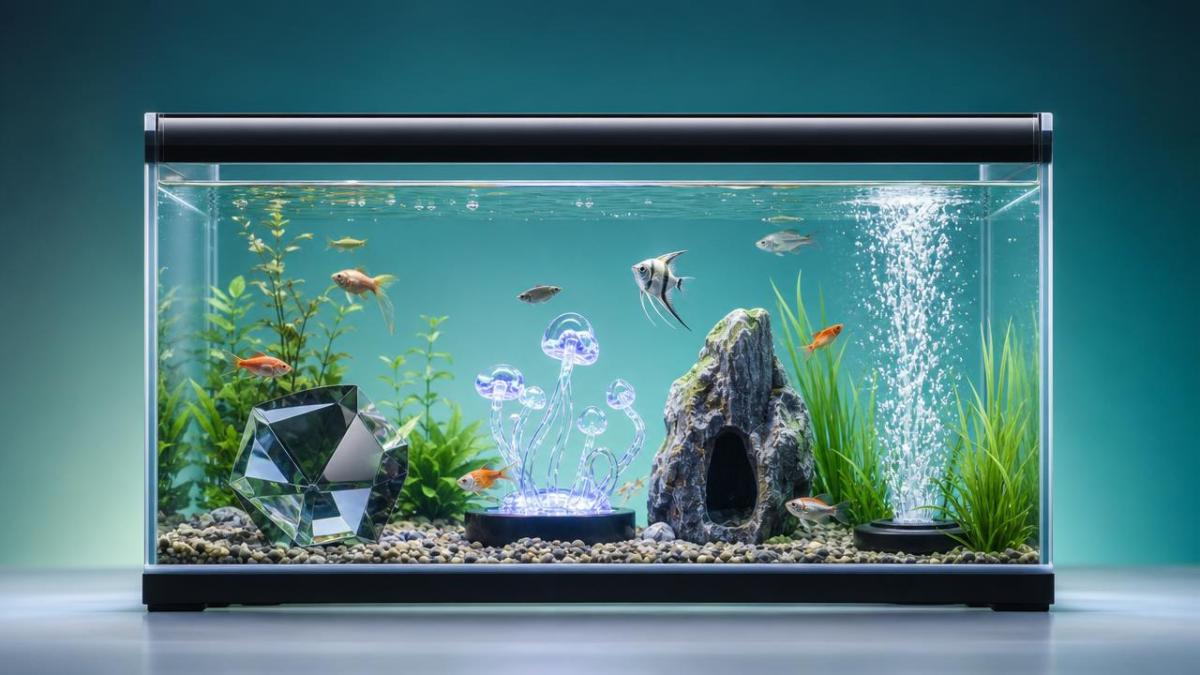
In the pet supplies trade, appearance sells fast, but behavior-related failures create longer-term costs. A decorative cave, bright LED ornament, mirrored background, or high-flow novelty bubbler may look premium on a shelf while causing fish to hide excessively, flare, collide, or stop feeding.
For quality control teams, the challenge is not only material safety. It is also functional safety. Fish tank accessories should be assessed for their effect on visibility, territorial stress, swimming routes, shelter use, light exposure, and noise or vibration inside the aquarium.
Safety managers often face a difficult question: if a product is chemically compliant and physically intact, can it still be unsuitable? In many cases, yes. A product can pass basic inspections yet still contribute to chronic stress and welfare complaints after retail sale.
- Behavior disruption may trigger returns even when there is no visible defect, because fish become inactive, aggressive, or prone to injury.
- Products with sharp visual contrast, unstable flow, or narrow openings can increase entrapment risk and species-specific stress.
- Importers and exporters need stronger screening standards, especially when sourcing decorative fish tank accessories across different factories and regions.
What behavior signals should buyers watch during evaluation?
A practical review should include fish positioning in the tank, repeated darting, prolonged hiding, glass surfing, fin clamping, disrupted schooling, and feeding hesitation. These indicators matter because they reveal whether an accessory changes the aquarium from a usable habitat into a visually crowded display.
Which fish tank accessories most often disturb fish behavior?
The table below helps quality and safety managers identify high-risk fish tank accessories by linking the retail appeal of each product to likely behavioral consequences and common procurement concerns.
The main lesson is simple: decorative appeal and habitat suitability are not the same thing. Fish tank accessories that alter light, reflection, shelter geometry, or water movement require review beyond packaging claims and visual inspection.
Other commonly overlooked items
- Artificial plants with very rigid leaves may scratch fins and reduce normal passage through planted zones.
- Floating novelty toys can cast inconsistent shadows, which may stress skittish species.
- Large centerpieces may reduce open swimming lanes, especially in community tanks with schooling fish.
How should QC teams evaluate fish tank accessories before approval?
A robust review system should combine physical inspection, species-use assumptions, and simulated in-tank observation. For pet and aquarium supply buyers, the right process reduces complaint rates and improves supplier communication before bulk orders ship.
Recommended screening workflow
- Check materials for aquarium suitability, coating stability, odor, loose particles, and finish consistency.
- Measure openings, edge radius, and internal spaces to reduce entrapment or abrasion risk.
- Review lighting, aeration, and motion features for intensity rather than just function.
- Test placement in a representative aquarium layout to see whether swimming routes remain open.
- Document species limitations clearly on packaging or internal product notes if the item is not universally suitable.
For import-focused procurement, this workflow is especially important because catalog photos rarely show proportion, turbulence, or reflective intensity accurately. A small sourcing error in fish tank accessories can turn into repeated after-sales friction across multiple markets.
Key evaluation dimensions for approval decisions
Use the following matrix when comparing fish tank accessories from different suppliers, especially when balancing price pressure, delivery schedules, and compliance expectations.
This kind of matrix makes supplier discussions more objective. Instead of saying an item “looks risky,” teams can define which features in fish tank accessories conflict with welfare, usability, or downstream customer expectations.
What standards and compliance points matter in the pet supplies sector?
No single global rule covers every aquarium ornament, but buyers should still apply a structured compliance lens. In pet supplies, relevant checks often include material safety, labeling clarity, electrical safety for powered features, and general product risk communication.
Practical compliance priorities
- Verify whether plastics, resins, coatings, adhesives, and colorants are suitable for aquarium contact use.
- Check that powered fish tank accessories include clear instructions on submersion limits, cleaning, and operating conditions.
- Review warning language for small parts, breakage hazards, or non-suitability for aggressive or large-bodied species.
- Maintain supplier documentation trails, especially when products are sourced from multiple factories under similar designs.
Quality managers should also remember that compliance does not replace use-case judgment. A legally saleable accessory may still be a poor fit for community tanks, breeder tanks, quarantine systems, or species that are highly reactive to light and reflection.
How can buyers balance cost, retail appeal, and fish welfare?
The lowest-cost decorative line is not always the lowest-risk option. Returns, negative reviews, damaged livestock claims, and distributor disputes can quickly erase the margin advantage of cheap but behavior-disruptive fish tank accessories.
Lower-risk alternatives worth considering
- Matte-finish ornaments instead of reflective surfaces for species prone to aggression.
- Soft-form artificial plants with flexible leaves rather than rigid decorative spikes.
- Shelters with multiple exits rather than single-entry novelty caves.
- Adjustable and steady lighting features rather than flashing visual effects.
- Aeration pieces that diffuse flow broadly instead of creating concentrated turbulence.
For sourcing teams, these substitutions often preserve shelf appeal while reducing behavioral risk. They also simplify product training for distributors and retail staff, who may not understand the difference between “safe to place in water” and “safe for fish behavior.”
What common mistakes do safety managers and buyers make?
Mistake 1: judging fish tank accessories only by material safety
An inert material is important, but it does not address stress, aggression, or poor tank navigation. Functional interaction matters just as much as chemical stability.
Mistake 2: assuming all species respond similarly
Calm schooling fish, territorial fish, nocturnal fish, and long-finned fish use space differently. A single accessory can be neutral for one species and highly disruptive for another.
Mistake 3: over-prioritizing novelty during line expansion
Seasonal themes and eye-catching features may support short-term sales. However, when fish tank accessories create welfare complaints, they weaken brand trust across both retail and wholesale channels.
FAQ for procurement, QC, and safety review
How do I know if fish tank accessories are too stimulating?
Look for intense reflection, rapid color change, concentrated bubbles, unstable shadows, or oversized centerpieces. If the accessory draws constant attention from fish rather than blending into normal movement patterns, it may be overstimulating.
Which fish tank accessories are safer for mixed community tanks?
Items with soft contours, non-reflective finishes, moderate shelter space, and stable placement usually perform better. Accessories that preserve open swimming lanes and offer more than one escape route are generally easier to approve.
What should buyers request from suppliers before placing bulk orders?
Request dimension details, material descriptions, finish information, powered-feature instructions if relevant, packaging warnings, and samples for in-tank observation. For higher-risk fish tank accessories, ask how the supplier defines intended species or tank size suitability.
Can a decorative accessory still be sold if it is not suitable for all fish?
Yes, but suitability should be communicated clearly. Restricting use by fish size, temperament, or tank type can reduce complaints and help distributors position the product more responsibly.
Why work with us for market intelligence and sourcing decisions?
In pet supplies, product quality is no longer judged only by finish, price, and lead time. Buyers also need market intelligence, risk context, and supplier visibility across regions. That is where GTIIN and TradeVantage add value for importers, exporters, and category managers handling fish tank accessories and related aquarium products.
Our strength lies in connecting supply chain information with commercial decision-making. We track sector developments, sourcing shifts, and product positioning trends across global markets, helping teams identify where decorative innovation aligns with practical usability and where hidden risks may affect brand performance.
- Consult us for product selection logic when comparing fish tank accessories across multiple suppliers.
- Ask about parameter confirmation, sample review priorities, and documentation expectations before order finalization.
- Discuss delivery cycle concerns, private-label content planning, and market-facing positioning for safer decorative lines.
- Use our industry intelligence support to evaluate compliance communication, sourcing alternatives, and quotation comparisons with better context.
If your team is reviewing fish tank accessories for sourcing, compliance, or range optimization, contact us with your target market, product category, and supplier list. We can help you structure evaluation points, compare alternatives, and support smarter conversations around samples, specifications, timelines, and quotation strategy.
 How an industrial trade intelligence dashboard can identify new supplier marketsDiscover how an industrial trade intelligence dashboard helps identify new supplier markets by comparing capacity, landed cost, logistics resilience, and compliance risk.
 Which global market entry barriers should exporters assess first?Global market entry barriers exporters should assess first: tariffs, compliance, buyer qualification, logistics, and payment risk. Build a practical strategy for confident market entry.
 How trade data aggregation analytics can reveal emerging supplier marketsTrade data aggregation analytics reveals emerging supplier markets by connecting trade flows, capacity signals, logistics, and compliance insights for smarter sourcing decisions.
 When an export market analysis platform can validate demand in a new marketExport market analysis platform insights help validate new-market demand through buyer fit, regulations, logistics, competition, and profitable entry conditions.
 What is driving the beauty and personal care market in the USA?Beauty and personal care in USA is driven by targeted solutions, selective premiumization, digital discovery, clean-label trust, diverse needs, and compliance. Explore key growth opportunities.
 How trade flow monitoring reports reveal changing regional demandTrade flow monitoring reports reveal changing regional demand through import volumes, sourcing shifts, product mix, logistics signals, and regulatory trends. Explore actionable market insights.
 How international market intelligence for investors reduces market-entry riskInternational market intelligence for investors reduces market-entry risk by validating demand, regulations, logistics, and competition before capital is committed.
 How international sourcing intelligence helps identify supplier risk earlyInternational sourcing intelligence helps businesses spot supplier risks early, protect supply continuity, and make smarter global procurement decisions.
 How trade data aggregation analytics reveals emerging supplier marketsTrade data aggregation analytics reveals emerging supplier markets through export trends, input flows, logistics, and regulatory signals. Discover smarter sourcing insights.
 What industrial cluster monitoring in Vietnam reveals about site riskIndustrial cluster monitoring Vietnam reveals hidden site risks across labor, utilities, logistics, compliance, and supplier dependencies. Make smarter sourcing and expansion decisions.
 Food Technology Trends Reshaping Shelf Life, Safety, and Product InnovationFood technology is reshaping shelf life, safety, and innovation. Discover the trends helping food businesses cut risk, improve compliance, and unlock stronger global market growth.
 How electronics manufacturing services are changing with low-volume demandElectronics manufacturing services are evolving fast with low-volume demand. Learn how agile EMS partners improve flexibility, compliance, sourcing resilience, and speed to market.
 How Can Buyers Reduce Procurement Risks for Electronic Components?How to reduce procurement risks for electronic components: learn how buyers assess traceability, lead times, compliance, and supplier types to avoid costly sourcing mistakes.
 What Sourcing Intelligence India Reveals About Supplier Risk and Cost ShiftsSourcing intelligence India reveals hidden supplier risk, compliance gaps, logistics pressure, and real cost shifts—helping buyers compare vendors smarter and source with more confidence.
 Fashion Trends 2026: Which Materials, Colors, and Silhouettes Are Gaining Ground?Fashion trends 2026 spotlight tactile fabrics, mineral colors, and controlled volume. Explore the materials, shades, and silhouettes shaping smarter, more wearable style.
 Smart Device Market Outlook: Key Growth Drivers, Segments, and Business OpportunitiesSmart device market trends are shifting toward system value, industrial demand, and resilient supply chains. Explore key growth drivers, high-potential segments, and business opportunities.
 How Global Trade Intelligence Services Help B2B Firms Evaluate Markets and SuppliersGlobal trade intelligence services help B2B firms compare suppliers, assess market potential, and uncover compliance, logistics, and pricing risks before costly decisions are made.
 Manufacturing Sector Updates for Investors: What Signals Matter Most in 2025?Manufacturing sector updates for investors in 2025: track orders, margins, supply chains, regulation, and exports to spot resilient manufacturers and smarter investment signals.
 How Energy Market Intelligence Helps Businesses Track Price Risks and Demand ShiftsEnergy market intelligence helps businesses spot price risks, demand shifts, and supply pressure early—improving procurement, resilience, and faster strategic decisions.
 Precision Hardware Tools Market: Key Demand Drivers, Segments, and Growth OutlookPrecision hardware tools market trends are reshaping sourcing, compliance, and automation. Explore key demand drivers, segment shifts, regional supply patterns, and growth opportunities.
 How to Use Customs Import Data to Find Buyers, Track Competitors, and Spot Demand?Customs import data helps you find real buyers, track competitors, and spot demand shifts early. Learn practical ways to turn trade records into smarter global business decisions.





















Global Trade Insights & Industry
Our mission is to empower global exporters and importers with data-driven insights that foster strategic growth.
Search News
Popular Tags
Industry Overview
The global commercial kitchen equipment market is projected to reach $112 billion by 2027. Driven by urbanization, the rise of e-commerce food delivery, and strict hygiene regulations.