

CIBF2026 Shenzhen Opens: Solid-State Battery Mass Production Accelerates

The 18th China International Battery Fair (CIBF2026) opened in Shenzhen on May 13, 2026. With over 3,200 exhibitors—including leading Chinese battery and materials firms—the event marked a pivotal shift in global lithium-ion supply chain expectations, driven by accelerating commercialization of all-solid-state lithium batteries and intensified scrutiny of export delivery reliability.
Event Overview
The 18th China International Battery Fair (CIBF2026) commenced in Shenzhen on May 13, 2026. More than 3,200 enterprises participated. Several top-tier Chinese battery manufacturers announced that their all-solid-state electrolyte lithium batteries have entered pilot-scale mass production. At the exhibition, overseas procurement entities—particularly those serving energy storage systems and EV accessories markets—explicitly stated that ‘stable six-month delivery capacity’ has become the primary evaluation criterion for new orders.
Industries Affected
Direct trading enterprises: Export-oriented battery module and pack traders face heightened contractual pressure, as overseas buyers now require binding delivery schedules backed by verifiable production capacity—not just quotations or MOUs. This shifts negotiation dynamics from price-led to capacity- and timeline-guaranteed terms.
Raw material procurement enterprises: Firms sourcing separator films, anode materials, and structural components are experiencing accelerated demand for long-term supply commitments. The emergence of ‘capacity lock-in agreements’—previously uncommon outside Tier-1 OEM programs—is now being requested across mid-tier export channels, increasing working capital exposure and planning complexity.
Manufacturing enterprises: Cell and pack producers must now align internal capacity planning with external delivery guarantees. Scaling up solid-state production lines while maintaining yield stability introduces new operational trade-offs—especially for companies still transitioning from lab-scale prototypes to repeatable, high-yield manufacturing processes.
Supply chain service enterprises: Logistics providers, customs brokers, and certification agencies report rising inquiries for expedited compliance pathways—including pre-audit support for UN38.3, IEC 62619, and regional safety certifications (e.g., UL 1973, EN 50604). Delivery predictability is now being factored into service-level agreements alongside transit time and documentation turnaround.
Key Focus Areas and Recommended Actions
Evaluate and formalize production capacity visibility
Manufacturers and suppliers should document and externally validate their near-term output capacity (next 6–12 months), including line utilization rates, raw material buffer levels, and bottleneck mitigation plans—ideally via third-party verification where feasible.
Negotiate tiered delivery commitments
Rather than blanket ‘capacity lock-in’, consider structured agreements—e.g., firm volume commitments for Q3–Q4 2026, with rolling forecasts for H1 2027—allowing flexibility without undermining buyer confidence.
Align certification timelines with production ramp-up
For solid-state battery exporters, initiate safety and transport certification processes no later than the start of pilot production—not after qualification completion—to avoid shipment delays at scale-up.
Strengthen cross-functional delivery governance
Establish joint internal task forces (production, procurement, logistics, quality) to monitor and report on delivery readiness metrics—such as on-time component receipt rate, first-pass yield, and certified packaging availability—on a biweekly basis.
Editorial Insight / Industry Observation
Observably, the emphasis on ‘six-month stable delivery’ signals a structural recalibration—not merely a cyclical tightening—in how international buyers assess supplier maturity. Analysis shows this metric functions less as a logistical checkpoint and more as a proxy for integrated operational resilience: it implicitly tests vertical coordination, raw material security, regulatory foresight, and financial stamina. From an industry perspective, this represents a quiet but decisive move toward ‘delivery-as-a-service’ as a core competency—distinct from, and increasingly prioritized over, pure cost or technical novelty.
Conclusion
CIBF2026 did not simply showcase technological progress; it crystallized a new threshold for market access in global lithium battery trade. The convergence of solid-state commercialization and delivery discipline marks a transition from innovation-led differentiation to execution-led eligibility. For stakeholders, success will depend less on announcing breakthroughs—and more on demonstrating repeatable, auditable, and certifiably scalable delivery performance.
Source Attribution
Official CIBF2026 Exhibition Guide (Shenzhen Convention & Exhibition Group, May 2026); public announcements by CATL, BYD Battery, and WeLion at CIBF2026 Press Conference; procurement statements collected by BatteryTech Insights during onsite buyer interviews (May 13–14, 2026). Note: Final terms of capacity lock-in agreements and regional certification acceptance criteria remain under active negotiation and are subject to update through Q3 2026.
Recommended News
 China's April机电 Exports Hit Record High, Up 20.4%China's April机电 exports hit record high (+20.4%) — driving demand for CNC equipment, solar PV modules & warehouse automation globally.
 EU Imposes 19.2% Anti-Dumping Duty on Chinese Adipic AcidEU imposes 19.2% anti-dumping duty on Chinese adipic acid—impacting nylon 66, PU foam & automotive suppliers. Act now to review contracts, origin docs & tariffs.
 Colombia Extends 28.3% Anti-Dumping Duty on Chinese Acrylic SheetsColombia extends 28.3% anti-dumping duty on Chinese acrylic sheets until 2029 — critical for importers, fabricators & supply chain teams across Latin America.
 CIBF2026 Shenzhen Opens: Solid-State Battery Mass Production AcceleratesCIBF2026 Shenzhen spotlights solid-state battery mass production—global buyers now prioritize 6-month delivery reliability. Discover how to meet new capacity & certification demands.
 Brazil INMETRO Tightens EMF Limits for Body Care Devices by 30%Brazil INMETRO tightens EMF limits by 30% for RF, microcurrent & LED body care devices—mandatory IEC 62493:2020 testing required from June 1, 2026. Act now to avoid customs delays!
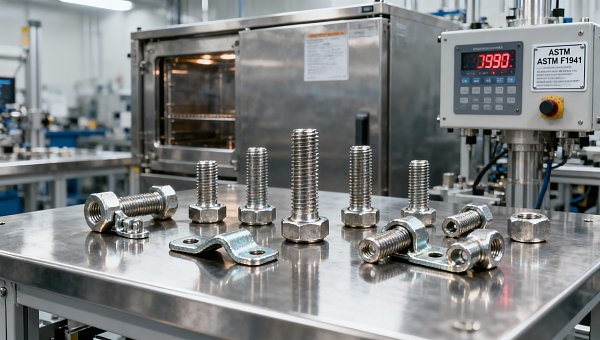
 India BIS Enforces IS 2062:2026 with Hydrogen Embrittlement Testing for Construction HardwareIndia BIS enforces IS 2062:2026 with mandatory hydrogen embrittlement testing for construction hardware—fasteners, hinges, connectors. Act now to secure BIS certification & market access.
 RCEP Phase II Digital Origin Rules Launch for Smart Factory EquipmentRCEP Phase II Digital Origin Rules now live — accelerate tariff-free access for smart factory equipment like CNC machines, robots & vision systems across Asia.
 New GS-EN IEC 62493:2026 Mandates EMF Retesting for Smart Lighting ExportsNew GS-EN IEC 62493:2026 mandates EMF retesting for smart lighting exports—40% stricter limits. Act now to avoid shipment delays in Germany, Austria & Switzerland.
 FDA Adds 37 Chinese Food Packaging Firms to Import AlertFDA adds 37 Chinese food packaging firms to Import Alert — discover why FSMA compliance statements & migration reports are now critical for U.S. market access.
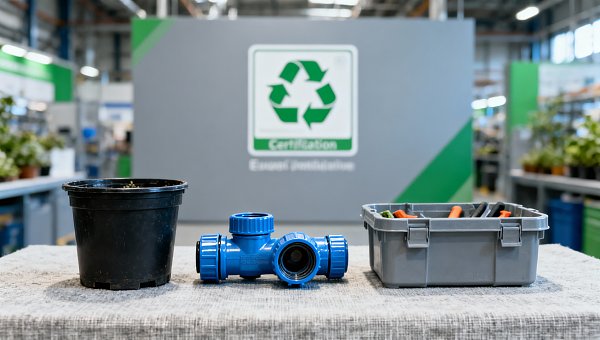
 EU EPR Rule for Plastic Garden Supplies Takes Effect May 12, 2026EU EPR Rule for Plastic Garden Supplies takes effect May 12, 2026 — mandatory registration & recycling fees for exporters. Act now to avoid customs delays & market access loss.
 Hotel security systems that reduce blind spots indoorsHotel security systems that reduce indoor blind spots help hotels improve visibility across lobbies, corridors, elevators, and service areas for safer operations and stronger guest trust.
 Luxury hotel carpets: which materials age more gracefully?Luxury hotel carpets: discover whether wool, nylon, or blends age more gracefully. Compare durability, comfort, stain performance, and lifecycle value for premium hotels.
 Why hospitality uniforms affect service consistencyHospitality uniforms improve service consistency by reinforcing trust, role clarity, and brand standards. Learn how the right uniform strategy boosts guest confidence and repeat bookings.
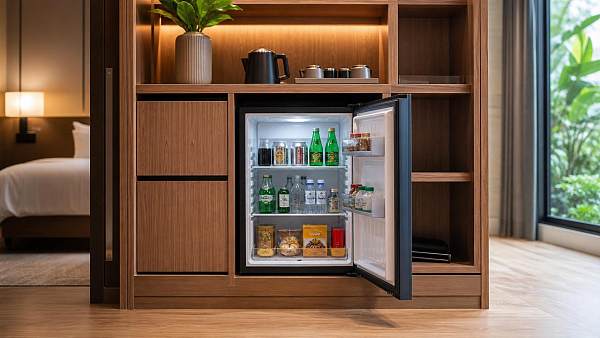
 Hotel minibar refrigerators and the real energy tradeoffHotel minibar refrigerators: uncover the real energy tradeoff beyond wattage. Compare cooling, noise, maintenance, and ROI to choose smarter, lower-cost hotel solutions.
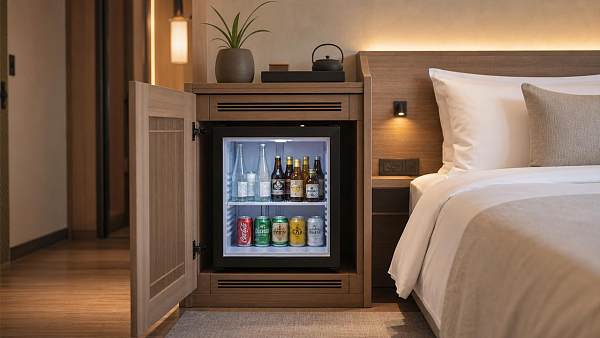
 How quiet should hotel minibar refrigerators really be?Hotel minibar refrigerators should be quiet enough to protect guest sleep. Learn the ideal dB range, quietest technologies, and smart selection tips for better hotel room comfort.
 Hotel room dividers and fire code issues to check firstHotel room dividers can impact fire safety, egress, and approvals. Learn the first fire code checks to avoid delays, reduce risk, and choose compliant solutions.
 Small Animal Habitats: Which Setup Reduces Stress Best?Small animal habitats that truly reduce stress start with species-specific design. Compare setups for hamsters, rabbits, rats, and guinea pigs to find welfare-led, buyer-smart habitat solutions.
 Pet Healthcare Products With Hidden Costs After PurchasePet healthcare products may look affordable, but hidden post-purchase costs can erode margins. Learn how to compare suppliers, reduce risk, and make smarter buying decisions.
 Why Bird Cages Wholesale Prices Vary More Than ExpectedBird cages wholesale prices vary for reasons beyond size or style. Learn how materials, coating, packaging, compliance, and sales channels affect real sourcing costs.
 Pet Grooming Tools That Save Time Without Pulling FurPet grooming tools that save time without pulling fur: discover gentle, coat-safe brushes, combs, and de-shedding options that reduce stress, speed up grooming, and improve coat health.
 Fish Tank Accessories That Look Good but Disturb Fish BehaviorFish tank accessories can look stunning yet quietly stress fish. Discover which popular designs disrupt behavior and how buyers can choose safer, smarter options.

















Global Trade Insights & Industry
Our mission is to empower global exporters and importers with data-driven insights that foster strategic growth.
Search News
Popular Tags
Industry Overview
The global commercial kitchen equipment market is projected to reach $112 billion by 2027. Driven by urbanization, the rise of e-commerce food delivery, and strict hygiene regulations.