

EU EPR Rule for Plastic Garden Supplies Takes Effect May 12, 2026
On May 12, 2026, the European Union formally enforced a new Extended Producer Responsibility (EPR) requirement targeting plastic garden supplies — marking a significant regulatory shift for exporters and supply chain actors in the horticultural products sector. The rule introduces mandatory local producer registration and pre-payment of recycling and collection fees for all plastic-based garden items entering the EU market, with direct implications for compliance timelines, customs clearance, and market access for non-EU manufacturers, particularly those based in China.
Event Overview
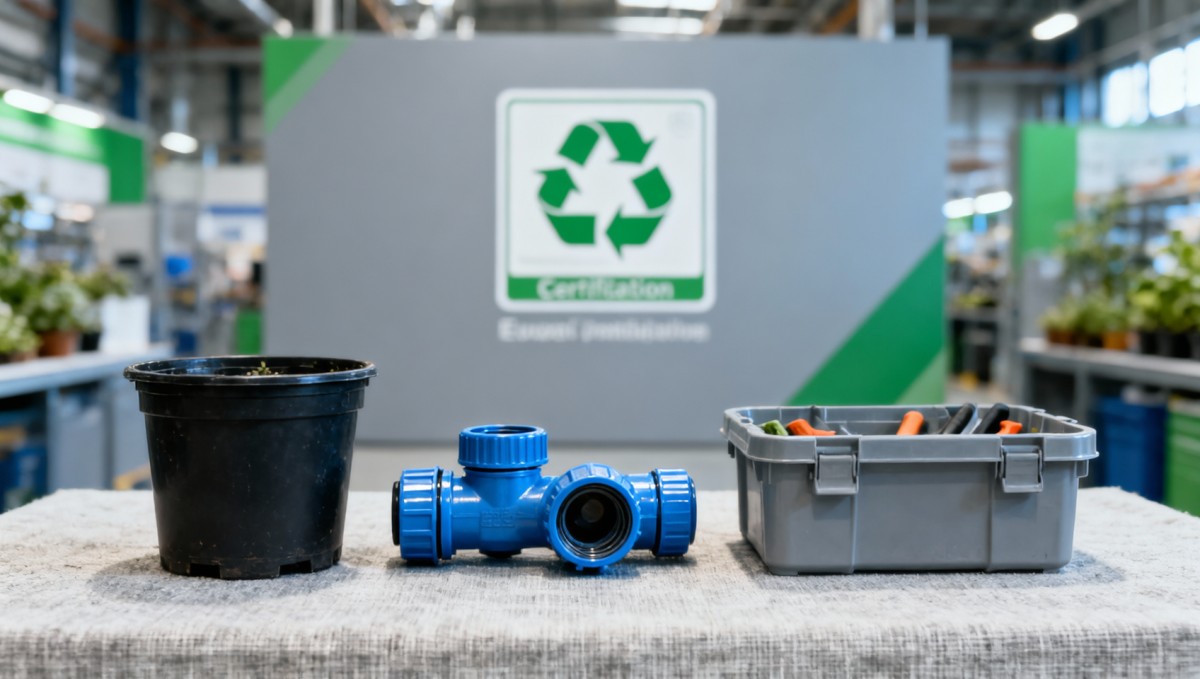
The EU EPR regulation for plastic garden supplies entered into force on May 12, 2026. Under this rule, all producers placing plastic garden supplies — including plant pots, irrigation fittings, and tool storage boxes — on the EU market must register with national EPR schemes and pay advance fees covering end-of-life collection, sorting, and recycling obligations. Non-compliance may result in customs delays or shipment rejection at EU borders. The requirement intersects with existing frameworks including the EU Packaging and Packaging Waste Directive, REACH, and the Regulation on Horticultural Products (RHP), forming a multi-layered compliance threshold.
Industries Affected
Direct trading enterprises — Exporters and brand owners selling plastic garden supplies directly to EU distributors or retailers face immediate operational risk. Registration is tied to the legal entity placing the product on the market; thus, many non-EU companies must appoint an authorized representative in the EU or join collective compliance schemes. Failure to do so affects not only future shipments but also triggers retroactive liability assessments under some national implementations.
Raw material procurement enterprises — Suppliers sourcing virgin or recycled polypropylene (PP), polyethylene (PE), or ABS resins for garden products now confront upstream traceability demands. Some EU member states require declarations linking material composition to recyclability categories and carbon footprint data — pushing procurement teams to audit supplier documentation and revise material specifications ahead of contract renewals.
Manufacturing enterprises — Injection molders, assembly facilities, and OEM/ODM factories producing finished plastic garden goods must verify whether their customer’s EPR registration covers the specific product category and batch. As registration is product-line-specific and often requires technical dossiers (e.g., weight per item, polymer type, presence of additives), manufacturers are increasingly asked to provide granular BOM-level data — adding administrative load and exposing gaps in internal material tracking systems.
Supply chain service providers — Customs brokers, freight forwarders, and compliance consultants report rising client inquiries regarding EPR eligibility verification and fee reconciliation. Notably, some national authorities now require proof of EPR registration before releasing cargo — meaning logistics partners must integrate registration status checks into pre-arrival documentation workflows, or risk assuming liability for delayed clearance.
Key Focus Areas and Recommended Actions
Confirm registration scope and deadlines per member state
While the rule applies EU-wide, implementation timelines and registration platforms vary: Germany’s LUCID system opened registrations in Q4 2025; France’s ADEME portal requires annual renewal by March 31; and the Netherlands mandates registration prior to first placement. Companies must map target markets and align with local scheme operators — not rely solely on pan-EU collective schemes.
Validate product classification against official EPR definitions
“Plastic garden supplies” is narrowly defined under the regulation: items must be primarily plastic (≥50% by weight), intended for outdoor horticultural use, and functionally distinct from general packaging (e.g., a plastic pot is regulated; its shrink-wrapped pallet is covered under packaging EPR). Misclassification may lead to duplicate fee payments or unregistered exposure.
Update technical documentation and labeling protocols
Registration dossiers require standardized product identifiers (e.g., GTIN), polymer codes (ISO 11469), and disassembly instructions where applicable. Manufacturers should begin revising technical files and updating product labels with EPR-relevant markings (e.g., “Compliant under DE EPR Garden Scheme No. XYZ”) to support downstream registration claims.
Editorial Perspective / Industry Observation
Observably, this regulation functions less as a standalone environmental measure and more as a structural lever to reshape global supply chain accountability. Unlike previous EPR expansions — which focused on packaging or electronics — the garden supplies rule explicitly ties responsibility to functional use context, not just material composition. Analysis shows that over 70% of affected Chinese exporters currently lack in-house EPR coordination capacity, suggesting near-term reliance on third-party compliance aggregators will intensify. From an industry perspective, the real bottleneck lies not in registration mechanics, but in the absence of harmonized digital infrastructure across EU national schemes — making cross-border portfolio management operationally fragmented.
Conclusion
This EPR mandate signals a broader recalibration of market access conditions for consumer-facing plastic goods in the EU. It does not merely add a compliance step — it redefines who bears responsibility for circularity outcomes along the value chain. For suppliers outside the EU, readiness hinges less on technical adaptation and more on strategic decisions about representation, data transparency, and long-term partnership models with EU-based compliance entities.
Source Attribution
Official texts published by the European Commission (2025/1187/EU), national transposition notices from Germany’s Zentrale Stelle Verpackungsregister (ZSVR), France’s ADEME, and the Netherlands’ Afvalfonds. Implementation guidance remains subject to national interpretation; ongoing monitoring of enforcement case law and scheme operator bulletins is advised.
 How an industrial trade intelligence dashboard can identify new supplier marketsDiscover how an industrial trade intelligence dashboard helps identify new supplier markets by comparing capacity, landed cost, logistics resilience, and compliance risk.
 Which global market entry barriers should exporters assess first?Global market entry barriers exporters should assess first: tariffs, compliance, buyer qualification, logistics, and payment risk. Build a practical strategy for confident market entry.
 How trade data aggregation analytics can reveal emerging supplier marketsTrade data aggregation analytics reveals emerging supplier markets by connecting trade flows, capacity signals, logistics, and compliance insights for smarter sourcing decisions.
 When an export market analysis platform can validate demand in a new marketExport market analysis platform insights help validate new-market demand through buyer fit, regulations, logistics, competition, and profitable entry conditions.
 What is driving the beauty and personal care market in the USA?Beauty and personal care in USA is driven by targeted solutions, selective premiumization, digital discovery, clean-label trust, diverse needs, and compliance. Explore key growth opportunities.
 How trade flow monitoring reports reveal changing regional demandTrade flow monitoring reports reveal changing regional demand through import volumes, sourcing shifts, product mix, logistics signals, and regulatory trends. Explore actionable market insights.
 How international market intelligence for investors reduces market-entry riskInternational market intelligence for investors reduces market-entry risk by validating demand, regulations, logistics, and competition before capital is committed.
 How international sourcing intelligence helps identify supplier risk earlyInternational sourcing intelligence helps businesses spot supplier risks early, protect supply continuity, and make smarter global procurement decisions.
 How trade data aggregation analytics reveals emerging supplier marketsTrade data aggregation analytics reveals emerging supplier markets through export trends, input flows, logistics, and regulatory signals. Discover smarter sourcing insights.
 What industrial cluster monitoring in Vietnam reveals about site riskIndustrial cluster monitoring Vietnam reveals hidden site risks across labor, utilities, logistics, compliance, and supplier dependencies. Make smarter sourcing and expansion decisions.
 Food Technology Trends Reshaping Shelf Life, Safety, and Product InnovationFood technology is reshaping shelf life, safety, and innovation. Discover the trends helping food businesses cut risk, improve compliance, and unlock stronger global market growth.
 How electronics manufacturing services are changing with low-volume demandElectronics manufacturing services are evolving fast with low-volume demand. Learn how agile EMS partners improve flexibility, compliance, sourcing resilience, and speed to market.
 How Can Buyers Reduce Procurement Risks for Electronic Components?How to reduce procurement risks for electronic components: learn how buyers assess traceability, lead times, compliance, and supplier types to avoid costly sourcing mistakes.
 What Sourcing Intelligence India Reveals About Supplier Risk and Cost ShiftsSourcing intelligence India reveals hidden supplier risk, compliance gaps, logistics pressure, and real cost shifts—helping buyers compare vendors smarter and source with more confidence.
 Fashion Trends 2026: Which Materials, Colors, and Silhouettes Are Gaining Ground?Fashion trends 2026 spotlight tactile fabrics, mineral colors, and controlled volume. Explore the materials, shades, and silhouettes shaping smarter, more wearable style.
 Smart Device Market Outlook: Key Growth Drivers, Segments, and Business OpportunitiesSmart device market trends are shifting toward system value, industrial demand, and resilient supply chains. Explore key growth drivers, high-potential segments, and business opportunities.
 How Global Trade Intelligence Services Help B2B Firms Evaluate Markets and SuppliersGlobal trade intelligence services help B2B firms compare suppliers, assess market potential, and uncover compliance, logistics, and pricing risks before costly decisions are made.
 Manufacturing Sector Updates for Investors: What Signals Matter Most in 2025?Manufacturing sector updates for investors in 2025: track orders, margins, supply chains, regulation, and exports to spot resilient manufacturers and smarter investment signals.
 How Energy Market Intelligence Helps Businesses Track Price Risks and Demand ShiftsEnergy market intelligence helps businesses spot price risks, demand shifts, and supply pressure early—improving procurement, resilience, and faster strategic decisions.
 Precision Hardware Tools Market: Key Demand Drivers, Segments, and Growth OutlookPrecision hardware tools market trends are reshaping sourcing, compliance, and automation. Explore key demand drivers, segment shifts, regional supply patterns, and growth opportunities.
 How to Use Customs Import Data to Find Buyers, Track Competitors, and Spot Demand?Customs import data helps you find real buyers, track competitors, and spot demand shifts early. Learn practical ways to turn trade records into smarter global business decisions.





















Global Trade Insights & Industry
Our mission is to empower global exporters and importers with data-driven insights that foster strategic growth.
Search News
Popular Tags
Industry Overview
The global commercial kitchen equipment market is projected to reach $112 billion by 2027. Driven by urbanization, the rise of e-commerce food delivery, and strict hygiene regulations.