

Brazil INMETRO Tightens EMF Limits for Body Care Devices by 30%
On May 7, 2026, Brazil’s National Institute of Metrology, Standardization and Industrial Quality (INMETRO) issued Portaria No. 127/2026, expanding mandatory electromagnetic field (EMF) certification to body care aesthetic devices—including radiofrequency (RF) devices, microcurrent delivery units, and red/blue light masks—and reducing permissible EMF exposure limits by 30% compared to previous requirements. The update mandates full-spectrum testing per IEC 62493:2020 and takes effect for customs clearance and sale in Brazil starting June 1, 2026. Exporters and manufacturers supplying these product categories to the Brazilian market—particularly those based in China—must now reassess compliance readiness.
Event Overview
On May 7, 2026, INMETRO published Portaria 127/2026, formally extending mandatory EMF conformity assessment under its certification scheme to body care aesthetic instruments. Specifically covered are RF-based devices, microcurrent facial/body devices, and LED phototherapy masks (red/blue light). The regulation enforces a 30% reduction in maximum allowable EMF emission levels relative to prior versions and requires test reports compliant with IEC 62493:2020 covering the full frequency range (100 kHz–6 GHz). As of June 1, 2026, non-compliant devices—especially those originating from China—will be denied customs clearance and prohibited from sale in Brazil.
Industries Affected
Direct Exporters & OEM/ODM Manufacturers
Companies exporting or manufacturing body care devices for the Brazilian market are directly affected because INMETRO’s certification is now a prerequisite for import. Non-compliance results in shipment rejection at Brazilian ports, leading to inventory delays, storage costs, and potential contract penalties. Affected products must undergo retesting and recertification under the new limit, which may require hardware or shielding modifications.
Supply Chain & Component Suppliers
Suppliers of critical subsystems—such as RF generators, microcurrent control modules, and LED driver boards—face indirect but material impact. If their components contribute to elevated EMF emissions, downstream device integrators may request design revisions or alternative parts. This could trigger renegotiation of technical specifications or lead-time extensions for component qualification.
Distribution & Import Agents
Local distributors and import agents in Brazil must verify INMETRO certification status before accepting shipments. Under the new rule, they bear increased liability for customs hold-ups and market withdrawal risks. Their documentation workflows must now include validated IEC 62493:2020 test reports and updated Portaria 127/2026 declaration letters—not just legacy INMETRO certificates.
Key Actions for Relevant Enterprises and Practitioners
Verify current certification status against Portaria 127/2026
Confirm whether existing INMETRO certificates reference the repealed version of the standard or cite IEC 62493:2020 explicitly. Legacy certificates issued under earlier editions (e.g., IEC 62493:2015) do not satisfy the new requirement—even if previously accepted.
Identify high-risk SKUs requiring immediate retesting
Prioritize models with higher-power RF outputs, multi-channel microcurrent circuits, or densely packed LED arrays—these are most likely to exceed the tightened 30% EMF limit. Focus first on SKUs scheduled for shipment to Brazil between June and September 2026.
Engage accredited labs for IEC 62493:2020 full-band testing
Only test reports issued by INMETRO-accredited laboratories (listed in the INMETRO Organism Registry) will be accepted. Confirm lab accreditation scope includes the full 100 kHz–6 GHz range; some labs certified only for sub-bands may require supplemental validation.
Update labeling, technical files, and importer declarations
Certified devices must display the updated INMETRO mark alongside the Portaria number (127/2026) and year of certification. Technical documentation submitted to Brazilian importers must include the full IEC 62493:2020 report—not summaries or excerpts—and a signed manufacturer’s declaration of conformity referencing the new regulation.
Editorial Perspective / Industry Observation
Observably, this regulatory shift signals a broader trend among emerging markets to align EMF safety frameworks with updated international standards—particularly as consumer awareness of non-ionizing radiation grows. Analysis shows that the 30% tightening is not incremental but represents a meaningful threshold adjustment, likely targeting devices operating near prior limits. From an industry perspective, this is less a one-off compliance event and more a signal that EMF scrutiny for low-power aesthetic electronics is intensifying globally—not just in Brazil. Current enforcement timing (June 1, 2026) suggests limited grace period, implying INMETRO expects manufacturers to have completed assessments well ahead of the deadline. It is therefore more accurate to interpret this as an operational inflection point than a distant policy warning.
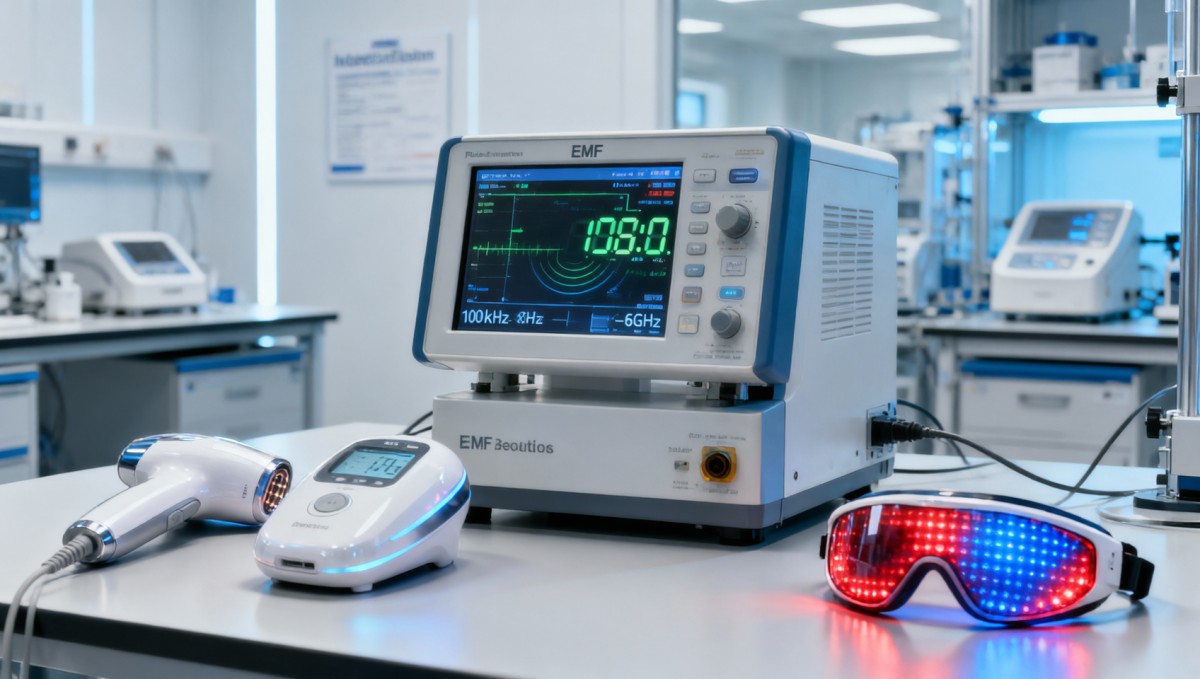
In summary, Portaria 127/2026 introduces enforceable, time-bound constraints on EMF emissions for body care devices entering Brazil—impacting exporters, suppliers, and local channel partners alike. Its significance lies not only in the technical recalibration but in its role as an early indicator of tightening regulatory expectations for aesthetic technology in regulated LATAM markets. For stakeholders, the update is best understood as a concrete compliance milestone requiring targeted action—not a speculative risk or background policy development.
Source: Official INMETRO Portaria No. 127/2026, published May 7, 2026. Status of implementation and list of accredited laboratories remain subject to verification via the INMETRO Organism Registry (www.inmetro.gov.br/organismos). Ongoing updates to enforcement guidance—particularly regarding transitional arrangements for pending applications—are under observation.
 How an industrial trade intelligence dashboard can identify new supplier marketsDiscover how an industrial trade intelligence dashboard helps identify new supplier markets by comparing capacity, landed cost, logistics resilience, and compliance risk.
 Which global market entry barriers should exporters assess first?Global market entry barriers exporters should assess first: tariffs, compliance, buyer qualification, logistics, and payment risk. Build a practical strategy for confident market entry.
 How trade data aggregation analytics can reveal emerging supplier marketsTrade data aggregation analytics reveals emerging supplier markets by connecting trade flows, capacity signals, logistics, and compliance insights for smarter sourcing decisions.
 When an export market analysis platform can validate demand in a new marketExport market analysis platform insights help validate new-market demand through buyer fit, regulations, logistics, competition, and profitable entry conditions.
 What is driving the beauty and personal care market in the USA?Beauty and personal care in USA is driven by targeted solutions, selective premiumization, digital discovery, clean-label trust, diverse needs, and compliance. Explore key growth opportunities.
 How trade flow monitoring reports reveal changing regional demandTrade flow monitoring reports reveal changing regional demand through import volumes, sourcing shifts, product mix, logistics signals, and regulatory trends. Explore actionable market insights.
 How international market intelligence for investors reduces market-entry riskInternational market intelligence for investors reduces market-entry risk by validating demand, regulations, logistics, and competition before capital is committed.
 How international sourcing intelligence helps identify supplier risk earlyInternational sourcing intelligence helps businesses spot supplier risks early, protect supply continuity, and make smarter global procurement decisions.
 How trade data aggregation analytics reveals emerging supplier marketsTrade data aggregation analytics reveals emerging supplier markets through export trends, input flows, logistics, and regulatory signals. Discover smarter sourcing insights.
 What industrial cluster monitoring in Vietnam reveals about site riskIndustrial cluster monitoring Vietnam reveals hidden site risks across labor, utilities, logistics, compliance, and supplier dependencies. Make smarter sourcing and expansion decisions.
 Food Technology Trends Reshaping Shelf Life, Safety, and Product InnovationFood technology is reshaping shelf life, safety, and innovation. Discover the trends helping food businesses cut risk, improve compliance, and unlock stronger global market growth.
 How electronics manufacturing services are changing with low-volume demandElectronics manufacturing services are evolving fast with low-volume demand. Learn how agile EMS partners improve flexibility, compliance, sourcing resilience, and speed to market.
 How Can Buyers Reduce Procurement Risks for Electronic Components?How to reduce procurement risks for electronic components: learn how buyers assess traceability, lead times, compliance, and supplier types to avoid costly sourcing mistakes.
 What Sourcing Intelligence India Reveals About Supplier Risk and Cost ShiftsSourcing intelligence India reveals hidden supplier risk, compliance gaps, logistics pressure, and real cost shifts—helping buyers compare vendors smarter and source with more confidence.
 Fashion Trends 2026: Which Materials, Colors, and Silhouettes Are Gaining Ground?Fashion trends 2026 spotlight tactile fabrics, mineral colors, and controlled volume. Explore the materials, shades, and silhouettes shaping smarter, more wearable style.
 Smart Device Market Outlook: Key Growth Drivers, Segments, and Business OpportunitiesSmart device market trends are shifting toward system value, industrial demand, and resilient supply chains. Explore key growth drivers, high-potential segments, and business opportunities.
 How Global Trade Intelligence Services Help B2B Firms Evaluate Markets and SuppliersGlobal trade intelligence services help B2B firms compare suppliers, assess market potential, and uncover compliance, logistics, and pricing risks before costly decisions are made.
 Manufacturing Sector Updates for Investors: What Signals Matter Most in 2025?Manufacturing sector updates for investors in 2025: track orders, margins, supply chains, regulation, and exports to spot resilient manufacturers and smarter investment signals.
 How Energy Market Intelligence Helps Businesses Track Price Risks and Demand ShiftsEnergy market intelligence helps businesses spot price risks, demand shifts, and supply pressure early—improving procurement, resilience, and faster strategic decisions.
 Precision Hardware Tools Market: Key Demand Drivers, Segments, and Growth OutlookPrecision hardware tools market trends are reshaping sourcing, compliance, and automation. Explore key demand drivers, segment shifts, regional supply patterns, and growth opportunities.
 How to Use Customs Import Data to Find Buyers, Track Competitors, and Spot Demand?Customs import data helps you find real buyers, track competitors, and spot demand shifts early. Learn practical ways to turn trade records into smarter global business decisions.





















Global Trade Insights & Industry
Our mission is to empower global exporters and importers with data-driven insights that foster strategic growth.
Search News
Popular Tags
Industry Overview
The global commercial kitchen equipment market is projected to reach $112 billion by 2027. Driven by urbanization, the rise of e-commerce food delivery, and strict hygiene regulations.