

When Outdoor Storage Solutions Create More Moisture Than Protection
Not all outdoor storage solutions protect gear the way users expect. For after-sales maintenance teams, hidden moisture buildup often explains recurring product damage, mold complaints, and shortened equipment life. Understanding why storage units trap condensation instead of blocking it is essential for diagnosing failures, improving customer guidance, and reducing costly service issues before they escalate.
In outdoor sports equipment, the storage environment often determines whether a tent coating peels in 9 months or lasts 3 seasons, whether a sleeping bag develops mildew in 2 weeks of off-season storage, and whether protective padding keeps its shape after repeated transport and warehousing.
For after-sales maintenance personnel, complaints linked to moisture rarely start with visible water ingress alone. They usually involve temperature swings, poor ventilation, trapped humidity, and user habits that interact with outdoor storage solutions in ways customers do not anticipate at purchase.
This matters in B2B service chains as well. Distributors, repair teams, and brand support staff need practical criteria to evaluate storage cabinets, deck boxes, transit trunks, and fabric shelters used for skis, tents, climbing gear, helmets, life vests, and seasonal accessories.
Why Outdoor Storage Solutions Often Trap Moisture Instead of Preventing It
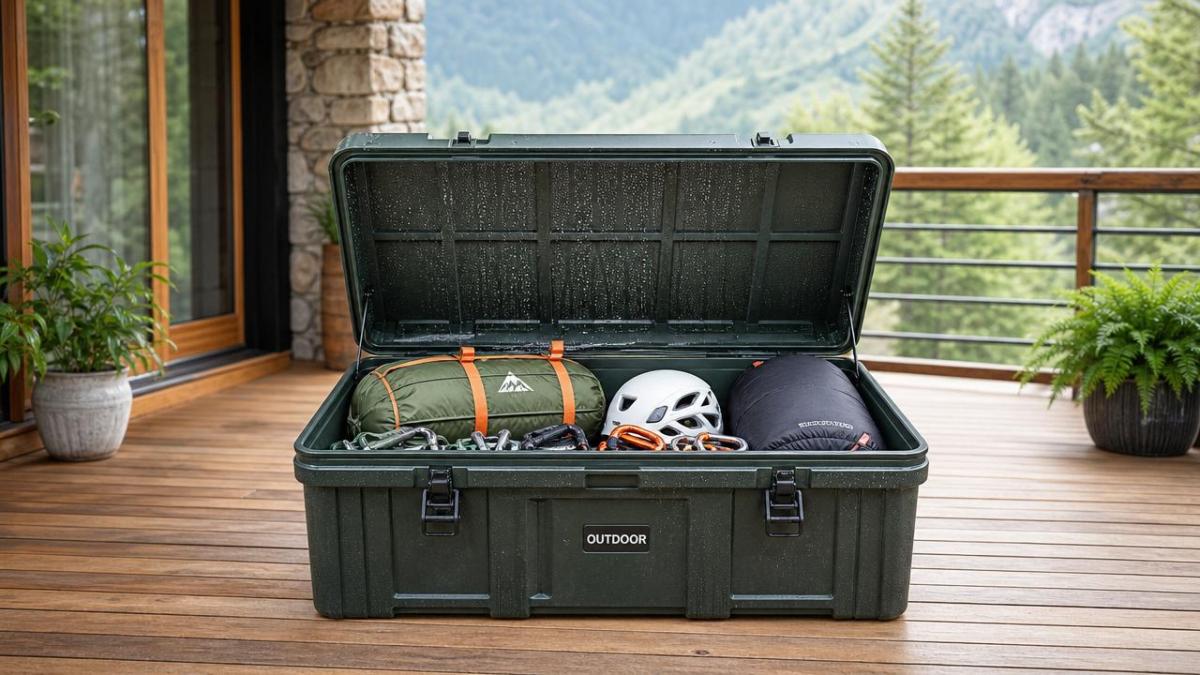
A common misconception is that a sealed enclosure automatically protects gear. In reality, many outdoor storage solutions stop rain but still capture humid air. When daytime temperatures rise by 8°C–15°C and night temperatures drop quickly, condensation forms on interior walls, lids, and stored equipment surfaces.
After-sales teams see this pattern in polymer deck boxes, metal lockers, laminated transit cases, and tarp-covered shelters. The issue is especially severe when users store damp items after a ride, trek, paddle session, or snow day without a 12–24 hour drying period.
The Condensation Cycle in Real Service Scenarios
Moisture problems usually follow a 4-step cycle: wet gear enters storage, airflow remains limited, the enclosure heats up under sun exposure, and internal vapor condenses as ambient temperature falls. This can repeat daily for weeks, even when there is no obvious leak.
For outdoor sports products, materials respond differently. Nylon tent flysheets may trap residual moisture in folds. EVA padding can hold surface condensation. Metal components on trekking poles, buckles, and tool sets may show corrosion spots within 30–60 days under sustained humidity.
High-Risk Gear Categories
- Camping textiles: tents, sleeping bags, tarps, camp chairs with padded fabric
- Water sports gear: buoyancy aids, dry bags, wetsuit accessories, paddle gloves
- Snow and trail equipment: helmets, ski boots, gaiters, packs, straps, liners
- Climbing and cycling accessories: harness pads, helmets, gloves, hydration packs
The table below outlines typical moisture sources that maintenance teams should check before attributing damage to product defects alone. It helps separate design issues from use-and-storage issues during warranty review and field inspections.
The key takeaway is simple: rain resistance is not the same as moisture control. For after-sales teams, that distinction can reduce unnecessary part replacements and improve root-cause diagnosis in as little as 1 service cycle.
Design Features That Look Protective but Create Risk
Several common design choices increase hidden humidity. Tight gaskets without pressure balancing, flat lids that drip inward, dark exterior shells that overheat, and solid floors placed directly on concrete or soil all raise condensation risk inside outdoor storage solutions.
A storage unit may appear premium because it is thick-walled or fully enclosed, yet if it lacks vent channels, raised feet, or drainage points, interior RH can remain high for 24–72 hours after gear is stored. That delay is enough to trigger odor and mold complaints.
How After-Sales Teams Can Diagnose Moisture-Related Storage Failures
Effective diagnosis starts with pattern recognition. If claims cluster around zipper oxidation, fabric odor, liner discoloration, or foam deformation, storage conditions should be reviewed before the product itself is judged noncompliant. A 5-point inspection process can usually identify the true source.
A Practical 5-Point Inspection Checklist
- Check whether gear was stored wet, partially dried, or clean and fully aired.
- Inspect the enclosure for vent openings, drain paths, and floor clearance above ground.
- Look for condensation marks on interior panels, lid undersides, and corner seams.
- Measure local conditions where possible: humidity above 65% and repeated thermal swings raise risk.
- Compare damage position with airflow dead zones, not just with water entry points.
This structured review supports more consistent maintenance decisions across service teams in warehouses, rental fleets, repair centers, and distributor networks. It also improves customer communication because the explanation becomes evidence-based rather than opinion-based.
Visual Clues That Suggest Condensation Rather Than Leakage
- Uniform moisture film across multiple surfaces instead of a single wet spot
- Mold forming in folds, corners, and compression points rather than near seams only
- Corrosion on metal trim with no visible rainwater trail
- Musty odor after 7–10 days of storage even in a closed, intact box
The following comparison table can be used by after-sales maintenance teams to distinguish common fault patterns. It is particularly useful when assessing outdoor storage solutions used with multi-material sports gear.
Used consistently, this framework shortens troubleshooting time and lowers repeat complaints. It also helps brands and service partners create clearer warranty boundaries around misuse, environmental exposure, and storage-related degradation.
What Better Outdoor Storage Solutions Should Include for Outdoor Sports Equipment
For outdoor gear, moisture-safe storage is rarely about one feature alone. The best outdoor storage solutions combine weather shielding, passive ventilation, floor isolation, and material compatibility. In most after-sales cases, improving 3 or 4 design elements is more effective than simply making the box tighter.
Priority Design Criteria for B2B Buyers and Service Teams
When evaluating storage units for camps, rental operators, event support teams, and equipment dealers, consider vent placement, underside clearance, internal partitioning, and ease of drying inspection. A 20 mm–50 mm raised base can already reduce moisture transfer from wet decking or concrete.
- Cross-ventilation instead of one-sided venting
- Sloped lids or drip management to prevent interior runoff
- Drain-compatible floors for cleaning and accidental water release
- Non-absorptive interior surfaces that can be wiped dry in under 10 minutes
- Clear volume zoning for textiles, hard goods, and repair tools
Maintenance teams should also review whether the storage product matches the gear category. A box suitable for paddles and helmets may be unsuitable for down sleeping bags or laminated tent fabrics that require lower residual humidity and better air exchange.
Material and Placement Considerations
Placement often matters as much as construction. A well-designed enclosure placed against a heat-reflective wall, under full sun for 6–8 hours daily, or directly above wet soil can still fail. Service guidance should therefore include siting instructions, not just product handling notes.
For many outdoor storage solutions, adding simple accessories can improve outcomes: vent inserts, moisture indicators, removable drying racks, mesh separation panels, and replaceable desiccant packs. These low-cost additions are practical for seasonal fleets and after-sales support programs.
Service Guidance, Customer Education, and Procurement Advice
Reducing moisture-related claims is not only a design issue; it is also a communication issue. Many end users assume that “store outdoors” means “store wet gear immediately.” After-sales teams can cut complaint volume by building short, repeatable guidance into handover documents, labels, and support scripts.
Customer Instructions That Prevent Repeat Failures
- Dry high-risk gear for 12–24 hours before enclosed storage.
- Leave storage lids slightly ventilated after heavy-use days where safe.
- Inspect for odor, droplets, or damp corners every 7 days in humid seasons.
- Separate textiles from metal tools and sharp repair items.
- Clean and fully air the enclosure at least once every 30–45 days.
These steps are simple, but they meaningfully reduce mildew, corrosion, and liner staining. For maintenance departments, they also create a documented usage baseline that improves claim evaluation and supports more transparent service outcomes.
Procurement Questions Worth Asking Suppliers
B2B buyers sourcing outdoor storage solutions for sports equipment should ask at least 6 practical questions: How is ventilation achieved? Is the floor raised? What happens after wet loading? Can the interior be cleaned quickly? Which materials contact gear? What use limits apply in high-humidity zones?
For companies working across international supply chains, these details support better product positioning and fewer post-sale disputes. They also strengthen supplier evaluation when comparing enclosures for rental operations, export packaging transitions, seasonal stock storage, and field service deployment.
When outdoor storage solutions create more moisture than protection, the damage often appears later as odor, corrosion, fabric degradation, or mold rather than immediate water exposure. For after-sales maintenance teams, the most effective response is a combination of accurate diagnosis, storage-specific user guidance, and better purchasing criteria.
Organizations that support outdoor sports equipment across distribution, maintenance, and export channels benefit from treating storage as part of product performance, not as a separate accessory decision. If you need deeper market insight, sourcing references, or tailored visibility for your storage-related product solutions, contact us to get a customized plan, discuss product details, and explore more industry solutions.
 How an industrial trade intelligence dashboard can identify new supplier marketsDiscover how an industrial trade intelligence dashboard helps identify new supplier markets by comparing capacity, landed cost, logistics resilience, and compliance risk.
 Which global market entry barriers should exporters assess first?Global market entry barriers exporters should assess first: tariffs, compliance, buyer qualification, logistics, and payment risk. Build a practical strategy for confident market entry.
 How trade data aggregation analytics can reveal emerging supplier marketsTrade data aggregation analytics reveals emerging supplier markets by connecting trade flows, capacity signals, logistics, and compliance insights for smarter sourcing decisions.
 When an export market analysis platform can validate demand in a new marketExport market analysis platform insights help validate new-market demand through buyer fit, regulations, logistics, competition, and profitable entry conditions.
 What is driving the beauty and personal care market in the USA?Beauty and personal care in USA is driven by targeted solutions, selective premiumization, digital discovery, clean-label trust, diverse needs, and compliance. Explore key growth opportunities.
 How trade flow monitoring reports reveal changing regional demandTrade flow monitoring reports reveal changing regional demand through import volumes, sourcing shifts, product mix, logistics signals, and regulatory trends. Explore actionable market insights.
 How international market intelligence for investors reduces market-entry riskInternational market intelligence for investors reduces market-entry risk by validating demand, regulations, logistics, and competition before capital is committed.
 How international sourcing intelligence helps identify supplier risk earlyInternational sourcing intelligence helps businesses spot supplier risks early, protect supply continuity, and make smarter global procurement decisions.
 How trade data aggregation analytics reveals emerging supplier marketsTrade data aggregation analytics reveals emerging supplier markets through export trends, input flows, logistics, and regulatory signals. Discover smarter sourcing insights.
 What industrial cluster monitoring in Vietnam reveals about site riskIndustrial cluster monitoring Vietnam reveals hidden site risks across labor, utilities, logistics, compliance, and supplier dependencies. Make smarter sourcing and expansion decisions.
 Food Technology Trends Reshaping Shelf Life, Safety, and Product InnovationFood technology is reshaping shelf life, safety, and innovation. Discover the trends helping food businesses cut risk, improve compliance, and unlock stronger global market growth.
 How electronics manufacturing services are changing with low-volume demandElectronics manufacturing services are evolving fast with low-volume demand. Learn how agile EMS partners improve flexibility, compliance, sourcing resilience, and speed to market.
 How Can Buyers Reduce Procurement Risks for Electronic Components?How to reduce procurement risks for electronic components: learn how buyers assess traceability, lead times, compliance, and supplier types to avoid costly sourcing mistakes.
 What Sourcing Intelligence India Reveals About Supplier Risk and Cost ShiftsSourcing intelligence India reveals hidden supplier risk, compliance gaps, logistics pressure, and real cost shifts—helping buyers compare vendors smarter and source with more confidence.
 Fashion Trends 2026: Which Materials, Colors, and Silhouettes Are Gaining Ground?Fashion trends 2026 spotlight tactile fabrics, mineral colors, and controlled volume. Explore the materials, shades, and silhouettes shaping smarter, more wearable style.
 Smart Device Market Outlook: Key Growth Drivers, Segments, and Business OpportunitiesSmart device market trends are shifting toward system value, industrial demand, and resilient supply chains. Explore key growth drivers, high-potential segments, and business opportunities.
 How Global Trade Intelligence Services Help B2B Firms Evaluate Markets and SuppliersGlobal trade intelligence services help B2B firms compare suppliers, assess market potential, and uncover compliance, logistics, and pricing risks before costly decisions are made.
 Manufacturing Sector Updates for Investors: What Signals Matter Most in 2025?Manufacturing sector updates for investors in 2025: track orders, margins, supply chains, regulation, and exports to spot resilient manufacturers and smarter investment signals.
 How Energy Market Intelligence Helps Businesses Track Price Risks and Demand ShiftsEnergy market intelligence helps businesses spot price risks, demand shifts, and supply pressure early—improving procurement, resilience, and faster strategic decisions.
 Precision Hardware Tools Market: Key Demand Drivers, Segments, and Growth OutlookPrecision hardware tools market trends are reshaping sourcing, compliance, and automation. Explore key demand drivers, segment shifts, regional supply patterns, and growth opportunities.
 How to Use Customs Import Data to Find Buyers, Track Competitors, and Spot Demand?Customs import data helps you find real buyers, track competitors, and spot demand shifts early. Learn practical ways to turn trade records into smarter global business decisions.





















Global Trade Insights & Industry
Our mission is to empower global exporters and importers with data-driven insights that foster strategic growth.
Search News
Popular Tags
Industry Overview
The global commercial kitchen equipment market is projected to reach $112 billion by 2027. Driven by urbanization, the rise of e-commerce food delivery, and strict hygiene regulations.