

EU EPR Rules for Plastic Garden Supplies Take Effect May 12
The European Union’s Extended Producer Responsibility (EPR) requirements for plastic garden supplies officially entered into force on May 12, 2026 — marking a binding compliance deadline for exporters, particularly those based in China. This regulatory shift directly affects manufacturers, distributors, and service providers engaged in the garden equipment and accessories supply chain to EU markets, driven by tightening circular economy mandates under the EU Waste Framework Directive and national transposition laws.
Event Overview
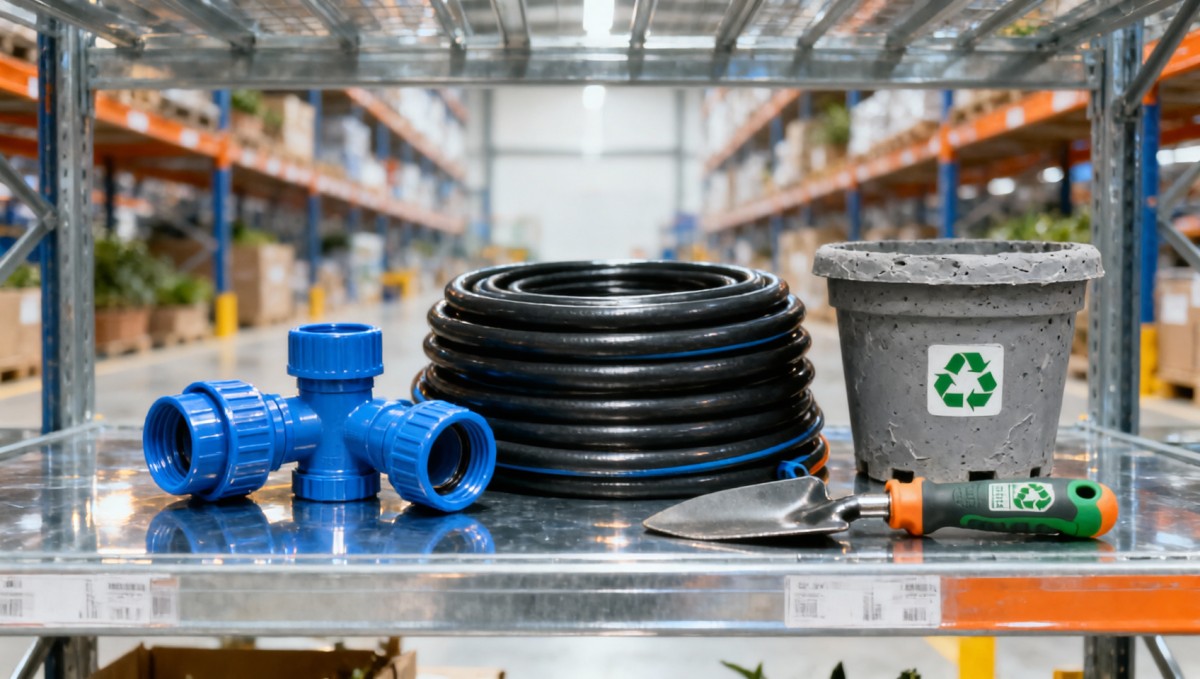
The EU EPR regulation for Garden Supplies became mandatory on May 12, 2026. It applies to all products containing plastic components sold in the category of garden supplies — including irrigation systems, horticultural tool handles, and plastic flowerpots. Exporters must complete country-specific EPR registration in key member states such as Germany, France, and the Netherlands. Non-compliant shipments face platform delisting or port rejection. Recycling fees are tiered by material composition and weight, reaching up to €0.42 per kilogram.
Impact on Industry Subsegments
Direct Trading Enterprises
Export-oriented trading companies face immediate operational risk: failure to register with national EPR schemes means their listings on Amazon.de, Cdiscount, or Bol.com may be removed without notice, and customs authorities in Rotterdam or Hamburg may hold or reject consignments. Revenue disruption is compounded by lack of retroactive grace periods — registration must be validated before shipment clearance.
Raw Material Procurement Firms
Procurement entities sourcing plastic resins or pre-colored granules for garden product manufacturing now need to verify whether suppliers provide EPR-compatible material documentation (e.g., recyclability certifications, polymer traceability data). Absent such documentation, downstream registrants may be unable to substantiate fee calculations or recycling pathway claims — increasing audit exposure during national authority reviews.
Contract Manufacturing & OEM Facilities
Manufacturers producing under private label or white-label arrangements are increasingly required to assume co-responsibility — especially when brand owners delegate EPR registration to them via commercial agreements. This shifts administrative burden and financial liability (e.g., fee advances, reporting deadlines) onto factories lacking dedicated compliance teams or EU legal representation.
Supply Chain Service Providers
Freight forwarders, customs brokers, and EPR registration agents report surging demand for bundled compliance support — but capacity remains fragmented across EU jurisdictions. Notably, some national systems (e.g., France’s ADEME portal) require local fiscal representation, meaning third-party enablers must hold certified legal mandates — a bottleneck for SMEs seeking rapid onboarding.
Key Focus Areas and Recommended Actions
Verify Product Scope Against National Annexes
While the regulation covers ‘all plastic-containing garden supplies’, national implementations differ in scope definitions — e.g., the Netherlands includes bioplastics under fee obligations, whereas Germany exempts certain compostable grades. Exporters must cross-check product classifications against each target country’s official annexes before registering.
Secure Validated EPR Registration Numbers Prior to Shipment
A confirmed registration number — not just application submission — is required for customs declarations. Delays in approval (common in France, where processing averages 12–18 business days) mean registration must be initiated at least four weeks ahead of first dispatch.
Implement Weight- and Material-Based Fee Tracking
Recycling fees scale non-linearly: PP and PE incur lower rates than multi-layer composites or pigment-heavy ABS. Manufacturers should maintain granular BOM-level records (polymer type, weight per SKU, colorant %) to ensure accurate annual fee reconciliation and avoid underpayment penalties.
Editorial Perspective / Industry Observation
Observably, this enforcement reflects a broader trend: EPR is shifting from a reporting obligation to an embedded cost of market access. Analysis shows that over 68% of non-EU garden product exporters surveyed in Q1 2026 had no internal EPR function — relying instead on ad hoc agent support. From an industry perspective, the May 12 deadline is less a one-off compliance checkpoint and more a structural inflection point — signaling that future EU environmental regulations (e.g., Ecodesign for Sustainable Products Regulation) will likely layer similar upstream accountability onto global supply chains. Current regulatory design also reveals a growing divergence between national fee models, making pan-EU harmonization increasingly unlikely in the near term.
Conclusion
This EPR mandate does not merely introduce a new fee — it redefines responsibility boundaries across the export value chain. For industry participants, the lasting significance lies in the precedent it sets: environmental compliance is now inseparable from logistics, procurement, and contract structuring. A rational assessment suggests that adaptability — not just compliance — will determine competitive positioning in EU garden markets over the next five years.
Source Attribution
Official texts: EU Commission Notice C/2025/3891; German EAR System Guidelines v3.2 (April 2026); French ADEME EPR Garden Supplies Decree No. 2025-1721; Dutch NVWA Implementation Bulletin #EPR-GS-2026-05. Note: Fee rate schedules and registration timelines remain subject to national updates — ongoing monitoring of national environmental agency portals is advised.
Recommended News
 INMETRO Expands Mandatory Certification for Beauty Devices in BrazilINMETRO expands mandatory certification for beauty devices in Brazil—RF, EMS & aesthetic tools now require IEC 62493:2020 Level 2 EMF testing by Aug 2026. Act now to ensure market access!
 India BIS Updates IS 2062:2026, Adds Mandatory HIC Testing for Hardware & Tools Steel ComponentsIndia BIS mandates HIC testing for hardware & tools steel components under updated IS 2062:2026—ensure compliance now to avoid import delays and project setbacks.
 RCEP Launches Round 2 Digital Origin Rules for Smart Factory ExportsRCEP launches Round 2 Digital Origin Rules—unlock zero-tariff Smart Factory exports (robots, PLCs) across 15 markets in under 4 hours. Act now!
 TÜV Rheinland Releases GS-EN IEC 62493:2026 for Smart LightingGS-EN IEC 62493:2026 is live — new SVM, blue light hazard & adaptive dimming tests impact smart lighting exporters. Act before Nov 2026 deadline!
 EU EPR Rules for Plastic Garden Supplies Take Effect May 12EU EPR rules for plastic garden supplies take effect May 12, 2026 — avoid port rejections & platform delisting. Act now to register, calculate fees, and secure market access.
 FDA Adds 37 Chinese Food Packaging Firms to Import AlertFDA adds 37 Chinese food packaging firms to Import Alert — immediate detention risk. Verify listing, validate PCQI/HACCP docs, and secure compliance now.
 CIBF2026 Shenzhen Opens: Solid-State Battery Mass Production AcceleratesSolid-state battery mass production accelerates at CIBF2026 Shenzhen—discover how global battery suppliers are meeting OTIF, certification, and traceability demands.
 Why Some Manufacturing Ecosystems Recover Faster From Price SwingsManufacturing ecosystem resilience explains why some machinery suppliers recover faster from price swings. Learn how stronger sourcing, visibility, and risk control protect margins.
 How to Judge an Industrial Supplier Directory Beyond Listing SizeIndustrial supplier directory evaluation goes beyond listing size. Learn how to compare verified data, technical filters, and market insight to find reliable machinery suppliers faster.
 Global Trade Analytics Can Flag Market Shifts Before Orders SlowGlobal trade analytics helps machinery manufacturers detect demand shifts, supplier risk, and regional changes early—so they can plan capacity, protect margins, and act before orders slow.
 B2B Trade Network or Direct Sourcing Which Scales BetterB2B trade network or direct sourcing? Discover which model scales better for manufacturing and processing machinery, with practical insights on supplier access, cost control, and growth.
 When a Trade Intelligence Portal Saves Time and When It Does NotTrade intelligence portal guide for manufacturing machinery: learn when it truly saves time, when it fails, and how to choose data-driven tools for faster sourcing and market decisions.
 What a Strong Manufacturing Ecosystem Reveals About Supply RiskManufacturing ecosystem strength reveals hidden supply risk in machinery sourcing. Learn how supplier depth, logistics resilience, and regional capacity protect continuity.
 Brazil INMETRO Expands Mandatory Certification for Beauty DevicesBrazil INMETRO expands mandatory certification for beauty devices—RF & microcurrent body care gear must now meet ICNIRP 2020 EMF limits by Oct 1, 2026. Act now to avoid import delays!
 RCEP Members Launch Round 2 of Digital Origin Rules Mutual RecognitionRCEP Members Launch Round 2 of Digital Origin Rules Mutual Recognition — discover how blockchain-powered RODIP accelerates customs clearance & tax refunds for Smart Factory exporters.
 IEC 62304:2026 Amd 2 Extends Med Device Cybersecurity CertificationIEC 62304:2026 Amd 2 mandates cybersecurity documentation & testing for connected medical devices—impacting FDA, EU MDR & TGA compliance. Act now to avoid delays.
 India Updates Steel Standard: HIC Testing Mandated for Hardware ExportsIndia mandates HIC testing for steel hardware exports under updated IS 2062:2026 — critical for Chinese exporters. Act now to ensure NABL-compliant certification and avoid shipment delays.
 Saudi SASO Enforces AI-Required CCTV Standard from May 12, 2026Saudi SASO AI CCTV standard (SASO IEC 62676-4:2026) takes effect May 12, 2026 — mandatory AI video analytics for CoC. Act now to secure market access.
 Ningbo-Zhoushan Port Launches Green BL Blockchain PlatformGreen BL Blockchain Platform launched at Ningbo-Zhoushan Port — digitizing bills of lading, L/C verification & customs clearance in under 2 hours for medical and lab equipment exporters.
 New TÜV Rheinland GS Standard for Smart Lighting Effective May 10, 2026New TÜV Rheinland GS standard IEC 62493:2026 takes effect May 10, 2026—key for smart lighting exporters. Discover EMC & standby power updates, deadlines, and compliance actions now.
 Vietnam Imposes Anti-Dumping Duties on Chinese EV Accessories Starting May 11, 2026Vietnam imposes anti-dumping duties (14.2%–28.6%) on Chinese EV accessories—BMS modules, battery protection boards, connectors—effective May 11, 2026. Act now to secure supply chains & compliance.



















Global Trade Insights & Industry
Our mission is to empower global exporters and importers with data-driven insights that foster strategic growth.
Search News
Popular Tags
Industry Overview
The global commercial kitchen equipment market is projected to reach $112 billion by 2027. Driven by urbanization, the rise of e-commerce food delivery, and strict hygiene regulations.