

EU's New Battery Carbon Footprint Rules: Mandatory EPD Registration for Chinese Lithium Battery Exporters from 2027
EU's New Battery Carbon Footprint Rules: Mandatory EPD Registration for Chinese Lithium Battery Exporters from 2027
Introduction
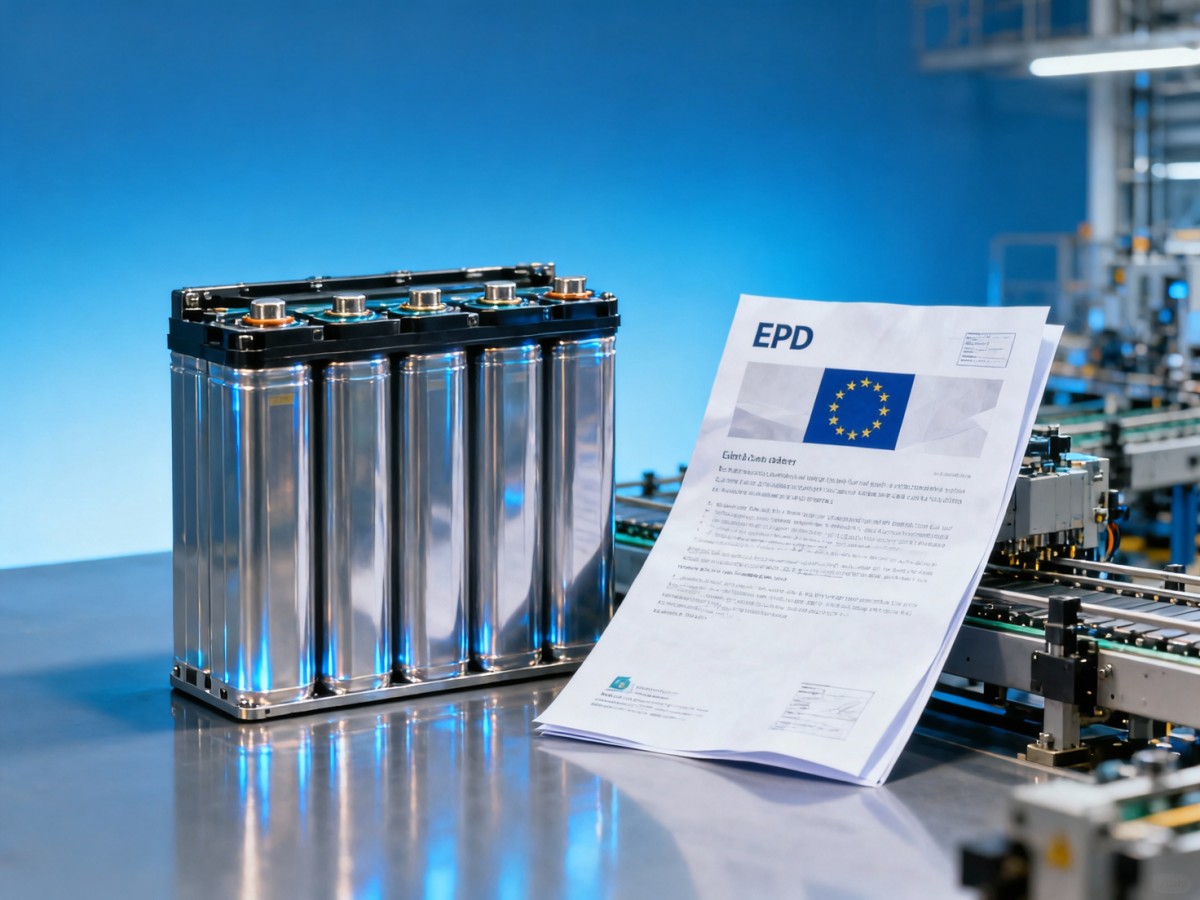
On March 26, 2026, the European Commission officially enacted the implementing rules of the Battery Regulation (EU) 2023/1542, mandating that imported power batteries provide a Life Cycle Assessment (LCA) certification and an Environmental Product Declaration (EPD) verified by EU-recognized institutions. This regulation, effective from January 2027, directly impacts Chinese lithium battery exporters, requiring them to complete EPD registration within six months to maintain access to the EU energy storage and electric vehicle (EV) supply chains. The move highlights the EU's tightening environmental standards and poses significant compliance challenges for global battery manufacturers, particularly those from China.
Event Overview
The Battery Regulation (EU) 2023/1542, finalized on March 26, 2026, introduces stringent carbon footprint disclosure requirements for power batteries entering the EU market. Key provisions include:
- Mandatory EPD registration for all imported power batteries, effective January 2027.
- A six-month transition period for Chinese lithium battery exporters to comply.
- Verification of LCA data by EU-accredited bodies.
Non-compliant products will be barred from the EU energy storage and EV supply chains, affecting both new entrants and existing suppliers.
Impact on Key Industries
1. Lithium Battery Exporters
Chinese manufacturers, which dominate global battery production, face immediate pressure to adapt their supply chains and documentation processes. The EPD requirement adds administrative costs and may delay shipments during the transition.
2. EV and Energy Storage System (ESS) Manufacturers
OEMs relying on Chinese batteries must either secure compliant suppliers or risk production disruptions. The regulation could reshape procurement strategies, favoring localized or EU-aligned supply chains.
3. Raw Material Suppliers
Upstream providers of lithium, cobalt, and nickel must now provide verifiable environmental data to downstream manufacturers, increasing transparency demands across the value chain.
4. Logistics and Compliance Services
Third-party certifiers and consultancies specializing in LCA and EPD preparation will see heightened demand, particularly in China and the EU.
Key Actions for Affected Businesses
1. Prioritize EPD Registration
Exporters should immediately engage with EU-recognized verification bodies to initiate the EPD process, as delays could result in lost market access.
2. Audit Supply Chain Emissions
Upstream collaboration is critical—manufacturers must work with raw material suppliers to collect standardized carbon footprint data for LCA reporting.
3. Monitor EU Policy Updates
The European Commission may release additional technical guidelines; companies should designate teams to track and interpret these developments.
4. Evaluate Alternative Markets
While complying with EU rules, exporters may need to diversify to markets with less stringent requirements to mitigate short-term revenue risks.
Industry Observations
From an industry perspective, this regulation signals the EU’s broader push to enforce sustainability in its energy transition. While the immediate focus is on compliance, the long-term implications could include:
- Accelerated localization of battery production within Europe.
- Increased R&D investment in low-carbon battery technologies.
- Potential trade tensions if compliance costs disproportionately affect non-EU manufacturers.
Currently, the rule functions as both a market barrier and a catalyst for greener practices. Its success will depend on uniform enforcement and industry adaptability.
Conclusion
The EU’s 2026 battery carbon footprint rules represent a pivotal shift toward regulated sustainability in the global battery trade. For Chinese exporters, the next six months are critical to align operations with EPD requirements or risk exclusion from a key market. The regulation underscores the growing intersection of environmental policy and trade competitiveness—a trend likely to expand to other sectors. Stakeholders should view this not merely as a compliance hurdle but as an impetus to future-proof their businesses against escalating green standards.
Sources
- European Commission: Battery Regulation (EU) 2023/1542 (March 26, 2026)
- Note: Subsequent implementing guidelines are pending release and warrant close monitoring.
 How an industrial trade intelligence dashboard can identify new supplier marketsDiscover how an industrial trade intelligence dashboard helps identify new supplier markets by comparing capacity, landed cost, logistics resilience, and compliance risk.
 Which global market entry barriers should exporters assess first?Global market entry barriers exporters should assess first: tariffs, compliance, buyer qualification, logistics, and payment risk. Build a practical strategy for confident market entry.
 How trade data aggregation analytics can reveal emerging supplier marketsTrade data aggregation analytics reveals emerging supplier markets by connecting trade flows, capacity signals, logistics, and compliance insights for smarter sourcing decisions.
 When an export market analysis platform can validate demand in a new marketExport market analysis platform insights help validate new-market demand through buyer fit, regulations, logistics, competition, and profitable entry conditions.
 What is driving the beauty and personal care market in the USA?Beauty and personal care in USA is driven by targeted solutions, selective premiumization, digital discovery, clean-label trust, diverse needs, and compliance. Explore key growth opportunities.
 How trade flow monitoring reports reveal changing regional demandTrade flow monitoring reports reveal changing regional demand through import volumes, sourcing shifts, product mix, logistics signals, and regulatory trends. Explore actionable market insights.
 How international market intelligence for investors reduces market-entry riskInternational market intelligence for investors reduces market-entry risk by validating demand, regulations, logistics, and competition before capital is committed.
 How international sourcing intelligence helps identify supplier risk earlyInternational sourcing intelligence helps businesses spot supplier risks early, protect supply continuity, and make smarter global procurement decisions.
 How trade data aggregation analytics reveals emerging supplier marketsTrade data aggregation analytics reveals emerging supplier markets through export trends, input flows, logistics, and regulatory signals. Discover smarter sourcing insights.
 What industrial cluster monitoring in Vietnam reveals about site riskIndustrial cluster monitoring Vietnam reveals hidden site risks across labor, utilities, logistics, compliance, and supplier dependencies. Make smarter sourcing and expansion decisions.
 Food Technology Trends Reshaping Shelf Life, Safety, and Product InnovationFood technology is reshaping shelf life, safety, and innovation. Discover the trends helping food businesses cut risk, improve compliance, and unlock stronger global market growth.
 How electronics manufacturing services are changing with low-volume demandElectronics manufacturing services are evolving fast with low-volume demand. Learn how agile EMS partners improve flexibility, compliance, sourcing resilience, and speed to market.
 How Can Buyers Reduce Procurement Risks for Electronic Components?How to reduce procurement risks for electronic components: learn how buyers assess traceability, lead times, compliance, and supplier types to avoid costly sourcing mistakes.
 What Sourcing Intelligence India Reveals About Supplier Risk and Cost ShiftsSourcing intelligence India reveals hidden supplier risk, compliance gaps, logistics pressure, and real cost shifts—helping buyers compare vendors smarter and source with more confidence.
 Fashion Trends 2026: Which Materials, Colors, and Silhouettes Are Gaining Ground?Fashion trends 2026 spotlight tactile fabrics, mineral colors, and controlled volume. Explore the materials, shades, and silhouettes shaping smarter, more wearable style.
 Smart Device Market Outlook: Key Growth Drivers, Segments, and Business OpportunitiesSmart device market trends are shifting toward system value, industrial demand, and resilient supply chains. Explore key growth drivers, high-potential segments, and business opportunities.
 How Global Trade Intelligence Services Help B2B Firms Evaluate Markets and SuppliersGlobal trade intelligence services help B2B firms compare suppliers, assess market potential, and uncover compliance, logistics, and pricing risks before costly decisions are made.
 Manufacturing Sector Updates for Investors: What Signals Matter Most in 2025?Manufacturing sector updates for investors in 2025: track orders, margins, supply chains, regulation, and exports to spot resilient manufacturers and smarter investment signals.
 How Energy Market Intelligence Helps Businesses Track Price Risks and Demand ShiftsEnergy market intelligence helps businesses spot price risks, demand shifts, and supply pressure early—improving procurement, resilience, and faster strategic decisions.
 Precision Hardware Tools Market: Key Demand Drivers, Segments, and Growth OutlookPrecision hardware tools market trends are reshaping sourcing, compliance, and automation. Explore key demand drivers, segment shifts, regional supply patterns, and growth opportunities.
 How to Use Customs Import Data to Find Buyers, Track Competitors, and Spot Demand?Customs import data helps you find real buyers, track competitors, and spot demand shifts early. Learn practical ways to turn trade records into smarter global business decisions.





















Global Trade Insights & Industry
Our mission is to empower global exporters and importers with data-driven insights that foster strategic growth.
Search News
Popular Tags
Industry Overview
The global commercial kitchen equipment market is projected to reach $112 billion by 2027. Driven by urbanization, the rise of e-commerce food delivery, and strict hygiene regulations.