

Can Commercial LED lighting energy-saving solutions pay off?
For enterprise decisions, the issue is no longer whether LED technology reduces electricity use.
The real question is whether Commercial LED lighting energy-saving solutions can deliver measurable returns across facilities, operations, and long-term capital planning.
As energy prices, carbon targets, and workplace expectations rise, lighting upgrades now belong in strategic cost-control discussions.
Commercial LED lighting energy-saving solutions: basic definition
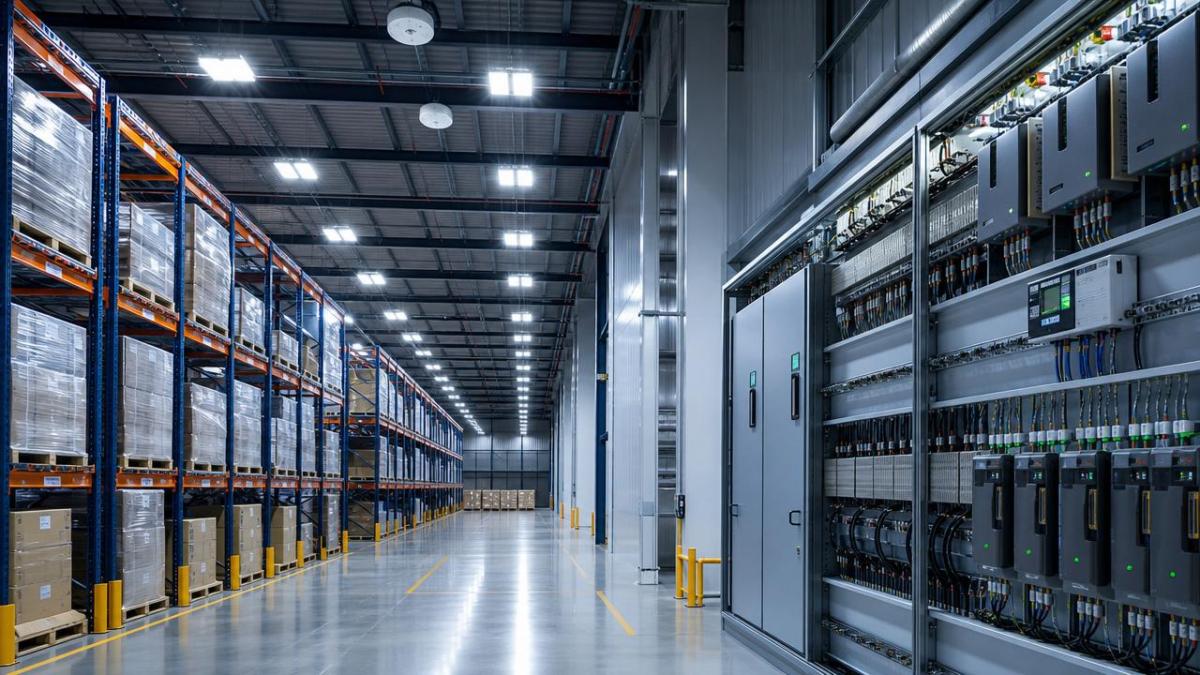
Commercial LED lighting energy-saving solutions combine efficient luminaires, drivers, controls, layout design, and monitoring tools for non-residential buildings.
They are used in offices, warehouses, factories, retail areas, parking facilities, schools, healthcare buildings, and mixed-use properties.
A complete solution is not just replacing lamps. It also corrects lighting levels, operating schedules, glare, maintenance access, and safety needs.
The core value comes from lower wattage, longer service life, intelligent dimming, and better alignment between light output and actual occupancy.
For many buildings, lighting remains one of the most visible and controllable electricity loads.
That makes Commercial LED lighting energy-saving solutions attractive when budgets require fast, verifiable, and operationally low-risk improvements.
Industry context and cost pressure
Lighting economics have changed because electricity volatility now affects planning across almost every industry.
Buildings with long operating hours face the strongest payback potential, especially where legacy fluorescent, HID, or halogen systems remain installed.
Regulatory pressure also matters. Energy codes increasingly favor efficient fixtures, automatic controls, daylight response, and commissioning documentation.
Sustainability reporting adds another driver. Lighting upgrades can support Scope 2 emission reduction through measurable electricity savings.
The commercial case is strongest when financial, operational, compliance, and maintenance objectives are evaluated together.
How payback is calculated
Payback usually starts with the difference between current lighting energy use and projected LED energy use.
The simple formula is project cost divided by annual savings. However, that formula should not stop at electricity.
Commercial LED lighting energy-saving solutions often produce additional value through reduced maintenance, fewer lift rentals, and less production disruption.
Incentives can also reduce upfront cost. Utility rebates, tax benefits, and green financing may materially improve return timing.
A reliable calculation should include operating hours, electricity rate, fixture quantity, labor cost, control strategy, and expected product lifetime.
It should also consider avoided replacement cycles for lamps, ballasts, starters, and outdated emergency lighting components.
Key financial inputs
- Existing wattage and measured operating hours.
- New LED wattage and expected control savings.
- Local electricity rate and demand charge structure.
- Installation labor, access equipment, and disposal cost.
- Available rebates, financing terms, and depreciation treatment.
Where returns are usually strongest
Commercial LED lighting energy-saving solutions are most attractive where lights operate for long schedules or support critical work areas.
Warehouses, logistics hubs, manufacturing floors, cold storage, and parking garages often show rapid payback because lighting hours are extensive.
Retail and hospitality sites may gain added value from improved color quality, visual comfort, and brand presentation.
Office buildings often benefit from controls, daylight use, and improved employee comfort rather than wattage reduction alone.
Operational benefits beyond utility savings
The best projects treat lighting as infrastructure, not only as an energy expense.
Commercial LED lighting energy-saving solutions can improve safety by delivering more consistent illumination across work surfaces and circulation routes.
Better lighting quality may reduce visual fatigue in inspection areas, assembly lines, laboratories, and administrative spaces.
Longer service life reduces emergency repairs, especially in high ceilings, temperature-controlled rooms, and locations requiring special access equipment.
Networked controls add another layer. They reveal usage patterns, support fault detection, and simplify building-wide scheduling.
These effects may not appear fully in a simple payback model, yet they influence total cost of ownership.
Procurement factors that affect real returns
A low fixture price does not guarantee a strong return. Product quality, certification, and compatibility strongly affect lifecycle value.
Commercial LED lighting energy-saving solutions should be assessed through performance data, warranty terms, thermal design, driver quality, and photometric files.
Relevant documentation may include LM-79, LM-80, TM-21, CE, RoHS, UL, DLC, or local energy compliance records.
Controls also require careful coordination. Sensors, dimmers, emergency circuits, and building management systems must work together.
For international sourcing, lead times, customs requirements, spare parts, and after-sales support can affect project schedules.
Independent verification helps reduce procurement risk, particularly when multiple sites or cross-border supply chains are involved.
Practical evaluation checklist
- Confirm baseline energy use with bills, meters, or fixture inventories.
- Request photometric layouts before approving large-area replacements.
- Compare warranty coverage, failure conditions, and replacement procedures.
- Verify certifications against the destination market.
- Model savings with conservative operating-hour assumptions.
- Include maintenance savings, incentives, and control optimization.
Typical risks and how to avoid them
Some projects underperform because the baseline is inaccurate or the building schedule changes after installation.
Others fail because illumination levels are reduced too aggressively to reach a shorter payback number.
Commercial LED lighting energy-saving solutions must balance savings with visibility, safety, and local code requirements.
Poor thermal management can shorten fixture life, especially in industrial spaces, outdoor canopies, and high-temperature production areas.
Control systems can also create issues if commissioning is rushed or staff are not trained to adjust schedules.
A pilot zone can reduce uncertainty. It allows measurement before a full rollout across similar buildings.
A structured path to project approval
A credible business case should present energy savings, capital cost, payback period, internal rate of return, and operational benefits.
It should also show assumptions clearly, including tariffs, usage hours, inflation, maintenance labor, and rebate deadlines.
Commercial LED lighting energy-saving solutions often gain faster approval when grouped with safety, ESG, and asset modernization objectives.
For multi-site portfolios, prioritization is important. Start with high-consumption buildings, failing systems, or areas with expensive maintenance access.
After installation, measurement should continue. Meter data, utility bills, and control reports help confirm performance.
Documented results can support future funding, supplier benchmarking, and carbon reporting across the wider property network.
Strategic value for global trade and sourcing
The LED market is global, with supply chains spanning chips, drivers, optics, aluminum housings, controls, and finished luminaires.
Price movements, component shortages, certification differences, and regional policy changes can influence project cost and delivery reliability.
Commercial LED lighting energy-saving solutions therefore require both technical assessment and market intelligence.
Verified trade data, compliance tracking, and supplier evaluation help prevent delays caused by unsuitable products or incomplete documentation.
Organizations comparing domestic and international options should examine lifecycle value, not only factory price.
A slightly higher-quality product may deliver better payback if it reduces failures, warranty disputes, and replacement labor.
Next steps for measurable payback
Commercial LED lighting energy-saving solutions can pay off when projects are planned with accurate baselines and disciplined sourcing.
The strongest outcomes combine efficient fixtures, suitable controls, verified compliance, practical installation planning, and post-installation measurement.
Before committing capital, build a site inventory, estimate realistic savings, request technical documentation, and check available incentives.
GTIIN supports structured market understanding across lighting, green energy, electrical infrastructure, and global industrial supply chains.
With verified intelligence, Commercial LED lighting energy-saving solutions become easier to compare, justify, and implement at scale.
 How to use supplier risk analysis to spot financial warning signsUse supplier risk analysis to spot cash flow pressure, debt risks, and delivery warning signs. Learn practical steps to reduce exposure and protect supply continuity.
 When dual sourcing makes sense in a sourcing strategy for manufacturersSourcing strategy for manufacturers: learn when dual sourcing strengthens supply continuity, reduces disruption risk, and protects production without adding unnecessary complexity.
 How bulk commodities pricing affects long-term supply contractsBulk commodities pricing shapes long-term supply contracts through index rules, freight, quality, volume, and currency risk. Explore strategies for resilient costs and supply security.
 Which global manufacturing trends by sector matter most for sourcing plans?Global manufacturing trends by sector: identify sourcing risks, supplier resilience, compliance demands, and cost drivers to build smarter, more reliable procurement plans.
 What industrial trade intelligence pricing should include before you subscribeIndustrial trade intelligence pricing explained: compare coverage, data quality, access rights, and workflow value before choosing a subscription that supports smarter trade decisions.
 How an industrial trade intelligence dashboard can identify new supplier marketsDiscover how an industrial trade intelligence dashboard helps identify new supplier markets by comparing capacity, landed cost, logistics resilience, and compliance risk.
 Which global market entry barriers should exporters assess first?Global market entry barriers exporters should assess first: tariffs, compliance, buyer qualification, logistics, and payment risk. Build a practical strategy for confident market entry.
 How trade data aggregation analytics can reveal emerging supplier marketsTrade data aggregation analytics reveals emerging supplier markets by connecting trade flows, capacity signals, logistics, and compliance insights for smarter sourcing decisions.
 When an export market analysis platform can validate demand in a new marketExport market analysis platform insights help validate new-market demand through buyer fit, regulations, logistics, competition, and profitable entry conditions.
 What is driving the beauty and personal care market in the USA?Beauty and personal care in USA is driven by targeted solutions, selective premiumization, digital discovery, clean-label trust, diverse needs, and compliance. Explore key growth opportunities.
 How trade flow monitoring reports reveal changing regional demandTrade flow monitoring reports reveal changing regional demand through import volumes, sourcing shifts, product mix, logistics signals, and regulatory trends. Explore actionable market insights.
 How international market intelligence for investors reduces market-entry riskInternational market intelligence for investors reduces market-entry risk by validating demand, regulations, logistics, and competition before capital is committed.
 How international sourcing intelligence helps identify supplier risk earlyInternational sourcing intelligence helps businesses spot supplier risks early, protect supply continuity, and make smarter global procurement decisions.
 How trade data aggregation analytics reveals emerging supplier marketsTrade data aggregation analytics reveals emerging supplier markets through export trends, input flows, logistics, and regulatory signals. Discover smarter sourcing insights.
 What industrial cluster monitoring in Vietnam reveals about site riskIndustrial cluster monitoring Vietnam reveals hidden site risks across labor, utilities, logistics, compliance, and supplier dependencies. Make smarter sourcing and expansion decisions.
 Food Technology Trends Reshaping Shelf Life, Safety, and Product InnovationFood technology is reshaping shelf life, safety, and innovation. Discover the trends helping food businesses cut risk, improve compliance, and unlock stronger global market growth.
 How electronics manufacturing services are changing with low-volume demandElectronics manufacturing services are evolving fast with low-volume demand. Learn how agile EMS partners improve flexibility, compliance, sourcing resilience, and speed to market.
 How Can Buyers Reduce Procurement Risks for Electronic Components?How to reduce procurement risks for electronic components: learn how buyers assess traceability, lead times, compliance, and supplier types to avoid costly sourcing mistakes.
 What Sourcing Intelligence India Reveals About Supplier Risk and Cost ShiftsSourcing intelligence India reveals hidden supplier risk, compliance gaps, logistics pressure, and real cost shifts—helping buyers compare vendors smarter and source with more confidence.
 Fashion Trends 2026: Which Materials, Colors, and Silhouettes Are Gaining Ground?Fashion trends 2026 spotlight tactile fabrics, mineral colors, and controlled volume. Explore the materials, shades, and silhouettes shaping smarter, more wearable style.
 Smart Device Market Outlook: Key Growth Drivers, Segments, and Business OpportunitiesSmart device market trends are shifting toward system value, industrial demand, and resilient supply chains. Explore key growth drivers, high-potential segments, and business opportunities.





















Global Trade Insights & Industry
Our mission is to empower global exporters and importers with data-driven insights that foster strategic growth.
Search News
Popular Tags
Industry Overview
The global commercial kitchen equipment market is projected to reach $112 billion by 2027. Driven by urbanization, the rise of e-commerce food delivery, and strict hygiene regulations.