

2026 Shanghai International EV Charging & Energy Storage Expo Opens
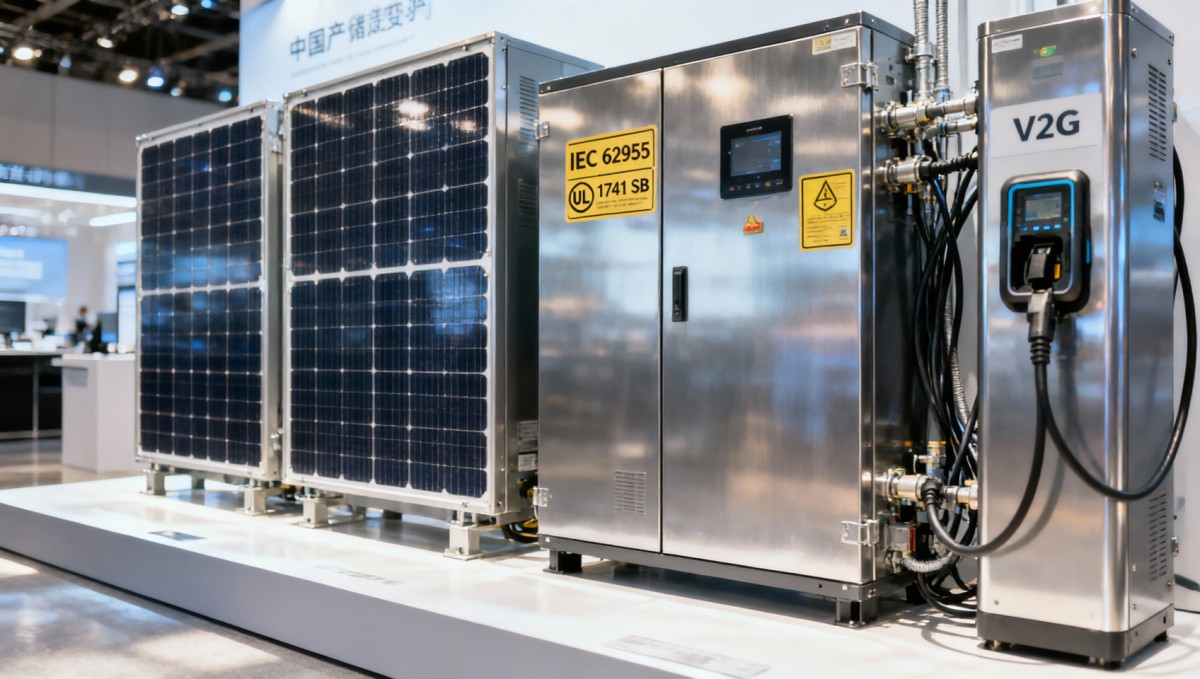
On May 13, 2026, the 5th Shanghai International EV Charging, Battery Swapping & PV-Storage-Charging Exhibition opened in Shanghai, spotlighting integrated ‘PV-Storage-Charging Smart Microgrid’ solutions. The event signals shifting procurement priorities among international energy distributors—particularly from Germany, Australia, and Chile—toward Chinese-made photovoltaic inverters, liquid-cooled energy storage cabinets, and V2G bidirectional charging modules. Notably, system integration solutions certified to both IEC 62955 and UL 1741 SB now offer a 12-week delivery cycle, making them a preferred choice for off-grid markets in the Middle East and Latin America. This development warrants attention from companies engaged in cross-border energy equipment trade, system integration, and supply chain logistics.
Event Overview
The fifth edition of the Shanghai International EV Charging & Energy Storage Exhibition commenced on May 13, 2026. It centered on ‘PV-Storage-Charging Smart Microgrid’ system solutions. Publicly reported details include participation by energy distributors from Germany, Australia, and Chile; active technical and commercial engagement with Chinese suppliers of PV inverters, liquid-cooled energy storage cabinets, and V2G bidirectional modules; and confirmation that dual-certified (IEC 62955 + UL 1741 SB) system integration packages are now deliverable within 12 weeks. These systems are cited as the procurement preference for off-grid applications in the Middle East and Latin America.
Which Subsectors Are Affected
Direct Export-Oriented Trading Companies
These firms face recalibration of product positioning and compliance expectations. The emphasis on dual certification (IEC 62955 and UL 1741 SB) means that market access—especially for regulated off-grid deployments—is increasingly contingent on verified interoperability and safety documentation, not just component-level approvals.
System Integrators & OEMs
Integrators supplying turnkey microgrids are directly impacted by the compressed 12-week delivery benchmark. This implies tighter coordination across hardware sourcing, firmware validation, and certification alignment—particularly where UL 1741 SB requires grid-support functionality testing under U.S.-aligned protocols.
Component Manufacturers (e.g., Inverter, BMS, Thermal Management Suppliers)
Manufacturers supplying subassemblies—such as PV inverters or liquid-cooled battery cabinets—face heightened demand for pre-validated interfaces and modular designs compatible with third-party V2G controllers and microgrid controllers. Interoperability readiness, rather than standalone performance, is becoming a differentiator.
Distribution & Channel Partners in Target Markets
Regional distributors in the Middle East and Latin America are seeing accelerated adoption criteria for off-grid projects. The preference for 12-week, dual-certified systems suggests reduced tolerance for custom engineering cycles—and increased reliance on standardized, pre-commissioned configurations.
What Relevant Companies or Practitioners Should Monitor and Act On
Track certification pathway harmonization—not just listing status
IEC 62955 (residual current monitoring for EV chargers) and UL 1741 SB (inverter-based grid support) serve distinct regulatory functions. Observably, their joint requirement reflects convergence between safety-critical protection and grid-interactive capability. Companies should verify whether existing test reports cover combined functional safety and grid-service logic—not only individual standard compliance.
Monitor lead time benchmarks for integrated solutions—not just components
The stated 12-week delivery window applies to full system integration, not individual parts. Analysis shows this signals growing buyer expectation for coordinated supply chain execution. Firms involved in assembly, firmware loading, and factory acceptance testing should assess internal bottlenecks in certification handover, communication protocol alignment, and documentation packaging.
Validate compatibility claims for V2G modules in target regional grids
V2G functionality referenced at the exhibition pertains to bidirectional power flow control. However, UL 1741 SB does not mandate V2G—it covers inverter behavior during grid disturbances. Current more appropriately understood as early-stage commercial signaling: regional distributors are seeking future-ready platforms, but actual V2G deployment remains subject to local utility interconnection rules and tariff frameworks still under development in most Middle Eastern and Latin American jurisdictions.
Prepare technical documentation packages for non-Chinese-speaking buyers
German, Australian, and Chilean distributors engaged at the show required bilingual (English–Chinese) or English-only technical datasheets, certification summaries, and commissioning checklists. From an operational standpoint, delaying translation or modular documentation until after order placement risks elongating procurement review cycles—especially where public-sector or utility-backed projects require formal compliance audits.
Editorial Perspective / Industry Observation
This exhibition outcome is best interpreted as a signal—not yet a settled market standard. The focus on dual certification and shortened delivery timelines reflects maturing buyer sophistication in emerging off-grid markets, but does not indicate universal regulatory adoption of those requirements. Analysis shows the 12-week benchmark is currently achievable only by vertically aligned integrators with in-house certification management and pre-qualified component libraries. For most mid-tier suppliers, achieving similar lead times would require upstream collaboration—not just process optimization. Observably, the trend points toward consolidation of technical accountability in system delivery, shifting risk and responsibility from end users toward certified integrators.
It is therefore more accurate to view this development as an early inflection point in procurement discipline—where compliance depth, interoperability assurance, and schedule reliability are becoming jointly weighted selection criteria. Sustained relevance will depend less on isolated product features and more on verifiable integration readiness across certification, communication, and logistics dimensions.
Conclusion
While the 2026 Shanghai exhibition highlights growing international interest in integrated PV-storage-charging microgrids, its core significance lies in the tightening linkage between certification rigor, delivery predictability, and regional off-grid deployment viability. This is not yet a broad-based market shift—but rather a leading indicator of rising technical and procedural expectations among sophisticated energy buyers. Current more appropriately understood as a benchmark-setting moment for high-intent procurement corridors, rather than evidence of widespread regulatory or infrastructural readiness.
Information Sources
Main source: Official press release and exhibitor briefing materials from the 2026 Shanghai International EV Charging & Energy Storage Exhibition organizing committee.
Note: Delivery timelines, certification scope, and regional procurement preferences cited are based solely on statements issued during the May 13, 2026 opening session. Ongoing verification of field deployment performance, certification renewal status, and utility-level adoption in target markets remains pending.
 How an industrial trade intelligence dashboard can identify new supplier marketsDiscover how an industrial trade intelligence dashboard helps identify new supplier markets by comparing capacity, landed cost, logistics resilience, and compliance risk.
 Which global market entry barriers should exporters assess first?Global market entry barriers exporters should assess first: tariffs, compliance, buyer qualification, logistics, and payment risk. Build a practical strategy for confident market entry.
 How trade data aggregation analytics can reveal emerging supplier marketsTrade data aggregation analytics reveals emerging supplier markets by connecting trade flows, capacity signals, logistics, and compliance insights for smarter sourcing decisions.
 When an export market analysis platform can validate demand in a new marketExport market analysis platform insights help validate new-market demand through buyer fit, regulations, logistics, competition, and profitable entry conditions.
 What is driving the beauty and personal care market in the USA?Beauty and personal care in USA is driven by targeted solutions, selective premiumization, digital discovery, clean-label trust, diverse needs, and compliance. Explore key growth opportunities.
 How trade flow monitoring reports reveal changing regional demandTrade flow monitoring reports reveal changing regional demand through import volumes, sourcing shifts, product mix, logistics signals, and regulatory trends. Explore actionable market insights.
 How international market intelligence for investors reduces market-entry riskInternational market intelligence for investors reduces market-entry risk by validating demand, regulations, logistics, and competition before capital is committed.
 How international sourcing intelligence helps identify supplier risk earlyInternational sourcing intelligence helps businesses spot supplier risks early, protect supply continuity, and make smarter global procurement decisions.
 How trade data aggregation analytics reveals emerging supplier marketsTrade data aggregation analytics reveals emerging supplier markets through export trends, input flows, logistics, and regulatory signals. Discover smarter sourcing insights.
 What industrial cluster monitoring in Vietnam reveals about site riskIndustrial cluster monitoring Vietnam reveals hidden site risks across labor, utilities, logistics, compliance, and supplier dependencies. Make smarter sourcing and expansion decisions.
 Food Technology Trends Reshaping Shelf Life, Safety, and Product InnovationFood technology is reshaping shelf life, safety, and innovation. Discover the trends helping food businesses cut risk, improve compliance, and unlock stronger global market growth.
 How electronics manufacturing services are changing with low-volume demandElectronics manufacturing services are evolving fast with low-volume demand. Learn how agile EMS partners improve flexibility, compliance, sourcing resilience, and speed to market.
 How Can Buyers Reduce Procurement Risks for Electronic Components?How to reduce procurement risks for electronic components: learn how buyers assess traceability, lead times, compliance, and supplier types to avoid costly sourcing mistakes.
 What Sourcing Intelligence India Reveals About Supplier Risk and Cost ShiftsSourcing intelligence India reveals hidden supplier risk, compliance gaps, logistics pressure, and real cost shifts—helping buyers compare vendors smarter and source with more confidence.
 Fashion Trends 2026: Which Materials, Colors, and Silhouettes Are Gaining Ground?Fashion trends 2026 spotlight tactile fabrics, mineral colors, and controlled volume. Explore the materials, shades, and silhouettes shaping smarter, more wearable style.
 Smart Device Market Outlook: Key Growth Drivers, Segments, and Business OpportunitiesSmart device market trends are shifting toward system value, industrial demand, and resilient supply chains. Explore key growth drivers, high-potential segments, and business opportunities.
 How Global Trade Intelligence Services Help B2B Firms Evaluate Markets and SuppliersGlobal trade intelligence services help B2B firms compare suppliers, assess market potential, and uncover compliance, logistics, and pricing risks before costly decisions are made.
 Manufacturing Sector Updates for Investors: What Signals Matter Most in 2025?Manufacturing sector updates for investors in 2025: track orders, margins, supply chains, regulation, and exports to spot resilient manufacturers and smarter investment signals.
 How Energy Market Intelligence Helps Businesses Track Price Risks and Demand ShiftsEnergy market intelligence helps businesses spot price risks, demand shifts, and supply pressure early—improving procurement, resilience, and faster strategic decisions.
 Precision Hardware Tools Market: Key Demand Drivers, Segments, and Growth OutlookPrecision hardware tools market trends are reshaping sourcing, compliance, and automation. Explore key demand drivers, segment shifts, regional supply patterns, and growth opportunities.
 How to Use Customs Import Data to Find Buyers, Track Competitors, and Spot Demand?Customs import data helps you find real buyers, track competitors, and spot demand shifts early. Learn practical ways to turn trade records into smarter global business decisions.





















Global Trade Insights & Industry
Our mission is to empower global exporters and importers with data-driven insights that foster strategic growth.
Search News
Popular Tags
Industry Overview
The global commercial kitchen equipment market is projected to reach $112 billion by 2027. Driven by urbanization, the rise of e-commerce food delivery, and strict hygiene regulations.