

India BIS Updates IS 2062:2026 — HIC/SSCC Testing Mandatory for Construction Fasteners
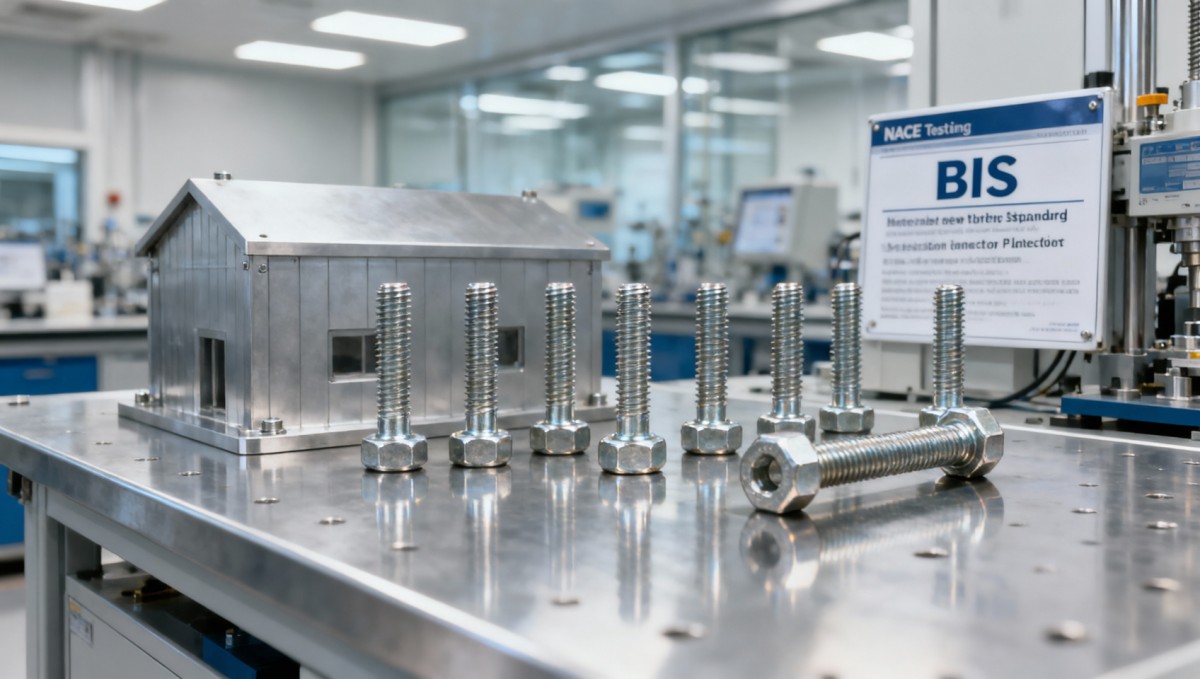
On May 13, 2026, the Bureau of Indian Standards (BIS) issued the revised standard IS 2062:2026, introducing mandatory hydrogen-induced cracking (HIC) and sulfide stress corrosion cracking (SSCC) testing for structural steel components used in construction — including bolts, anchor rods, and connection plates. The requirement takes effect on September 1, 2026, and applies to all imported steel hardware destined for infrastructure, industrial, and building projects in India. This update signals a tightening of material integrity requirements amid growing emphasis on long-term structural safety in high-sulfur or sour-service environments.
Event Overview
On May 13, 2026, the Bureau of Indian Standards (BIS) published IS 2062:2026, amending the previous version by adding two new mandatory test requirements: hydrogen-induced cracking (HIC) and sulfide stress corrosion cracking (SSCC). Effective September 1, 2026, all structural steel products covered under this standard — specifically fasteners and connection elements for building and civil engineering applications — must be accompanied by test reports issued by BIS-recognized laboratories. Non-compliant shipments will be rejected at customs clearance and fail project acceptance audits.
Industries Affected
Direct Exporters (Trading Companies): Export-oriented trading firms handling Chinese-made construction steel hardware face immediate operational impact. They must now verify supplier test compliance, coordinate third-party lab accreditation, and revise commercial documentation (e.g., certificates of conformity, test report annexes) to meet BIS’s evidentiary standards. Delays in obtaining valid reports may trigger shipment hold-ups or contract penalties.
Raw Material Sourcing Firms: Companies procuring base steel billets, wire rods, or forged blanks for downstream fastener production must reassess supplier qualifications. Since HIC/SSCC resistance depends heavily on steelmaking practices (e.g., inclusion control, ladle refining, hydrogen pickup during casting), sourcing decisions now require metallurgical traceability — not just grade compliance — raising due diligence burdens.
Manufacturers (Forging, Threading, Heat-Treating Facilities): Fabricators of bolts, anchor rods, and plates must validate whether their current heat treatment cycles, surface conditioning methods, and post-processing handling (e.g., acid pickling, electroplating) introduce hydrogen ingress risks. Process adjustments may be needed — especially for high-strength grades (e.g., ASTM A325/A490 equivalents) — to avoid inadvertent embrittlement prior to testing.
Supply Chain Service Providers (Testing Labs, Certification Bodies, Customs Agents): BIS-recognized labs outside India remain limited; demand for accredited HIC/SSCC testing capacity is surging. Certification consultants and freight forwarders must now integrate BIS lab validation checks into pre-shipment verification workflows — adding time and cost layers to export readiness assessments.
Key Focus Areas & Recommended Actions
Verify laboratory accreditation status against BIS’s latest List of Recognized Labs
Only test reports from laboratories explicitly named in BIS’s updated ‘List of Recognized Laboratories’ (as of June 2026) are accepted. Reports from ISO/IEC 17025-accredited labs — without BIS recognition — do not suffice. Exporters should request formal accreditation letters and cross-check them with BIS’s official portal before submission.
Review product specifications against IS 2062:2026 Annex D (HIC/SSCC Test Protocols)
The new standard references NACE TM0284 (for HIC) and NACE TM0177 Method A (for SSCC), but prescribes modified acceptance criteria — notably stricter thresholds for crack-sensitive area percentage and threshold stress levels. Manufacturers must align internal QA protocols with these specific parameters, not generic industry norms.
Update technical documentation packages for Indian tenders
Public infrastructure tenders in India (e.g., NHAI, CPWD, state Panchayat projects) are expected to reference IS 2062:2026 explicitly starting Q3 2026. Bidders must include certified HIC/SSCC reports as mandatory annexures — retroactive application may apply to contracts signed after September 1, 2026, even if delivery occurs later.
Editorial Insight / Industry Observation
Analysis shows that IS 2062:2026 reflects a broader regulatory shift in emerging markets: moving beyond dimensional and tensile compliance toward performance-based material resilience. Observably, India’s focus on HIC/SSCC — traditionally emphasized in oil & gas standards (e.g., API RP 941) — suggests increasing convergence between infrastructure and energy-sector material expectations. From an industry perspective, this is less about harmonization with international codes and more about localized risk mitigation: India’s coastal and inland industrial zones often feature higher ambient sulfur content and variable water chemistry, elevating long-term corrosion exposure. Current evidence does not support claims of protectionist intent; rather, the change appears aligned with post-pandemic infrastructure quality audits and recent structural incident reviews.
Conclusion
This revision marks a consequential step in India’s construction materials governance — shifting accountability upstream to raw material producers and process engineers, not just final exporters. It underscores that regulatory maturity in fast-growing economies increasingly hinges on technical specificity, not just procedural formality. For global suppliers, adapting requires metallurgical literacy, not just compliance paperwork.
Source Attribution & Ongoing Monitoring
Primary source: Bureau of Indian Standards (BIS), IS 2062:2026 — Hot Rolled Carbon Steel Structural Sections for General Purposes, published May 13, 2026; effective September 1, 2026. Official notice available at www.manakonline.in.
Also referenced: BIS Circular No. BIS/STANDARDS/2026/047 (dated May 13, 2026); NACE International Standards TM0284-2022 and TM0177-2021.
Note: BIS has indicated plans to publish a technical guidance note on HIC/SSCC sampling frequency and lot definition by July 2026 — this remains pending and warrants monitoring.
 How an industrial trade intelligence dashboard can identify new supplier marketsDiscover how an industrial trade intelligence dashboard helps identify new supplier markets by comparing capacity, landed cost, logistics resilience, and compliance risk.
 Which global market entry barriers should exporters assess first?Global market entry barriers exporters should assess first: tariffs, compliance, buyer qualification, logistics, and payment risk. Build a practical strategy for confident market entry.
 How trade data aggregation analytics can reveal emerging supplier marketsTrade data aggregation analytics reveals emerging supplier markets by connecting trade flows, capacity signals, logistics, and compliance insights for smarter sourcing decisions.
 When an export market analysis platform can validate demand in a new marketExport market analysis platform insights help validate new-market demand through buyer fit, regulations, logistics, competition, and profitable entry conditions.
 What is driving the beauty and personal care market in the USA?Beauty and personal care in USA is driven by targeted solutions, selective premiumization, digital discovery, clean-label trust, diverse needs, and compliance. Explore key growth opportunities.
 How trade flow monitoring reports reveal changing regional demandTrade flow monitoring reports reveal changing regional demand through import volumes, sourcing shifts, product mix, logistics signals, and regulatory trends. Explore actionable market insights.
 How international market intelligence for investors reduces market-entry riskInternational market intelligence for investors reduces market-entry risk by validating demand, regulations, logistics, and competition before capital is committed.
 How international sourcing intelligence helps identify supplier risk earlyInternational sourcing intelligence helps businesses spot supplier risks early, protect supply continuity, and make smarter global procurement decisions.
 How trade data aggregation analytics reveals emerging supplier marketsTrade data aggregation analytics reveals emerging supplier markets through export trends, input flows, logistics, and regulatory signals. Discover smarter sourcing insights.
 What industrial cluster monitoring in Vietnam reveals about site riskIndustrial cluster monitoring Vietnam reveals hidden site risks across labor, utilities, logistics, compliance, and supplier dependencies. Make smarter sourcing and expansion decisions.
 Food Technology Trends Reshaping Shelf Life, Safety, and Product InnovationFood technology is reshaping shelf life, safety, and innovation. Discover the trends helping food businesses cut risk, improve compliance, and unlock stronger global market growth.
 How electronics manufacturing services are changing with low-volume demandElectronics manufacturing services are evolving fast with low-volume demand. Learn how agile EMS partners improve flexibility, compliance, sourcing resilience, and speed to market.
 How Can Buyers Reduce Procurement Risks for Electronic Components?How to reduce procurement risks for electronic components: learn how buyers assess traceability, lead times, compliance, and supplier types to avoid costly sourcing mistakes.
 What Sourcing Intelligence India Reveals About Supplier Risk and Cost ShiftsSourcing intelligence India reveals hidden supplier risk, compliance gaps, logistics pressure, and real cost shifts—helping buyers compare vendors smarter and source with more confidence.
 Fashion Trends 2026: Which Materials, Colors, and Silhouettes Are Gaining Ground?Fashion trends 2026 spotlight tactile fabrics, mineral colors, and controlled volume. Explore the materials, shades, and silhouettes shaping smarter, more wearable style.
 Smart Device Market Outlook: Key Growth Drivers, Segments, and Business OpportunitiesSmart device market trends are shifting toward system value, industrial demand, and resilient supply chains. Explore key growth drivers, high-potential segments, and business opportunities.
 How Global Trade Intelligence Services Help B2B Firms Evaluate Markets and SuppliersGlobal trade intelligence services help B2B firms compare suppliers, assess market potential, and uncover compliance, logistics, and pricing risks before costly decisions are made.
 Manufacturing Sector Updates for Investors: What Signals Matter Most in 2025?Manufacturing sector updates for investors in 2025: track orders, margins, supply chains, regulation, and exports to spot resilient manufacturers and smarter investment signals.
 How Energy Market Intelligence Helps Businesses Track Price Risks and Demand ShiftsEnergy market intelligence helps businesses spot price risks, demand shifts, and supply pressure early—improving procurement, resilience, and faster strategic decisions.
 Precision Hardware Tools Market: Key Demand Drivers, Segments, and Growth OutlookPrecision hardware tools market trends are reshaping sourcing, compliance, and automation. Explore key demand drivers, segment shifts, regional supply patterns, and growth opportunities.
 How to Use Customs Import Data to Find Buyers, Track Competitors, and Spot Demand?Customs import data helps you find real buyers, track competitors, and spot demand shifts early. Learn practical ways to turn trade records into smarter global business decisions.





















Global Trade Insights & Industry
Our mission is to empower global exporters and importers with data-driven insights that foster strategic growth.
Search News
Popular Tags
Industry Overview
The global commercial kitchen equipment market is projected to reach $112 billion by 2027. Driven by urbanization, the rise of e-commerce food delivery, and strict hygiene regulations.