

What to check before ordering ergonomic office furniture in bulk
Before placing a large order for ergonomic office furniture, procurement teams need to look beyond price and style. Factors such as product certifications, adjustability, material durability, supplier reliability, lead times, and after-sales support can directly affect employee comfort, budget control, and long-term value.
This guide explains what to check before buying ergonomic office furniture in bulk, with a focus on the practical questions procurement professionals need answered before they approve a supplier or sign a purchase agreement.
Start with the procurement risks that matter most
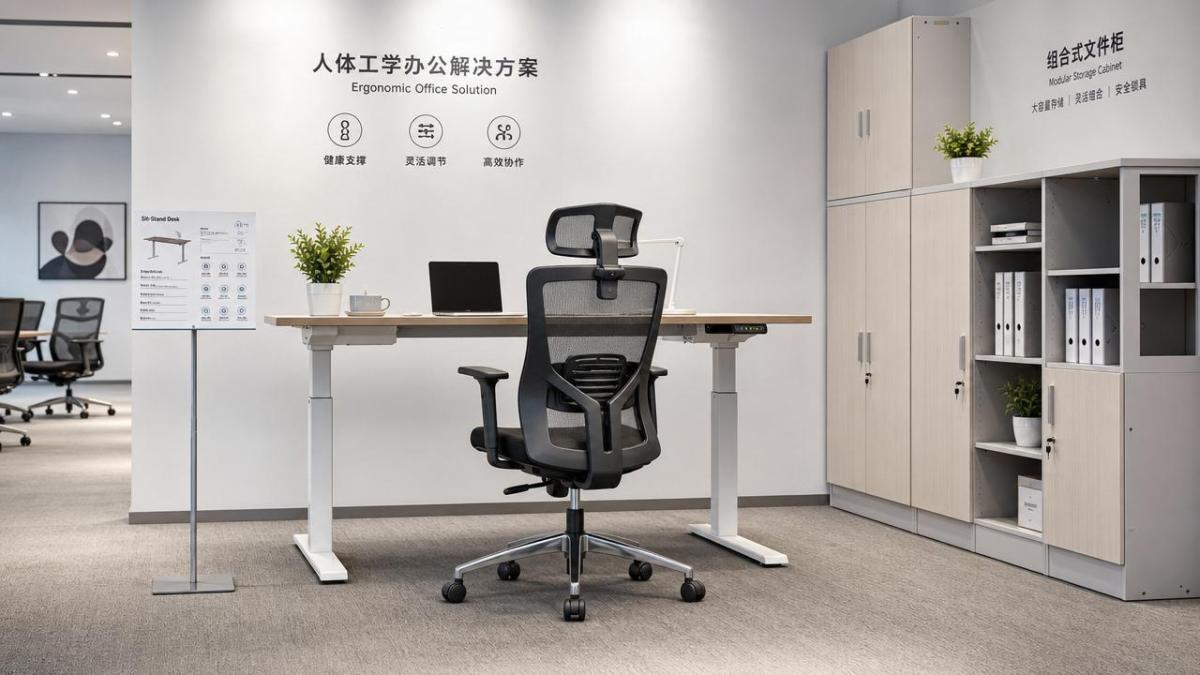
When buyers search for ergonomic office furniture, they usually are not looking for design inspiration. They want to reduce purchasing risk, avoid complaints, and make sure the order performs well after installation.
In bulk procurement, the wrong furniture choice can create hidden costs. Returns, damaged items, employee discomfort, inconsistent quality, and delayed delivery can quickly outweigh any attractive unit price offered in the initial quotation.
That is why the first check should be strategic. Ask whether the furniture supports your workplace goals, fits your users, and can be delivered at scale without compromising quality or service.
Check whether the furniture is truly ergonomic, not just marketed that way
The word ergonomic is often used loosely in product listings. Procurement teams should verify what actual ergonomic features are included, rather than relying on broad claims from catalogs or sales presentations.
For office chairs, key features usually include adjustable seat height, lumbar support, backrest tilt, armrest adjustment, and seat depth options. These functions help different users achieve better posture across long working hours.
For desks, review whether height adjustment is available, how smooth the mechanism is, and whether the range suits both shorter and taller employees. Cable management and monitor support also influence workstation ergonomics.
If your project includes workstations, storage, and meeting furniture, check whether the whole setup supports healthy movement and practical use. A single ergonomic chair cannot solve a poor workstation layout.
Request technical specifications, adjustment range data, and if possible, product demonstration videos. In large purchases, measurable ergonomic functions are far more reliable than descriptive language in brochures.
Verify certifications and compliance before comparing suppliers
Certifications help procurement teams filter serious manufacturers from weak ones. They also reduce legal and operational risk, especially for buyers sourcing across borders or furnishing multiple locations with the same standards.
Relevant checks may include BIFMA testing, ISO quality systems, fire safety compliance, environmental certifications, and material emissions standards such as low VOC requirements where applicable in your market.
Do not just ask whether a supplier has certificates. Ask for valid documents linked to the exact product models under consideration. A factory may hold certifications that do not apply to every item it sells.
Also confirm whether components such as gas lifts, casters, electrical desk motors, laminates, or foam meet local regulations. Small compliance gaps can delay customs clearance or create post-installation safety issues.
For procurement teams, certified ergonomic office furniture offers more than a marketing benefit. It creates a more defensible purchasing decision and improves confidence when reporting internally to management or project stakeholders.
Assess durability based on usage conditions, not showroom appearance
Bulk buyers should never evaluate office furniture based only on visual appeal. The better question is how the product will perform after daily use by many employees over several years.
Review the materials used in frames, bases, fabrics, mesh, foam, laminates, and hardware. Ask about cycle testing, weight capacity, abrasion resistance, and edge protection, especially for high-traffic office environments.
Procurement teams should match durability standards to real usage. A task chair for an eight-hour workstation needs different performance expectations than seating intended for occasional meeting room use.
Look closely at the wear points that fail first in practice. These often include armrests, recline mechanisms, casters, desk motors, drawer runners, and surface finishes exposed to repeated cleaning and contact.
Request warranty terms together with expected product life. A longer warranty is useful, but only if the supplier clearly explains what is covered, what parts are excluded, and how claims are handled in bulk orders.
Test adjustability and user fit across your workforce
One of the biggest mistakes in ergonomic office furniture procurement is assuming one specification fits everyone. In reality, office users vary by height, weight, work habits, and physical support needs.
If possible, arrange product samples or pilot installations before placing a large order. Let different employee groups test chairs and desks, then collect structured feedback on comfort, support, and ease of adjustment.
Pay attention to whether users can understand the controls quickly. A chair with many features has limited value if employees do not know how to set it correctly or find the controls difficult to use.
For multinational offices or large organizations, consider whether a core furniture range can serve most users while allowing optional upgrades for specific departments or medically necessary accommodations.
Bulk purchasing should balance standardization and inclusivity. Standardized models simplify procurement and maintenance, but the furniture still needs to fit the people who will use it every day.
Review supplier consistency, production capacity, and lead times
For procurement professionals, supplier reliability is often as important as product quality. A strong sample means little if the manufacturer cannot maintain consistency across hundreds or thousands of units.
Ask where the furniture is produced, what the monthly output is, and whether the supplier controls key components directly or depends heavily on third-party subcontractors. This affects quality stability and delivery risk.
Request information on production lead times, raw material sourcing, and current order backlog. During busy seasons, popular ergonomic office furniture models may face longer timelines than standard office products.
It is also wise to ask how the supplier handles mixed orders involving chairs, desks, storage, and accessories. Consolidation efficiency can affect shipping costs, project scheduling, and installation readiness.
For international sourcing, verify export experience, packaging standards, and documentation accuracy. Delays often happen not because of manufacturing failure, but because of weak logistics coordination or incomplete paperwork.
Understand the total landed cost, not only the unit price
Low quotes can be misleading if they exclude important cost elements. Procurement teams should calculate the full cost of ownership before comparing suppliers or presenting a recommendation internally.
Include freight, import duties, installation, spare parts, packaging disposal, warranty support, and replacement risk. In some cases, slightly higher-priced furniture delivers better long-term value because service issues are lower.
Also examine whether accessories are included or charged separately. Headrests, monitor arms, cable trays, privacy screens, and power modules can significantly change the actual project cost.
Another important factor is assembly complexity. Furniture that arrives with difficult installation requirements can increase labor costs and extend office downtime during moves, fit-outs, or phased workplace upgrades.
When evaluating ergonomic office furniture suppliers, the best purchasing decision is usually not the cheapest option. It is the option that delivers predictable performance, support, and manageable lifetime cost.
Examine after-sales service and spare parts availability
After-sales support becomes more important as order volume increases. A small defect rate in a large project can still affect many users and place pressure on procurement, facilities, and workplace operations teams.
Ask how warranty claims are submitted, how quickly replacements are shipped, and whether spare parts are stocked locally or regionally. Waiting weeks for a caster or gas lift can disrupt normal office use.
Clear service terms are especially important for adjustable desks and task chairs because these categories contain moving parts that may require maintenance over time. Service capability should be assessed before purchase.
Good suppliers provide installation guides, user instructions, maintenance recommendations, and dedicated account support. These details may seem secondary during sourcing, but they strongly influence long-term satisfaction after deployment.
If possible, speak with existing business customers in similar project sizes. Reference checks often reveal whether a supplier performs well after delivery, which is when many procurement problems actually begin.
Check customization options without creating unnecessary complexity
Many bulk buyers need some level of customization, whether for brand colors, dimensions, fabrics, finishes, or packaging. The key is to confirm what is feasible without increasing risk too much.
Customized ergonomic office furniture can support brand identity and workplace design goals, but it may also lengthen lead times, raise minimum order quantities, and complicate future reorders or replacements.
Before approving custom specifications, ask whether the selected options are standard materials, how they affect warranty coverage, and whether color or finish consistency can be maintained across production batches.
It is often practical to standardize core functional components while customizing visible finishes only. That approach protects ergonomic performance and simplifies maintenance while still meeting design expectations.
Use a structured evaluation checklist before final approval
Procurement teams benefit from using a scoring framework rather than relying on informal impressions. This makes supplier comparison easier and supports transparent internal decision-making.
Your checklist can include ergonomics, certifications, durability, user fit, warranty, production capacity, delivery schedule, landed cost, service response, and reference project quality. Weight each factor by business priority.
For example, if the project involves a headquarters relocation with fixed deadlines, lead time and installation readiness may deserve more weight. If the purchase supports hybrid work upgrades, adjustability may matter more.
Documenting these checks also helps create stronger procurement records. This is useful for management review, future reorders, supplier performance tracking, and internal alignment across procurement, HR, and facilities teams.
Conclusion: buy for performance, reliability, and long-term workplace value
Before ordering ergonomic office furniture in bulk, buyers should look beyond appearance and initial price. The most successful decisions come from checking real ergonomic function, compliance, durability, supplier reliability, and service support.
For procurement professionals, the goal is not simply to purchase furniture. It is to secure a scalable workplace solution that supports employee comfort, controls long-term costs, and reduces avoidable supply chain risk.
If a supplier can prove product quality, deliver consistently, and support the order after installation, the purchase is far more likely to create lasting value. That is the standard worth applying to every bulk furniture decision.
 How an industrial trade intelligence dashboard can identify new supplier marketsDiscover how an industrial trade intelligence dashboard helps identify new supplier markets by comparing capacity, landed cost, logistics resilience, and compliance risk.
 Which global market entry barriers should exporters assess first?Global market entry barriers exporters should assess first: tariffs, compliance, buyer qualification, logistics, and payment risk. Build a practical strategy for confident market entry.
 How trade data aggregation analytics can reveal emerging supplier marketsTrade data aggregation analytics reveals emerging supplier markets by connecting trade flows, capacity signals, logistics, and compliance insights for smarter sourcing decisions.
 When an export market analysis platform can validate demand in a new marketExport market analysis platform insights help validate new-market demand through buyer fit, regulations, logistics, competition, and profitable entry conditions.
 What is driving the beauty and personal care market in the USA?Beauty and personal care in USA is driven by targeted solutions, selective premiumization, digital discovery, clean-label trust, diverse needs, and compliance. Explore key growth opportunities.
 How trade flow monitoring reports reveal changing regional demandTrade flow monitoring reports reveal changing regional demand through import volumes, sourcing shifts, product mix, logistics signals, and regulatory trends. Explore actionable market insights.
 How international market intelligence for investors reduces market-entry riskInternational market intelligence for investors reduces market-entry risk by validating demand, regulations, logistics, and competition before capital is committed.
 How international sourcing intelligence helps identify supplier risk earlyInternational sourcing intelligence helps businesses spot supplier risks early, protect supply continuity, and make smarter global procurement decisions.
 How trade data aggregation analytics reveals emerging supplier marketsTrade data aggregation analytics reveals emerging supplier markets through export trends, input flows, logistics, and regulatory signals. Discover smarter sourcing insights.
 What industrial cluster monitoring in Vietnam reveals about site riskIndustrial cluster monitoring Vietnam reveals hidden site risks across labor, utilities, logistics, compliance, and supplier dependencies. Make smarter sourcing and expansion decisions.
 Food Technology Trends Reshaping Shelf Life, Safety, and Product InnovationFood technology is reshaping shelf life, safety, and innovation. Discover the trends helping food businesses cut risk, improve compliance, and unlock stronger global market growth.
 How electronics manufacturing services are changing with low-volume demandElectronics manufacturing services are evolving fast with low-volume demand. Learn how agile EMS partners improve flexibility, compliance, sourcing resilience, and speed to market.
 How Can Buyers Reduce Procurement Risks for Electronic Components?How to reduce procurement risks for electronic components: learn how buyers assess traceability, lead times, compliance, and supplier types to avoid costly sourcing mistakes.
 What Sourcing Intelligence India Reveals About Supplier Risk and Cost ShiftsSourcing intelligence India reveals hidden supplier risk, compliance gaps, logistics pressure, and real cost shifts—helping buyers compare vendors smarter and source with more confidence.
 Fashion Trends 2026: Which Materials, Colors, and Silhouettes Are Gaining Ground?Fashion trends 2026 spotlight tactile fabrics, mineral colors, and controlled volume. Explore the materials, shades, and silhouettes shaping smarter, more wearable style.
 Smart Device Market Outlook: Key Growth Drivers, Segments, and Business OpportunitiesSmart device market trends are shifting toward system value, industrial demand, and resilient supply chains. Explore key growth drivers, high-potential segments, and business opportunities.
 How Global Trade Intelligence Services Help B2B Firms Evaluate Markets and SuppliersGlobal trade intelligence services help B2B firms compare suppliers, assess market potential, and uncover compliance, logistics, and pricing risks before costly decisions are made.
 Manufacturing Sector Updates for Investors: What Signals Matter Most in 2025?Manufacturing sector updates for investors in 2025: track orders, margins, supply chains, regulation, and exports to spot resilient manufacturers and smarter investment signals.
 How Energy Market Intelligence Helps Businesses Track Price Risks and Demand ShiftsEnergy market intelligence helps businesses spot price risks, demand shifts, and supply pressure early—improving procurement, resilience, and faster strategic decisions.
 Precision Hardware Tools Market: Key Demand Drivers, Segments, and Growth OutlookPrecision hardware tools market trends are reshaping sourcing, compliance, and automation. Explore key demand drivers, segment shifts, regional supply patterns, and growth opportunities.
 How to Use Customs Import Data to Find Buyers, Track Competitors, and Spot Demand?Customs import data helps you find real buyers, track competitors, and spot demand shifts early. Learn practical ways to turn trade records into smarter global business decisions.





















Global Trade Insights & Industry
Our mission is to empower global exporters and importers with data-driven insights that foster strategic growth.
Search News
Popular Tags
Industry Overview
The global commercial kitchen equipment market is projected to reach $112 billion by 2027. Driven by urbanization, the rise of e-commerce food delivery, and strict hygiene regulations.