

Brazil INMETRO Tightens EMF Limits for Body Care Devices by 30%
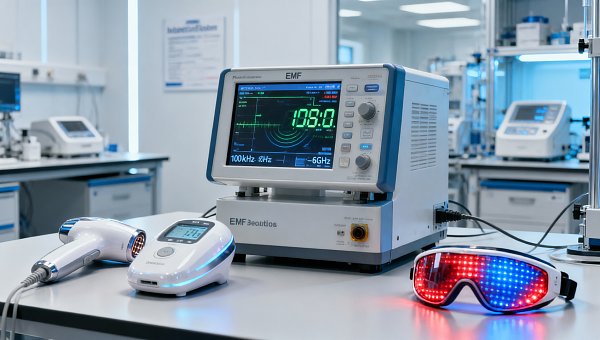
On May 13, 2026, Brazil’s National Institute of Metrology, Standardization and Industrial Quality (INMETRO) issued Portaria No. 112/2026, tightening electromagnetic field (EMF) radiation limits by 30% for radiofrequency (RF) and microcurrent body care devices—and introducing a mandatory real-time skin temperature monitoring requirement. The regulation takes effect on October 1, 2026. Importers, manufacturers, and distributors targeting the Brazilian market must ensure compliance with the updated INMETRO certification; non-compliant products will be prohibited from sale.
Event Overview
On May 13, 2026, INMETRO published Portaria No. 112/2026. The regulation revises technical requirements for body care devices—including RF beauty devices and microcurrent iontophoresis units—by reducing permissible EMF exposure limits by 30% and mandating integrated real-time skin temperature monitoring functionality. The new requirements enter into force on October 1, 2026. Certification under the revised standard is mandatory for market access in Brazil.
Which Subsectors Are Affected
Direct Trading Enterprises (Importers & Exporters)
Importers placing body care devices into the Brazilian market are directly responsible for ensuring certification validity under the new regime. Non-compliance will result in customs rejection or post-import withdrawal—impacting inventory turnover, contract fulfillment, and liability exposure.
Manufacturing Enterprises (OEM/ODM Producers)
Manufacturers supplying RF or microcurrent devices to Brazilian importers must redesign or retrofit hardware to meet stricter EMF thresholds and integrate certified temperature-sensing modules. This affects bill-of-materials, firmware validation, and type-testing timelines.
Supply Chain & Certification Service Providers
Certification bodies accredited by INMETRO must update their test protocols and reporting templates to reflect the revised EMF limits and new functional verification criteria. Laboratories may face increased demand for pre-certification EMF mapping and thermal performance testing.
What Relevant Enterprises or Practitioners Should Focus On — and How to Respond Now
Monitor official implementation guidance from INMETRO
Portaria No. 112/2026 references technical annexes that have not yet been publicly released. Enterprises should track INMETRO’s official portal for publication of the updated ABNT NBR IEC 62471-based measurement methodology and temperature monitoring validation protocol.
Prioritize product lines with RF or microcurrent technology for immediate technical review
Devices using high-frequency energy delivery (e.g., 0.3–10 MHz RF, pulsed microcurrent >50 µA) are subject to the 30% EMF reduction. Firms should identify affected SKUs, assess current EMF emission margins, and initiate engineering evaluation before Q3 2026.
Distinguish between regulatory signal and enforceable obligation
The May 13 issuance is a formal regulatory act—not a draft or consultation. However, enforcement depends on the availability of updated conformity assessment procedures. Until accredited labs confirm test readiness, some importers may operate under transitional interpretation—but no formal grace period is stated.
Initiate supplier alignment and documentation updates ahead of October 2026
Importers should request updated test reports and certification certificates from suppliers by July 2026. Internal compliance checklists must include verification of both EMF retesting and functional validation of skin temperature monitoring (e.g., sensor placement, sampling frequency, alarm thresholds).
Editorial Perspective / Industry Observation
Observably, this revision reflects INMETRO’s broader shift toward harmonizing cosmetic device safety standards with evolving global expectations on bioelectrical interaction—particularly in consumer-facing aesthetic tools. Analysis shows the 30% EMF reduction aligns closely with recent EU SCHEER opinion thresholds for localized RF exposure, suggesting convergence rather than divergence in regional approaches. From an industry perspective, the addition of real-time thermal monitoring signals a move beyond static safety limits toward dynamic risk mitigation—a trend likely to influence future updates in other LATAM markets. It is more accurately understood as an operational inflection point than a long-term strategic pivot: the rule is definitive, its scope narrow, but its execution demands cross-functional coordination across R&D, regulatory affairs, and supply chain.
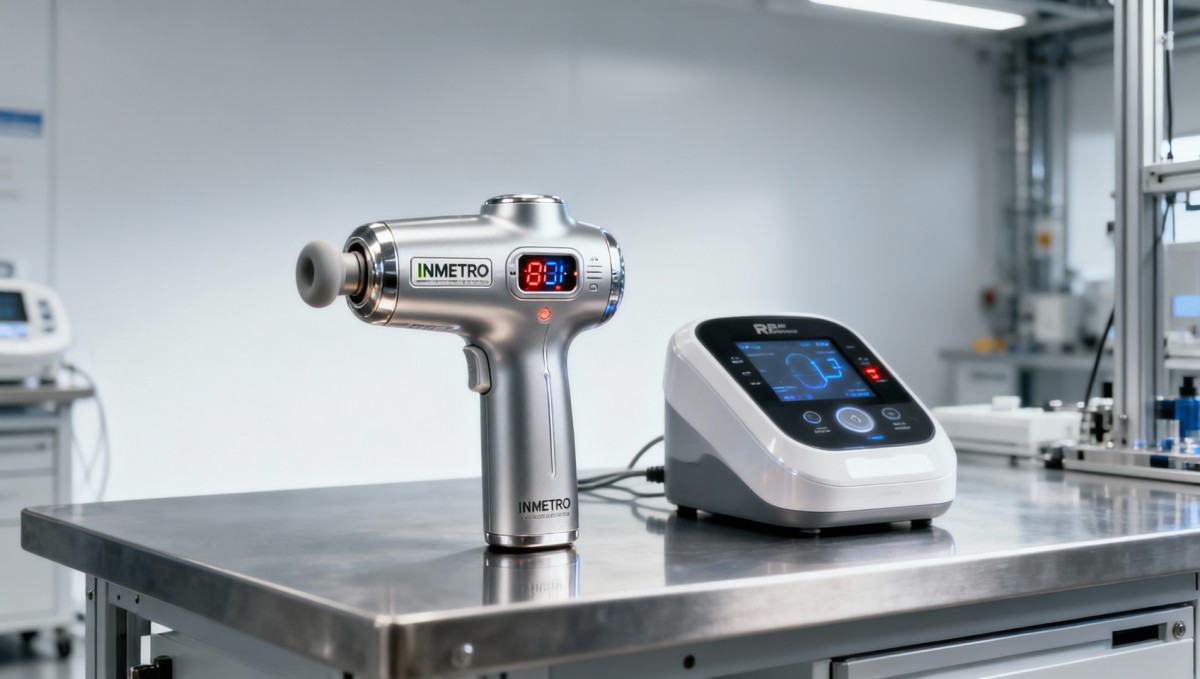
Conclusion: This update establishes a concrete compliance deadline for a defined product category in a high-potential emerging market. Its significance lies not in novelty, but in enforceability: it introduces measurable, testable, and time-bound obligations for specific device functionalities. Current understanding should treat it as a binding technical requirement—not a warning signal or proposal—requiring targeted, timeline-driven action by affected stakeholders.
Source: INMETRO Portaria No. 112/2026, published May 13, 2026. Note: Annexes detailing test methods and temperature monitoring specifications remain pending public release and are under observation.
Recommended News
 2026 Shanghai International EV Charging & Energy Storage Expo Opens2026 Shanghai EV Charging & Energy Storage Expo highlights PV-Storage-Charging microgrids, dual-certified (IEC/UL) systems, and 12-week global delivery—key for exporters, integrators & OEMs.
 Shanghai Bar Association Unveils First Industry BlueprintShanghai Bar Association unveils first industry blueprint: 100 overseas law firm branches by 2028 — boosting cross-border legal support for global trade, investment & supply chains.
 China's April机电 Products Export Hits Record HighChina's April机电 products export hit a record USD 142.8B (+20.4% YoY)—key insight for global buyers, suppliers & manufacturers navigating smart factory demand.
 EU Enforces EPR for Plastic Garden Supplies from May 12, 2026EU EPR for plastic garden supplies kicks in May 12, 2026 — mandatory registration, fees & labeling across all member states. Act now to avoid border rejections & penalties.
 Brazil INMETRO Tightens EMF Limits for Body Care Devices by 30%Brazil INMETRO tightens EMF limits by 30% for RF & microcurrent body care devices—plus mandatory real-time skin temperature monitoring. Act now to ensure compliance by Oct 1, 2026.
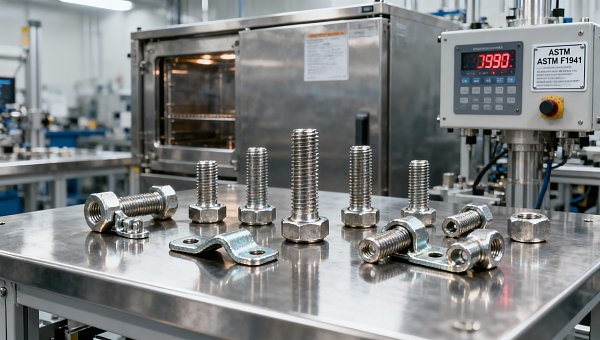
 India BIS Updates IS 2062:2026 — HIC/SSCC Testing Mandatory for Construction FastenersIndia BIS mandates HIC/SSCC testing for construction fasteners under IS 2062:2026 — ensure compliance before Sept 1, 2026 to avoid customs rejection & project delays.
 CIBF2026 Shenzhen Opens: Solid-State Battery Mass Production AcceleratesSolid-state battery mass production accelerates at CIBF2026 Shenzhen—CATL, BYD & Weilan target Q3 2026 launch, 500 Wh/kg cells, and 8-week global delivery.
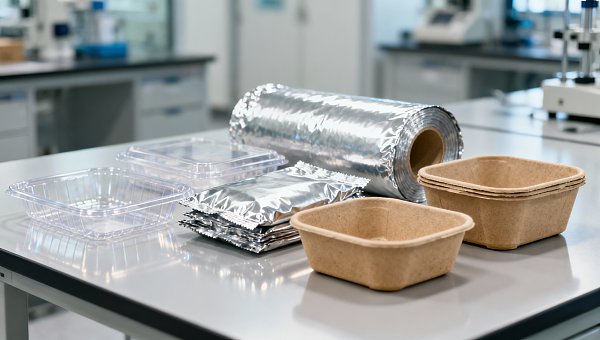
 FDA Adds 37 Chinese Food Packaging Firms to Import AlertFDA adds 37 Chinese food packaging firms to Import Alert 99-08—learn which companies are affected, compliance risks, and urgent actions for U.S. importers & brands.
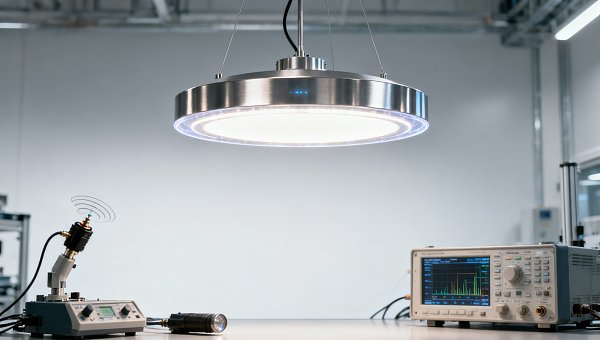
 New GS-EN IEC 62493:2026 Mandates EMF Retesting for Smart Lighting ExportsNew GS-EN IEC 62493:2026 mandates EMF retesting for smart lighting exports to the EU — act now to avoid shipment delays, retail bans, and lost tenders.
 RCEP Round 2 Digital Origin Recognition Launches for Smart Factory EquipmentRCEP Round 2 digital origin recognition is live—unlock zero-tariff exports for smart factory equipment, robots & CNC systems across Asia-Pacific. Act now.
 Office supplies wholesale vs retail sourcing for growing teamsOffice supplies wholesale vs retail: learn how growing teams can cut costs, improve inventory control, and build a smarter sourcing strategy for scalable business growth.
 What to check before ordering ergonomic office furniture in bulkErgonomic office furniture bulk orders require more than a low price. Learn what to check on certifications, adjustability, durability, lead times, and supplier support before you buy.
 China's April机电 Exports Hit Record High, Up 20.4%China's April机电 exports hit record high (+20.4%) — driving demand for CNC equipment, solar PV modules & warehouse automation globally.
 EU Imposes 19.2% Anti-Dumping Duty on Chinese Adipic AcidEU imposes 19.2% anti-dumping duty on Chinese adipic acid—impacting nylon 66, PU foam & automotive suppliers. Act now to review contracts, origin docs & tariffs.
 Colombia Extends 28.3% Anti-Dumping Duty on Chinese Acrylic SheetsColombia extends 28.3% anti-dumping duty on Chinese acrylic sheets until 2029 — critical for importers, fabricators & supply chain teams across Latin America.
 CIBF2026 Shenzhen Opens: Solid-State Battery Mass Production AcceleratesCIBF2026 Shenzhen spotlights solid-state battery mass production—global buyers now prioritize 6-month delivery reliability. Discover how to meet new capacity & certification demands.
 Brazil INMETRO Tightens EMF Limits for Body Care Devices by 30%Brazil INMETRO tightens EMF limits by 30% for RF, microcurrent & LED body care devices—mandatory IEC 62493:2020 testing required from June 1, 2026. Act now to avoid customs delays!
 India BIS Enforces IS 2062:2026 with Hydrogen Embrittlement Testing for Construction HardwareIndia BIS enforces IS 2062:2026 with mandatory hydrogen embrittlement testing for construction hardware—fasteners, hinges, connectors. Act now to secure BIS certification & market access.
 RCEP Phase II Digital Origin Rules Launch for Smart Factory EquipmentRCEP Phase II Digital Origin Rules now live — accelerate tariff-free access for smart factory equipment like CNC machines, robots & vision systems across Asia.
 New GS-EN IEC 62493:2026 Mandates EMF Retesting for Smart Lighting ExportsNew GS-EN IEC 62493:2026 mandates EMF retesting for smart lighting exports—40% stricter limits. Act now to avoid shipment delays in Germany, Austria & Switzerland.
 FDA Adds 37 Chinese Food Packaging Firms to Import AlertFDA adds 37 Chinese food packaging firms to Import Alert — discover why FSMA compliance statements & migration reports are now critical for U.S. market access.













Global Trade Insights & Industry
Our mission is to empower global exporters and importers with data-driven insights that foster strategic growth.
Search News
Popular Tags
Industry Overview
The global commercial kitchen equipment market is projected to reach $112 billion by 2027. Driven by urbanization, the rise of e-commerce food delivery, and strict hygiene regulations.