

CIBF2026 Shenzhen Opens: Solid-State Battery Mass Production Accelerates
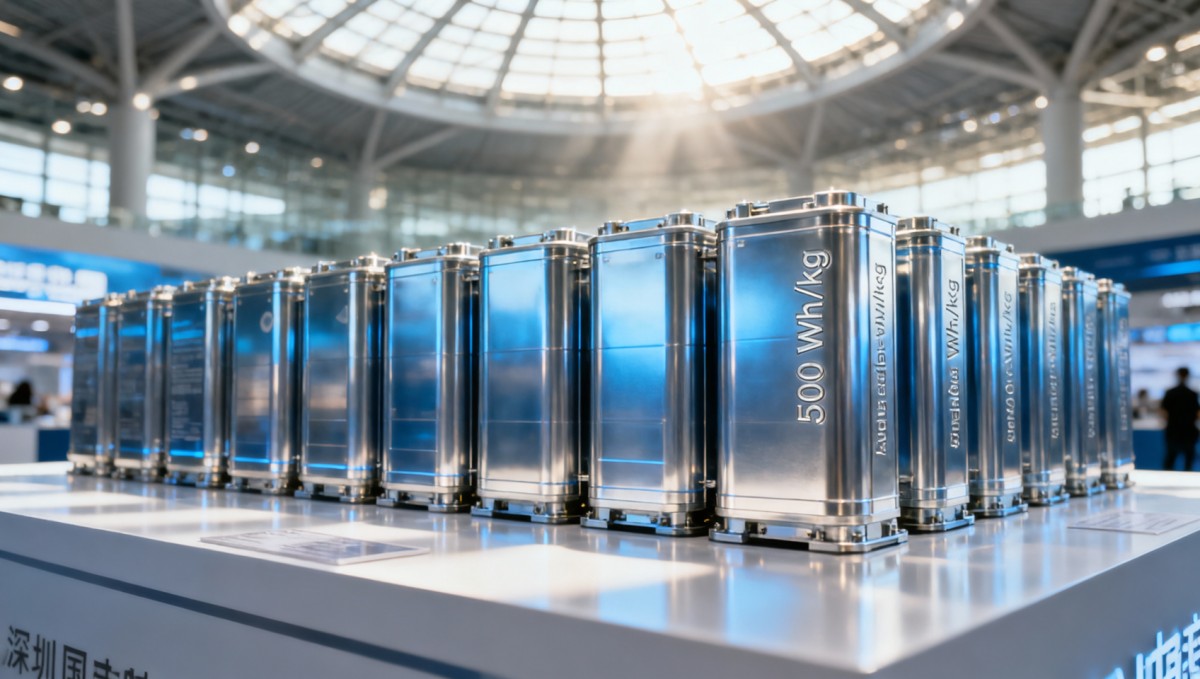
The 25th China International Battery Fair (CIBF2026) opened in Shenzhen on May 13, 2026. This event signals a pivotal shift in the global lithium-ion battery supply chain—particularly as solid-state battery commercialization timelines advance and overseas delivery reliability emerges as a decisive competitive factor for international EV component buyers.
Event Overview
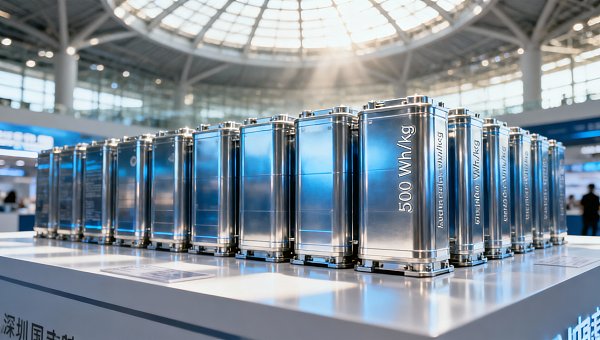
On May 13, 2026, the 25th China International Battery Fair (CIBF2026) opened in Shenzhen. CATL, BYD, and Weilan New Energy announced that their automotive-grade solid-state batteries will enter mass production in Q3 2026—earlier than previously scheduled. Single-cell energy density has exceeded 500 Wh/kg. Leading manufacturers have established dedicated overseas delivery channels, reducing lead times to within eight weeks. The exhibition highlighted a strategic pivot among major Chinese battery suppliers: from price-driven competition toward a dual evaluation framework centered on delivery certainty and technological generation.
Industries Affected
Direct Trading Enterprises: Export-oriented battery traders face intensified pressure to guarantee order fulfillment windows. With overseas clients—especially in Europe, the U.S., and the Middle East—now prioritizing on-time delivery alongside technical specifications, trading firms must integrate real-time production visibility and logistics coordination into their service offerings. Delayed shipments or lack of transparency on cell qualification status may directly erode contract renewals.
Raw Material Procurement Enterprises: Suppliers of cathode precursors, solid electrolytes, and lithium metal anode materials are experiencing revised demand signals. Earlier-than-expected solid-state ramp-up implies accelerated qualification cycles and tighter purity/tolerance requirements. Procurement teams must now align sourcing with OEM-level validation timelines—not just quarterly volume forecasts.
Manufacturing Enterprises (Cell & Module Producers): Firms engaged in cell assembly, module integration, and pack-level testing must scale up process control for new chemistries and interfaces. The 500 Wh/kg milestone reflects not only material innovation but also advances in thermal management, interface engineering, and in-line defect detection—raising capital expenditure and workforce upskilling requirements.
Supply Chain Service Providers: Logistics integrators, customs compliance specialists, and certification support providers see growing demand for region-specific regulatory navigation—e.g., EU Battery Regulation Annex II reporting, U.S. Inflation Reduction Act (IRA) traceability, and GCC type-approval pathways. Standardized documentation and pre-validated transport protocols for solid-state cells (including safety classification updates) are becoming differentiators.
Key Focus Areas and Response Measures
Align procurement contracts with verified delivery SLAs
Trading and OEM procurement teams should require contractual commitments tied to the newly established eight-week overseas delivery window, including penalties for unexcused delays and mechanisms for shared visibility into production line throughput.
Accelerate material qualification for solid-state platforms
Raw material suppliers must initiate joint testing programs with battery makers ahead of Q3 2026 launch—focusing on interfacial stability, cycle life under fast-charge conditions, and batch-to-batch consistency across new electrolyte systems.
Invest in digital twin-enabled logistics tracking
Supply chain service providers should deploy integrated tracking platforms linking factory ERP outputs to freight forwarding data—enabling predictive ETAs and proactive exception handling for high-priority export lanes.
Update compliance frameworks for next-gen cell classifications
All stakeholders must review UN 38.3 revision drafts and IATA Dangerous Goods Regulations (DGR) 65th Edition updates, particularly regarding thermal runaway thresholds and packaging requirements for sulfide- and oxide-based solid electrolytes.
Editorial Perspective / Industry Observation
Observably, the CIBF2026 announcements reflect more than technical progress—they mark a structural recalibration of value allocation across the battery value chain. Analysis shows that delivery certainty is no longer a logistical afterthought but a co-equal pillar with energy density in cross-border procurement decisions. From an industry perspective, this shift favors vertically integrated players with internal logistics control and standardized quality gates—but it also creates opportunities for specialized third-party enablers who can certify and verify delivery performance independently. Current evidence suggests the ‘delivery + generation’ dual metric is gaining traction beyond EVs, extending into energy storage system (ESS) tenders in emerging markets.
Conclusion
CIBF2026 underscores a maturing phase in lithium battery globalization: where speed of execution, regulatory agility, and technical leadership converge as non-substitutable competencies. The acceleration of solid-state battery deployment does not merely represent an upgrade in performance—it redefines how trust is built, priced, and enforced across international supply relationships.
Source Attribution
Official announcements from CIBF Organizing Committee (May 13, 2026); press releases issued by Contemporary Amperex Technology Co. Limited (CATL), BYD Company Ltd., and Weilan New Energy Co., Ltd. during CIBF2026 exhibition. Note: Final mass production timelines, cell certification status, and regional regulatory acceptance remain subject to ongoing verification and are under continuous observation.
Recommended News
 2026 Shanghai International EV Charging & Energy Storage Expo Opens2026 Shanghai EV Charging & Energy Storage Expo highlights PV-Storage-Charging microgrids, dual-certified (IEC/UL) systems, and 12-week global delivery—key for exporters, integrators & OEMs.
 Shanghai Bar Association Unveils First Industry BlueprintShanghai Bar Association unveils first industry blueprint: 100 overseas law firm branches by 2028 — boosting cross-border legal support for global trade, investment & supply chains.
 China's April机电 Products Export Hits Record HighChina's April机电 products export hit a record USD 142.8B (+20.4% YoY)—key insight for global buyers, suppliers & manufacturers navigating smart factory demand.
 EU Enforces EPR for Plastic Garden Supplies from May 12, 2026EU EPR for plastic garden supplies kicks in May 12, 2026 — mandatory registration, fees & labeling across all member states. Act now to avoid border rejections & penalties.
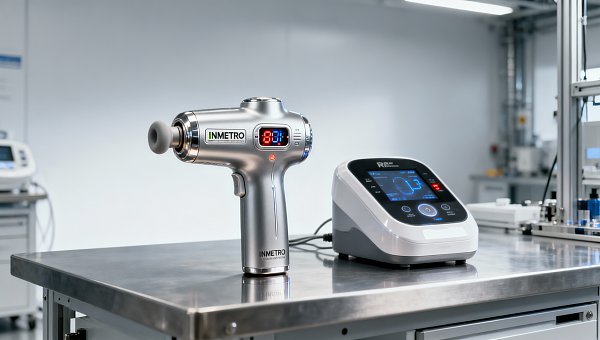
 Brazil INMETRO Tightens EMF Limits for Body Care Devices by 30%Brazil INMETRO tightens EMF limits by 30% for RF & microcurrent body care devices—plus mandatory real-time skin temperature monitoring. Act now to ensure compliance by Oct 1, 2026.
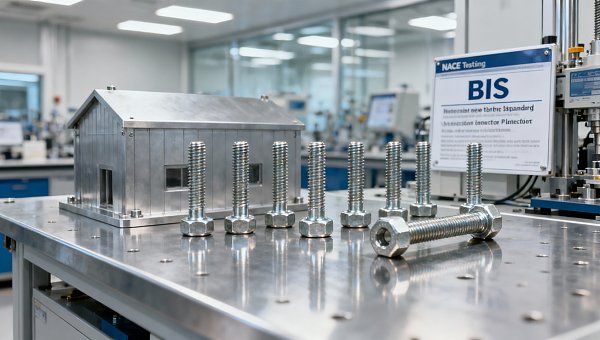
 India BIS Updates IS 2062:2026 — HIC/SSCC Testing Mandatory for Construction FastenersIndia BIS mandates HIC/SSCC testing for construction fasteners under IS 2062:2026 — ensure compliance before Sept 1, 2026 to avoid customs rejection & project delays.
 CIBF2026 Shenzhen Opens: Solid-State Battery Mass Production AcceleratesSolid-state battery mass production accelerates at CIBF2026 Shenzhen—CATL, BYD & Weilan target Q3 2026 launch, 500 Wh/kg cells, and 8-week global delivery.
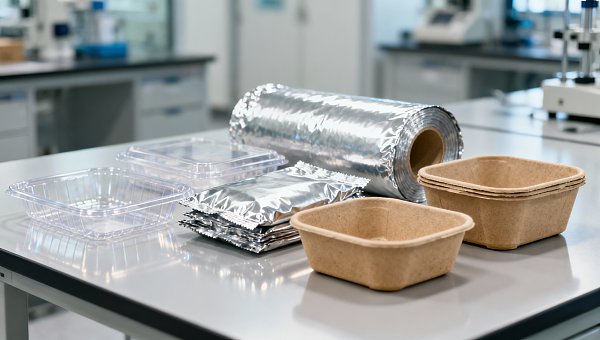
 FDA Adds 37 Chinese Food Packaging Firms to Import AlertFDA adds 37 Chinese food packaging firms to Import Alert 99-08—learn which companies are affected, compliance risks, and urgent actions for U.S. importers & brands.
 New GS-EN IEC 62493:2026 Mandates EMF Retesting for Smart Lighting ExportsNew GS-EN IEC 62493:2026 mandates EMF retesting for smart lighting exports to the EU — act now to avoid shipment delays, retail bans, and lost tenders.
 RCEP Round 2 Digital Origin Recognition Launches for Smart Factory EquipmentRCEP Round 2 digital origin recognition is live—unlock zero-tariff exports for smart factory equipment, robots & CNC systems across Asia-Pacific. Act now.
 Office supplies wholesale vs retail sourcing for growing teamsOffice supplies wholesale vs retail: learn how growing teams can cut costs, improve inventory control, and build a smarter sourcing strategy for scalable business growth.
 What to check before ordering ergonomic office furniture in bulkErgonomic office furniture bulk orders require more than a low price. Learn what to check on certifications, adjustability, durability, lead times, and supplier support before you buy.
 China's April机电 Exports Hit Record High, Up 20.4%China's April机电 exports hit record high (+20.4%) — driving demand for CNC equipment, solar PV modules & warehouse automation globally.
 EU Imposes 19.2% Anti-Dumping Duty on Chinese Adipic AcidEU imposes 19.2% anti-dumping duty on Chinese adipic acid—impacting nylon 66, PU foam & automotive suppliers. Act now to review contracts, origin docs & tariffs.
 Colombia Extends 28.3% Anti-Dumping Duty on Chinese Acrylic SheetsColombia extends 28.3% anti-dumping duty on Chinese acrylic sheets until 2029 — critical for importers, fabricators & supply chain teams across Latin America.
 CIBF2026 Shenzhen Opens: Solid-State Battery Mass Production AcceleratesCIBF2026 Shenzhen spotlights solid-state battery mass production—global buyers now prioritize 6-month delivery reliability. Discover how to meet new capacity & certification demands.
 Brazil INMETRO Tightens EMF Limits for Body Care Devices by 30%Brazil INMETRO tightens EMF limits by 30% for RF, microcurrent & LED body care devices—mandatory IEC 62493:2020 testing required from June 1, 2026. Act now to avoid customs delays!
 India BIS Enforces IS 2062:2026 with Hydrogen Embrittlement Testing for Construction HardwareIndia BIS enforces IS 2062:2026 with mandatory hydrogen embrittlement testing for construction hardware—fasteners, hinges, connectors. Act now to secure BIS certification & market access.
 RCEP Phase II Digital Origin Rules Launch for Smart Factory EquipmentRCEP Phase II Digital Origin Rules now live — accelerate tariff-free access for smart factory equipment like CNC machines, robots & vision systems across Asia.
 New GS-EN IEC 62493:2026 Mandates EMF Retesting for Smart Lighting ExportsNew GS-EN IEC 62493:2026 mandates EMF retesting for smart lighting exports—40% stricter limits. Act now to avoid shipment delays in Germany, Austria & Switzerland.
 FDA Adds 37 Chinese Food Packaging Firms to Import AlertFDA adds 37 Chinese food packaging firms to Import Alert — discover why FSMA compliance statements & migration reports are now critical for U.S. market access.





Global Trade Insights & Industry
Our mission is to empower global exporters and importers with data-driven insights that foster strategic growth.
Search News
Popular Tags
Industry Overview
The global commercial kitchen equipment market is projected to reach $112 billion by 2027. Driven by urbanization, the rise of e-commerce food delivery, and strict hygiene regulations.