As energy costs, land constraints, and sustainability targets reshape infrastructure planning, project leaders are reassessing how solar assets can coexist with productive farmland.
Agri-PV systems cost-effective solutions are becoming increasingly viable by combining optimized mounting designs, smarter O&M models, and improved project financing.
For engineering and project management teams, the key is no longer whether agrivoltaics can work, but how to structure deployment, supplier selection, and lifecycle economics.
What project leaders need to validate first
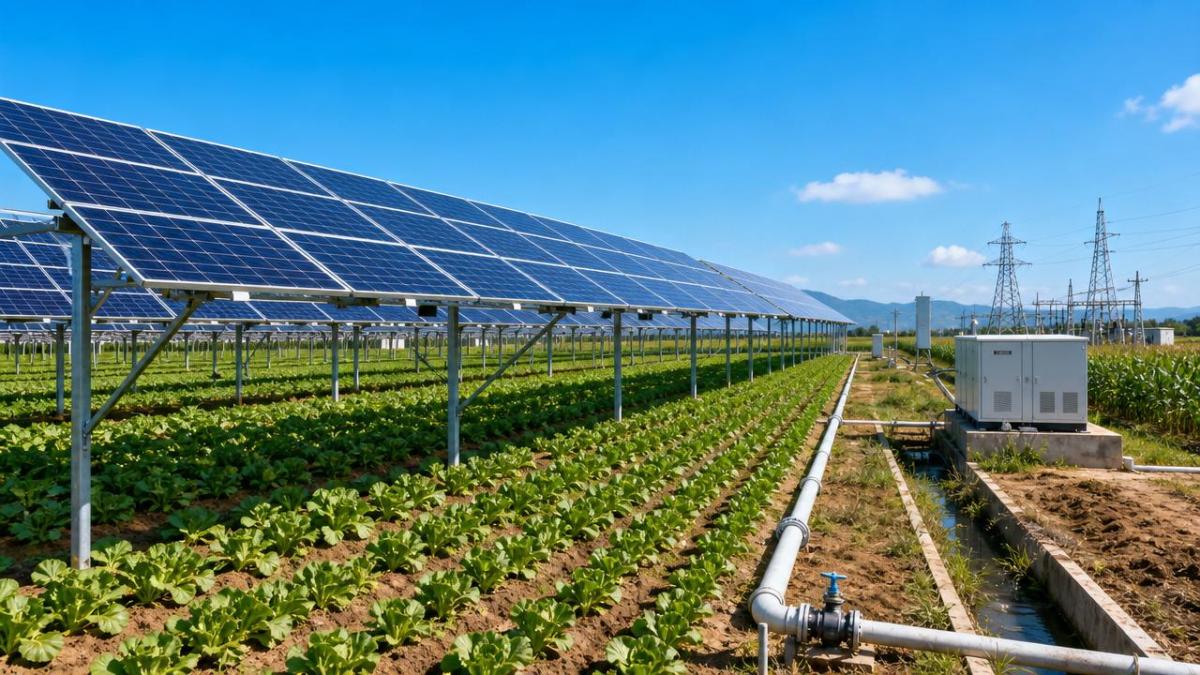
The commercial case for Agri-PV starts with one practical question: can the site produce both energy and crops without undermining either asset?
For project managers, viability depends less on headline solar capacity and more on land-use fit, crop response, grid access, permitting, and maintenance complexity.
A cost-effective project is not simply the cheapest installation. It is a system where design choices reduce lifecycle risk and protect agricultural productivity.
This distinction matters because Agri-PV projects combine two operating environments with different schedules, performance indicators, and stakeholder expectations.
Engineering teams should therefore assess technical feasibility, farmer acceptance, financing structure, and local regulatory treatment before finalizing procurement or construction sequencing.
Why Agri-PV economics are improving
Several cost drivers have shifted in favor of agrivoltaics. Module prices have softened, mounting systems are becoming standardized, and lenders better understand hybrid land-use projects.
At the same time, conventional solar developers face stronger competition for available land, especially near substations, irrigation networks, and productive rural infrastructure.
Agri-PV systems cost-effective solutions help resolve this constraint by generating revenue from electricity while maintaining or enhancing farm output.
Some crops benefit from partial shading, especially in hot regions where heat stress, water loss, and excessive solar exposure reduce yields.
These agronomic benefits are site-specific, but they can materially improve the overall business case when measured alongside power generation.
The strongest projects usually combine moderate structural complexity with clear agricultural use, avoiding unnecessary engineering features that inflate capital expenditure.
Design choices that most affect project cost
Mounting configuration is often the largest differentiator between a viable Agri-PV system and an over-engineered demonstration project.
Fixed elevated structures can support machinery access but increase steel consumption, foundation requirements, installation time, and wind-load engineering costs.
Lower-cost designs may use optimized row spacing, selective elevation, and crop-specific clearance rather than maximizing height across the entire site.
Tracking systems can improve energy yield, but project leaders must compare that gain against higher mechanical complexity and maintenance exposure.
For many agricultural sites, a simpler fixed-tilt or limited-tracking configuration may produce better risk-adjusted returns than a technically impressive alternative.
Electrical layout also matters. Cable routing, inverter placement, access roads, and drainage planning can either support farm operations or disrupt them repeatedly.
Early coordination between solar engineers and farm operators prevents expensive redesigns after equipment dimensions, irrigation lines, or harvesting routes are already fixed.
How to evaluate the true return on investment
Project managers should avoid judging Agri-PV only by levelized cost of electricity, because electricity is just one part of the project value stack.
A more realistic evaluation includes power revenue, crop revenue, water savings, land lease value, avoided grid purchases, and sustainability-related incentives.
In corporate settings, Agri-PV may also support decarbonization commitments, supply chain resilience, and ESG reporting requirements tied to agricultural procurement.
However, these benefits should be quantified carefully. Soft benefits become credible only when linked to measurable operating data or contractual commitments.
For example, a food processor may value renewable electricity more if the project stabilizes energy costs near a critical agricultural supply base.
An irrigation-intensive farm may see greater value from shading if reduced evaporation lowers pumping demand and improves water allocation during dry periods.
The most useful ROI model compares a baseline farm scenario, a standard solar scenario, and an Agri-PV scenario under multiple price and yield assumptions.
Supplier selection should focus on lifecycle reliability
Low-cost procurement can quickly become expensive if structural components, corrosion protection, or installation tolerances are not suitable for agricultural environments.
Project leaders should request evidence of previous installations in similar wind, soil, rainfall, and farm machinery conditions.
Suppliers should also demonstrate how their system accommodates irrigation access, livestock exclusion, crop rotation, cleaning routes, and emergency maintenance.
For international procurement teams, documentation quality is especially important because Agri-PV components often involve customized steel, fasteners, clamps, and foundations.
Technical drawings should clearly define load assumptions, coating standards, module compatibility, grounding details, and replacement procedures.
A strong supplier will not only quote hardware prices but explain how the design reduces installation labor and operational downtime.
For B2B buyers, the most reliable cost-effective solutions combine competitive manufacturing with transparent engineering support and verifiable quality control.
Permitting and stakeholder alignment can protect the schedule
Agri-PV projects often face permitting questions because authorities must decide whether the land remains agricultural, energy-generating, or both.
Early engagement with planning agencies, grid operators, water authorities, and agricultural stakeholders reduces the risk of late-stage objections.
Project managers should prepare documentation showing that farm activity remains operational, including access plans, crop plans, and maintenance coordination.
Community acceptance also improves when the project is presented as land productivity enhancement rather than agricultural displacement.
This is particularly important in regions where solar expansion has created concerns about food security, landscape change, or rural employment.
Clear benefit-sharing models, farmer participation, and local contractor involvement can reduce resistance while improving long-term operating cooperation.
Schedule risk should be treated as a financial variable, because permitting delays can weaken power purchase agreements and increase construction financing costs.
O&M planning must reflect farm realities
Operations and maintenance plans for Agri-PV cannot simply copy utility-scale solar procedures, because farm activities change access conditions throughout the year.
Planting, spraying, irrigation, pruning, grazing, and harvesting all affect when technicians can enter the site safely and efficiently.
Cost-effective O&M begins during design, with adequate turning radius, safe equipment clearances, drainage protection, and defined responsibilities between parties.
Vegetation management may be easier in some Agri-PV systems because crops or grazing animals occupy ground that would otherwise require mowing.
However, dust, pollen, animal activity, and irrigation overspray can influence module soiling and inspection frequency.
Remote monitoring, string-level diagnostics, and predictive maintenance help reduce truck rolls, especially where farm schedules limit physical access.
The O&M contract should define response times, shutdown protocols, crop damage liability, and coordination rules during peak agricultural periods.
Where Agri-PV is most likely to work
Not every agricultural site is suitable for Agri-PV, and disciplined project screening is essential for cost control.
Good candidates often include high-value crops, heat-sensitive crops, water-stressed regions, farms near grid infrastructure, and sites with supportive land-use policy.
Greenhouses, orchards, vineyards, berries, leafy vegetables, and certain livestock operations may offer stronger compatibility than large-scale mechanized grain production.
Projects become harder when machinery requires wide uninterrupted movement, local grid capacity is limited, or crop economics cannot absorb operational disruption.
Site topography, soil conditions, flood risk, and foundation strategy must be assessed before pricing appears reliable.
For project leaders, the strongest opportunities are usually not the largest sites, but the sites where energy and agriculture reinforce each other.
A focused pilot can be valuable when agricultural response data is uncertain, provided it is designed to inform bankable expansion decisions.
Financing structures that improve affordability
Agri-PV projects can use several financing models, including direct ownership, power purchase agreements, leases, joint ventures, and cooperative structures.
The best structure depends on who controls the land, who consumes the electricity, and who bears agricultural performance risk.
For farms with limited capital, third-party ownership may reduce upfront investment while delivering lease income or discounted electricity.
For industrial buyers, a long-term offtake agreement can support renewable procurement while helping suppliers stabilize energy costs.
Public incentives, rural development grants, carbon programs, and water-efficiency funding can improve returns, but they should not be the only reason to proceed.
Lenders will usually want clear evidence that agricultural activity will continue and that project revenue is not exposed to unresolved land-use disputes.
Financial models should stress-test module degradation, crop yield variation, curtailment, O&M escalation, insurance costs, and potential repowering requirements.
A practical deployment roadmap
A disciplined Agri-PV development process begins with site screening, stakeholder mapping, and a high-level comparison against conventional solar and conventional farming.
The next step is a feasibility study combining solar yield modeling, crop impact assessment, grid review, structural concept design, and permitting analysis.
After that, project teams should prepare a procurement package that separates mandatory technical requirements from optional performance enhancements.
This prevents suppliers from over-customizing bids while allowing meaningful comparison of capital cost, installation duration, and lifecycle performance.
During detailed design, farm operators should review access, irrigation, planting schedules, machinery routes, and safety procedures before drawings are frozen.
Construction planning should account for agricultural seasons, soil compaction risk, weather windows, and the availability of specialized installation crews.
After commissioning, performance tracking should measure both electrical output and agricultural outcomes, because the project’s value depends on both systems.
Key risks and how to reduce them
The most common Agri-PV risks are not purely technical. They usually arise from misaligned assumptions between developers, farmers, financiers, and regulators.
Crop yield uncertainty can be reduced through agronomic trials, university research, comparable field data, or phased deployment.
Structural cost escalation can be reduced by standardizing designs, limiting unnecessary elevation, and validating local fabrication capabilities early.
Grid connection risk requires early capacity checks, realistic interconnection timelines, and contingency planning for curtailment or phased energization.
Operational conflict can be reduced through written interface agreements that define access rights, maintenance windows, safety responsibilities, and compensation procedures.
Procurement risk can be reduced by verifying supplier references, materials certification, coating durability, and engineering calculations before contract award.
Ultimately, risk control is what makes cost-effective solutions credible, because lower upfront costs are valuable only when performance remains dependable.
Conclusion: viability depends on integration, not shortcuts
Agri-PV is becoming more viable because technology costs, design knowledge, and project finance models are moving in the right direction.
Yet the best projects are not built by chasing the lowest equipment quote or maximizing solar capacity at the expense of farm operations.
They are built through integrated planning, realistic financial modeling, supplier discipline, and careful coordination between engineering and agriculture.
For project managers, Agri-PV systems cost-effective solutions should be evaluated through lifecycle value, not simple capital cost comparisons.
When land productivity, energy generation, water use, and operating risk are assessed together, agrivoltaics can become a practical infrastructure strategy.
The clear takeaway is this: Agri-PV works best where every design decision supports both power performance and agricultural continuity.