

What makes beauty and personal care devices safe for home use
As beauty and personal care devices move from salons and clinics into bathrooms and bedrooms, safety matters as much as visible results. Consumers are no longer choosing only between “works” and “doesn’t work.” They are also judging whether a device can be used repeatedly at home without causing burns, skin barrier damage, eye injury, infection, or electrical risk. That shift has changed how serious buyers evaluate everything from facial cleansing brushes and heated styling tools to LED masks, microcurrent devices, and home-use hair removal systems.
The key point is simple: a device is not safe for home use just because it is popular, expensive, or widely sold online. Home safety comes from a combination of design limits, material choices, testing, instructions, and user behavior. When any one of those is weak, the risk rises quickly.
For consumers trying to make a practical decision, it helps to stop asking only “What does this device do?” and start asking “What prevents it from doing harm?” That is the question manufacturers, regulators, retailers, and informed users should all be able to answer clearly.
Home-use safety starts with controlled energy, not marketing claims
Most beauty and personal care devices work by delivering some form of energy or mechanical action to the body. That may be heat, light, vibration, electrical current, suction, rotation, pressure, or a combination of these. Safety depends on whether that output stays within limits suitable for non-professional users.
A home-use laser or intense pulsed light hair removal device, for example, is built around lower energy levels than professional systems. That usually means slower results, but it is also part of the safety model. The same logic applies to LED skin tools, radio frequency devices, and microcurrent equipment. If a device is designed for unsupervised use, it should have clear boundaries that reduce the chance of misuse.
This is one of the most common consumer misunderstandings in beauty and personal care: people often assume stronger means better. In reality, stronger often means less margin for error. Professional devices are used in controlled environments because trained operators can assess skin type, treatment time, contraindications, and recovery signs. At home, the product itself must carry more of that safety burden.
That is why safe consumer devices usually emphasize dose control over maximum intensity. In practical terms, this may include preset treatment cycles, energy caps, automatic shutoff, skin contact sensors, cooling features, and limits that prevent repeated rapid firing in one area.
Materials matter more than many buyers realize
When a device touches skin regularly, material quality is not a cosmetic detail. It is a safety factor. Poor-quality plastics, unstable coatings, rough metal edges, or difficult-to-clean surfaces can turn a low-risk tool into a source of irritation or contamination.
For facial devices and cleansing tools, the contact surface should be non-irritating, smooth, and suitable for repeated exposure to moisture, oils, cleansers, and skin friction. Silicone, stainless steel, and well-finished medical- or cosmetic-grade contact materials are often preferred because they are easier to clean and less likely to degrade quickly. That does not mean every premium-looking product uses better materials. Appearance is not proof.
For heated tools such as hair stylers, facial warming devices, or thermal brushes, housing materials also matter because they affect insulation and temperature stability. A device may claim to be safe because the heating element is hidden, but if the outer casing becomes too hot or the temperature fluctuates sharply, that is still a user risk.
Battery safety is another area consumers often overlook. Rechargeable devices should have stable charging systems, overcharge protection, and clear instructions on compatible chargers or cables. In low-cost unverified products, electrical safety failures may have less to do with the beauty function itself and more to do with the battery pack, adapter, or poor assembly quality.
Certifications and compliance are useful, but they are not all equal
Many consumers look for a certification mark and assume that safety has been fully proven. That is only partly true. Labels can be meaningful, but they need context.
In major markets, electrical and electronic personal care devices may need to meet applicable safety, electromagnetic compatibility, and product compliance requirements. Depending on the market and product category, buyers may encounter markings or references such as CE in the European market, UL or ETL listing in the United States for certain electrical product contexts, UKCA in the UK, FCC for relevant electronic interference aspects, RoHS for hazardous substance restrictions, and REACH-related material compliance in Europe. Medical-style claims can trigger a different and stricter regulatory pathway, which is one reason companies often market devices for cosmetic use only.
Consumers should keep two cautions in mind. One, a mark is not automatically proof of broad product excellence; it may only indicate conformity in a specific scope. Two, online marketplaces have made it easier for non-compliant or falsely marked products to circulate. If a seller cannot provide a traceable brand identity, model information, user manual, warranty support, and basic compliance documentation, a printed logo on the box should not inspire much confidence.
A more reliable signal is consistency across the full product package: clear labeling, named manufacturer or importer, voltage and charging specifications, warning statements, instructions for contraindications, cleaning guidance, and customer support channels. Safety is usually visible in the discipline of the documentation, not just in a symbol.
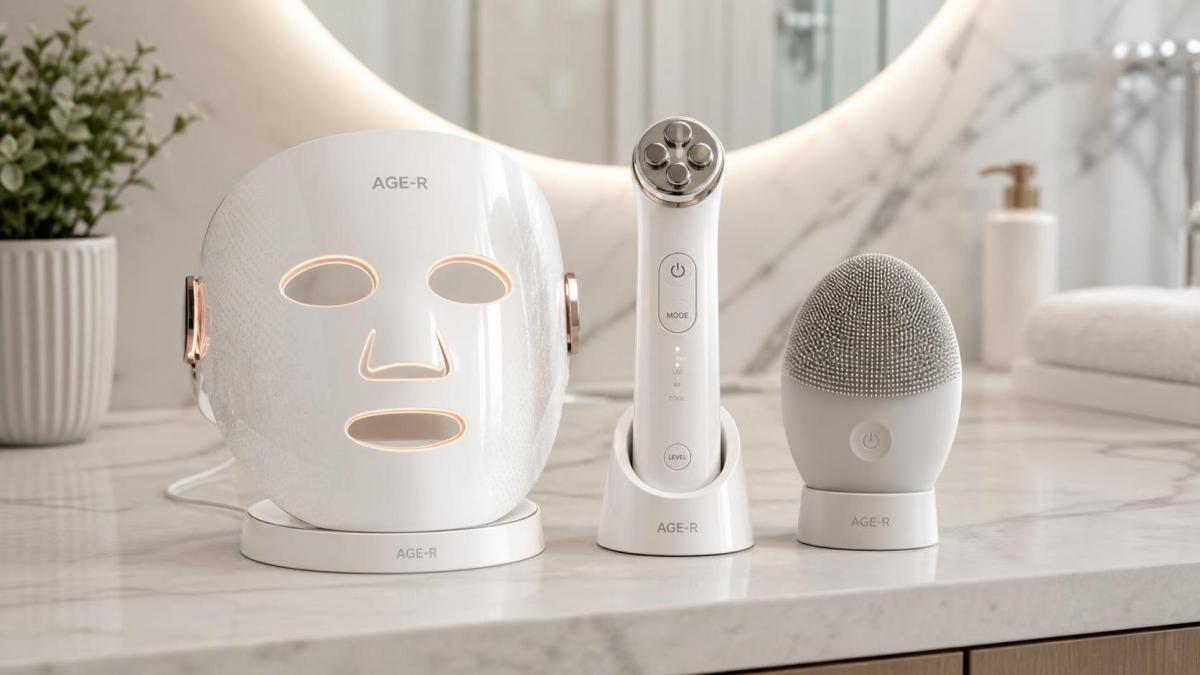
Built-in protection features are what separate a consumer device from a risky gadget
For genuine home use, safety has to be engineered into the product. This is especially important because users may be distracted, inexperienced, or tempted to overuse a device when results are slow.
Some of the most valuable built-in safeguards include:
- Temperature regulation for heated tools, so the device does not spike beyond intended limits.
- Automatic shutoff after a defined period of inactivity or treatment time.
- Skin contact sensors that prevent light or energy discharge unless the device is properly positioned.
- Eye protection design for LED, IPL, or laser-related devices, especially around wavelength exposure and accidental flashes.
- Pressure control for suction or exfoliation tools, reducing bruising or broken capillaries.
- Adjustable intensity levels that start low rather than forcing all users into the same setting.
- Water-resistance design where bathroom use is expected, with clear limits on whether the device is splash-proof or fully washable.
- Lock functions to prevent accidental activation during travel or storage.
These features may sound ordinary, but they are often the difference between a properly designed product and a trend-driven accessory built mainly for speed to market.
Instructions are part of the safety system, not an afterthought
A safe device can become unsafe when it is used on the wrong person, the wrong area, or the wrong schedule. This is why usage instructions are not just legal text. They are part of the safety architecture.
Good instructions should tell users:
- who should not use the device;
- which skin conditions require caution;
- whether a patch test is recommended;
- how long each session should last;
- how often treatment should be repeated;
- which products should not be used together with the device;
- how to clean and store it properly;
- when to stop use and seek advice.
This matters especially for devices used with active skincare ingredients. Retinoids, exfoliating acids, acne treatments, and photosensitizing ingredients can change how skin responds to heat, light, friction, or current. A device may be safe in isolation but not safe in combination with a user’s routine.
Consumers also need to pay attention to anatomical limitations. Not every device suitable for cheeks or forehead is safe near eyelids, lips, broken skin, moles, tattoos, or inflamed acne. One of the main risk patterns in home beauty care is not catastrophic failure, but routine overuse in sensitive areas.
Hygiene is a safety issue, especially for reusable skin-contact devices
In beauty and personal care, safety is often discussed in terms of burns or electrical hazards, but hygiene failures are just as common. Brushes, heads, rollers, extraction tools, epilators, and shaving devices can all accumulate residue, bacteria, dead skin, and product buildup if not maintained correctly.
Design influences hygiene. Devices with removable, washable heads or smooth non-porous contact points are easier to keep clean. Deep crevices, fabric surfaces, and poorly sealed joints increase maintenance difficulty. This may not matter much in the first week of use, but over months it affects both safety and product life.
Sharing devices between users raises another concern. A product marketed for convenience is not necessarily designed for multi-user hygiene. If replacement heads are unavailable or cleaning instructions are vague, the long-term safety profile becomes weaker.
The biggest risks often come from mismatch, not malfunction
Consumers tend to imagine unsafe devices as defective devices. In practice, many problems come from a mismatch between product and user.
An IPL hair removal device may be technically compliant yet unsuitable for certain skin tones or hair colors. A cleansing brush may be too abrasive for rosacea-prone skin. A microcurrent device may not be appropriate for someone with certain implanted electronic devices or other contraindications that the manufacturer identifies. A heated tool may be safe for normal scalp use but not for fragile, chemically damaged hair or compromised skin.
This is why skin type, sensitivity, medical history, and treatment goals matter more than trend lists. Home-use products are safer when consumers buy according to suitability, not hype.
It also explains why “worked for me” reviews are weak evidence. User satisfaction says little about whether a device is broadly safe across different conditions. What one person calls “strong enough to be effective,” another person may experience as irritation, hyperpigmentation trigger, or barrier damage.
What to look for before buying
For a first screening, consumers do not need to read technical standards in detail. They do need to ask better questions than “Is it popular?”
A safer buying checklist includes the following:
- Is the brand identifiable, with a real company presence and support contact?
- Does the product provide clear intended use and clear exclusions?
- Are power ratings, charging method, and electrical specifications stated clearly?
- Does the manual explain treatment frequency and maximum exposure?
- Are replacement parts and cleaning instructions available?
- Does the product include sensible protection features for its category?
- Are the claims realistic, or do they promise professional-level results with no risk?
- Is the seller transparent about certifications rather than using vague compliance language?
One useful rule is that responsible products usually sound more cautious. If the advertising suggests universal suitability, instant results, and zero downside, caution is warranted. Safety-conscious manufacturers tend to be more specific about limits.
Why the category is under more scrutiny now
The growth of at-home devices reflects a larger shift in beauty and personal care consumption. Users want privacy, lower long-term treatment cost, flexible scheduling, and more control over routines. That demand has expanded the category quickly, but it has also created a crowded market where quality varies sharply.
As a result, consumers are navigating a mix of established brands, private-label imports, social-media-driven launches, and cross-border e-commerce listings. In that environment, product safety can no longer be judged by retail visibility alone. Devices that look similar may differ significantly in testing rigor, materials, output control, and after-sales accountability.
This is also where broader industry trends matter. More regulators and marketplaces are paying attention to product traceability, electrical compliance, hazardous substances, misleading claims, and seller responsibility. The direction is clear even when enforcement varies by market: home-use devices that interact with skin, hair, and light exposure are being treated with greater seriousness than novelty gadgets.
Safe use depends on the consumer too
Even well-designed products can be misused. The most common consumer mistakes are treating too often, using maximum intensity immediately, combining too many actives and devices at once, skipping patch tests, ignoring contraindications, and using a damaged or dirty device because “it still works.”
The safer approach is less dramatic. Start low, follow the interval guidance, watch for delayed irritation rather than only immediate discomfort, and stop when skin or scalp shows signs of stress. If a device requires protective eyewear or specific preparation steps, those are not optional extras. They are part of the risk-control system.
For people with chronic skin conditions, recent cosmetic procedures, unusual sensitivity, or uncertainty about compatibility, professional advice remains valuable. Home-use does not mean risk-free. It means the product has been designed for non-professional operation within defined limits.
What really makes a home beauty device safe
The safest beauty and personal care devices are not the ones with the boldest promises. They are the ones built around restraint, clarity, and predictable use. Safe materials, controlled energy output, protective engineering, credible compliance, good hygiene design, and honest instructions all matter. So does the user’s willingness to stay within the intended limits.
For consumers, that leads to a more useful definition of safety: not “nothing can go wrong,” but “the product is designed to reduce foreseeable harm when used as directed.” In a fast-growing home beauty market, that is the standard worth paying attention to.
 Which global manufacturing trends by sector matter most for sourcing plans?Global manufacturing trends by sector: identify sourcing risks, supplier resilience, compliance demands, and cost drivers to build smarter, more reliable procurement plans.
 What industrial trade intelligence pricing should include before you subscribeIndustrial trade intelligence pricing explained: compare coverage, data quality, access rights, and workflow value before choosing a subscription that supports smarter trade decisions.
 How an industrial trade intelligence dashboard can identify new supplier marketsDiscover how an industrial trade intelligence dashboard helps identify new supplier markets by comparing capacity, landed cost, logistics resilience, and compliance risk.
 Which global market entry barriers should exporters assess first?Global market entry barriers exporters should assess first: tariffs, compliance, buyer qualification, logistics, and payment risk. Build a practical strategy for confident market entry.
 How trade data aggregation analytics can reveal emerging supplier marketsTrade data aggregation analytics reveals emerging supplier markets by connecting trade flows, capacity signals, logistics, and compliance insights for smarter sourcing decisions.
 When an export market analysis platform can validate demand in a new marketExport market analysis platform insights help validate new-market demand through buyer fit, regulations, logistics, competition, and profitable entry conditions.
 What is driving the beauty and personal care market in the USA?Beauty and personal care in USA is driven by targeted solutions, selective premiumization, digital discovery, clean-label trust, diverse needs, and compliance. Explore key growth opportunities.
 How trade flow monitoring reports reveal changing regional demandTrade flow monitoring reports reveal changing regional demand through import volumes, sourcing shifts, product mix, logistics signals, and regulatory trends. Explore actionable market insights.
 How international market intelligence for investors reduces market-entry riskInternational market intelligence for investors reduces market-entry risk by validating demand, regulations, logistics, and competition before capital is committed.
 How international sourcing intelligence helps identify supplier risk earlyInternational sourcing intelligence helps businesses spot supplier risks early, protect supply continuity, and make smarter global procurement decisions.
 How trade data aggregation analytics reveals emerging supplier marketsTrade data aggregation analytics reveals emerging supplier markets through export trends, input flows, logistics, and regulatory signals. Discover smarter sourcing insights.
 What industrial cluster monitoring in Vietnam reveals about site riskIndustrial cluster monitoring Vietnam reveals hidden site risks across labor, utilities, logistics, compliance, and supplier dependencies. Make smarter sourcing and expansion decisions.
 Food Technology Trends Reshaping Shelf Life, Safety, and Product InnovationFood technology is reshaping shelf life, safety, and innovation. Discover the trends helping food businesses cut risk, improve compliance, and unlock stronger global market growth.
 How electronics manufacturing services are changing with low-volume demandElectronics manufacturing services are evolving fast with low-volume demand. Learn how agile EMS partners improve flexibility, compliance, sourcing resilience, and speed to market.
 How Can Buyers Reduce Procurement Risks for Electronic Components?How to reduce procurement risks for electronic components: learn how buyers assess traceability, lead times, compliance, and supplier types to avoid costly sourcing mistakes.
 What Sourcing Intelligence India Reveals About Supplier Risk and Cost ShiftsSourcing intelligence India reveals hidden supplier risk, compliance gaps, logistics pressure, and real cost shifts—helping buyers compare vendors smarter and source with more confidence.
 Fashion Trends 2026: Which Materials, Colors, and Silhouettes Are Gaining Ground?Fashion trends 2026 spotlight tactile fabrics, mineral colors, and controlled volume. Explore the materials, shades, and silhouettes shaping smarter, more wearable style.
 Smart Device Market Outlook: Key Growth Drivers, Segments, and Business OpportunitiesSmart device market trends are shifting toward system value, industrial demand, and resilient supply chains. Explore key growth drivers, high-potential segments, and business opportunities.
 How Global Trade Intelligence Services Help B2B Firms Evaluate Markets and SuppliersGlobal trade intelligence services help B2B firms compare suppliers, assess market potential, and uncover compliance, logistics, and pricing risks before costly decisions are made.
 Manufacturing Sector Updates for Investors: What Signals Matter Most in 2025?Manufacturing sector updates for investors in 2025: track orders, margins, supply chains, regulation, and exports to spot resilient manufacturers and smarter investment signals.
 How Energy Market Intelligence Helps Businesses Track Price Risks and Demand ShiftsEnergy market intelligence helps businesses spot price risks, demand shifts, and supply pressure early—improving procurement, resilience, and faster strategic decisions.





















Global Trade Insights & Industry
Our mission is to empower global exporters and importers with data-driven insights that foster strategic growth.
Search News
Popular Tags
Industry Overview
The global commercial kitchen equipment market is projected to reach $112 billion by 2027. Driven by urbanization, the rise of e-commerce food delivery, and strict hygiene regulations.