

Building Materials Manufacturer Quality Checklist
Selecting the right building materials manufacturer is a critical decision for quality control and safety management teams. Beyond price and capacity, sourcing decisions must verify consistency, compliance, documentation, testing, and risk controls across the supply chain.
This checklist helps evaluate a building materials manufacturer with measurable criteria. It supports safer projects, fewer defects, stronger supplier governance, and better long-term sourcing outcomes.
Why a Building Materials Manufacturer Checklist Matters

Construction materials affect structural durability, fire safety, energy performance, and installation quality. A weak building materials manufacturer can create failures that appear months after delivery.
A checklist turns supplier evaluation into a repeatable process. It reduces subjective judgment and creates comparable evidence across factories, regions, and product categories.
Global sourcing adds another layer of complexity. Standards, labeling rules, test methods, and certification expectations may vary by destination market.
Using verified supplier intelligence also improves negotiation quality. A reliable building materials manufacturer should be assessed through facts, not only sales claims.
Core Building Materials Manufacturer Quality Checklist
The following checklist focuses on practical verification steps. Each item should be supported by records, samples, test results, or direct factory evidence.
- Verify business registration, production scope, export history, and ownership structure before approving any building materials manufacturer for critical supply programs.
- Check whether product specifications match project requirements, including dimensions, tolerances, grades, surface finish, performance ratings, and installation compatibility.
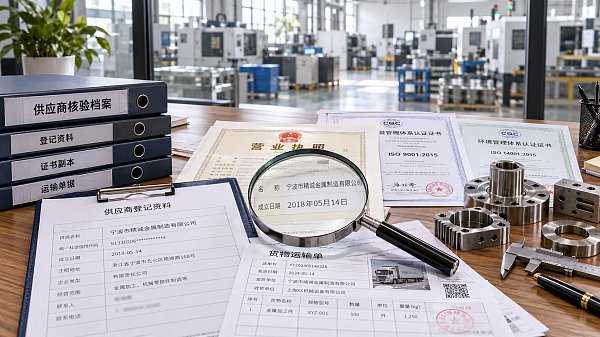
- Request current certifications, laboratory reports, and conformity documents linked to exact product models, production batches, and destination regulations.
- Review raw material sourcing controls, supplier approval procedures, incoming inspection records, and traceability from inputs to finished goods.
- Inspect process control plans, work instructions, calibration schedules, and in-process quality checkpoints used by the building materials manufacturer.
- Confirm testing frequency for strength, density, moisture, fire resistance, corrosion protection, thermal performance, or other category-specific properties.
- Assess packaging design, pallet stability, labeling accuracy, moisture protection, and handling instructions for long-distance transportation risks.
- Evaluate nonconforming material procedures, corrective action records, complaint response speed, and documented root-cause analysis discipline.
- Audit environmental, health, and safety controls related to emissions, dust, chemicals, machine guarding, waste handling, and worker protection.
- Confirm production capacity, lead-time reliability, seasonal constraints, maintenance planning, and backup arrangements during demand surges.
- Compare sample quality with mass-production output through pre-shipment inspection, retained samples, and batch-level photographic evidence.
- Require clear warranty terms, dispute procedures, replacement responsibilities, and liability boundaries before issuing large-volume purchase orders.
Documentation That Should Be Verified
Documentation is not paperwork for its own sake. It proves whether a building materials manufacturer can maintain controlled production over time.
Core documents should include product data sheets, technical drawings, batch certificates, test reports, safety data sheets, and packaging specifications.
Records must be current, signed where required, and tied to the exact product. Generic certificates create unnecessary compliance risk.
- Match certificate numbers with issuing bodies, validity periods, laboratory names, sample descriptions, and applicable test standards.
- Compare technical data against contract specifications to identify unsupported claims, missing tolerances, or unexplained performance gaps.
- Keep all approved records in a controlled supplier file, including revisions, inspection photos, correspondence, and corrective actions.
A disciplined building materials manufacturer should answer document questions quickly. Delays may indicate poor record control or weak internal coordination.
Factory Audit Points for a Building Materials Manufacturer
A factory audit reveals conditions that documents cannot fully show. Production discipline, cleanliness, storage control, and staff behavior often predict quality stability.
Start with receiving areas. Raw materials should be labeled, protected, segregated, and inspected before they enter production.
Then review production flow. A capable building materials manufacturer should separate unfinished, accepted, rejected, and quarantined materials clearly.
Testing rooms deserve close attention. Equipment should be calibrated, operators trained, and results recorded without manual alteration.
- Observe whether operators follow written procedures rather than relying only on experience or informal supervisor instructions.
- Check whether measuring tools carry calibration labels and whether expired instruments are physically removed from use.
- Review warehouse conditions for humidity, stacking height, sunlight exposure, chemical segregation, and first-in-first-out practices.
Factory visits should end with evidence collection. Photos, audit notes, interview records, and sample references make later decisions easier.
Application Scenarios and Extra Controls
Structural and Load-Bearing Materials
For steel, cement products, engineered panels, and masonry materials, strength consistency is essential. Small deviations can affect site safety and long-term performance.
A building materials manufacturer in this category should provide batch-level mechanical testing, traceable raw material records, and documented production parameters.
Insulation, Waterproofing, and Envelope Systems
Thermal performance, water resistance, adhesion, dimensional stability, and fire classification should be verified before approval. Site failures are often expensive to repair.
The building materials manufacturer should disclose storage requirements, shelf life, climate limitations, and compatibility with adjacent materials.
Interior Finishes and Decorative Products
Flooring, panels, ceilings, coatings, and fixtures require visual consistency. Color variation, odor, emissions, and surface defects can trigger rejection.
A reliable building materials manufacturer should define appearance standards, inspection lighting, acceptable defect limits, and replacement procedures.
Commonly Missed Risks in Supplier Evaluation
Some risks are easy to overlook because they do not appear in the first quotation. They usually emerge during production, shipment, or installation.
Unverified Subcontracting
A building materials manufacturer may outsource part of production during peak demand. Without approval controls, quality systems can become inconsistent.
Outdated Test Reports
Old reports may not represent current formulas, suppliers, machinery, or production locations. Always confirm report dates and product identity.
Weak Change Notification
Material substitutions, process changes, packaging revisions, and factory moves should require written approval before shipment.
Poor Export Labeling
Incorrect labels can delay customs clearance or create site confusion. Labels should match documents, packaging, and destination compliance rules.
Practical Execution Steps
A strong checklist works best when used in a staged approval process. Each stage should produce objective evidence before moving forward.
- Screen potential suppliers with registration data, product scope, export records, certifications, and known market references.
- Request samples and verify them against written specifications, project drawings, test requirements, and installation conditions.
- Conduct a remote or onsite audit before approving any building materials manufacturer for recurring supply.
- Approve a pilot order with defined inspection points, retained samples, packaging checks, and shipment release criteria.
- Monitor performance using delivery accuracy, defect rate, complaint closure time, and document response quality.
For international sourcing, independent verification can strengthen decisions. Platforms such as GTIIN help convert complex trade signals into structured supplier intelligence.
This matters when evaluating a building materials manufacturer across unfamiliar markets, changing compliance conditions, or fragmented supply chains.
Summary and Action Guide
A qualified building materials manufacturer should prove more than production capacity. The decision should include compliance, traceability, testing, packaging, and corrective action capability.
The next step is to build a supplier file for each candidate. Include certificates, audit notes, sample approvals, inspection results, and performance history.
Before issuing major orders, compare evidence across at least several qualified sources. This makes risk visible and improves sourcing resilience.
A checklist-driven process helps turn supplier selection into controlled decision-making. It protects project quality, reduces avoidable defects, and supports safer construction outcomes.
 How to verify sourcing intelligence data before selecting suppliersVerify sourcing intelligence data before choosing suppliers. Learn how to check company records, certifications, and capacity to reduce procurement risk and build a reliable shortlist.
 How to use supplier risk analysis to spot financial warning signsUse supplier risk analysis to spot cash flow pressure, debt risks, and delivery warning signs. Learn practical steps to reduce exposure and protect supply continuity.
 When dual sourcing makes sense in a sourcing strategy for manufacturersSourcing strategy for manufacturers: learn when dual sourcing strengthens supply continuity, reduces disruption risk, and protects production without adding unnecessary complexity.
 How bulk commodities pricing affects long-term supply contractsBulk commodities pricing shapes long-term supply contracts through index rules, freight, quality, volume, and currency risk. Explore strategies for resilient costs and supply security.
 Which global manufacturing trends by sector matter most for sourcing plans?Global manufacturing trends by sector: identify sourcing risks, supplier resilience, compliance demands, and cost drivers to build smarter, more reliable procurement plans.
 What industrial trade intelligence pricing should include before you subscribeIndustrial trade intelligence pricing explained: compare coverage, data quality, access rights, and workflow value before choosing a subscription that supports smarter trade decisions.
 How an industrial trade intelligence dashboard can identify new supplier marketsDiscover how an industrial trade intelligence dashboard helps identify new supplier markets by comparing capacity, landed cost, logistics resilience, and compliance risk.
 Which global market entry barriers should exporters assess first?Global market entry barriers exporters should assess first: tariffs, compliance, buyer qualification, logistics, and payment risk. Build a practical strategy for confident market entry.
 How trade data aggregation analytics can reveal emerging supplier marketsTrade data aggregation analytics reveals emerging supplier markets by connecting trade flows, capacity signals, logistics, and compliance insights for smarter sourcing decisions.
 When an export market analysis platform can validate demand in a new marketExport market analysis platform insights help validate new-market demand through buyer fit, regulations, logistics, competition, and profitable entry conditions.
 What is driving the beauty and personal care market in the USA?Beauty and personal care in USA is driven by targeted solutions, selective premiumization, digital discovery, clean-label trust, diverse needs, and compliance. Explore key growth opportunities.
 How trade flow monitoring reports reveal changing regional demandTrade flow monitoring reports reveal changing regional demand through import volumes, sourcing shifts, product mix, logistics signals, and regulatory trends. Explore actionable market insights.
 How international market intelligence for investors reduces market-entry riskInternational market intelligence for investors reduces market-entry risk by validating demand, regulations, logistics, and competition before capital is committed.
 How international sourcing intelligence helps identify supplier risk earlyInternational sourcing intelligence helps businesses spot supplier risks early, protect supply continuity, and make smarter global procurement decisions.
 How trade data aggregation analytics reveals emerging supplier marketsTrade data aggregation analytics reveals emerging supplier markets through export trends, input flows, logistics, and regulatory signals. Discover smarter sourcing insights.
 What industrial cluster monitoring in Vietnam reveals about site riskIndustrial cluster monitoring Vietnam reveals hidden site risks across labor, utilities, logistics, compliance, and supplier dependencies. Make smarter sourcing and expansion decisions.
 Food Technology Trends Reshaping Shelf Life, Safety, and Product InnovationFood technology is reshaping shelf life, safety, and innovation. Discover the trends helping food businesses cut risk, improve compliance, and unlock stronger global market growth.
 How electronics manufacturing services are changing with low-volume demandElectronics manufacturing services are evolving fast with low-volume demand. Learn how agile EMS partners improve flexibility, compliance, sourcing resilience, and speed to market.
 How Can Buyers Reduce Procurement Risks for Electronic Components?How to reduce procurement risks for electronic components: learn how buyers assess traceability, lead times, compliance, and supplier types to avoid costly sourcing mistakes.
 What Sourcing Intelligence India Reveals About Supplier Risk and Cost ShiftsSourcing intelligence India reveals hidden supplier risk, compliance gaps, logistics pressure, and real cost shifts—helping buyers compare vendors smarter and source with more confidence.
 Fashion Trends 2026: Which Materials, Colors, and Silhouettes Are Gaining Ground?Fashion trends 2026 spotlight tactile fabrics, mineral colors, and controlled volume. Explore the materials, shades, and silhouettes shaping smarter, more wearable style.




















Global Trade Insights & Industry
Our mission is to empower global exporters and importers with data-driven insights that foster strategic growth.
Search News
Popular Tags
Industry Overview
The global commercial kitchen equipment market is projected to reach $112 billion by 2027. Driven by urbanization, the rise of e-commerce food delivery, and strict hygiene regulations.