

When does sustainable construction lower total building costs?
Sustainable construction does not lower total building costs in every project, and that is usually where procurement teams get stuck. The market often frames it as a moral upgrade or a branding decision. In practice, it is a cost-structure decision. The real question is not whether a greener material costs more on day one, but whether the building will cost less to run, maintain, adapt, insure, and keep compliant over the next 10, 20, or 30 years.
For business decision-makers, especially those dealing with industrial facilities, logistics sites, commercial buildings, and multi-market asset portfolios, the answer depends on timing, use case, and supply chain discipline. Sustainable construction starts lowering total cost when the project team stops treating it as an add-on package and starts using it to reduce operational waste, design rework, maintenance exposure, and regulatory risk.
The cheapest building on paper is often not the cheapest building to own
A conventional cost comparison usually overweights initial procurement and underweights the expenses that arrive after handover. That is manageable in a short-term speculative project. It becomes expensive in owner-occupied assets, long-lease properties, factories, cold chain buildings, healthcare sites, and buildings with heavy mechanical loads.
This is where sustainable construction can change the total math. Better envelope performance may reduce HVAC sizing. Smarter daylighting may reduce lighting demand. Durable finishes may cut replacement cycles. Water-efficient systems may matter more in regions where industrial water pricing or availability is volatile. Low-maintenance exterior materials may not impress in a bid tabulation, but they become very visible after five rainy seasons, three rounds of cleaning contracts, and one unexpected labor shortage.
In other words, sustainable design lowers total building costs when it removes recurring expenses, not just when it wins a headline-level energy claim.
Where the cost savings usually show up first
The first savings rarely come from every green feature at once. They tend to appear in a few predictable areas.
What matters is that these savings are measurable in operation, not just attractive in a presentation deck.
It works best when the building will be held and operated, not flipped quickly
One of the clearest dividing lines is ownership horizon. If a developer plans to exit fast, many lifecycle gains will not be captured directly unless buyers already price them in. But if the same building will be occupied by the owner, leased under long contracts, or operated as part of a regional network, sustainable construction becomes easier to justify.
Think about logistics parks, manufacturing plants, food processing facilities, data-supporting commercial sites, hospitals, educational campuses, and mixed-use assets with central plant systems. These buildings do not just consume materials once. They consume energy, water, cleaning services, repair labor, spare parts, and compliance attention every year.
That is also why procurement and finance teams should review sustainable construction through total cost of ownership, not unit price alone. A lower bid based on short-life roofing, weak insulation detailing, or difficult-to-source components can quietly transfer cost from capex to opex, and sometimes to downtime.
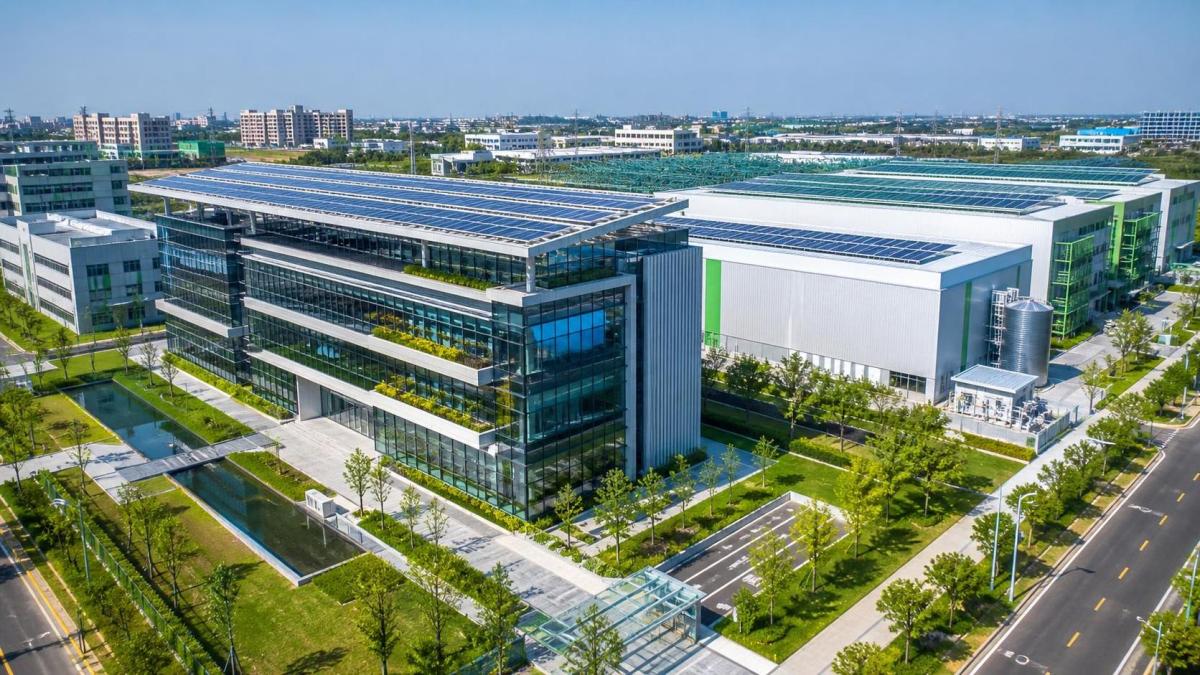
The payback is stronger in buildings with heavy utility demand
Not all building types respond equally. A lightly used warehouse in a mild climate may not justify every premium feature. A conditioned pharmaceutical storage facility, electronics plant, or office tower in a hot urban market is a different story. The more energy-intensive the building, the more room there is for efficiency improvements to offset initial investment.
That does not mean decision-makers should chase the most advanced technology. In many projects, the strongest returns come from less glamorous choices: air sealing done properly, roof insulation matched to climate, shading that reduces peak cooling load, efficient pumps and drives, controls that are actually usable by the facility team, and materials that withstand local weather without constant corrective work.
This is also where regional trade and sourcing conditions matter. A specified product may look efficient in design documents but become costlier overall if the supply chain is unstable, the lead time is long, customs treatment is uncertain, or replacement parts are difficult to access locally. Platforms such as GTIIN are useful in this stage because they help teams compare not only products, but supplier regions, regulatory exposure, pricing pressure, and logistics resilience across international markets. For sustainable construction, that visibility matters as much as the technical brochure.
When regulations are tightening, early adoption can be cheaper than delayed compliance
Another moment when sustainable construction lowers total cost is when local or export-linked standards are moving faster than a company’s building specifications. This is common in multinational operations, industrial parks serving regulated sectors, and projects tied to international tenants or investors.
If a building is delivered to today’s minimum code but likely needs retrofits in a few years to meet energy disclosure rules, emissions expectations, indoor air requirements, or tenant reporting demands, the “savings” from doing less upfront may disappear quickly. Retrofit work is almost always more disruptive than getting the base design right during construction. It can involve partial shutdowns, redesign conflicts, contractor remobilization, and a lot of finger-pointing about who should absorb the cost.
The point is not that every project needs the highest certification pathway. It is that future compliance has a cost, and ignoring it is still a decision. In cross-border supply chains, this issue has become more visible because buyers increasingly review environmental responsibility together with production transparency, certification readiness, and long-term operating stability.
Procurement mistakes that make “green” buildings more expensive than they need to be
Some projects overspend not because sustainable construction is inherently costly, but because the buying process is poorly aligned with the design intent.
A common problem is substituting on visible product price without checking system consequences. For example, cheaper glazing may affect cooling loads. A lower-cost façade detail may increase water ingress risk. Imported equipment may look attractive until service support, commissioning, or software integration becomes difficult. Recycled or low-impact materials can also create trouble if documentation is weak and the spec team cannot verify suitability for the actual exposure condition.
Another issue is treating sustainability requirements as separate from mainstream procurement controls. They should be integrated into supplier evaluation in the same way teams already review lead time, quality consistency, standards compliance, after-sales support, and logistics reliability. In real projects, the most expensive failure is often not buying a high-performance product. It is buying the wrong product for the local operating reality.
How to judge whether the premium is justified
A practical screening method is to ask five questions before approving a higher-cost sustainable option:
- Will this reduce a recurring cost line such as energy, water, maintenance, cleaning, or replacement?
- Is the reduction likely under this building’s actual operating pattern, not a generic model?
- Can the local team install, commission, maintain, and replace it without unusual dependency?
- Does it reduce future compliance or retrofit exposure?
- If the original supplier becomes difficult to source, is there a realistic continuity plan?
If the answer to most of those questions is no, the premium may be hard to defend. If the answer is yes, then sustainable construction is no longer a branding choice. It is a risk-adjusted procurement decision.
Why market intelligence now matters more than design intent alone
In earlier cycles, building teams could often evaluate material choices mostly on performance and price. That is no longer enough. Trade conditions, freight volatility, supplier concentration, regional certification practices, and changing customs rules now affect whether a “sustainable” solution remains cost-effective after purchase.
That is where structured industrial information becomes practical rather than theoretical. A procurement team comparing insulation systems, façade materials, efficient equipment, or prefabricated building components may need to understand not just technical fit, but which supplier regions are under pricing pressure, which markets are tightening documentation requirements, and where delivery stability is becoming a hidden risk. GTIIN’s role in this context is not to sell a material choice, but to help decision-makers read the market around the choice more clearly.
That broader view can prevent a familiar mistake: selecting a supposedly lower-impact option that later carries higher transport uncertainty, inconsistent documentation, or weak after-sales support. Sustainable construction only lowers total building costs when the supply side is as dependable as the design concept.
So when does it actually lower total building costs?
Usually when four conditions line up: the building will be held long enough to capture lifecycle savings; operating loads are significant enough for efficiency gains to matter; compliance expectations are likely to rise; and procurement is disciplined enough to secure reliable, serviceable, well-documented materials and systems.
If those conditions are absent, sustainable construction can still be the right strategic choice, but the financial case may be weaker or slower. If they are present, the lower total cost is often not driven by a single dramatic feature. It comes from many avoided costs that conventional budgeting tends to miss until they show up in operations, maintenance, or retrofit planning.
For companies making building and sourcing decisions across changing international markets, that distinction matters. The better question is not “How much more does sustainable construction cost?” It is “Which future expenses are we buying out of the building now, and how confident are we in the supply chain behind that decision?”
 What industrial trade intelligence pricing should include before you subscribeIndustrial trade intelligence pricing explained: compare coverage, data quality, access rights, and workflow value before choosing a subscription that supports smarter trade decisions.
 How an industrial trade intelligence dashboard can identify new supplier marketsDiscover how an industrial trade intelligence dashboard helps identify new supplier markets by comparing capacity, landed cost, logistics resilience, and compliance risk.
 Which global market entry barriers should exporters assess first?Global market entry barriers exporters should assess first: tariffs, compliance, buyer qualification, logistics, and payment risk. Build a practical strategy for confident market entry.
 How trade data aggregation analytics can reveal emerging supplier marketsTrade data aggregation analytics reveals emerging supplier markets by connecting trade flows, capacity signals, logistics, and compliance insights for smarter sourcing decisions.
 When an export market analysis platform can validate demand in a new marketExport market analysis platform insights help validate new-market demand through buyer fit, regulations, logistics, competition, and profitable entry conditions.
 What is driving the beauty and personal care market in the USA?Beauty and personal care in USA is driven by targeted solutions, selective premiumization, digital discovery, clean-label trust, diverse needs, and compliance. Explore key growth opportunities.
 How trade flow monitoring reports reveal changing regional demandTrade flow monitoring reports reveal changing regional demand through import volumes, sourcing shifts, product mix, logistics signals, and regulatory trends. Explore actionable market insights.
 How international market intelligence for investors reduces market-entry riskInternational market intelligence for investors reduces market-entry risk by validating demand, regulations, logistics, and competition before capital is committed.
 How international sourcing intelligence helps identify supplier risk earlyInternational sourcing intelligence helps businesses spot supplier risks early, protect supply continuity, and make smarter global procurement decisions.
 How trade data aggregation analytics reveals emerging supplier marketsTrade data aggregation analytics reveals emerging supplier markets through export trends, input flows, logistics, and regulatory signals. Discover smarter sourcing insights.
 What industrial cluster monitoring in Vietnam reveals about site riskIndustrial cluster monitoring Vietnam reveals hidden site risks across labor, utilities, logistics, compliance, and supplier dependencies. Make smarter sourcing and expansion decisions.
 Food Technology Trends Reshaping Shelf Life, Safety, and Product InnovationFood technology is reshaping shelf life, safety, and innovation. Discover the trends helping food businesses cut risk, improve compliance, and unlock stronger global market growth.
 How electronics manufacturing services are changing with low-volume demandElectronics manufacturing services are evolving fast with low-volume demand. Learn how agile EMS partners improve flexibility, compliance, sourcing resilience, and speed to market.
 How Can Buyers Reduce Procurement Risks for Electronic Components?How to reduce procurement risks for electronic components: learn how buyers assess traceability, lead times, compliance, and supplier types to avoid costly sourcing mistakes.
 What Sourcing Intelligence India Reveals About Supplier Risk and Cost ShiftsSourcing intelligence India reveals hidden supplier risk, compliance gaps, logistics pressure, and real cost shifts—helping buyers compare vendors smarter and source with more confidence.
 Fashion Trends 2026: Which Materials, Colors, and Silhouettes Are Gaining Ground?Fashion trends 2026 spotlight tactile fabrics, mineral colors, and controlled volume. Explore the materials, shades, and silhouettes shaping smarter, more wearable style.
 Smart Device Market Outlook: Key Growth Drivers, Segments, and Business OpportunitiesSmart device market trends are shifting toward system value, industrial demand, and resilient supply chains. Explore key growth drivers, high-potential segments, and business opportunities.
 How Global Trade Intelligence Services Help B2B Firms Evaluate Markets and SuppliersGlobal trade intelligence services help B2B firms compare suppliers, assess market potential, and uncover compliance, logistics, and pricing risks before costly decisions are made.
 Manufacturing Sector Updates for Investors: What Signals Matter Most in 2025?Manufacturing sector updates for investors in 2025: track orders, margins, supply chains, regulation, and exports to spot resilient manufacturers and smarter investment signals.
 How Energy Market Intelligence Helps Businesses Track Price Risks and Demand ShiftsEnergy market intelligence helps businesses spot price risks, demand shifts, and supply pressure early—improving procurement, resilience, and faster strategic decisions.
 Precision Hardware Tools Market: Key Demand Drivers, Segments, and Growth OutlookPrecision hardware tools market trends are reshaping sourcing, compliance, and automation. Explore key demand drivers, segment shifts, regional supply patterns, and growth opportunities.





















Global Trade Insights & Industry
Our mission is to empower global exporters and importers with data-driven insights that foster strategic growth.
Search News
Popular Tags
Industry Overview
The global commercial kitchen equipment market is projected to reach $112 billion by 2027. Driven by urbanization, the rise of e-commerce food delivery, and strict hygiene regulations.