

How trade infrastructure monitoring helps detect port delays
A shipment can appear to be on schedule while vessels are accumulating outside its destination port or containers are taking longer to leave the terminal. By the time a revised arrival notice reaches the operations team, delivery appointments, production schedules, and customer commitments may already be at risk.
Trade infrastructure monitoring helps detect these delays earlier by connecting port and transport signals with the milestones of specific shipments. The practical task is to distinguish a general disruption from one that affects your vessel, terminal, container availability, or inland route, then decide whether to monitor, escalate, or activate an alternative.
Follow the shipment beyond the vessel’s arrival
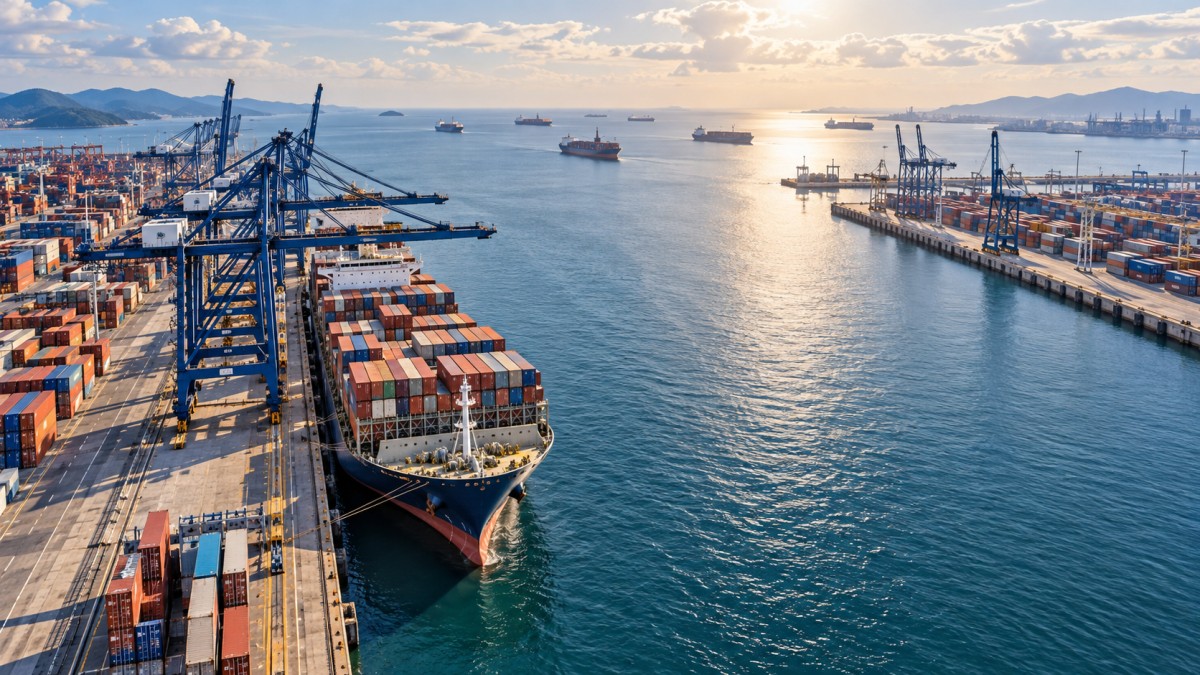
Port delay is not a single event. A vessel may wait for a berth, spend longer than expected at the terminal, discharge containers that cannot immediately be collected, or arrive on time while the road or rail connection is disrupted. Each situation calls for a different response.
Start by mapping the milestones that matter to the shipment: expected vessel arrival, berth and discharge, customs release where applicable, terminal pickup, inland departure, and delivery. Record the responsible party and the expected time window for each milestone. A shipment is exposed when a disruption overlaps with a milestone it has not yet passed; congestion at a terminal is less relevant to a container that has already left the port.
For outbound cargo, work backward from the vessel’s cargo cutoff. A terminal gate restriction or inland transport interruption can prevent a container from reaching the port in time even when the vessel itself remains on schedule. The relevant warning is not simply a late vessel but the loss of the window needed to deliver and process the cargo.
Signals that deserve a closer look
No single indicator reliably predicts every port delay. Use the following signals to identify where to investigate, not as automatic proof that a particular shipment will be late.
Vessel queues and berth availability
A growing number of vessels waiting near a port, repeated changes to estimated arrival times, or notices about berth restrictions can indicate pressure on marine operations. Check whether the affected vessels serve the same terminal and whether your carrier has changed the port rotation or published a revised schedule.
Vessel position alone has limits. A ship at anchor may be waiting for a berth, but it may also be awaiting instructions or handling another operational requirement. Compare its status with carrier updates and port or terminal notices before treating the anchorage as a confirmed delay.
Terminal handling and container availability
After discharge, look for changes in container availability, terminal appointment access, gate hours, equipment availability, and notices of operational restrictions. A vessel arriving on time does not guarantee an immediate pickup: the container may still need to be unloaded, released, located, and made available through the terminal’s process.
Check the specific container status rather than relying only on a port-wide congestion label. A terminal can be busy while a particular container is ready for collection, or an individual container can remain unavailable for reasons unrelated to congestion. Ask the carrier, terminal, or appointed logistics provider which condition is holding it and who can resolve it.
Connections after the port
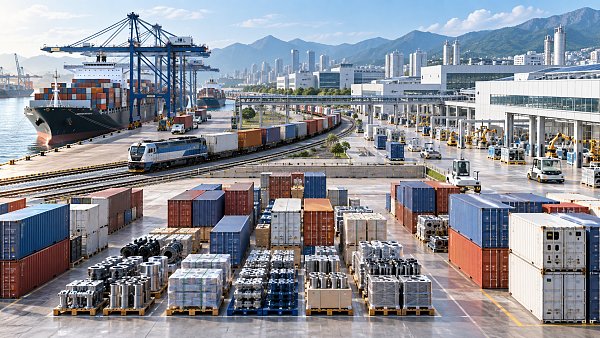
Monitor the inland leg as carefully as the marine leg. Restricted rail capacity, missed rail departures, road closures, limited trucking appointments, or warehouse receiving constraints can turn a timely discharge into a late delivery. For rail cargo, confirm whether the container has been assigned to a train and whether the expected departure is still valid. For truck pickup, check whether a usable appointment and vehicle are available.
Weather alerts, labor disruptions, equipment outages, and local transport restrictions may affect several parts of the chain at once. Their operational significance depends on location, timing, and scope: a warning covering the wider region is a reason to verify conditions, not proof that every terminal has stopped working.
Turn observations into a shipment-level assessment
A useful monitoring record links each signal to an exposed shipment and a decision. Keep the record simple enough to update when new information arrives. For each shipment under review, capture the latest milestone, planned next event, source and timestamp of the update, likely consequence, and person responsible for follow-up.
- Confirm the reference schedule. Use the latest carrier or logistics provider schedule, not an earlier booking confirmation, and note whether the time shown is an estimate or a confirmed event.
- Identify the affected location. Match the notice to the port, terminal, inland facility, or route actually used by the shipment. A disruption at one terminal does not necessarily apply to another.
- Check the timing. Compare the expected duration or review period of the disruption with the shipment’s next milestone. Where the duration is unknown, record that uncertainty rather than inserting an assumed recovery date.
- Measure the operational exposure. Compare the revised or at-risk milestone with the delivery commitment, inventory coverage, receiving appointment, or export cutoff. Include time needed for the remaining steps, not just the vessel transit.
- Assign the next action. Specify who will confirm the status, when the next update is due, and what change would trigger an escalation or alternative plan.
For example, an alert about longer berth waits becomes actionable when the shipment’s vessel is approaching the affected terminal and the remaining time before a required delivery is already limited. If the vessel is still far from the port and the disruption has no confirmed duration, the appropriate first action may be a scheduled recheck rather than an immediate routing change.
Set thresholds around decisions, not alert volume
Too many notifications can hide the changes that matter. Define alert conditions around your own operating constraints: a vessel arrival estimate moving beyond a receiving window, a container remaining unavailable after discharge, a missed pickup appointment, or a planned rail connection no longer being achievable.
Use a normal range for the route and terminal where reliable internal history exists. Compare like with like: import and export flows, different terminals, and different inland destinations can have different handling patterns. Where history is limited, use the agreed shipment schedule and operational deadlines as the initial reference, then revise the threshold as verified observations accumulate.
It can help to separate three working statuses:
- Watch: A relevant signal has appeared, but the shipment impact is unconfirmed. Set a time to check again and identify the source that can confirm it.
- At risk: A revised estimate or missed milestone threatens the remaining delivery window. Check available alternatives and inform the people who depend on the shipment.
- Confirmed delay: A missed cutoff, unavailable connection, or revised commitment means the original plan can no longer be met. Agree on the recovery action and update the delivery expectation.
These labels should reflect evidence, not certainty about the final outcome. A shipment can move back from at risk if a berth becomes available or a connection is recovered. Record the reason for the change so the next person reviewing the shipment understands the decision.
Choose a response that matches the bottleneck
Before changing a route, ask which stage is constrained and whether the alternative actually avoids it. An alternative port may still depend on the same inland rail corridor; an earlier pickup appointment is not useful if the container has not been released. Confirm availability and requirements with the relevant carrier, terminal, and transport provider before communicating a revised delivery promise.
When the issue is vessel waiting, possible actions include requesting an updated berth outlook, checking whether the carrier has a feasible alternative service, and reviewing how much schedule flexibility remains at destination. A port change can introduce additional handling, documentation, or inland transport requirements, so compare the complete revised route rather than the marine leg alone.
When the container is discharged but cannot leave, establish whether the hold is operational, documentary, customs-related, or transport-related. A terminal availability issue requires different follow-up from an incomplete release or a missed trucking appointment. Keep each unresolved item with the party able to act on it; repeated requests for a general status may not expose the actual blocker.
For an inland disruption, ask about the next realistic rail departure, alternative trucking capacity, and the receiving facility’s ability to accept a changed delivery time. Where stock is available elsewhere, an internal inventory transfer may be worth assessing, but it should be compared with the time and handling required. For exports, check whether a later vessel booking is available before missing the original cutoff becomes unavoidable.
Cost matters alongside time. Confirm any quoted rerouting, storage, terminal, or transport charges and their conditions before authorizing a change. Potential charges should not be treated as certain until the responsible provider confirms how they apply to the shipment.
Keep information current and resolve conflicting updates
Port dashboards, carrier schedules, vessel tracking, terminal systems, and provider messages may refresh at different times. An estimated arrival can also change without a physical delay if the carrier revises its schedule. Preserve both the event time and the time the information was received; an older update should not overwrite a newer confirmed milestone.
When sources disagree, first check whether they describe the same event. Vessel arrival at port, arrival at berth, discharge, and container availability are distinct milestones. Then verify identifiers such as vessel voyage, container number, terminal, and local time zone. Ask the responsible party to clarify any discrepancy that affects a decision, and retain the competing information until it is resolved.
Monitoring also depends on knowing when a signal has become stale. Set the next review time according to the approaching milestone and the likely speed of change. A shipment awaiting a pickup appointment may need closer attention than one whose vessel is still days away. Once the container has left the affected facility, stop treating that facility’s congestion as an active exposure and shift attention to the next connection.
After a disruption, compare the recorded warnings with actual milestone times and the decisions taken. Review whether an alert arrived early enough to act, whether it applied to the correct terminal, and whether the chosen response addressed the real constraint. Use that evidence to adjust the next review interval or escalation threshold, rather than assuming every congestion alert requires the same response.
 China Manufacturing PMI Falls to 49.3 in OctoberChina manufacturing PMI fell to 49.3 in October, signaling renewed contraction. Explore the role of weak export orders and domestic demand.
 Can you trust flexible packaging market intelligence forecasts?Can you trust flexible packaging market intelligence forecasts? Learn how to verify sources, challenge assumptions, and assess demand before making costly investment or sourcing decisions.
 When is supply chain disruption management consulting worth the cost?When is supply chain disruption management consulting worth the cost? Learn how to compare fees, avoidable losses, and recovery options to make a confident investment decision.
 How to use macroeconomic analysis to forecast industrial demandApply an industrial macro analysis methodology to forecast demand, interpret economic signals, and plan inventory and capacity. Discover practical steps for smarter business decisions.
 How to assess Singapore suppliers with global supply chain intelligenceExplore international supply chain intelligence Singapore buyers can use to verify suppliers, assess capabilities and delivery risks, and make confident sourcing decisions.
 Which macroeconomic indicators help forecast U.S. industrial demand?Explore industrial macro analysis USA decision-makers can use to forecast demand. Track new orders, inventories, and credit signals to sharpen procurement and capacity decisions.
 Can a food processing manufacturer meet your small-batch needs?Can a food processing manufacturer meet your small-batch needs? Discover how to assess minimum orders, costs, packaging, and safety to choose the right partner for your launch.
 How to verify sourcing intelligence data before selecting suppliersVerify sourcing intelligence data before choosing suppliers. Learn how to check company records, certifications, and capacity to reduce procurement risk and build a reliable shortlist.
 How to use supplier risk analysis to spot financial warning signsUse supplier risk analysis to spot cash flow pressure, debt risks, and delivery warning signs. Learn practical steps to reduce exposure and protect supply continuity.
 When dual sourcing makes sense in a sourcing strategy for manufacturersSourcing strategy for manufacturers: learn when dual sourcing strengthens supply continuity, reduces disruption risk, and protects production without adding unnecessary complexity.
 How bulk commodities pricing affects long-term supply contractsBulk commodities pricing shapes long-term supply contracts through index rules, freight, quality, volume, and currency risk. Explore strategies for resilient costs and supply security.
 Which global manufacturing trends by sector matter most for sourcing plans?Global manufacturing trends by sector: identify sourcing risks, supplier resilience, compliance demands, and cost drivers to build smarter, more reliable procurement plans.
 What industrial trade intelligence pricing should include before you subscribeIndustrial trade intelligence pricing explained: compare coverage, data quality, access rights, and workflow value before choosing a subscription that supports smarter trade decisions.
 How an industrial trade intelligence dashboard can identify new supplier marketsDiscover how an industrial trade intelligence dashboard helps identify new supplier markets by comparing capacity, landed cost, logistics resilience, and compliance risk.
 Which global market entry barriers should exporters assess first?Global market entry barriers exporters should assess first: tariffs, compliance, buyer qualification, logistics, and payment risk. Build a practical strategy for confident market entry.
 How trade data aggregation analytics can reveal emerging supplier marketsTrade data aggregation analytics reveals emerging supplier markets by connecting trade flows, capacity signals, logistics, and compliance insights for smarter sourcing decisions.
 When an export market analysis platform can validate demand in a new marketExport market analysis platform insights help validate new-market demand through buyer fit, regulations, logistics, competition, and profitable entry conditions.
 What is driving the beauty and personal care market in the USA?Beauty and personal care in USA is driven by targeted solutions, selective premiumization, digital discovery, clean-label trust, diverse needs, and compliance. Explore key growth opportunities.
 How trade flow monitoring reports reveal changing regional demandTrade flow monitoring reports reveal changing regional demand through import volumes, sourcing shifts, product mix, logistics signals, and regulatory trends. Explore actionable market insights.
 How international market intelligence for investors reduces market-entry riskInternational market intelligence for investors reduces market-entry risk by validating demand, regulations, logistics, and competition before capital is committed.
 How international sourcing intelligence helps identify supplier risk earlyInternational sourcing intelligence helps businesses spot supplier risks early, protect supply continuity, and make smarter global procurement decisions.
















Global Trade Insights & Industry
Our mission is to empower global exporters and importers with data-driven insights that foster strategic growth.
Search News
Popular Tags
Industry Overview
The global commercial kitchen equipment market is projected to reach $112 billion by 2027. Driven by urbanization, the rise of e-commerce food delivery, and strict hygiene regulations.