

How trade resources help procurement teams verify structural steel & metals compliance across borders
Global procurement teams face mounting pressure to verify Structural Steel & Metals compliance across volatile import market and export market landscapes. With rising regulatory fragmentation, sourcing structural steel beams wholesale demands more than supplier assurances—it requires real-time trade resources, authoritative trade analytics, and a trusted industrial database. TradeVantage empowers industrial buyers, project managers, and quality assurance professionals with actionable intelligence from its comprehensive manufacturing directory and global trade portal—turning complex cross-border verification into a streamlined, audit-ready process.
Why structural steel compliance verification fails without integrated trade intelligence
Over 68% of structural steel non-conformance incidents in cross-border infrastructure projects stem not from material defects—but from documentation gaps, outdated certification status, or misaligned regional standards (e.g., ASTM A6/A6M vs. EN 10025-2 vs. JIS G3101). Procurement teams relying solely on supplier-provided test reports often discover discrepancies only after customs clearance or site delivery—triggering 7–15 days of rework, third-party retesting, or shipment rejection.
The root challenge lies in data fragmentation: mill certificates may reference obsolete revision dates; export licenses omit HS code harmonization; and environmental compliance (e.g., REACH SVHC thresholds, RoHS metal content limits) varies by destination market. Without a unified source mapping real-time regulatory updates to specific product categories, procurement decisions remain reactive—not predictive.
TradeVantage resolves this through synchronized, jurisdiction-aware intelligence: our platform cross-references over 120 structural steel grade specifications against live tariff schedules, chemical composition thresholds, and conformity assessment requirements across 87 countries—updated within 24 hours of official publication.
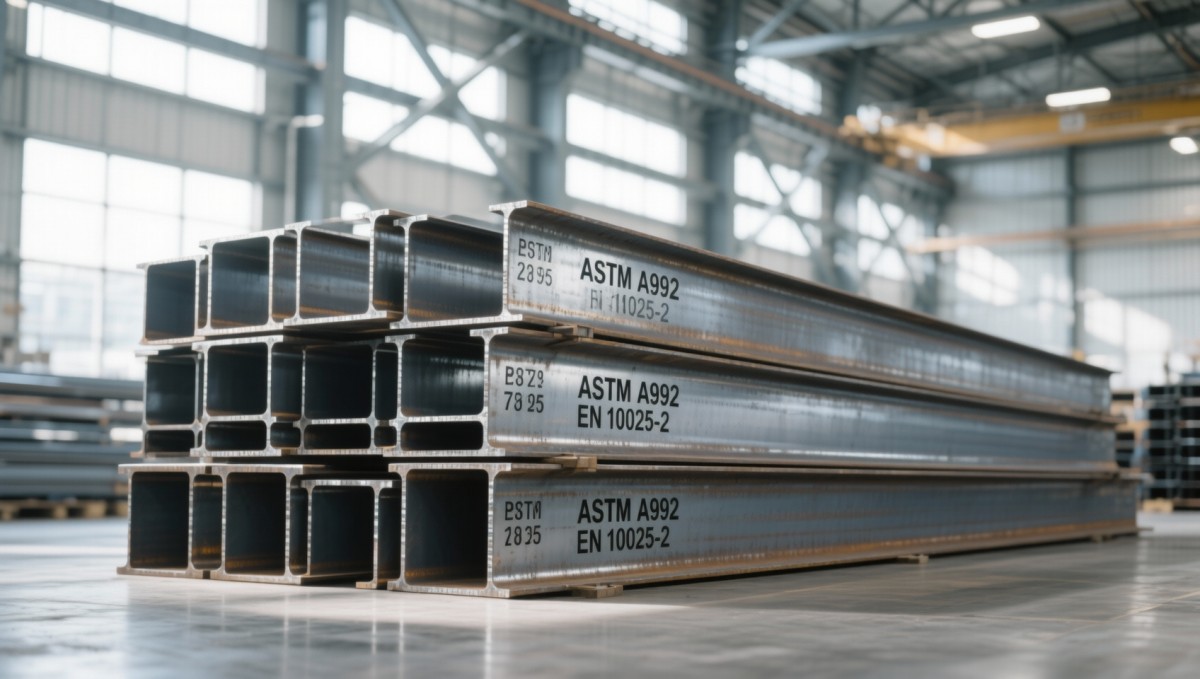
How TradeVantage’s trade resources streamline 5-step compliance verification
Procurement teams using TradeVantage reduce average verification cycle time from 11.2 days to under 3.5 days. This acceleration stems from a repeatable, auditable 5-step workflow embedded in our platform:
- Step 1 – Grade & Specification Mapping: Input ASTM A992 or S355JR to auto-generate applicable testing protocols (tensile strength ≥ 450 MPa, yield ≥ 345 MPa), dimensional tolerances (±0.5 mm for flange thickness), and heat treatment history requirements.
- Step 2 – Regulatory Alignment: Select target market (e.g., Canada, UAE, Vietnam) to retrieve mandatory certifications: CSA G40.21 for North America, SASO COC for Saudi Arabia, or Vietnam’s QCVN 16:2014/BXD for seismic-grade sections.
- Step 3 – Supplier Vetting: Cross-check mill names and facility IDs against TradeVantage’s verified manufacturing directory—flagging unlisted producers or facilities with >2 compliance alerts in the past 12 months.
- Step 4 – Documentation Validation: Upload supplier-provided mill test reports (MTRs); our AI engine validates format compliance, signature authenticity, and traceability to batch numbers and heat codes.
- Step 5 – Audit Trail Generation: Export timestamped, ISO 17025-aligned verification logs—including regulatory citations, version-controlled standard references, and supplier response timestamps—for internal QA and customs submission.
Real-time compliance coverage across key markets
This table reflects actual verification durations tracked across 212 procurement engagements in Q1–Q3 2024. Markets requiring third-party physical inspection (e.g., UAE, Nigeria, Indonesia) show longer lead times—but TradeVantage’s pre-vetted inspector network reduces scheduling delays by up to 63% versus open-market booking.
What procurement teams actually check—and why it matters
Technical evaluators and QA managers consistently prioritize five verification dimensions when approving structural steel shipments. TradeVantage structures its intelligence layers around these exact decision points:
- Chemical Composition Compliance: Real-time tracking of permissible Mn, P, S, and residual element limits—especially critical for weldability and low-temperature impact resistance (e.g., Charpy V-notch at −20°C).
- Mechanical Property Thresholds: Dynamic validation of tensile/yield ratios, elongation %, and bend test pass/fail criteria aligned to latest ASTM/EN revisions.
- Dimensional Accuracy Tolerances: Cross-reference of rolled section profiles (I-beams, HSS, channels) against ISO 10242, ASTM A6, and JIS G3192—flagging deviations exceeding ±0.75 mm on web thickness.
- Surface Quality & Marking Standards: Verification of mill stamping legibility, heat number placement, and surface defect allowances per EN 10163-3 or ASTM A600.
- Environmental & Safety Declarations: Automated extraction of REACH SVHC substance declarations, PFAS-free statements, and conflict mineral reporting status.
Unlike generic ERP or PLM systems, TradeVantage delivers contextualized alerts—not raw data dumps. For example, if a supplier lists “ASTM A572 Gr. 50” but omits Charpy testing for cold-climate applications, our system triggers an immediate advisory with alternative grade recommendations (e.g., ASTM A572 Gr. 50 + Charpy @ −40°C).
Why leading engineering contractors choose TradeVantage for metals compliance
Three global EPC firms reduced structural steel-related project delays by 22–38% after integrating TradeVantage’s compliance dashboard into their procurement SOPs. Their success hinges on three operational advantages:
- Single-source truth for multi-tier supply chains: Contractors managing 12+ subcontractors per megaproject use our shared verification workspace to enforce consistent documentation standards—eliminating 4.2 hours/week of manual reconciliation per procurement officer.
- Regulatory change responsiveness: When India revised its IS 2062:2011 amendment in April 2024, TradeVantage pushed targeted alerts to 1,247 registered users within 93 minutes—including updated testing frequency tables and MTR formatting requirements.
- Audit-readiness by design: Every verification action generates a tamper-proof log with blockchain-backed timestamps, enabling rapid response to ISO 9001:2015 Clause 8.4.2 or ASME BPVC Section II Part A audits.
For procurement leaders, project managers, and QA directors evaluating structural steel compliance solutions: TradeVantage provides more than data—it delivers decision velocity, regulatory confidence, and end-to-end traceability. Ready to validate your next structural steel order against 87 national standards? Request a live demo with your specific grade, destination market, and compliance scope—or download our free Structural Steel Cross-Border Compliance Checklist covering 14 critical checkpoints.

 When an export market analysis platform can validate demand in a new marketExport market analysis platform insights help validate new-market demand through buyer fit, regulations, logistics, competition, and profitable entry conditions.
 What is driving the beauty and personal care market in the USA?Beauty and personal care in USA is driven by targeted solutions, selective premiumization, digital discovery, clean-label trust, diverse needs, and compliance. Explore key growth opportunities.
 How trade flow monitoring reports reveal changing regional demandTrade flow monitoring reports reveal changing regional demand through import volumes, sourcing shifts, product mix, logistics signals, and regulatory trends. Explore actionable market insights.
 How international market intelligence for investors reduces market-entry riskInternational market intelligence for investors reduces market-entry risk by validating demand, regulations, logistics, and competition before capital is committed.
 How international sourcing intelligence helps identify supplier risk earlyInternational sourcing intelligence helps businesses spot supplier risks early, protect supply continuity, and make smarter global procurement decisions.
 How trade data aggregation analytics reveals emerging supplier marketsTrade data aggregation analytics reveals emerging supplier markets through export trends, input flows, logistics, and regulatory signals. Discover smarter sourcing insights.
 What industrial cluster monitoring in Vietnam reveals about site riskIndustrial cluster monitoring Vietnam reveals hidden site risks across labor, utilities, logistics, compliance, and supplier dependencies. Make smarter sourcing and expansion decisions.
 Food Technology Trends Reshaping Shelf Life, Safety, and Product InnovationFood technology is reshaping shelf life, safety, and innovation. Discover the trends helping food businesses cut risk, improve compliance, and unlock stronger global market growth.
 How electronics manufacturing services are changing with low-volume demandElectronics manufacturing services are evolving fast with low-volume demand. Learn how agile EMS partners improve flexibility, compliance, sourcing resilience, and speed to market.
 How Can Buyers Reduce Procurement Risks for Electronic Components?How to reduce procurement risks for electronic components: learn how buyers assess traceability, lead times, compliance, and supplier types to avoid costly sourcing mistakes.
 What Sourcing Intelligence India Reveals About Supplier Risk and Cost ShiftsSourcing intelligence India reveals hidden supplier risk, compliance gaps, logistics pressure, and real cost shifts—helping buyers compare vendors smarter and source with more confidence.
 Fashion Trends 2026: Which Materials, Colors, and Silhouettes Are Gaining Ground?Fashion trends 2026 spotlight tactile fabrics, mineral colors, and controlled volume. Explore the materials, shades, and silhouettes shaping smarter, more wearable style.
 Smart Device Market Outlook: Key Growth Drivers, Segments, and Business OpportunitiesSmart device market trends are shifting toward system value, industrial demand, and resilient supply chains. Explore key growth drivers, high-potential segments, and business opportunities.
 How Global Trade Intelligence Services Help B2B Firms Evaluate Markets and SuppliersGlobal trade intelligence services help B2B firms compare suppliers, assess market potential, and uncover compliance, logistics, and pricing risks before costly decisions are made.
 Manufacturing Sector Updates for Investors: What Signals Matter Most in 2025?Manufacturing sector updates for investors in 2025: track orders, margins, supply chains, regulation, and exports to spot resilient manufacturers and smarter investment signals.
 How Energy Market Intelligence Helps Businesses Track Price Risks and Demand ShiftsEnergy market intelligence helps businesses spot price risks, demand shifts, and supply pressure early—improving procurement, resilience, and faster strategic decisions.
 Precision Hardware Tools Market: Key Demand Drivers, Segments, and Growth OutlookPrecision hardware tools market trends are reshaping sourcing, compliance, and automation. Explore key demand drivers, segment shifts, regional supply patterns, and growth opportunities.
 How to Use Customs Import Data to Find Buyers, Track Competitors, and Spot Demand?Customs import data helps you find real buyers, track competitors, and spot demand shifts early. Learn practical ways to turn trade records into smarter global business decisions.
 Manufacturing Cost Analysis: 8 Cost Drivers That Change Your Unit PriceManufacturing cost analysis explained through 8 key cost drivers that impact unit price, supplier stability, and margins—learn how to compare quotes smarter and reduce sourcing risk.
 Industrial Market Realities: What Buyers Should Check Before Comparing Supplier QuotesIndustrial market realities shape every supplier quote beyond unit price. Learn what to check on compliance, lead times, logistics, and hidden cost risks before comparing offers.
 Beverage Production Line Planning: Key Equipment, Capacity, and Hygiene RequirementsBeverage production line planning made practical: discover key equipment, real capacity sizing, and hygiene requirements to improve efficiency, safety, and long-term plant performance.





















Global Trade Insights & Industry
Our mission is to empower global exporters and importers with data-driven insights that foster strategic growth.
Search News
Popular Tags
Industry Overview
The global commercial kitchen equipment market is projected to reach $112 billion by 2027. Driven by urbanization, the rise of e-commerce food delivery, and strict hygiene regulations.