

China's Oil & Gas Reserves Surge, Boosting Export Potential for Specialized Tubing and Explosion-Proof Equipment
On May 6, 2026, China’s Ministry of Natural Resources reported significant progress in oil and gas exploration during the 14th Five-Year Plan period (2021–2025), triggering renewed demand signals across upstream equipment supply chains — particularly for specialized tubular goods and intrinsically safe electrical components used in hazardous environments.
Event Overview
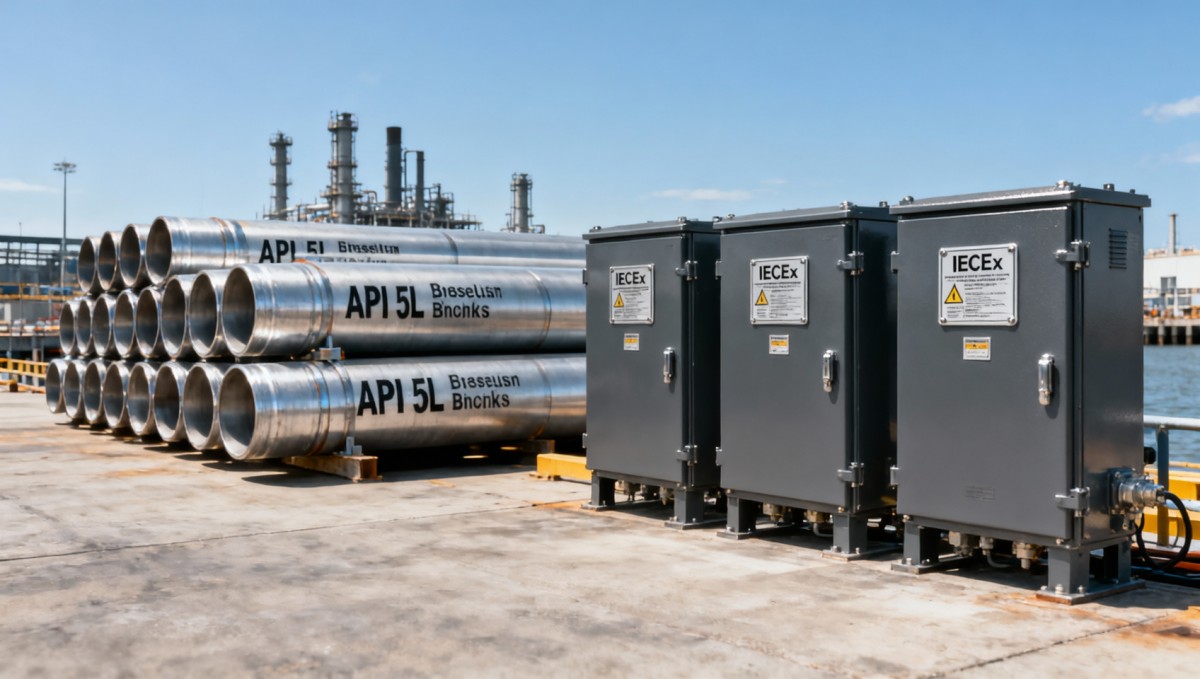
The Ministry of Natural Resources announced on May 6, 2026, that China achieved a technological leap in oil and gas exploration over the past five years, with newly proven reserves reaching a ten-year high. This growth has concurrently stimulated export demand for API 5L steel pipes, intrinsically safe sensors, and explosion-proof junction boxes — especially among energy project procurement entities in the Middle East, Central Asia, and the Gulf of Mexico.
Industries Affected
Direct Trading Enterprises
Export-oriented trading firms specializing in oilfield equipment face improved order visibility, particularly for API-certified seamless and welded line pipe, as well as IECEx/ATEX-certified explosion-proof enclosures. Demand is not broad-based but regionally concentrated — meaning firms with established distribution channels or local representation in target markets are better positioned to convert inquiry into contracts. However, increased scrutiny on origin documentation and conformity assessment procedures may raise pre-shipment compliance overhead.
Raw Material Procurement Enterprises
Enterprises sourcing base materials — such as high-strength low-alloy (HSLA) steel slabs for API 5L pipe production or aluminum alloy ingots for explosion-proof housings — may experience modest upward pressure on lead times and spot pricing. This reflects tightening regional supply amid concurrent infrastructure upgrades in domestic steel mills and casting facilities. Still, no systemic shortage is indicated; procurement teams should prioritize dual-sourcing strategies rather than anticipate price spikes.
Manufacturing Enterprises
Domestic manufacturers of oilfield tubulars and certified explosion-proof devices stand to benefit from enhanced export validation pathways — notably through strengthened recognition of Chinese certification bodies by overseas regulators. Yet, scaling production requires alignment with evolving international standards (e.g., ISO 8501 surface preparation requirements for pipe coatings, or updated IEC 60079-11 testing protocols). Manufacturers lacking recent third-party audit records may encounter longer qualification cycles abroad.
Supply Chain Service Providers
Logistics and compliance service providers — especially those offering integrated customs brokerage, ATEX/IECEx technical file review, and freight consolidation for heavy industrial cargo — are seeing rising inquiries from mid-tier exporters seeking end-to-end support. Notably, demand centers on multimodal solutions capable of handling oversized pipe shipments to remote terminals and managing hazardous goods declarations for sensor modules. Current capacity constraints at key transshipment hubs (e.g., Jebel Ali, Algeciras) suggest lead-time buffers should be extended by 7–10 days.
Key Considerations and Recommended Actions
Monitor Regional Certification Recognition Timelines
While China’s CNEX certification body has expanded mutual recognition agreements with several Gulf Cooperation Council (GCC) members, full equivalence with EU Notified Bodies remains pending. Exporters should verify whether their product categories fall under recently ratified bilateral arrangements before initiating tender submissions.
Reassess Technical Documentation Readiness
Buyers in the Middle East and Mexico increasingly require bilingual (English–Arabic/Spanish) user manuals, hazard zone classification diagrams, and traceability matrices — not just test reports. Firms still relying on legacy Chinese-only documentation risk disqualification at bid evaluation stage.
Evaluate Local Representation Options
In markets where direct sales are constrained by import licensing rules (e.g., Kazakhstan’s mandatory local agent registration), partnering with authorized representatives who hold valid Type Examination Certificates may accelerate market entry more effectively than establishing new subsidiaries.
Editorial Perspective / Industry Observation
Observably, the reserve growth itself does not automatically translate into sustained export momentum — rather, it acts as a catalyst that exposes existing gaps in global market readiness. Analysis shows that while Chinese manufacturers have closed much of the performance gap with Tier-1 suppliers in corrosion resistance and pressure rating, trust-building around long-term reliability and after-sales service remains uneven. From an industry perspective, this moment favors firms investing in field-service capability development — not just factory output expansion.
Conclusion
This development underscores a structural shift: China’s upstream resource gains are now beginning to reshape downstream industrial export dynamics. However, the impact is selective — benefiting players with both technical compliance maturity and regional commercial agility. A rational interpretation is that this represents less a broad-based boom and more a precision opportunity requiring calibrated response.
Source Attribution
Official data released by the Ministry of Natural Resources of the People’s Republic of China, May 6, 2026. Further updates on certification reciprocity status and regional procurement tenders will be tracked via the China National Petroleum Corporation (CNPC) International Procurement Portal and the International Electrotechnical Commission (IEC) Conformity Assessment System database. Ongoing monitoring is advised for changes to GCC Standardization Organization (GSO) Regulation No. GSO 2530/2025 on explosion-proof equipment imports.
 Which global manufacturing trends by sector matter most for sourcing plans?Global manufacturing trends by sector: identify sourcing risks, supplier resilience, compliance demands, and cost drivers to build smarter, more reliable procurement plans.
 What industrial trade intelligence pricing should include before you subscribeIndustrial trade intelligence pricing explained: compare coverage, data quality, access rights, and workflow value before choosing a subscription that supports smarter trade decisions.
 How an industrial trade intelligence dashboard can identify new supplier marketsDiscover how an industrial trade intelligence dashboard helps identify new supplier markets by comparing capacity, landed cost, logistics resilience, and compliance risk.
 Which global market entry barriers should exporters assess first?Global market entry barriers exporters should assess first: tariffs, compliance, buyer qualification, logistics, and payment risk. Build a practical strategy for confident market entry.
 How trade data aggregation analytics can reveal emerging supplier marketsTrade data aggregation analytics reveals emerging supplier markets by connecting trade flows, capacity signals, logistics, and compliance insights for smarter sourcing decisions.
 When an export market analysis platform can validate demand in a new marketExport market analysis platform insights help validate new-market demand through buyer fit, regulations, logistics, competition, and profitable entry conditions.
 What is driving the beauty and personal care market in the USA?Beauty and personal care in USA is driven by targeted solutions, selective premiumization, digital discovery, clean-label trust, diverse needs, and compliance. Explore key growth opportunities.
 How trade flow monitoring reports reveal changing regional demandTrade flow monitoring reports reveal changing regional demand through import volumes, sourcing shifts, product mix, logistics signals, and regulatory trends. Explore actionable market insights.
 How international market intelligence for investors reduces market-entry riskInternational market intelligence for investors reduces market-entry risk by validating demand, regulations, logistics, and competition before capital is committed.
 How international sourcing intelligence helps identify supplier risk earlyInternational sourcing intelligence helps businesses spot supplier risks early, protect supply continuity, and make smarter global procurement decisions.
 How trade data aggregation analytics reveals emerging supplier marketsTrade data aggregation analytics reveals emerging supplier markets through export trends, input flows, logistics, and regulatory signals. Discover smarter sourcing insights.
 What industrial cluster monitoring in Vietnam reveals about site riskIndustrial cluster monitoring Vietnam reveals hidden site risks across labor, utilities, logistics, compliance, and supplier dependencies. Make smarter sourcing and expansion decisions.
 Food Technology Trends Reshaping Shelf Life, Safety, and Product InnovationFood technology is reshaping shelf life, safety, and innovation. Discover the trends helping food businesses cut risk, improve compliance, and unlock stronger global market growth.
 How electronics manufacturing services are changing with low-volume demandElectronics manufacturing services are evolving fast with low-volume demand. Learn how agile EMS partners improve flexibility, compliance, sourcing resilience, and speed to market.
 How Can Buyers Reduce Procurement Risks for Electronic Components?How to reduce procurement risks for electronic components: learn how buyers assess traceability, lead times, compliance, and supplier types to avoid costly sourcing mistakes.
 What Sourcing Intelligence India Reveals About Supplier Risk and Cost ShiftsSourcing intelligence India reveals hidden supplier risk, compliance gaps, logistics pressure, and real cost shifts—helping buyers compare vendors smarter and source with more confidence.
 Fashion Trends 2026: Which Materials, Colors, and Silhouettes Are Gaining Ground?Fashion trends 2026 spotlight tactile fabrics, mineral colors, and controlled volume. Explore the materials, shades, and silhouettes shaping smarter, more wearable style.
 Smart Device Market Outlook: Key Growth Drivers, Segments, and Business OpportunitiesSmart device market trends are shifting toward system value, industrial demand, and resilient supply chains. Explore key growth drivers, high-potential segments, and business opportunities.
 How Global Trade Intelligence Services Help B2B Firms Evaluate Markets and SuppliersGlobal trade intelligence services help B2B firms compare suppliers, assess market potential, and uncover compliance, logistics, and pricing risks before costly decisions are made.
 Manufacturing Sector Updates for Investors: What Signals Matter Most in 2025?Manufacturing sector updates for investors in 2025: track orders, margins, supply chains, regulation, and exports to spot resilient manufacturers and smarter investment signals.
 How Energy Market Intelligence Helps Businesses Track Price Risks and Demand ShiftsEnergy market intelligence helps businesses spot price risks, demand shifts, and supply pressure early—improving procurement, resilience, and faster strategic decisions.





















Global Trade Insights & Industry
Our mission is to empower global exporters and importers with data-driven insights that foster strategic growth.
Search News
Hot Articles
- When do metal pipes for construction need corrosion protection?00
0000-00
- China's Oil & Gas Reserves Surge, Boosting Export Potential for Specialized Tubing and Explosion-Proof Equipment00
0000-00
- Industrial & manufacturing machinery parts exporters rarely certify batch-level metallurgical consistency—here’s why it matters00
0000-00
Popular Tags
Industry Overview
The global commercial kitchen equipment market is projected to reach $112 billion by 2027. Driven by urbanization, the rise of e-commerce food delivery, and strict hygiene regulations.