

Ergonomic office furniture mistakes that raise long-term costs
Many finance approvers treat ergonomic office furniture as a discretionary expense, but the wrong choices often create higher long-term costs through injury claims, absenteeism, premature replacement, and lower productivity. Before approving the lowest bid, it is worth examining how common purchasing mistakes can quietly erode ROI and increase total workplace spending over time.
In office supplies procurement, the price on the quotation is only one layer of cost. A chair that fails in 18 months, a desk with limited adjustability, or a workstation that fits only 40% of employees can trigger years of avoidable expense. For finance teams, the smarter question is not “What is the lowest unit price?” but “What is the total cost over 3–7 years?”
For buyers, importers, and approval managers tracking workplace spending, ergonomic office furniture should be evaluated like any other operational asset: by durability, fit, risk reduction, service life, and workforce impact. When those factors are ignored, even a modest procurement error can multiply across 50, 200, or 1,000 seats.
Why low-cost ergonomic office furniture often becomes high-cost procurement
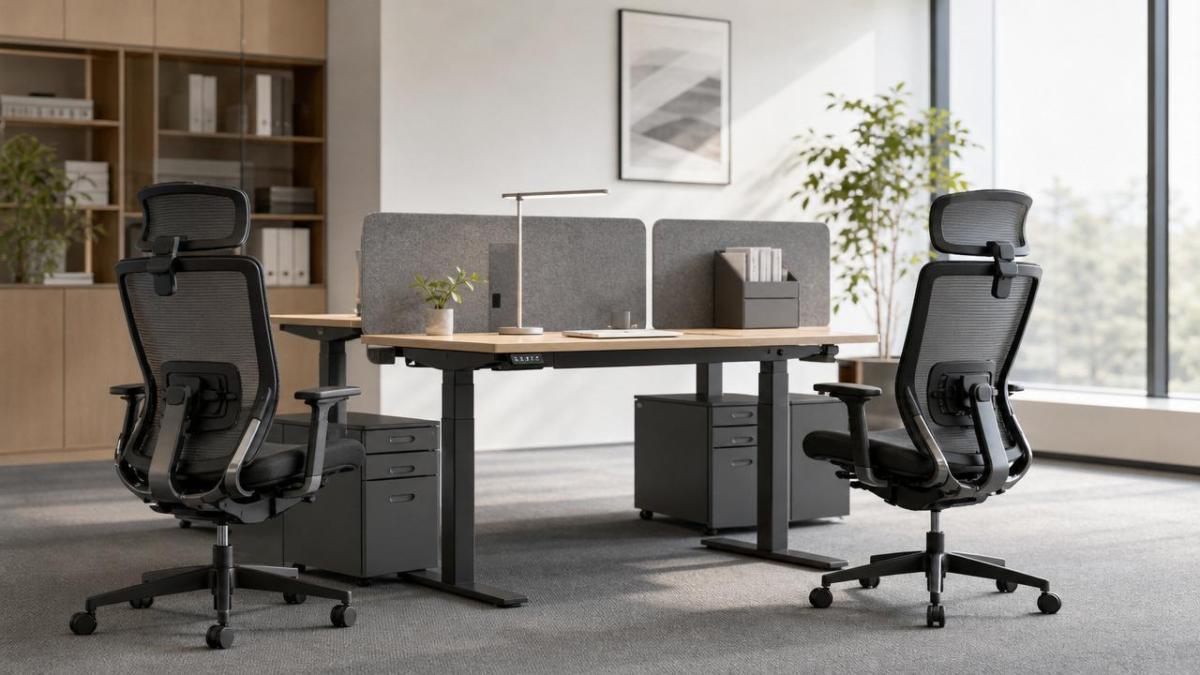
The first mistake is assuming that all ergonomic office furniture delivers comparable value if the product category sounds similar. In practice, two task chairs may both be described as ergonomic, yet differ sharply in adjustment range, material fatigue resistance, warranty terms, and replacement frequency.
A finance approver should expect a useful service window of roughly 5–8 years for mainstream office chairs in full-time commercial use, depending on shift intensity and maintenance. If a low-cost chair needs replacement in 18–30 months, the apparent savings can disappear after the second purchasing cycle.
Mistake 1: Comparing bids by unit price instead of total cost of ownership
Unit pricing is easy to compare, but total cost of ownership includes assembly time, user complaints, returns, replacement parts, downtime, warranty administration, and early disposal. For a 100-seat office, a difference of even $40 per chair can be offset quickly if the higher-grade option reduces replacement by one full cycle.
This is especially relevant in hybrid workplaces where furniture must support a wider user range. Shared workstations demand broader adjustment intervals, stronger frames, and easier daily reset. Products designed for one body type or one seating pattern often fail faster in flexible office layouts.
Key cost elements finance teams should include
- Expected service life: 3 years versus 7 years changes annualized cost materially.
- Warranty coverage: 1-year limited cover is not equal to 5-year component support.
- Failure points: casters, gas lift, armrests, mesh tension, and desk motors are common weak links.
- User fit range: inadequate fit increases discomfort, complaints, and workstation swaps.
- Operational disruption: replacement scheduling can consume 2–4 internal touchpoints per claim.
The table below shows how a lower upfront price can create a higher annualized cost once realistic replacement and service factors are considered.
For finance approvers, the conclusion is straightforward: annualized cost often favors better-engineered ergonomic office furniture even when the initial bid is 30%–70% higher. The larger the headcount, the more expensive short life cycles become.
Mistake 2: Buying “ergonomic” products without checking adjustability range
Another common error is treating the word ergonomic as proof of real fit. In commercial procurement, fit depends on measurable adjustment capacity. Seat height, lumbar position, arm width, arm height, seat depth, and back recline all affect whether a chair supports 60% of staff or closer to 90%.
For sit-stand desks, the same principle applies. A height-adjustable desk with a restricted lifting range may be acceptable for some users but unsuitable for taller staff or multi-user stations. Limited range leads to workaround behavior, which reduces the expected productivity gains from ergonomic investment.
Minimum checkpoints before approval
- Confirm seat height range and seat depth adjustment.
- Check whether lumbar support is fixed, height-adjustable, or depth-adjustable.
- Verify armrest movement in at least 3 directions for shared offices.
- Review desk height range for seated and standing use.
- Ask for load rating, cycle testing, and replacement part availability.
If a supplier cannot provide these details in a product sheet or quotation appendix, the risk profile rises. Lack of specification clarity often predicts later disputes over performance, warranty coverage, and user acceptance.
The hidden long-term costs behind poor ergonomic office furniture decisions
The second major issue is that bad ergonomic choices create costs outside the furniture budget line. Finance approvers may save on procurement but absorb losses later in HR, facilities, IT support, and departmental productivity. These costs are less visible, but they are often more damaging over a 12–36 month period.
Mistake 3: Ignoring absenteeism, discomfort, and productivity drag
Discomfort rarely appears immediately as a capital loss, which is why it is often underestimated. Yet even minor daily strain can reduce concentration, increase micro-break frequency, and drive more workstation complaints. In knowledge-based office environments, a 5% decline in effective work output can outweigh furniture savings surprisingly fast.
Ergonomic office furniture affects more than posture. It influences typing angle, monitor height compatibility, circulation during long seated sessions, and fatigue during 6–9 hour workdays. When furniture cannot adapt to the worker, employees tend to improvise with cushions, footrests, or informal swaps, creating inconsistent workstation setups.
Operational signs that furniture is costing more than it seems
- Repeated complaints within the first 90 days after installation.
- Frequent requests for chair replacements or workstation reassignment.
- Extra spending on add-ons such as seat pads, monitor risers, and foot supports.
- Facilities teams handling recurring adjustments or minor repairs every month.
- Noticeable differences in wear levels after only 12–18 months of use.
Mistake 4: Underestimating maintenance, service, and parts replacement
Maintenance exposure is another overlooked cost driver. Furniture with non-standard components, poor local parts access, or weak after-sales support can create long delays and fragmented repair bills. A caster failure may be inexpensive, but if replacement takes 3 weeks and affects dozens of seats, the disruption cost becomes meaningful.
This is where procurement teams should evaluate not just the product, but the supplier’s support model. Lead times for spare parts, assembly instructions, claim handling, and defect response windows all shape long-term cost control.
The following comparison helps finance approvers understand which hidden cost categories should be discussed before releasing a purchase order.
The important takeaway is that long-term cost is rarely caused by one dramatic failure. It usually comes from many small recurring frictions: support tickets, minor repairs, worker dissatisfaction, replacement scheduling, and fragmented reorders.
How finance approvers should evaluate ergonomic office furniture before sign-off
A disciplined approval process can prevent most costly mistakes. Instead of approving based on price and appearance alone, finance teams should request a structured evaluation that connects furniture specifications to utilization, lifecycle, and workforce fit.
Use a 4-part review framework
An effective review framework should cover four categories: commercial lifespan, ergonomic range, supplier support, and rollout practicality. These four areas usually reveal whether the product is suitable for 50 users or scalable to 500.
1. Commercial lifespan
Ask for expected use conditions, warranty duration, and typical wear components. If a product is intended for light use but your office operates 5 days a week with 8-hour occupancy, mismatch risk is high from day one.
2. Ergonomic range
Look for measurable adjustment coverage. A chair with 5–8 adjustment points and a desk with a broad lift range will support more users than a “one-size” specification. This matters most in shared seating, hot-desking, and multi-department layouts.
3. Supplier support
Clarify response times, replacement parts policy, assembly guidance, and claim channels. A supplier with a 48–72 hour response process is easier to manage than one that requires multiple escalation rounds across regions.
4. Rollout practicality
Large installations involve delivery sequencing, floor-by-floor assembly, packaging disposal, and user orientation. If implementation is poorly planned, even good ergonomic office furniture can create temporary disruption and hidden labor cost.
Pilot before scaling
For medium or large orders, a pilot run of 10–20 workstations is usually more cost-effective than approving 200 units at once. A 2–4 week pilot can reveal fit issues, assembly bottlenecks, and user preference patterns before the larger commitment is locked in.
Finance teams should ask for structured feedback from at least three groups: end users, facilities staff, and department managers. This cross-check reduces the chance that a product looks acceptable in a showroom but underperforms in real office conditions.
Practical procurement recommendations for lower risk and better ROI
The best ergonomic office furniture strategy is not necessarily premium-only purchasing. It is targeted specification. Some teams need full-feature chairs and sit-stand desks, while others may only need durable task seating with fewer adjustment points. Matching the furniture tier to the work profile improves cost discipline.
Segment purchases by use case
A finance approver can often improve ROI by separating procurement into 3 use cases: executive offices, standard assigned seating, and shared touchdown areas. This avoids overbuying where premium features are unnecessary and underbuying where long-duration work demands better ergonomic support.
Specify what matters in the RFQ
A stronger RFQ should include adjustment requirements, expected daily use, warranty minimums, delivery windows, and service terms. Clear specifications reduce apples-to-oranges bidding and make supplier comparisons more meaningful for budget approval.
Recommended RFQ checkpoints
- Minimum warranty target: 3 years for commercial office use.
- Required parts support window: at least 12 months after delivery.
- Installation timeline: define whether rollout is 1 phase or 3 phases.
- User environment: assigned seating, hot-desking, or meeting room rotation.
- Load and durability information: request tested commercial suitability.
- Post-install support: clarify issue reporting and replacement process.
For international sourcing and B2B supply chain planning, these details also improve supplier transparency. Better specification discipline supports cleaner negotiations, fewer post-delivery disputes, and more reliable cross-border office supplies procurement.
Think in annualized budget terms
When evaluating ergonomic office furniture, annualized cost is often the most useful metric for finance leaders. A chair costing US$280 over 7 years may be financially stronger than a US$150 alternative that requires replacement in 2 years and generates more support activity in between.
That approach also aligns better with strategic budgeting. It shifts the conversation from simple capex minimization to workplace asset optimization, which is especially important for firms managing multiple sites, phased office expansion, or regional procurement consistency.
Long-term savings in office furniture rarely come from the cheapest line item. They come from reducing repeat purchases, minimizing discomfort-related disruption, and selecting products that fit a broad workforce over a realistic 3–8 year horizon. For finance approvers, the most reliable path is to evaluate ergonomic office furniture through lifecycle cost, support readiness, and operational fit rather than headline price alone.
GTIIN and TradeVantage continue to track B2B sourcing trends, supplier positioning, and office supplies procurement dynamics that help importers, exporters, and decision-makers make more informed purchases. If you are reviewing workplace seating, height-adjustable desks, or broader office furnishing plans, now is the time to request a more detailed specification review instead of approving a risky low bid.
Contact us to explore tailored sourcing insights, compare market-ready ergonomic office furniture options, and get a procurement framework built for long-term cost control.
 How an industrial trade intelligence dashboard can identify new supplier marketsDiscover how an industrial trade intelligence dashboard helps identify new supplier markets by comparing capacity, landed cost, logistics resilience, and compliance risk.
 Which global market entry barriers should exporters assess first?Global market entry barriers exporters should assess first: tariffs, compliance, buyer qualification, logistics, and payment risk. Build a practical strategy for confident market entry.
 How trade data aggregation analytics can reveal emerging supplier marketsTrade data aggregation analytics reveals emerging supplier markets by connecting trade flows, capacity signals, logistics, and compliance insights for smarter sourcing decisions.
 When an export market analysis platform can validate demand in a new marketExport market analysis platform insights help validate new-market demand through buyer fit, regulations, logistics, competition, and profitable entry conditions.
 What is driving the beauty and personal care market in the USA?Beauty and personal care in USA is driven by targeted solutions, selective premiumization, digital discovery, clean-label trust, diverse needs, and compliance. Explore key growth opportunities.
 How trade flow monitoring reports reveal changing regional demandTrade flow monitoring reports reveal changing regional demand through import volumes, sourcing shifts, product mix, logistics signals, and regulatory trends. Explore actionable market insights.
 How international market intelligence for investors reduces market-entry riskInternational market intelligence for investors reduces market-entry risk by validating demand, regulations, logistics, and competition before capital is committed.
 How international sourcing intelligence helps identify supplier risk earlyInternational sourcing intelligence helps businesses spot supplier risks early, protect supply continuity, and make smarter global procurement decisions.
 How trade data aggregation analytics reveals emerging supplier marketsTrade data aggregation analytics reveals emerging supplier markets through export trends, input flows, logistics, and regulatory signals. Discover smarter sourcing insights.
 What industrial cluster monitoring in Vietnam reveals about site riskIndustrial cluster monitoring Vietnam reveals hidden site risks across labor, utilities, logistics, compliance, and supplier dependencies. Make smarter sourcing and expansion decisions.
 Food Technology Trends Reshaping Shelf Life, Safety, and Product InnovationFood technology is reshaping shelf life, safety, and innovation. Discover the trends helping food businesses cut risk, improve compliance, and unlock stronger global market growth.
 How electronics manufacturing services are changing with low-volume demandElectronics manufacturing services are evolving fast with low-volume demand. Learn how agile EMS partners improve flexibility, compliance, sourcing resilience, and speed to market.
 How Can Buyers Reduce Procurement Risks for Electronic Components?How to reduce procurement risks for electronic components: learn how buyers assess traceability, lead times, compliance, and supplier types to avoid costly sourcing mistakes.
 What Sourcing Intelligence India Reveals About Supplier Risk and Cost ShiftsSourcing intelligence India reveals hidden supplier risk, compliance gaps, logistics pressure, and real cost shifts—helping buyers compare vendors smarter and source with more confidence.
 Fashion Trends 2026: Which Materials, Colors, and Silhouettes Are Gaining Ground?Fashion trends 2026 spotlight tactile fabrics, mineral colors, and controlled volume. Explore the materials, shades, and silhouettes shaping smarter, more wearable style.
 Smart Device Market Outlook: Key Growth Drivers, Segments, and Business OpportunitiesSmart device market trends are shifting toward system value, industrial demand, and resilient supply chains. Explore key growth drivers, high-potential segments, and business opportunities.
 How Global Trade Intelligence Services Help B2B Firms Evaluate Markets and SuppliersGlobal trade intelligence services help B2B firms compare suppliers, assess market potential, and uncover compliance, logistics, and pricing risks before costly decisions are made.
 Manufacturing Sector Updates for Investors: What Signals Matter Most in 2025?Manufacturing sector updates for investors in 2025: track orders, margins, supply chains, regulation, and exports to spot resilient manufacturers and smarter investment signals.
 How Energy Market Intelligence Helps Businesses Track Price Risks and Demand ShiftsEnergy market intelligence helps businesses spot price risks, demand shifts, and supply pressure early—improving procurement, resilience, and faster strategic decisions.
 Precision Hardware Tools Market: Key Demand Drivers, Segments, and Growth OutlookPrecision hardware tools market trends are reshaping sourcing, compliance, and automation. Explore key demand drivers, segment shifts, regional supply patterns, and growth opportunities.
 How to Use Customs Import Data to Find Buyers, Track Competitors, and Spot Demand?Customs import data helps you find real buyers, track competitors, and spot demand shifts early. Learn practical ways to turn trade records into smarter global business decisions.





















Global Trade Insights & Industry
Our mission is to empower global exporters and importers with data-driven insights that foster strategic growth.
Search News
Popular Tags
Industry Overview
The global commercial kitchen equipment market is projected to reach $112 billion by 2027. Driven by urbanization, the rise of e-commerce food delivery, and strict hygiene regulations.