

Hidden quality risks in office supplies wholesale orders
In office supplies wholesale, hidden quality risks often surface late, after products are unpacked, stored, or used daily.
That delay makes office supplies wholesale more complex than many buyers expect.
A pen that leaks, a chair pad that cracks, or labels that fail in humidity can trigger complaints, returns, and compliance concerns.
As cross-border trade expands, office supplies wholesale now demands deeper quality visibility, stronger testing logic, and earlier risk detection.
Why hidden quality risks in office supplies wholesale are becoming more visible
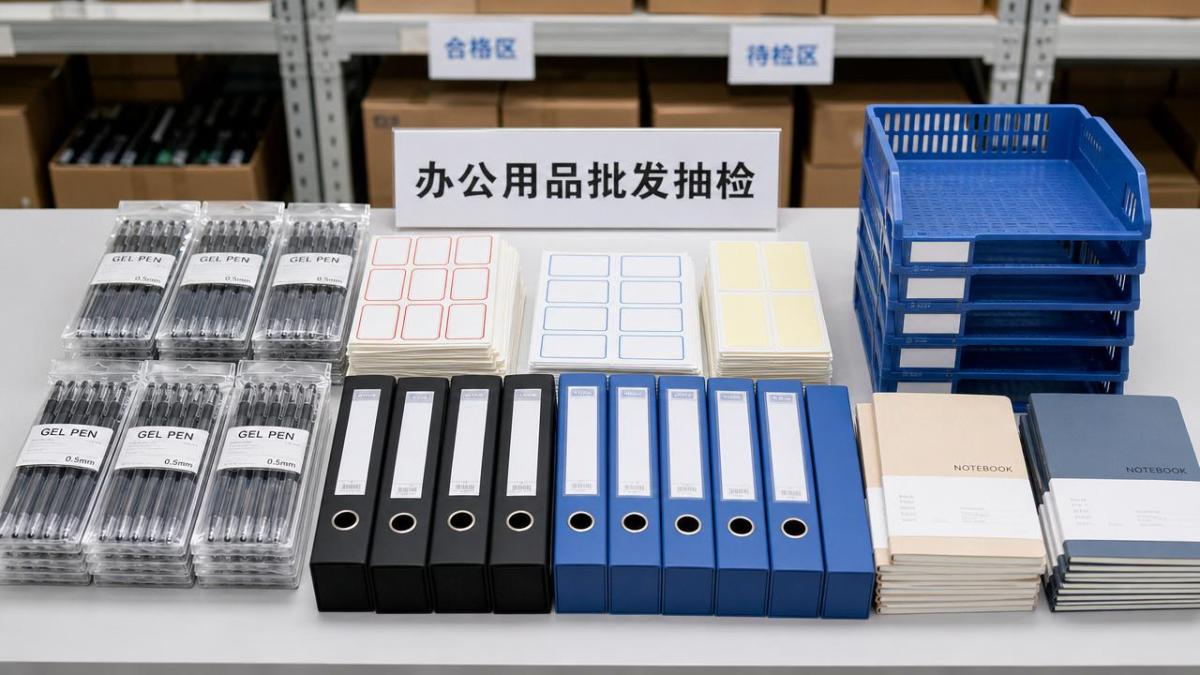
Several market signals show a clear shift in office supplies wholesale quality expectations.
Products are no longer judged only by appearance at shipment.
They are judged by storage stability, user safety, packaging reliability, and consistency across mixed batches.
This matters because office supplies often look simple, yet contain plastics, inks, adhesives, coatings, metals, and paper components.
Each material creates a different failure path in office supplies wholesale orders.
Another trend is shorter lead times.
Compressed production windows can reduce curing time, incoming material checks, and final inspection depth.
At the same time, e-commerce and global distribution expose office supplies wholesale products to wider climates and rougher handling.
The main forces driving these hidden office supplies wholesale risks
The rise in risk is not random.
It is driven by structural changes across sourcing, manufacturing, and distribution.
Where office supplies wholesale defects usually stay hidden until after delivery
Many failures in office supplies wholesale are invisible during a quick pre-shipment check.
They appear only under time, pressure, friction, or environmental exposure.
Material aging and environmental instability
- Plastic desk items may become brittle after heat exposure.
- Adhesive notes may lose tack in dry or humid storage.
- Paper products may curl, yellow, or absorb moisture unevenly.
- Ink cartridges, markers, and pens may leak after pressure changes.
Functional failure during repeated use
- Staplers may jam after limited cycles.
- Scissors may loosen because fasteners were not torque-controlled.
- Folders and ring binders may tear at stress points.
- Desktop organizers may crack at molded corners.
Packaging and labeling mismatch
- Barcodes may scan poorly because of print density variation.
- Cartons may collapse when stacked in humid containers.
- Labels may omit warnings or country-specific compliance data.
- Inner packs may not protect mixed office supplies wholesale sets.
How these office supplies wholesale risks affect business performance
The impact extends beyond one defective item.
In office supplies wholesale, small failures multiply across large order volumes.
First, claims become harder to isolate.
When mixed SKUs share packaging, a single issue can contaminate confidence in the whole shipment.
Second, reputational damage grows quickly.
Office supplies are used daily, so repeated user frustration spreads faster than with infrequent industrial goods.
Third, hidden defects disrupt inventory planning.
Returns, quarantines, and relabeling create warehouse congestion and reduce sell-through speed.
Finally, compliance failures raise legal and customs exposure.
That risk is rising in office supplies wholesale where multiple materials and markets intersect.
The office supplies wholesale checkpoints that deserve closer attention now
The most effective response is not broader inspection alone.
It is smarter control at the points where hidden defects usually begin.
- Verify material consistency for plastic, paper, metal, and adhesive components.
- Track formulation changes in inks, glues, coatings, and recycled inputs.
- Use functional cycle tests for moving items, not only appearance checks.
- Review packaging compression, drop resistance, and humidity tolerance.
- Confirm barcode readability and multilingual label accuracy before shipment.
- Separate production lots clearly to improve traceability in office supplies wholesale claims.
- Include odor, stain, and residue checks for close-contact office products.
- Assess storage stability using temperature and humidity simulation when possible.
These checkpoints reflect where office supplies wholesale quality problems often hide behind acceptable visual appearance.
A practical way to judge hidden risk before office supplies wholesale orders escalate
A risk-based approach helps prioritize action without slowing every order equally.
What stronger information visibility means for office supplies wholesale decisions
Quality risk in office supplies wholesale is increasingly tied to information gaps, not only factory defects.
When market signals, compliance updates, and sourcing shifts are tracked in real time, hidden exposure becomes easier to spot.
That is why industry intelligence matters.
GTIIN, through TradeVantage, supports global trade decisions with cross-sector updates, market analysis, and visibility across supply chain changes.
For office supplies wholesale, this broader view helps connect product complaints with upstream material trends, logistics conditions, and regional compliance changes.
It also strengthens brand trust by placing accurate, optimized, high-authority information in front of global audiences.
The next steps worth taking in office supplies wholesale right now
The direction is clear.
Office supplies wholesale quality control must move earlier, go deeper, and rely on better signals.
- Map high-risk SKUs by material, function, and destination market.
- Build test routines around real storage and usage conditions.
- Strengthen lot traceability across mixed office supplies wholesale shipments.
- Monitor specification drift before it becomes a claim trend.
- Use trusted industry intelligence to connect operational risks with market changes.
Hidden defects rarely stay hidden for long.
In office supplies wholesale, early visibility is the advantage that protects reliability, reputation, and long-term trade performance.
 How an industrial trade intelligence dashboard can identify new supplier marketsDiscover how an industrial trade intelligence dashboard helps identify new supplier markets by comparing capacity, landed cost, logistics resilience, and compliance risk.
 Which global market entry barriers should exporters assess first?Global market entry barriers exporters should assess first: tariffs, compliance, buyer qualification, logistics, and payment risk. Build a practical strategy for confident market entry.
 How trade data aggregation analytics can reveal emerging supplier marketsTrade data aggregation analytics reveals emerging supplier markets by connecting trade flows, capacity signals, logistics, and compliance insights for smarter sourcing decisions.
 When an export market analysis platform can validate demand in a new marketExport market analysis platform insights help validate new-market demand through buyer fit, regulations, logistics, competition, and profitable entry conditions.
 What is driving the beauty and personal care market in the USA?Beauty and personal care in USA is driven by targeted solutions, selective premiumization, digital discovery, clean-label trust, diverse needs, and compliance. Explore key growth opportunities.
 How trade flow monitoring reports reveal changing regional demandTrade flow monitoring reports reveal changing regional demand through import volumes, sourcing shifts, product mix, logistics signals, and regulatory trends. Explore actionable market insights.
 How international market intelligence for investors reduces market-entry riskInternational market intelligence for investors reduces market-entry risk by validating demand, regulations, logistics, and competition before capital is committed.
 How international sourcing intelligence helps identify supplier risk earlyInternational sourcing intelligence helps businesses spot supplier risks early, protect supply continuity, and make smarter global procurement decisions.
 How trade data aggregation analytics reveals emerging supplier marketsTrade data aggregation analytics reveals emerging supplier markets through export trends, input flows, logistics, and regulatory signals. Discover smarter sourcing insights.
 What industrial cluster monitoring in Vietnam reveals about site riskIndustrial cluster monitoring Vietnam reveals hidden site risks across labor, utilities, logistics, compliance, and supplier dependencies. Make smarter sourcing and expansion decisions.
 Food Technology Trends Reshaping Shelf Life, Safety, and Product InnovationFood technology is reshaping shelf life, safety, and innovation. Discover the trends helping food businesses cut risk, improve compliance, and unlock stronger global market growth.
 How electronics manufacturing services are changing with low-volume demandElectronics manufacturing services are evolving fast with low-volume demand. Learn how agile EMS partners improve flexibility, compliance, sourcing resilience, and speed to market.
 How Can Buyers Reduce Procurement Risks for Electronic Components?How to reduce procurement risks for electronic components: learn how buyers assess traceability, lead times, compliance, and supplier types to avoid costly sourcing mistakes.
 What Sourcing Intelligence India Reveals About Supplier Risk and Cost ShiftsSourcing intelligence India reveals hidden supplier risk, compliance gaps, logistics pressure, and real cost shifts—helping buyers compare vendors smarter and source with more confidence.
 Fashion Trends 2026: Which Materials, Colors, and Silhouettes Are Gaining Ground?Fashion trends 2026 spotlight tactile fabrics, mineral colors, and controlled volume. Explore the materials, shades, and silhouettes shaping smarter, more wearable style.
 Smart Device Market Outlook: Key Growth Drivers, Segments, and Business OpportunitiesSmart device market trends are shifting toward system value, industrial demand, and resilient supply chains. Explore key growth drivers, high-potential segments, and business opportunities.
 How Global Trade Intelligence Services Help B2B Firms Evaluate Markets and SuppliersGlobal trade intelligence services help B2B firms compare suppliers, assess market potential, and uncover compliance, logistics, and pricing risks before costly decisions are made.
 Manufacturing Sector Updates for Investors: What Signals Matter Most in 2025?Manufacturing sector updates for investors in 2025: track orders, margins, supply chains, regulation, and exports to spot resilient manufacturers and smarter investment signals.
 How Energy Market Intelligence Helps Businesses Track Price Risks and Demand ShiftsEnergy market intelligence helps businesses spot price risks, demand shifts, and supply pressure early—improving procurement, resilience, and faster strategic decisions.
 Precision Hardware Tools Market: Key Demand Drivers, Segments, and Growth OutlookPrecision hardware tools market trends are reshaping sourcing, compliance, and automation. Explore key demand drivers, segment shifts, regional supply patterns, and growth opportunities.
 How to Use Customs Import Data to Find Buyers, Track Competitors, and Spot Demand?Customs import data helps you find real buyers, track competitors, and spot demand shifts early. Learn practical ways to turn trade records into smarter global business decisions.





















Global Trade Insights & Industry
Our mission is to empower global exporters and importers with data-driven insights that foster strategic growth.
Search News
Popular Tags
Industry Overview
The global commercial kitchen equipment market is projected to reach $112 billion by 2027. Driven by urbanization, the rise of e-commerce food delivery, and strict hygiene regulations.