

Filing Cabinets: Fireproof vs Standard Storage Costs
【Executive Summary】:Choosing between fireproof and standard filing cabinets is not just a facilities purchase.
It is a risk, compliance, and total cost decision for offices handling paper records.
The upfront price can be misleading without reviewing document sensitivity, insurance exposure, replacement cost, and operational continuity.
This guide compares fire-rated and standard filing cabinets across practical workplace scenarios.
When Filing Cabinets Become a Scenario-Based Cost Decision
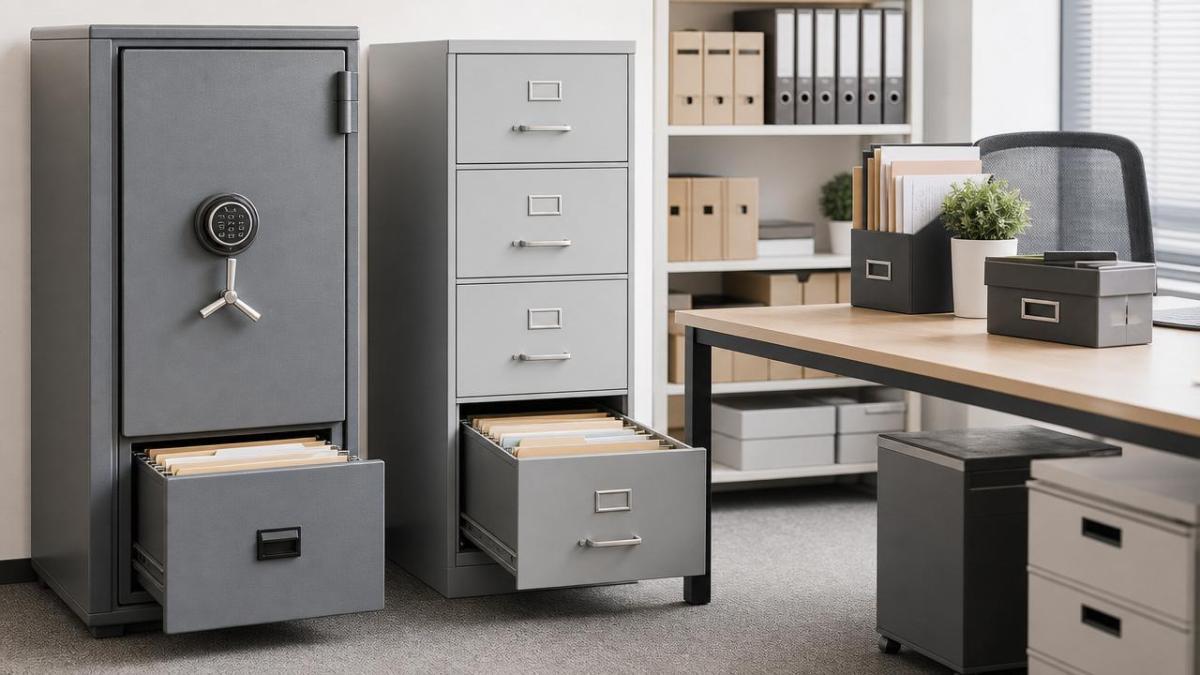
Filing cabinets look simple, but their cost changes sharply by use case.
A low-cost cabinet may suit replaceable documents, office forms, or short-retention paperwork.
Fireproof filing cabinets are different. They are designed to protect critical records during heat, smoke, and emergency conditions.
The right choice depends on what would happen if the stored documents were damaged.
That question matters more than drawer count, paint finish, or catalog price.
Scenario 1: Daily Office Records With Low Replacement Risk
Standard filing cabinets usually fit routine administrative storage.
Examples include printed schedules, internal reference notes, temporary forms, and duplicated project files.
In this scenario, filing cabinets mainly support organization, access speed, and workspace discipline.
The main cost factors are drawer capacity, steel thickness, slide quality, lock type, and delivery charges.
Standard filing cabinets are usually cheaper because they do not require insulation, fire testing, or specialized seals.
They also weigh less, which can reduce freight, installation complexity, and floor-load concerns.
However, lower cost should not mean poor durability.
Frequent drawer use still requires reliable suspension systems and stable anti-tip construction.
Scenario 2: Legal, Financial, and Compliance-Sensitive Documents
Fireproof filing cabinets become more relevant when documents carry legal, financial, or audit value.
Contracts, original certificates, tax records, deeds, and signed compliance files are typical examples.
The cabinet price should be compared with the cost of reconstitution.
Replacing documents can involve legal fees, disrupted claims, delayed audits, and lost commercial leverage.
Fire-rated filing cabinets usually cost more because they use insulation layers and tested construction.
Many models are rated for specific time periods, such as 30, 60, or 120 minutes.
The rating should match the realistic emergency response environment.
For irreplaceable originals, the premium is often easier to justify.
Scenario 3: Mixed Departments With Uneven Storage Value
Many workplaces do not need every cabinet to be fire-rated.
A blended approach can control spending while protecting high-value records.
Standard filing cabinets can hold active working papers, copies, and low-risk archives.
Fireproof filing cabinets can be reserved for originals, regulated files, and recovery-critical records.
This scenario-based allocation often delivers better value than buying one cabinet type for every area.
It also encourages document classification before purchase.
That classification reduces overbuying and prevents under-protection in sensitive locations.
Scenario 4: Distributed Sites, Warehouses, and Branch Offices
Storage decisions change when filing cabinets are used across multiple sites.
Branch offices, warehouses, clinics, schools, and service counters may face different risks.
A main office may need fireproof filing cabinets for master records.
A branch site may only need standard filing cabinets for copies and daily forms.
Transportation cost also matters across distributed locations.
Fire-rated cabinets are heavy, so shipping, stair access, elevators, and installation labor can affect total cost.
In older buildings, floor-load checks may be necessary before placing large fireproof filing cabinets.
Cost Differences That Should Be Compared Beyond Purchase Price
The true cost of filing cabinets includes more than the invoice amount.
Decision factors should include protection level, handling cost, maintenance, replacement exposure, and workflow impact.
This comparison shows why filing cabinets should be evaluated by scenario, not only by drawer count.
Demand Differences by Document Sensitivity and Access Frequency
Storage demand changes when sensitivity and access frequency are considered together.
High-access records need smooth operation, clear labeling, and ergonomic placement.
High-sensitivity records need stronger locks, restricted access, and better disaster protection.
- Low sensitivity, high access: standard filing cabinets are usually efficient.
- Low sensitivity, low access: economical archive cabinets may be enough.
- High sensitivity, high access: fireproof filing cabinets with reliable locks deserve attention.
- High sensitivity, low access: fire-rated archive storage can reduce recovery risk.
This matrix helps prevent unnecessary spending on all-fire-rated storage.
It also prevents critical documents from being placed in ordinary filing cabinets by habit.
How to Match Filing Cabinets to Practical Use Cases
A structured selection process keeps the purchase aligned with real operating risk.
Start with document value, then confirm access needs, rating requirements, and installation limits.
- List document groups by legal, financial, operational, and historical importance.
- Identify records that cannot be quickly recreated from digital systems.
- Estimate disruption if those files become unavailable after a fire.
- Assign standard filing cabinets to low-risk, replaceable records.
- Assign fireproof filing cabinets to original, regulated, or recovery-critical records.
- Check delivery access, floor strength, and future expansion before ordering.
This approach turns filing cabinets into a controlled storage strategy.
It also supports clearer budgeting across departments and locations.
Common Misjudgments That Increase Storage Costs
Assuming Fireproof Means Universal Protection
Fireproof filing cabinets are rated for specific conditions and time periods.
They are not automatically suitable for every media type or exposure level.
Paper, magnetic media, and digital backups may require different protection standards.
Buying Only by Lowest Unit Price
Cheap standard filing cabinets can become expensive if drawers fail under daily use.
Poor slides, weak locks, and unstable frames reduce service life.
A lower purchase price should still meet durability expectations.
Ignoring Space and Weight Constraints
Fire-rated filing cabinets can be much heavier than standard models.
This affects elevator access, flooring, installation time, and future relocation cost.
Weight planning is especially important in leased offices and older buildings.
Overlooking Digital Backup Practices
Digital backup can reduce the number of documents requiring fireproof filing cabinets.
However, original documents may still need physical protection.
A paperless strategy does not automatically remove physical record obligations.
Practical Cost Guidance for Fireproof and Standard Options
Use standard filing cabinets where documents are replaceable, duplicated, or short-term.
Choose stronger standard models when drawers will be opened many times each day.
Use fireproof filing cabinets where records support audits, claims, ownership, or business recovery.
Avoid placing every file in premium storage without first ranking document value.
A mixed fleet of filing cabinets often balances cost, protection, and access convenience.
The best result is not always the most expensive cabinet.
It is the cabinet that matches the consequences of document loss.
Action Steps Before Purchasing Filing Cabinets
Before ordering filing cabinets, create a record inventory with sensitivity categories.
Separate originals, regulated records, active working files, and replaceable copies.
Then compare cabinet cost against the cost of document loss, recovery, and operational delay.
Request specifications covering fire rating, lock type, drawer load, dimensions, and delivery requirements.
For international sourcing, verify standards, labeling, packaging, and after-sales support before commitment.
GTIIN helps connect storage decisions with broader trade, compliance, and sourcing intelligence.
Use objective data to choose filing cabinets that fit risk, budget, and long-term workplace resilience.
 When dual sourcing makes sense in a sourcing strategy for manufacturersSourcing strategy for manufacturers: learn when dual sourcing strengthens supply continuity, reduces disruption risk, and protects production without adding unnecessary complexity.
 How bulk commodities pricing affects long-term supply contractsBulk commodities pricing shapes long-term supply contracts through index rules, freight, quality, volume, and currency risk. Explore strategies for resilient costs and supply security.
 Which global manufacturing trends by sector matter most for sourcing plans?Global manufacturing trends by sector: identify sourcing risks, supplier resilience, compliance demands, and cost drivers to build smarter, more reliable procurement plans.
 What industrial trade intelligence pricing should include before you subscribeIndustrial trade intelligence pricing explained: compare coverage, data quality, access rights, and workflow value before choosing a subscription that supports smarter trade decisions.
 How an industrial trade intelligence dashboard can identify new supplier marketsDiscover how an industrial trade intelligence dashboard helps identify new supplier markets by comparing capacity, landed cost, logistics resilience, and compliance risk.
 Which global market entry barriers should exporters assess first?Global market entry barriers exporters should assess first: tariffs, compliance, buyer qualification, logistics, and payment risk. Build a practical strategy for confident market entry.
 How trade data aggregation analytics can reveal emerging supplier marketsTrade data aggregation analytics reveals emerging supplier markets by connecting trade flows, capacity signals, logistics, and compliance insights for smarter sourcing decisions.
 When an export market analysis platform can validate demand in a new marketExport market analysis platform insights help validate new-market demand through buyer fit, regulations, logistics, competition, and profitable entry conditions.
 What is driving the beauty and personal care market in the USA?Beauty and personal care in USA is driven by targeted solutions, selective premiumization, digital discovery, clean-label trust, diverse needs, and compliance. Explore key growth opportunities.
 How trade flow monitoring reports reveal changing regional demandTrade flow monitoring reports reveal changing regional demand through import volumes, sourcing shifts, product mix, logistics signals, and regulatory trends. Explore actionable market insights.
 How international market intelligence for investors reduces market-entry riskInternational market intelligence for investors reduces market-entry risk by validating demand, regulations, logistics, and competition before capital is committed.
 How international sourcing intelligence helps identify supplier risk earlyInternational sourcing intelligence helps businesses spot supplier risks early, protect supply continuity, and make smarter global procurement decisions.
 How trade data aggregation analytics reveals emerging supplier marketsTrade data aggregation analytics reveals emerging supplier markets through export trends, input flows, logistics, and regulatory signals. Discover smarter sourcing insights.
 What industrial cluster monitoring in Vietnam reveals about site riskIndustrial cluster monitoring Vietnam reveals hidden site risks across labor, utilities, logistics, compliance, and supplier dependencies. Make smarter sourcing and expansion decisions.
 Food Technology Trends Reshaping Shelf Life, Safety, and Product InnovationFood technology is reshaping shelf life, safety, and innovation. Discover the trends helping food businesses cut risk, improve compliance, and unlock stronger global market growth.
 How electronics manufacturing services are changing with low-volume demandElectronics manufacturing services are evolving fast with low-volume demand. Learn how agile EMS partners improve flexibility, compliance, sourcing resilience, and speed to market.
 How Can Buyers Reduce Procurement Risks for Electronic Components?How to reduce procurement risks for electronic components: learn how buyers assess traceability, lead times, compliance, and supplier types to avoid costly sourcing mistakes.
 What Sourcing Intelligence India Reveals About Supplier Risk and Cost ShiftsSourcing intelligence India reveals hidden supplier risk, compliance gaps, logistics pressure, and real cost shifts—helping buyers compare vendors smarter and source with more confidence.
 Fashion Trends 2026: Which Materials, Colors, and Silhouettes Are Gaining Ground?Fashion trends 2026 spotlight tactile fabrics, mineral colors, and controlled volume. Explore the materials, shades, and silhouettes shaping smarter, more wearable style.
 Smart Device Market Outlook: Key Growth Drivers, Segments, and Business OpportunitiesSmart device market trends are shifting toward system value, industrial demand, and resilient supply chains. Explore key growth drivers, high-potential segments, and business opportunities.
 How Global Trade Intelligence Services Help B2B Firms Evaluate Markets and SuppliersGlobal trade intelligence services help B2B firms compare suppliers, assess market potential, and uncover compliance, logistics, and pricing risks before costly decisions are made.





















Global Trade Insights & Industry
Our mission is to empower global exporters and importers with data-driven insights that foster strategic growth.
Search News
Popular Tags
Industry Overview
The global commercial kitchen equipment market is projected to reach $112 billion by 2027. Driven by urbanization, the rise of e-commerce food delivery, and strict hygiene regulations.