

Building a Chemical Trade Network With Lower Supply Risk
Building a resilient chemical trade network is no longer just about adding more supply sources. In today’s chemical market, lower supply risk comes from better visibility, stronger qualification processes, faster response planning, and tighter coordination across regions, logistics channels, and compliance requirements. When a chemical trade network is built with risk control in mind, it becomes easier to protect delivery schedules, stabilize pricing exposure, and maintain trust across long-term cross-border relationships.
The challenge is that chemical flows are exposed to multiple disruptions at the same time: feedstock volatility, port congestion, regulatory changes, documentation errors, packaging shortages, route limitations, and supplier concentration. A structured approach helps reduce blind spots. Instead of reacting only after a disruption appears, businesses can use a practical framework to evaluate suppliers, trade routes, product categories, and market signals before risk grows into lost orders or delayed shipments.
Why a Structured Approach Matters in a Chemical Trade Network
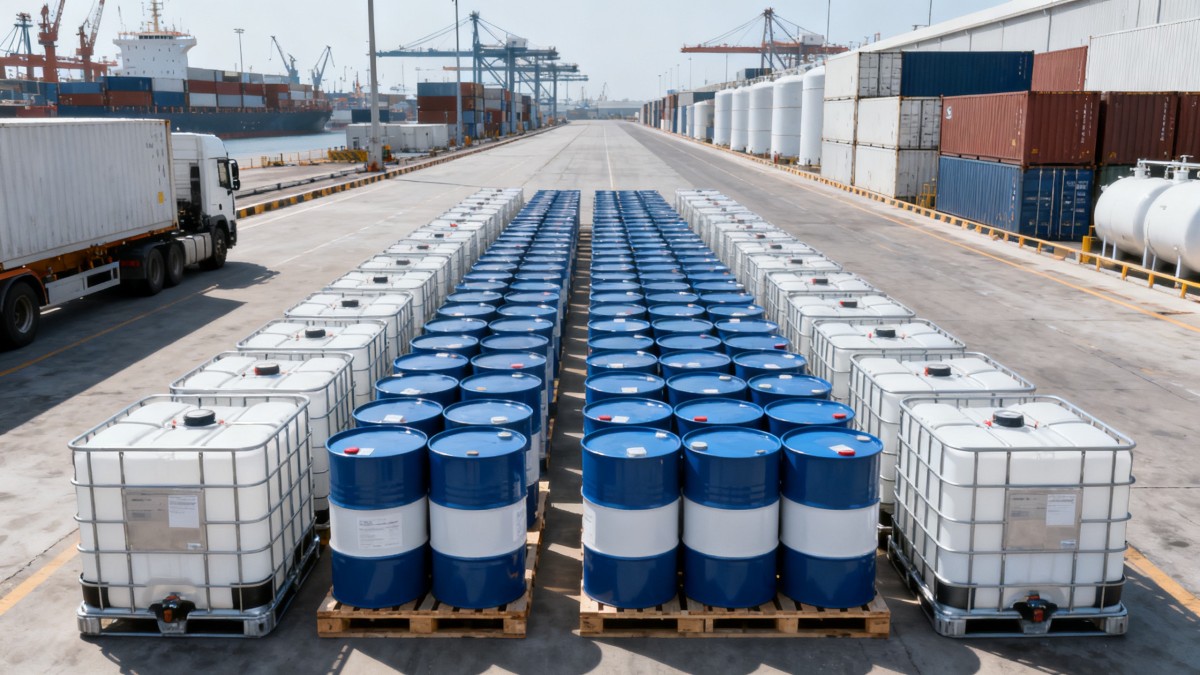
A strong chemical trade network depends on much more than commercial reach. Chemicals are tightly linked to specifications, storage limits, transport classes, customs rules, and country-specific environmental controls. That means even a financially sound supplier can still become a weak point if documentation is incomplete, logistics options are too narrow, or product consistency is unstable.
Using a checklist-based evaluation process creates a common standard for expansion and supplier retention. It supports faster decisions without lowering quality control. It also helps identify where a chemical trade network is too dependent on one region, one port, one packaging format, or one compliance pathway. In volatile markets, that level of clarity can be the difference between controlled substitution and operational disruption.
Core Priorities for Building a Lower-Risk Chemical Trade Network
- Map every critical chemical by origin, transit route, packaging type, and regulatory dependency to identify where a single disruption could stop trade flow.
- Qualify backup suppliers before they are needed, including sample validation, document review, lead-time checks, and alternate export capacity confirmation.
- Track upstream feedstock and energy trends because many supply shocks in a chemical trade network begin long before finished products tighten.
- Verify product consistency through COA history, batch stability records, and complaint patterns rather than relying only on quoted specification sheets.
- Assess logistics flexibility by checking access to tank, drum, IBC, and bag options as well as multimodal transport and hazardous cargo handling capacity.
- Review export documentation readiness, including SDS accuracy, HS coding alignment, labeling rules, and destination-specific declarations or licensing needs.
- Measure regional concentration risk to avoid overexposure to one production cluster, one geopolitical corridor, or one customs clearance bottleneck.
- Set inventory triggers by product criticality so high-impact chemicals receive earlier replenishment alerts than slower-moving or easier-to-substitute items.
- Build pricing intelligence into supplier reviews to distinguish temporary market spikes from structural cost shifts affecting your chemical trade network.
- Create communication rules for disruption events, including escalation paths, response deadlines, and standardized updates across supply and trade partners.
These priorities work best when reviewed quarterly, not only during crises. A chemical trade network evolves as new regulations emerge, freight patterns shift, and production economics change between Asia, Europe, the Middle East, and the Americas. Consistent review turns risk management from a one-time task into a practical operating discipline.
How to Evaluate Supplier Strength Beyond Price
Price remains important, but the cheapest source often carries hidden exposure. In chemicals, low pricing can be offset by unstable production cycles, poor packaging quality, inconsistent purity, limited dangerous goods handling, or weak export support. A healthier chemical trade network treats supplier evaluation as a blend of commercial, technical, and operational checks.
- Check whether the supplier can maintain output during utility shortages, feedstock tightness, scheduled maintenance, or environmental inspection periods.
- Confirm that commercial terms match operational reality, especially minimum order quantity, loading window, payment timing, and packaging availability.
- Review responsiveness on technical questions because slow clarification often signals weak internal coordination during more serious disruptions.
- Compare historical shipment reliability across seasons, not just recent transactions completed during favorable freight or inventory conditions.
It is also useful to rank suppliers by substitutability. Some commodity chemicals can be shifted between qualified sources with limited friction. Others, such as specialty intermediates or tightly regulated formulations, may require long requalification cycles. In those cases, a chemical trade network should prioritize early backup development even when current supply appears stable.
Scenario Planning Across Different Chemical Trade Situations
Bulk Commodity Chemicals
For acids, solvents, caustic products, polymers, and other bulk categories, supply risk often comes from plant outages, freight imbalances, and sudden changes in energy or feedstock costs. In this scenario, the main priority is route diversity and volume flexibility. A reliable chemical trade network should have alternate origins, port options, and packaging conversions ready before market stress appears.
Short-term buying decisions should be linked to inventory coverage and transit exposure. If one lane becomes congested, switching from bulk to packaged cargo or from one export region to another can protect continuity, even if unit cost rises temporarily.
Specialty and Fine Chemicals
With specialty chemicals, risk is less about volume and more about qualification time, specification control, and documentation accuracy. Here, the chemical trade network must focus on technical equivalence, sample retention, regulatory file completeness, and change-notification discipline.
A backup supplier is not truly qualified until product performance, compliance documents, and shipping execution are all tested. Building parallel approval channels reduces dependence on a single source and prevents long delays when customer requirements are strict.
Cross-Border Hazardous Shipments
Hazardous chemicals face additional risks tied to packaging certification, carrier acceptance, transshipment restrictions, and destination handling rules. In this scenario, a lower-risk chemical trade network depends on accurate dangerous goods classification and logistics partners that understand chemical documentation in detail.
Even when product supply is secure, a shipment can fail because labels, SDS versions, or container declarations do not match destination requirements. This is why document control should be treated as a supply-risk tool, not just an administrative step.
Often Overlooked Risks That Weaken a Chemical Trade Network
Overreliance on one country or cluster. A supplier base may look diversified on paper while still depending on the same upstream industrial zone, utility grid, or export port. True resilience requires geographic and infrastructure diversity.
Weak visibility into upstream raw materials. Many shortages do not start at the finished chemical level. They begin with feedstocks, energy constraints, or environmental restrictions affecting precursor supply. Ignoring upstream signals delays response time.
Packaging as a hidden bottleneck. Drums, IBCs, liners, and certified hazardous containers can become scarce even when product output is available. A practical chemical trade network tracks packaging risk alongside production status.
Incomplete compliance monitoring. Regulatory changes in labeling, restricted substances, customs treatment, or import permits can interrupt trade unexpectedly. Compliance drift can quietly raise risk across multiple destinations.
Delayed market intelligence sharing. When supply information is fragmented across emails, local contacts, and isolated teams, disruption signals arrive too late. Market intelligence should move quickly across the full chemical trade network.
Practical Steps to Strengthen Execution
Execution improves when risk controls are embedded into daily trade operations. That means assigning ownership to supplier reviews, document verification, freight lane monitoring, and market signal tracking. The goal is not to create bureaucracy, but to make key decisions easier when conditions change quickly.
- Build a supplier scorecard that combines price, quality stability, lead time, compliance readiness, logistics flexibility, and disruption response speed.
- Segment chemicals by criticality and replacement difficulty so risk actions are focused where supply interruption would cause the highest impact.
- Use monthly market reviews to connect trade data, freight developments, policy changes, and regional operating conditions across the network.
- Run disruption simulations for top-risk products to test whether alternate suppliers, routes, and documents can be activated without delay.
Data visibility is especially valuable here. GTIIN and TradeVantage help close information gaps by bringing together real-time supply chain updates, sector-specific intelligence, and global trade developments across chemical and adjacent industrial markets. Better intelligence does not remove every disruption, but it helps a chemical trade network detect early signals, compare regional risks, and support faster, more confident decisions.
FAQ on Building a Lower-Risk Chemical Trade Network
How many backup suppliers should a chemical trade network maintain?
It depends on product criticality, qualification complexity, and regional concentration. For high-impact or hard-to-replace chemicals, at least one fully validated backup source in a different supply region is often the minimum practical standard.
What is the fastest way to reduce supply risk?
Start by identifying single points of failure in your chemical trade network: one supplier, one route, one document path, or one packaging format. Then prioritize alternate options for the products with the highest operational impact.
Why is market intelligence so important in chemicals?
Chemical markets react quickly to energy costs, feedstock availability, environmental controls, and transport restrictions. Timely intelligence helps detect risk earlier, validate supplier claims, and support more strategic sourcing and trade planning.
Next Steps for a More Resilient Chemical Trade Network
A resilient chemical trade network is built through disciplined review, stronger visibility, and practical contingency planning. The most effective starting point is to assess current exposure by product, region, supplier, and route. From there, build a clear action plan: validate backup sources, strengthen compliance controls, diversify logistics options, and create a routine for monitoring market intelligence.
In a market where disruption can come from production, policy, freight, or documentation, lower supply risk becomes a competitive advantage. The businesses that respond fastest are usually the ones that prepared earliest. By turning risk review into a repeatable operating habit, your chemical trade network can become more stable, more visible, and better positioned for long-term trade growth.
 How an industrial trade intelligence dashboard can identify new supplier marketsDiscover how an industrial trade intelligence dashboard helps identify new supplier markets by comparing capacity, landed cost, logistics resilience, and compliance risk.
 Which global market entry barriers should exporters assess first?Global market entry barriers exporters should assess first: tariffs, compliance, buyer qualification, logistics, and payment risk. Build a practical strategy for confident market entry.
 How trade data aggregation analytics can reveal emerging supplier marketsTrade data aggregation analytics reveals emerging supplier markets by connecting trade flows, capacity signals, logistics, and compliance insights for smarter sourcing decisions.
 When an export market analysis platform can validate demand in a new marketExport market analysis platform insights help validate new-market demand through buyer fit, regulations, logistics, competition, and profitable entry conditions.
 What is driving the beauty and personal care market in the USA?Beauty and personal care in USA is driven by targeted solutions, selective premiumization, digital discovery, clean-label trust, diverse needs, and compliance. Explore key growth opportunities.
 How trade flow monitoring reports reveal changing regional demandTrade flow monitoring reports reveal changing regional demand through import volumes, sourcing shifts, product mix, logistics signals, and regulatory trends. Explore actionable market insights.
 How international market intelligence for investors reduces market-entry riskInternational market intelligence for investors reduces market-entry risk by validating demand, regulations, logistics, and competition before capital is committed.
 How international sourcing intelligence helps identify supplier risk earlyInternational sourcing intelligence helps businesses spot supplier risks early, protect supply continuity, and make smarter global procurement decisions.
 How trade data aggregation analytics reveals emerging supplier marketsTrade data aggregation analytics reveals emerging supplier markets through export trends, input flows, logistics, and regulatory signals. Discover smarter sourcing insights.
 What industrial cluster monitoring in Vietnam reveals about site riskIndustrial cluster monitoring Vietnam reveals hidden site risks across labor, utilities, logistics, compliance, and supplier dependencies. Make smarter sourcing and expansion decisions.
 Food Technology Trends Reshaping Shelf Life, Safety, and Product InnovationFood technology is reshaping shelf life, safety, and innovation. Discover the trends helping food businesses cut risk, improve compliance, and unlock stronger global market growth.
 How electronics manufacturing services are changing with low-volume demandElectronics manufacturing services are evolving fast with low-volume demand. Learn how agile EMS partners improve flexibility, compliance, sourcing resilience, and speed to market.
 How Can Buyers Reduce Procurement Risks for Electronic Components?How to reduce procurement risks for electronic components: learn how buyers assess traceability, lead times, compliance, and supplier types to avoid costly sourcing mistakes.
 What Sourcing Intelligence India Reveals About Supplier Risk and Cost ShiftsSourcing intelligence India reveals hidden supplier risk, compliance gaps, logistics pressure, and real cost shifts—helping buyers compare vendors smarter and source with more confidence.
 Fashion Trends 2026: Which Materials, Colors, and Silhouettes Are Gaining Ground?Fashion trends 2026 spotlight tactile fabrics, mineral colors, and controlled volume. Explore the materials, shades, and silhouettes shaping smarter, more wearable style.
 Smart Device Market Outlook: Key Growth Drivers, Segments, and Business OpportunitiesSmart device market trends are shifting toward system value, industrial demand, and resilient supply chains. Explore key growth drivers, high-potential segments, and business opportunities.
 How Global Trade Intelligence Services Help B2B Firms Evaluate Markets and SuppliersGlobal trade intelligence services help B2B firms compare suppliers, assess market potential, and uncover compliance, logistics, and pricing risks before costly decisions are made.
 Manufacturing Sector Updates for Investors: What Signals Matter Most in 2025?Manufacturing sector updates for investors in 2025: track orders, margins, supply chains, regulation, and exports to spot resilient manufacturers and smarter investment signals.
 How Energy Market Intelligence Helps Businesses Track Price Risks and Demand ShiftsEnergy market intelligence helps businesses spot price risks, demand shifts, and supply pressure early—improving procurement, resilience, and faster strategic decisions.
 Precision Hardware Tools Market: Key Demand Drivers, Segments, and Growth OutlookPrecision hardware tools market trends are reshaping sourcing, compliance, and automation. Explore key demand drivers, segment shifts, regional supply patterns, and growth opportunities.
 How to Use Customs Import Data to Find Buyers, Track Competitors, and Spot Demand?Customs import data helps you find real buyers, track competitors, and spot demand shifts early. Learn practical ways to turn trade records into smarter global business decisions.





















Global Trade Insights & Industry
Our mission is to empower global exporters and importers with data-driven insights that foster strategic growth.
Search News
Popular Tags
Industry Overview
The global commercial kitchen equipment market is projected to reach $112 billion by 2027. Driven by urbanization, the rise of e-commerce food delivery, and strict hygiene regulations.