

Meat Processing Technology Trends Shaping Food Safety in 2026
In 2026, meat processing technology is becoming a decisive factor in food safety, operational resilience, and global market access. From automated inspection systems to real-time traceability and smarter sanitation controls, the latest innovations are reshaping how processors manage risk and meet stricter compliance demands. For business decision-makers, understanding these trends is essential to improving product integrity, protecting brand reputation, and staying competitive in an increasingly regulated food industry.
For meat processors, exporters, importers, and supply chain leaders, the issue is no longer whether to modernize. The real question is which technologies deliver measurable safety gains, faster audits, lower contamination risk, and better commercial flexibility across domestic and cross-border markets. In a sector where a delay of 24 to 48 hours can disrupt cold chain integrity and a single sanitation failure can trigger multi-market consequences, investment decisions must be practical, risk-based, and scalable.
This is especially relevant for globally connected businesses that rely on accurate market intelligence. Platforms such as GTIIN and TradeVantage help decision-makers track how meat processing technology is evolving across regions, from automation upgrades in Asia to stricter buyer requirements in Europe and North America. For B2B enterprises, that visibility supports better procurement timing, stronger compliance planning, and more credible market positioning.
Why Meat Processing Technology Is Central to Food Safety in 2026
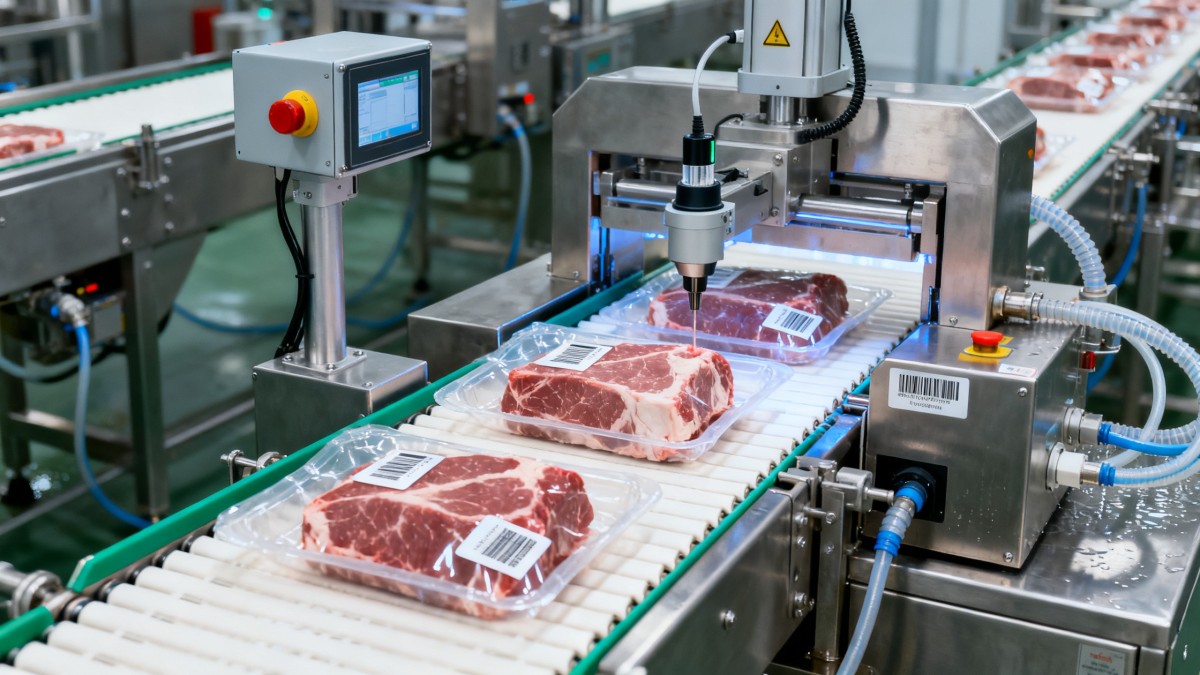
Food safety in meat processing now depends on a tightly managed chain of control points. These typically include raw material receiving, temperature management, foreign body detection, microbial risk reduction, packaging integrity, and outbound traceability. A modern plant may monitor 6 to 10 critical points per production line, with some high-throughput facilities reviewing data every 15 minutes or less. This shift is turning meat processing technology from a support function into a strategic operating system.
Stricter standards and shorter response windows
Regulatory scrutiny is increasing across slaughtering, deboning, grinding, marinating, and ready-to-cook segments. Buyers now expect more than end-product testing. They want preventive controls, digital records, and documented sanitation cycles. In practical terms, this means processors must detect deviations within minutes, not at the end of an 8-hour shift. If a cooling room rises above the specified range for 20 to 30 minutes, the incident must be recorded, assessed, and corrected before product release.
At the same time, export markets are becoming less tolerant of incomplete traceability. Batch-level visibility, supplier verification, and lot separation are often required for high-value channels. For executives, the cost of weak visibility is not only compliance exposure but also slower recall execution, lower buyer confidence, and reduced negotiating power.
The technologies shaping the next safety baseline
The most influential meat processing technology trends in 2026 are not isolated machines. They are integrated systems that connect inspection, sanitation, data capture, and decision-making. The following comparison shows how these tools contribute to risk reduction and operational control.
The key takeaway is that safety performance improves when technologies are linked. A vision camera without batch traceability has limited recall value. A sanitation program without digital verification creates documentation gaps. In 2026, processors gain the strongest results when contamination prevention, process control, and record integrity work as one coordinated framework.
Why manual systems are reaching their limit
Traditional paper logs and manually checked CCPs can still work in small operations, but they struggle in facilities running 2 shifts, multiple SKUs, and mixed domestic-export output. Human review is slower, records are fragmented, and corrective actions are harder to verify. When a plant handles 30 to 80 batches per day, even minor logging inconsistency can create major audit friction.
Common pain points in legacy operations
- Temperature records captured every 2 hours instead of continuously
- Sanitation completion verified by signature, not by cycle data or chemical confirmation
- Foreign body inspection performed at end of line only, without upstream controls
- Batch tracing dependent on spreadsheets that require manual reconciliation
- Audit preparation taking 1 to 3 days because data sits in separate systems
For senior management, these are not only operational inconveniences. They are risk multipliers that affect customer approval, export readiness, insurance exposure, and margin stability.
The Most Important Technology Trends to Watch Across Meat Processing Lines
The next wave of meat processing technology is defined by precision, interoperability, and verification. Decision-makers should focus less on isolated equipment claims and more on how each upgrade affects hazard control, throughput, labor dependence, and record quality over a 12- to 36-month horizon.
1. AI-assisted inspection is moving from premium to practical
Computer vision is now being applied to carcass grading, trim quality review, packaging seal inspection, and anomaly detection on conveyor lines. In 2026, the strongest value is not replacing every human inspector, but improving inspection consistency during repetitive, high-speed tasks. On lines running 1,000 to 4,000 kilograms per hour, small visual misses can accumulate into significant quality or safety deviations.
AI-supported systems can flag color shifts, irregular fat distribution, seal defects, and product positioning errors for operator review. This hybrid model helps reduce fatigue-related misses while maintaining human oversight where judgment is still essential.
2. Real-time traceability is becoming a trade requirement
Traceability is evolving from a compliance record into a commercial asset. Buyers increasingly want lot visibility from receiving to shipment, especially in chilled and frozen meat categories with complex sourcing structures. A robust system should map at least 5 core data points: supplier origin, intake date, production batch, packaging lot, and shipping destination.
For exporters, faster traceability means quicker response to import inquiries and lower disruption during hold-and-release events. For processors serving retail or foodservice clients, it supports account retention and stronger service-level credibility.
3. Smarter sanitation controls are reducing cross-contamination risk
Sanitation is no longer just a labor issue. It is a data issue. Digital sanitation tools now track rinse duration, chemical concentration, water temperature, line isolation status, and post-clean verification steps. In many facilities, the difference between a stable hygiene program and a recurring issue lies in controlling 4 variables: time, temperature, concentration, and confirmation.
Where product changeovers occur 2 to 6 times per day, cleaning consistency becomes critical. Automated prompts and lockout-linked verification can help reduce skipped steps and improve repeatability across shifts.
4. Predictive maintenance is protecting food safety, not just uptime
Equipment failure in meat plants often creates sanitation and contamination concerns before it creates visible downtime. A worn seal, unstable chiller, or poorly aligned slicer can affect product exposure, thermal control, or packaging integrity. Predictive maintenance tools that monitor vibration, temperature drift, motor load, or cycle frequency help teams intervene earlier, often during planned maintenance windows of 2 to 4 hours rather than emergency shutdowns.
How to Evaluate Meat Processing Technology for Investment and Procurement
Not every processor needs the same technology stack. A facility producing fresh cuts for domestic distribution has different control priorities than an exporter shipping frozen, value-added meat to multiple regions. The best procurement approach starts with risk mapping, then moves to integration, operator usability, and total cost over time.
Four decision filters for business leaders
- Identify the top 3 food safety risks by line, product type, and market channel.
- Check whether the new system integrates with existing ERP, MES, or quality records.
- Estimate labor impact across 6 to 12 months, including training and verification workload.
- Review service response, spare parts availability, and calibration support in the operating region.
This framework helps prevent a common mistake: buying advanced hardware without securing the data flow, maintenance support, and operating discipline needed to deliver actual safety outcomes.
A practical comparison of procurement priorities
The table below highlights how decision criteria may differ depending on plant profile and export ambition. This is useful when selecting meat processing technology under budget constraints or phased upgrade plans.
The most effective investments are often phased rather than all-at-once. Many processors begin with traceability and environmental monitoring, then add inspection automation and maintenance analytics once process discipline is stable.
Implementation risks that deserve attention
Technology alone does not solve weak execution. Projects often underperform when plants overlook sensor calibration, operator adoption, sanitation compatibility, or IT handover. A strong rollout usually includes 3 stages: site assessment, controlled pilot, and line-wide deployment. Each stage should have defined acceptance criteria, such as alarm accuracy, data completeness, and downtime impact.
Common implementation mistakes
- Installing inspection equipment without adjusting conveyor speed or product spacing
- Adding traceability software without standardizing batch naming rules
- Automating sanitation records while keeping inconsistent manual chemical dosing
- Failing to assign ownership for calibration checks every 7, 14, or 30 days
- Choosing vendors without regional service capability or spare part planning
What Business Decision-Makers Should Do Next
For executives in agriculture and food supply chains, the most valuable perspective is to treat meat processing technology as a market access tool as much as a plant efficiency tool. Better inspection, stronger traceability, and more disciplined sanitation directly influence customer trust, export readiness, and brand resilience. In 2026, the processors that move early will be better positioned to meet retailer expectations, pass buyer audits faster, and contain safety incidents with less operational shock.
A practical next step is to review one production line, one sanitation cycle, and one traceability workflow in the next 30 days. Identify where manual control still dominates, where data is delayed, and where verification cannot be demonstrated quickly. That diagnostic often reveals the clearest investment priorities.
GTIIN and TradeVantage support this process by helping global exporters, importers, and industrial stakeholders follow the technologies, supplier movements, and regulatory shifts shaping the meat sector. If your team is evaluating upgrades, entering new markets, or refining risk controls, now is the right time to get a tailored roadmap. Contact us today to explore customized solutions, compare market-ready options, and learn more about the meat processing technology trends that can strengthen your food safety strategy.
 When an export market analysis platform can validate demand in a new marketExport market analysis platform insights help validate new-market demand through buyer fit, regulations, logistics, competition, and profitable entry conditions.
 What is driving the beauty and personal care market in the USA?Beauty and personal care in USA is driven by targeted solutions, selective premiumization, digital discovery, clean-label trust, diverse needs, and compliance. Explore key growth opportunities.
 How trade flow monitoring reports reveal changing regional demandTrade flow monitoring reports reveal changing regional demand through import volumes, sourcing shifts, product mix, logistics signals, and regulatory trends. Explore actionable market insights.
 How international market intelligence for investors reduces market-entry riskInternational market intelligence for investors reduces market-entry risk by validating demand, regulations, logistics, and competition before capital is committed.
 How international sourcing intelligence helps identify supplier risk earlyInternational sourcing intelligence helps businesses spot supplier risks early, protect supply continuity, and make smarter global procurement decisions.
 How trade data aggregation analytics reveals emerging supplier marketsTrade data aggregation analytics reveals emerging supplier markets through export trends, input flows, logistics, and regulatory signals. Discover smarter sourcing insights.
 What industrial cluster monitoring in Vietnam reveals about site riskIndustrial cluster monitoring Vietnam reveals hidden site risks across labor, utilities, logistics, compliance, and supplier dependencies. Make smarter sourcing and expansion decisions.
 Food Technology Trends Reshaping Shelf Life, Safety, and Product InnovationFood technology is reshaping shelf life, safety, and innovation. Discover the trends helping food businesses cut risk, improve compliance, and unlock stronger global market growth.
 How electronics manufacturing services are changing with low-volume demandElectronics manufacturing services are evolving fast with low-volume demand. Learn how agile EMS partners improve flexibility, compliance, sourcing resilience, and speed to market.
 How Can Buyers Reduce Procurement Risks for Electronic Components?How to reduce procurement risks for electronic components: learn how buyers assess traceability, lead times, compliance, and supplier types to avoid costly sourcing mistakes.
 What Sourcing Intelligence India Reveals About Supplier Risk and Cost ShiftsSourcing intelligence India reveals hidden supplier risk, compliance gaps, logistics pressure, and real cost shifts—helping buyers compare vendors smarter and source with more confidence.
 Fashion Trends 2026: Which Materials, Colors, and Silhouettes Are Gaining Ground?Fashion trends 2026 spotlight tactile fabrics, mineral colors, and controlled volume. Explore the materials, shades, and silhouettes shaping smarter, more wearable style.
 Smart Device Market Outlook: Key Growth Drivers, Segments, and Business OpportunitiesSmart device market trends are shifting toward system value, industrial demand, and resilient supply chains. Explore key growth drivers, high-potential segments, and business opportunities.
 How Global Trade Intelligence Services Help B2B Firms Evaluate Markets and SuppliersGlobal trade intelligence services help B2B firms compare suppliers, assess market potential, and uncover compliance, logistics, and pricing risks before costly decisions are made.
 Manufacturing Sector Updates for Investors: What Signals Matter Most in 2025?Manufacturing sector updates for investors in 2025: track orders, margins, supply chains, regulation, and exports to spot resilient manufacturers and smarter investment signals.
 How Energy Market Intelligence Helps Businesses Track Price Risks and Demand ShiftsEnergy market intelligence helps businesses spot price risks, demand shifts, and supply pressure early—improving procurement, resilience, and faster strategic decisions.
 Precision Hardware Tools Market: Key Demand Drivers, Segments, and Growth OutlookPrecision hardware tools market trends are reshaping sourcing, compliance, and automation. Explore key demand drivers, segment shifts, regional supply patterns, and growth opportunities.
 How to Use Customs Import Data to Find Buyers, Track Competitors, and Spot Demand?Customs import data helps you find real buyers, track competitors, and spot demand shifts early. Learn practical ways to turn trade records into smarter global business decisions.
 Manufacturing Cost Analysis: 8 Cost Drivers That Change Your Unit PriceManufacturing cost analysis explained through 8 key cost drivers that impact unit price, supplier stability, and margins—learn how to compare quotes smarter and reduce sourcing risk.
 Industrial Market Realities: What Buyers Should Check Before Comparing Supplier QuotesIndustrial market realities shape every supplier quote beyond unit price. Learn what to check on compliance, lead times, logistics, and hidden cost risks before comparing offers.
 Beverage Production Line Planning: Key Equipment, Capacity, and Hygiene RequirementsBeverage production line planning made practical: discover key equipment, real capacity sizing, and hygiene requirements to improve efficiency, safety, and long-term plant performance.




















Global Trade Insights & Industry
Our mission is to empower global exporters and importers with data-driven insights that foster strategic growth.
Search News
Popular Tags
Industry Overview
The global commercial kitchen equipment market is projected to reach $112 billion by 2027. Driven by urbanization, the rise of e-commerce food delivery, and strict hygiene regulations.