

Food Packaging Machinery Selection Guide for Faster Changeovers
For project managers and engineering leads, selecting the right food packaging machinery can determine how quickly a line adapts to new products, formats, and production targets. This guide highlights the key factors behind faster changeovers, from modular design and automation compatibility to maintenance efficiency and operator usability, helping you reduce downtime and improve overall packaging performance.
Why faster changeovers matter in food packaging machinery projects
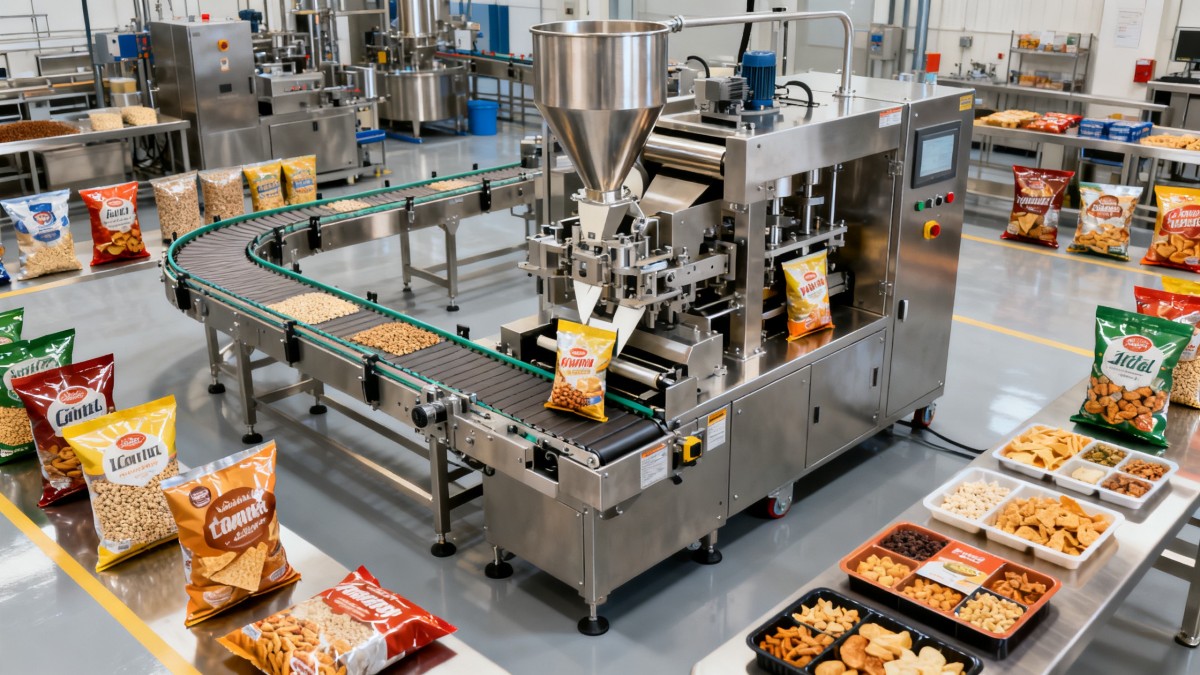
In the agriculture and food sector, changeover speed is no longer a secondary KPI. Product variety is expanding, seasonal demand shifts are sharper, and retailers often require shorter runs with more SKU variation. For a project manager, this means the selected food packaging machinery must support production flexibility without creating hidden cost centers in labor, sanitation, downtime, or revalidation.
A slow changeover affects more than output per hour. It delays order fulfillment, complicates labor planning, increases scrap during startup, and limits a plant’s ability to test new formats. On lines handling snacks, grains, frozen foods, dairy items, sauces, or ready meals, every additional minute spent on tool changes, film adjustments, or cleaning can disrupt the entire upstream and downstream schedule.
For engineering leads, the real issue is not just machine speed. It is the balance between mechanical simplicity, hygiene design, digital integration, and repeatable setup accuracy. A machine that runs fast in a brochure may still create long delays if format parts are complex, sensor recalibration is manual, or operators need constant technical support during every SKU switch.
- Frequent product changes require packaging systems that can move between bag sizes, tray dimensions, pouch structures, or labeling rules with minimal intervention.
- Food safety programs demand cleaning access and material compatibility, so changeover design must also support washdown or dry-clean requirements.
- Tight launch schedules mean project teams need predictable installation, commissioning, and operator ramp-up, not just attractive machine specifications.
How to evaluate food packaging machinery for quick format changes
When comparing food packaging machinery, project teams should focus on changeover architecture first and output speed second. Faster changeovers are usually the result of several coordinated design choices rather than a single feature. Machines built for high-mix production typically reduce manual adjustment points, simplify part replacement, and store recipes that let operators return to validated settings quickly.
Core selection criteria for engineering teams
- Assess how many tools are required for standard format changes. Fewer tools usually mean less skill dependency and lower setup time variability.
- Check whether rails, guides, sealing components, and infeed sections have scale indicators or servo-driven positioning for repeatable adjustment.
- Review HMI recipe management. Saved parameters for temperature, film tension, conveyor timing, and label placement can sharply reduce restart losses.
- Confirm sanitation accessibility. If guards, belts, or contact parts are difficult to remove and reinstall, cleaning-related changeovers will remain slow.
- Evaluate operator ergonomics. Awkward access points increase both setup time and the risk of incorrect assembly after product changes.
The table below helps compare food packaging machinery features that most directly influence changeover efficiency in food plants.
For most project teams, the best-performing food packaging machinery is the one that can be reset accurately by the actual shift crew, not just by vendor technicians during factory acceptance tests. That distinction matters when production plans change several times per week.
Which machine configurations suit different food packaging scenarios?
Not every line needs the same level of flexibility. A single-product export line for grains or powders may prioritize stable, repeatable production over complex multi-format capability. In contrast, a contract packer handling snacks, confectionery, frozen portions, or private-label launches may need food packaging machinery designed for frequent pouch, carton, or tray changes.
Common application scenarios
- Dry food lines: cereals, rice, flour, beans, pet food, and seeds often require quick transitions between bag sizes and film structures.
- Chilled and frozen lines: ready meals, seafood, meat portions, and vegetables need packaging systems that combine washdown readiness with fast recipe switching.
- Liquid and semi-liquid lines: sauces, dressings, dairy products, and purees usually place extra emphasis on CIP compatibility, fill accuracy, and nozzle change simplicity.
- Retail diversification lines: plants serving multiple retailers often need rapid label, coding, and case-packing changes in addition to primary pack adjustments.
The following comparison table can help engineering teams match food packaging machinery configurations with production reality instead of buying flexibility that will never be used.
This type of scenario mapping helps avoid a common procurement mistake: selecting food packaging machinery solely on output capacity while ignoring product mix, hygiene routines, and actual labor capability on the plant floor.
What technical details should project managers verify before purchase?
A well-structured technical review can prevent expensive delays during installation and startup. Project managers should request documentation that clarifies not only machine capacity, but also how changeovers are performed, what parts are replaced, and which steps require specialist support. In food packaging machinery projects, technical omissions often surface only after FAT or during the first commercial run.
Key technical checkpoints
- Format range: minimum and maximum bag, tray, carton, or pouch dimensions supported without major retrofit.
- Material compatibility: whether the machine handles mono-material films, recyclable structures, laminated materials, paper-based packs, or vacuum formats.
- Utility requirements: compressed air, power load, vacuum supply, sealing temperature range, and environmental limits.
- Integration readiness: compatibility with weighers, metal detectors, X-ray systems, checkweighers, printers, vision inspection, conveyors, and MES or ERP data exchange.
- Maintenance design: spare part accessibility, lubrication points, wear-part replacement intervals, and diagnostic tools for troubleshooting.
It is also useful to ask suppliers for a step-by-step changeover sequence. A line may be advertised as quick-change, but the practical question is how many minutes are spent on cleaning, how many on replacing tooling, and how many on confirming weight, seal integrity, code accuracy, and pack appearance after restart.
Questions that reveal real performance
- How long does a standard size change take when performed by trained plant operators rather than vendor engineers?
- Which components must be removed, cleaned, recalibrated, or revalidated after allergen or product-family changes?
- Are spare format parts shared across multiple sizes, or does each SKU require dedicated tooling storage?
- What alarms or guided setup prompts are available to reduce incorrect adjustments during shift change?
How to compare cost, downtime, and flexibility without overspending
The lowest quoted price for food packaging machinery is rarely the lowest operating cost. Project managers need a broader model that includes downtime exposure, spare parts, training time, utility consumption, cleaning effort, and the cost of startup waste. In many food plants, a machine with a higher upfront price delivers a better payback because it reduces line stoppages across dozens of annual format changes.
At the same time, there is no value in buying maximum automation if the plant runs long campaigns with only occasional pack modifications. The decision should reflect the real production profile, future SKU roadmap, and the organization’s technical maturity.
Use the table below to build a more balanced financial view when selecting food packaging machinery.
For budget-limited projects, a practical compromise is to invest in core changeover enablers first: recipe management, tool-less access, modular infeed sections, and integration-ready controls. These features often deliver stronger operational returns than paying only for higher top speed.
Compliance, hygiene, and implementation risks that are often overlooked
In food processing environments, machinery selection cannot be separated from hygiene and compliance planning. A technically flexible system can still become a poor investment if cleaning protocols are difficult, product contact areas are hard to inspect, or documentation does not support internal quality procedures. For project leaders, these issues directly influence approval timelines and post-installation reliability.
Areas to review during specification and vendor discussions
- Food contact materials and surface finish suitability for the intended product category and cleaning method.
- Machine design features that reduce debris traps, moisture retention, or difficult-to-access inspection zones.
- Support for traceability, date coding, batch identification, and verification steps required by customer audits or export documentation.
- Documentation quality, including manuals, spare parts lists, electrical drawings, and maintenance procedures that operators can actually use.
Where relevant, teams may also reference common frameworks such as HACCP-aligned risk thinking, hygienic design principles, and general electrical or machinery safety expectations used in their target markets. The point is not to overload the procurement file with paperwork, but to ensure that the selected food packaging machinery supports practical compliance rather than adding friction during commissioning.
Typical implementation mistakes
- Underestimating the space needed for format parts storage, operator access, and safe cleaning during line stoppages.
- Approving the machine before confirming integration with printers, inspection devices, or upstream filling equipment.
- Assuming a stated changeover time includes sanitation, verification, and quality release when it only reflects mechanical adjustment.
- Training only maintenance staff while leaving shift operators without structured changeover instruction.
FAQ: practical questions about food packaging machinery selection
How should I shortlist food packaging machinery for a multi-SKU food plant?
Start with product mix, pack formats, sanitation routine, and annual changeover frequency. Then compare machines based on tool-less adjustments, recipe storage, cleaning access, and integration with coding or inspection systems. For multi-SKU environments, a shorter and more repeatable changeover often creates more value than chasing the highest theoretical throughput.
What is the most common mistake during food packaging machinery procurement?
Many teams compare only purchase price and rated speed. That approach misses the real cost drivers: line stoppage, startup rejects, operator training burden, sanitation downtime, and the number of format parts required for each SKU. A more reliable decision comes from looking at total operating impact across the full production calendar.
Which food packaging machinery features help the most with faster changeovers?
The strongest contributors are usually servo-assisted positioning, digital recipe recall, quick-release product contact parts, accessible guarding, and clearly marked adjustment points. In allergen-sensitive or washdown-heavy applications, hygienic design can be just as important as mechanical automation because cleaning time may dominate the total changeover window.
How long is a realistic implementation cycle for a packaging line upgrade?
The timeline varies with customization level, factory readiness, and integration scope. Project managers should separate lead time into engineering review, manufacturing, FAT, shipment, installation, commissioning, and operator training. It is also wise to include time for packaging material trials and quality validation before full commercial release.
Why work with GTIIN and TradeVantage when evaluating packaging projects?
For project managers and engineering decision-makers, the challenge is not only finding food packaging machinery. It is finding reliable market intelligence, comparable supplier information, and sector-specific insight that can support a faster and safer decision. GTIIN and TradeVantage help bridge that gap by aggregating B2B intelligence across global supply chains and translating industry movement into practical decision support for exporters, importers, and industrial buyers.
Because the agriculture and food sector moves across regions, standards, and retail expectations, machinery decisions benefit from broader context. TradeVantage tracks industrial developments, packaging trends, and market shifts across multiple sectors, giving procurement and project teams a stronger basis for planning equipment upgrades, supplier outreach, and competitive positioning.
What you can discuss with us
- Packaging line parameters, including product type, pack format, throughput targets, and sanitation conditions.
- Food packaging machinery selection logic for new projects, upgrades, or export-oriented production lines.
- Lead time planning, supplier comparison, and implementation considerations for high-mix or retailer-driven operations.
- Customization topics such as coding integration, inspection systems, traceability workflows, and format expansion readiness.
- Questions around documentation, compliance expectations, sample evaluation paths, and quotation communication.
If your team is reviewing food packaging machinery for faster changeovers, use GTIIN and TradeVantage as a practical intelligence partner. Share your product category, desired formats, expected SKU count, and project timeline to discuss selection priorities, delivery considerations, and the most relevant supplier and market information for your next packaging investment.
 When an export market analysis platform can validate demand in a new marketExport market analysis platform insights help validate new-market demand through buyer fit, regulations, logistics, competition, and profitable entry conditions.
 What is driving the beauty and personal care market in the USA?Beauty and personal care in USA is driven by targeted solutions, selective premiumization, digital discovery, clean-label trust, diverse needs, and compliance. Explore key growth opportunities.
 How trade flow monitoring reports reveal changing regional demandTrade flow monitoring reports reveal changing regional demand through import volumes, sourcing shifts, product mix, logistics signals, and regulatory trends. Explore actionable market insights.
 How international market intelligence for investors reduces market-entry riskInternational market intelligence for investors reduces market-entry risk by validating demand, regulations, logistics, and competition before capital is committed.
 How international sourcing intelligence helps identify supplier risk earlyInternational sourcing intelligence helps businesses spot supplier risks early, protect supply continuity, and make smarter global procurement decisions.
 How trade data aggregation analytics reveals emerging supplier marketsTrade data aggregation analytics reveals emerging supplier markets through export trends, input flows, logistics, and regulatory signals. Discover smarter sourcing insights.
 What industrial cluster monitoring in Vietnam reveals about site riskIndustrial cluster monitoring Vietnam reveals hidden site risks across labor, utilities, logistics, compliance, and supplier dependencies. Make smarter sourcing and expansion decisions.
 Food Technology Trends Reshaping Shelf Life, Safety, and Product InnovationFood technology is reshaping shelf life, safety, and innovation. Discover the trends helping food businesses cut risk, improve compliance, and unlock stronger global market growth.
 How electronics manufacturing services are changing with low-volume demandElectronics manufacturing services are evolving fast with low-volume demand. Learn how agile EMS partners improve flexibility, compliance, sourcing resilience, and speed to market.
 How Can Buyers Reduce Procurement Risks for Electronic Components?How to reduce procurement risks for electronic components: learn how buyers assess traceability, lead times, compliance, and supplier types to avoid costly sourcing mistakes.
 What Sourcing Intelligence India Reveals About Supplier Risk and Cost ShiftsSourcing intelligence India reveals hidden supplier risk, compliance gaps, logistics pressure, and real cost shifts—helping buyers compare vendors smarter and source with more confidence.
 Fashion Trends 2026: Which Materials, Colors, and Silhouettes Are Gaining Ground?Fashion trends 2026 spotlight tactile fabrics, mineral colors, and controlled volume. Explore the materials, shades, and silhouettes shaping smarter, more wearable style.
 Smart Device Market Outlook: Key Growth Drivers, Segments, and Business OpportunitiesSmart device market trends are shifting toward system value, industrial demand, and resilient supply chains. Explore key growth drivers, high-potential segments, and business opportunities.
 How Global Trade Intelligence Services Help B2B Firms Evaluate Markets and SuppliersGlobal trade intelligence services help B2B firms compare suppliers, assess market potential, and uncover compliance, logistics, and pricing risks before costly decisions are made.
 Manufacturing Sector Updates for Investors: What Signals Matter Most in 2025?Manufacturing sector updates for investors in 2025: track orders, margins, supply chains, regulation, and exports to spot resilient manufacturers and smarter investment signals.
 How Energy Market Intelligence Helps Businesses Track Price Risks and Demand ShiftsEnergy market intelligence helps businesses spot price risks, demand shifts, and supply pressure early—improving procurement, resilience, and faster strategic decisions.
 Precision Hardware Tools Market: Key Demand Drivers, Segments, and Growth OutlookPrecision hardware tools market trends are reshaping sourcing, compliance, and automation. Explore key demand drivers, segment shifts, regional supply patterns, and growth opportunities.
 How to Use Customs Import Data to Find Buyers, Track Competitors, and Spot Demand?Customs import data helps you find real buyers, track competitors, and spot demand shifts early. Learn practical ways to turn trade records into smarter global business decisions.
 Manufacturing Cost Analysis: 8 Cost Drivers That Change Your Unit PriceManufacturing cost analysis explained through 8 key cost drivers that impact unit price, supplier stability, and margins—learn how to compare quotes smarter and reduce sourcing risk.
 Industrial Market Realities: What Buyers Should Check Before Comparing Supplier QuotesIndustrial market realities shape every supplier quote beyond unit price. Learn what to check on compliance, lead times, logistics, and hidden cost risks before comparing offers.
 Beverage Production Line Planning: Key Equipment, Capacity, and Hygiene RequirementsBeverage production line planning made practical: discover key equipment, real capacity sizing, and hygiene requirements to improve efficiency, safety, and long-term plant performance.



















Global Trade Insights & Industry
Our mission is to empower global exporters and importers with data-driven insights that foster strategic growth.
Search News
Popular Tags
Industry Overview
The global commercial kitchen equipment market is projected to reach $112 billion by 2027. Driven by urbanization, the rise of e-commerce food delivery, and strict hygiene regulations.