

Vertical farming systems and energy bills: the hidden gap
Vertical farming systems promise higher yields, tighter supply control, and year-round production, yet energy costs often expose a critical gap between planning and profitability. In controlled-environment agriculture, the difference between a viable facility and a struggling one is often not crop science alone, but how power demand behaves across lighting, dehumidification, cooling, air movement, and automation. When utility bills rise faster than modeled output, project returns weaken, expansion slows, and production pricing loses competitiveness.
For agriculture and food operations evaluating indoor growing infrastructure, the key question is not whether vertical farming systems can grow crops efficiently, but under which operating scenarios they can do so without creating a hidden energy burden. The most useful approach is scenario-based: identify the crop profile, climate, production schedule, and facility design assumptions first, then test whether the energy model still holds under real-world conditions.
When vertical farming systems look efficient on paper but fail in live operation
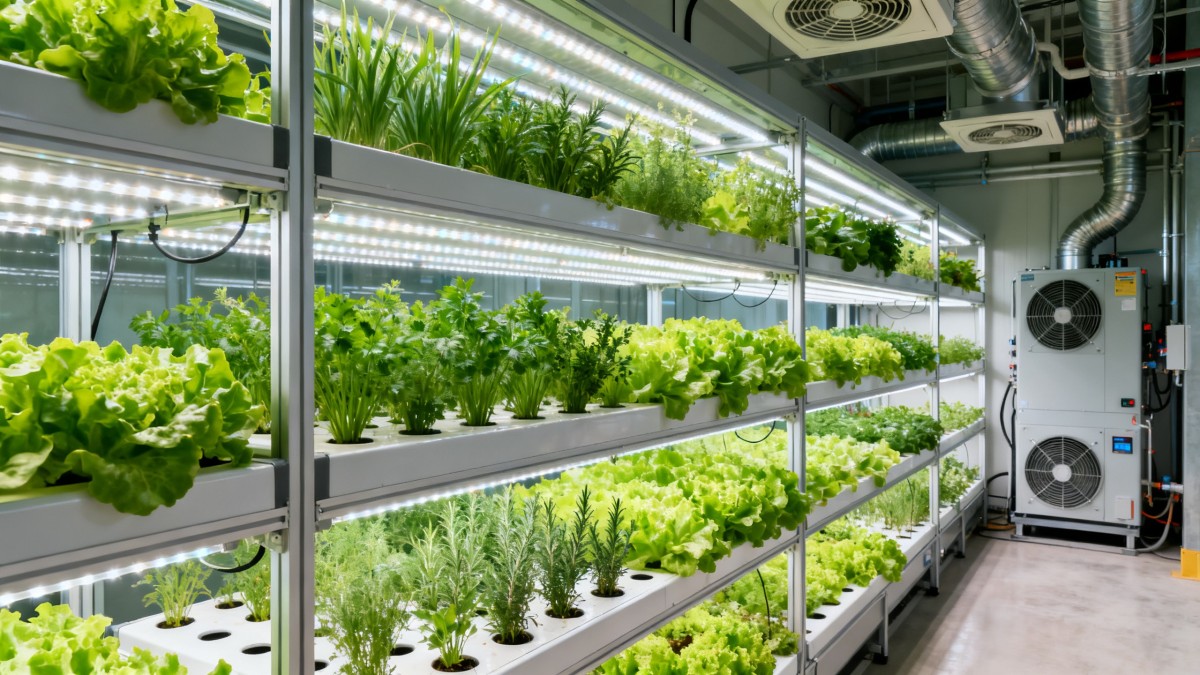
The hidden gap in vertical farming systems usually appears during transition from concept design to full-scale operation. Early financial models may focus on yield per square meter and premium pricing, while underestimating the combined load from LEDs, HVAC, pumps, sensors, and backup systems. A layout that seems compact and productive can concentrate heat and moisture, forcing mechanical systems to work harder than expected.
This matters especially in agriculture and food supply chains where margin stability is critical. Leafy greens, herbs, microgreens, and propagation crops each impose different operating demands. A farm designed for one crop mix may become energy-inefficient after a change in market demand, photoperiod, or production density. In practice, vertical farming systems should be judged less by headline yield and more by how resilient their energy profile remains when conditions change.
Scenario background: why crop, climate, and production targets change the energy equation
Not all vertical farming systems face the same utility risk. A cool-climate facility growing baby leaves with moderate light intensity behaves very differently from a humid-region site producing basil under aggressive lighting schedules. Energy costs rise or fall depending on three linked variables: how much light crops need, how much heat and moisture the room retains, and how much environmental correction equipment must compensate.
That is why scenario judgment is more valuable than generic benchmarks. Two farms with similar shelf area can report very different electricity bills if one runs high-density racks with limited airflow while the other integrates airflow zoning, heat recovery, and staged humidity control. In other words, vertical farming systems should be assessed as dynamic operating environments, not static equipment packages.
Scenario 1: leafy green production with stable demand and moderate light intensity
This is often the most favorable scenario for vertical farming systems. Lettuce, arugula, and similar leafy greens typically require lower light intensity than fruiting crops, shorter cycles, and relatively predictable quality targets. In this setting, energy performance depends heavily on balancing LED efficacy with airflow and moisture removal. If dehumidification is undersized, the operation may lose the energy savings gained from efficient lighting.
The core judgment point here is whether the facility can maintain target climate conditions without overcooling. Many vertical farming systems remove latent heat and moisture inefficiently by forcing cooling systems to compensate for a humidity problem. A better-fit design uses irrigation control, canopy spacing, and air distribution to reduce the HVAC burden before it appears on the utility bill.
Scenario 2: herb and specialty crop production with higher quality sensitivity
Basil, mint, cilantro, and premium culinary herbs create a more complex energy picture. These crops often require tighter environmental control to protect aroma, texture, and visual quality. In vertical farming systems serving fresh food channels, small deviations in temperature, humidity, or light can reduce shelf life and saleable output, which means energy use must be measured against marketable yield, not biological growth alone.
The key question is whether quality protection justifies the energy premium. If a project depends on long photoperiods and strict moisture management, the design should include variable-speed controls, zone-based climate response, and operational data tracking. Otherwise, vertical farming systems in this scenario may produce excellent crops but poor economics due to hidden correction loads and post-harvest losses.
Scenario 3: hot or humid regions where HVAC becomes the real bottleneck
In warm climates, the energy challenge of vertical farming systems often shifts from lighting to cooling and dehumidification. Even highly efficient LEDs introduce heat into enclosed rooms, and plant transpiration adds a constant humidity load. Where ambient conditions are already hot and wet, mechanical systems must fight both internal and external pressure, driving up peak demand and total electricity consumption.
The judgment point in this scenario is not simply installed capacity, but seasonal performance. A system that performs well in a mild month may become uneconomical in summer if envelope insulation, vapor control, and air sealing were treated as secondary issues. For vertical farming systems in these regions, building physics is part of agricultural performance. Weak envelope design can erase gains from advanced cultivation technology.
Scenario 4: rapid scale-up projects where utilization assumptions are too optimistic
Some vertical farming systems are built around ambitious growth targets, with the expectation that additional racks, crop zones, or production shifts will improve unit economics over time. The risk is that fixed energy infrastructure is sized for future output, while real utilization remains lower for longer than expected. In such cases, baseline power consumption spreads across insufficient production volume, raising cost per kilogram.
A practical judgment point is ramp-up flexibility. Facilities that can isolate zones, stage equipment loads, and align climate control with actual occupancy are less exposed. Vertical farming systems designed without modular energy logic often carry hidden overhead in early operations, making scale-up appear more expensive than the business case suggested.
How different vertical farming systems create different energy needs
Scenario-fit recommendations to reduce the hidden energy gap
- Model vertical farming systems with crop-specific light recipes instead of generic average lighting assumptions.
- Separate sensible and latent load analysis so humidity control does not remain hidden inside broad HVAC estimates.
- Evaluate utility tariffs, peak-demand penalties, and seasonal power pricing before fixing the operating schedule.
- Use zoning, staged commissioning, and modular climate control for scale-up projects where occupancy will rise gradually.
- Track kWh per kilogram, saleable yield, and climate stability together; one metric alone can hide performance issues.
- Treat envelope insulation, vapor barriers, and infiltration control as core design elements of vertical farming systems, especially in challenging climates.
Common misjudgments that make vertical farming systems look better than they are
A frequent mistake is evaluating vertical farming systems through equipment efficiency claims alone. Efficient LEDs matter, but they do not eliminate the downstream energy needed to manage heat and transpiration. Another common error is assuming full production utilization from month one, which hides the effect of fixed loads during commissioning and market ramp-up.
There is also a tendency to benchmark one farm against another without matching crop type, climate, and operating strategy. A low energy figure from one project may not transfer if the photoperiod, harvest standard, local tariff, or humidity profile is different. In agriculture and food operations, relevant benchmarking must be contextual. Vertical farming systems only become comparable when the production scenario is comparable as well.
Finally, some teams underweight maintenance and controls performance. Dirty coils, drifting sensors, poor calibration, or uneven airflow can gradually push a facility away from its design point. The result is not a sudden failure, but a slow increase in energy intensity that is easy to miss until margins tighten.
What to do next before approving or expanding a project
Before committing capital, test vertical farming systems against realistic operating scenarios rather than idealized design conditions. Build an energy review around crop mix, local weather patterns, tariff structure, utilization ramp, and saleable output assumptions. Then compare the modeled case with a stress case that includes seasonal extremes, occupancy delays, and stricter quality requirements.
This is where reliable industry intelligence becomes valuable. GTIIN and TradeVantage support global agriculture and food decision-making by connecting operational trends, facility economics, and supply-chain signals across markets. For businesses tracking controlled-environment agriculture, a stronger view of how vertical farming systems perform under different scenarios can improve planning accuracy, reduce hidden cost exposure, and strengthen long-term competitiveness in fast-changing food production networks.
 How an industrial trade intelligence dashboard can identify new supplier marketsDiscover how an industrial trade intelligence dashboard helps identify new supplier markets by comparing capacity, landed cost, logistics resilience, and compliance risk.
 Which global market entry barriers should exporters assess first?Global market entry barriers exporters should assess first: tariffs, compliance, buyer qualification, logistics, and payment risk. Build a practical strategy for confident market entry.
 How trade data aggregation analytics can reveal emerging supplier marketsTrade data aggregation analytics reveals emerging supplier markets by connecting trade flows, capacity signals, logistics, and compliance insights for smarter sourcing decisions.
 When an export market analysis platform can validate demand in a new marketExport market analysis platform insights help validate new-market demand through buyer fit, regulations, logistics, competition, and profitable entry conditions.
 What is driving the beauty and personal care market in the USA?Beauty and personal care in USA is driven by targeted solutions, selective premiumization, digital discovery, clean-label trust, diverse needs, and compliance. Explore key growth opportunities.
 How trade flow monitoring reports reveal changing regional demandTrade flow monitoring reports reveal changing regional demand through import volumes, sourcing shifts, product mix, logistics signals, and regulatory trends. Explore actionable market insights.
 How international market intelligence for investors reduces market-entry riskInternational market intelligence for investors reduces market-entry risk by validating demand, regulations, logistics, and competition before capital is committed.
 How international sourcing intelligence helps identify supplier risk earlyInternational sourcing intelligence helps businesses spot supplier risks early, protect supply continuity, and make smarter global procurement decisions.
 How trade data aggregation analytics reveals emerging supplier marketsTrade data aggregation analytics reveals emerging supplier markets through export trends, input flows, logistics, and regulatory signals. Discover smarter sourcing insights.
 What industrial cluster monitoring in Vietnam reveals about site riskIndustrial cluster monitoring Vietnam reveals hidden site risks across labor, utilities, logistics, compliance, and supplier dependencies. Make smarter sourcing and expansion decisions.
 Food Technology Trends Reshaping Shelf Life, Safety, and Product InnovationFood technology is reshaping shelf life, safety, and innovation. Discover the trends helping food businesses cut risk, improve compliance, and unlock stronger global market growth.
 How electronics manufacturing services are changing with low-volume demandElectronics manufacturing services are evolving fast with low-volume demand. Learn how agile EMS partners improve flexibility, compliance, sourcing resilience, and speed to market.
 How Can Buyers Reduce Procurement Risks for Electronic Components?How to reduce procurement risks for electronic components: learn how buyers assess traceability, lead times, compliance, and supplier types to avoid costly sourcing mistakes.
 What Sourcing Intelligence India Reveals About Supplier Risk and Cost ShiftsSourcing intelligence India reveals hidden supplier risk, compliance gaps, logistics pressure, and real cost shifts—helping buyers compare vendors smarter and source with more confidence.
 Fashion Trends 2026: Which Materials, Colors, and Silhouettes Are Gaining Ground?Fashion trends 2026 spotlight tactile fabrics, mineral colors, and controlled volume. Explore the materials, shades, and silhouettes shaping smarter, more wearable style.
 Smart Device Market Outlook: Key Growth Drivers, Segments, and Business OpportunitiesSmart device market trends are shifting toward system value, industrial demand, and resilient supply chains. Explore key growth drivers, high-potential segments, and business opportunities.
 How Global Trade Intelligence Services Help B2B Firms Evaluate Markets and SuppliersGlobal trade intelligence services help B2B firms compare suppliers, assess market potential, and uncover compliance, logistics, and pricing risks before costly decisions are made.
 Manufacturing Sector Updates for Investors: What Signals Matter Most in 2025?Manufacturing sector updates for investors in 2025: track orders, margins, supply chains, regulation, and exports to spot resilient manufacturers and smarter investment signals.
 How Energy Market Intelligence Helps Businesses Track Price Risks and Demand ShiftsEnergy market intelligence helps businesses spot price risks, demand shifts, and supply pressure early—improving procurement, resilience, and faster strategic decisions.
 Precision Hardware Tools Market: Key Demand Drivers, Segments, and Growth OutlookPrecision hardware tools market trends are reshaping sourcing, compliance, and automation. Explore key demand drivers, segment shifts, regional supply patterns, and growth opportunities.
 How to Use Customs Import Data to Find Buyers, Track Competitors, and Spot Demand?Customs import data helps you find real buyers, track competitors, and spot demand shifts early. Learn practical ways to turn trade records into smarter global business decisions.





















Global Trade Insights & Industry
Our mission is to empower global exporters and importers with data-driven insights that foster strategic growth.
Search News
Popular Tags
Industry Overview
The global commercial kitchen equipment market is projected to reach $112 billion by 2027. Driven by urbanization, the rise of e-commerce food delivery, and strict hygiene regulations.