

When agricultural machinery wholesale beats local sourcing
For organizations balancing equipment uptime, seasonal deadlines, and capital discipline, agricultural machinery wholesale can offer a more strategic path than local sourcing alone. While nearby dealers may provide convenience for urgent purchases, wholesale channels often deliver stronger pricing, wider model availability, and better alignment with fleet standardization goals. In agriculture and food supply operations, where machinery performance directly affects yield quality, harvest timing, storage efficiency, and logistics continuity, the sourcing model matters as much as the machine itself.
The decision is not simply about buying at a lower price. It is about comparing total landed cost, service access, spare parts planning, supplier resilience, compliance requirements, and long-term operating consistency. This article answers the key questions behind agricultural machinery wholesale, helping determine when wholesale outperforms local sourcing and how to evaluate the trade-offs with confidence.
What does agricultural machinery wholesale really mean in sourcing decisions?
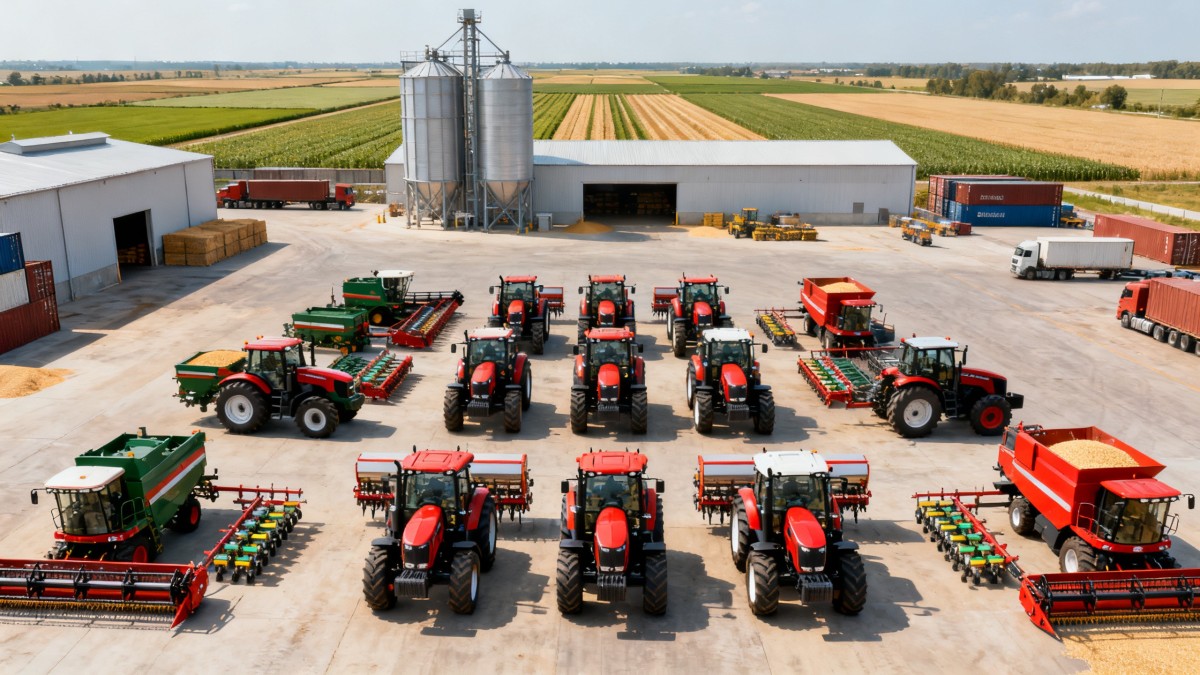
Agricultural machinery wholesale refers to procuring farm equipment through bulk, multi-unit, distributor, importer, or factory-connected channels rather than relying only on one local retail outlet. It may involve tractors, seeders, tillage tools, harvest equipment, irrigation systems, balers, sprayers, post-harvest handling machinery, or attached implements purchased in coordinated volumes or under structured supply agreements.
In practice, wholesale sourcing is less about volume for its own sake and more about commercial structure. The buyer gains access to negotiated pricing tiers, configurable specifications, repeat-order consistency, and broader sourcing intelligence across regions. This is especially useful when operations need multiple units, replacement cycles, mixed equipment categories, or standardized fleets across several sites.
Local sourcing, by contrast, usually prioritizes immediate availability and physical proximity. That can be valuable for emergency replacement. However, local channels may have narrower inventory, less flexibility on technical options, and higher per-unit pricing when compared with agricultural machinery wholesale programs linked to larger supply networks.
When does agricultural machinery wholesale beat local sourcing on cost?
The strongest cost advantage appears when equipment demand is planned rather than reactive. If purchases can be consolidated before planting, irrigation expansion, or harvest preparation, agricultural machinery wholesale often lowers unit price and creates room for favorable payment terms, bundled spare parts, or reduced accessory markups.
A realistic comparison should include more than the quoted machine price. It should measure:
- Base equipment cost per unit
- Freight, insurance, duties, and customs handling
- Dealer setup, commissioning, and operator training
- Spare parts package value
- Warranty scope and claims process
- Downtime risk from delayed parts replacement
- Residual value and resale market acceptance
Wholesale wins when the landed cost stays competitive after logistics and compliance are added, and when standardization reduces maintenance complexity over time. For example, buying ten compatible machines with shared components can significantly cut technician training time and spare parts inventory compared with purchasing mixed models from separate local sources.
Local sourcing may still be more economical for one-off specialty items, last-minute replacements, or remote environments where nearby service support is indispensable. The key is to compare lifecycle cost, not sticker price alone.
Which agricultural and food-sector scenarios benefit most from wholesale procurement?
Not every buying situation needs agricultural machinery wholesale, but several scenarios consistently favor it. The first is fleet expansion or renewal. When multiple tractors, planters, sprayers, or grain handling units are being upgraded within one budget cycle, wholesale sourcing improves leverage and specification consistency.
The second is seasonal sensitivity. In grain, fruit, vegetable, feed, and post-harvest operations, machinery downtime can lead to quality deterioration, delayed field work, labor inefficiency, and missed market windows. Wholesale agreements with preplanned parts support reduce this exposure.
The third is cross-border expansion. Agricultural enterprises operating across regions often need machinery that meets different terrain conditions, crop requirements, power standards, or emissions regulations. Agricultural machinery wholesale gives access to larger supplier portfolios and comparative intelligence that local channels may not provide.
Other strong-fit applications include:
- Contract farming networks seeking equipment uniformity
- Food processing supply chains coordinating harvest and transport timing
- Agri-distribution businesses building resale inventory
- Large irrigation or land development projects requiring bundled machinery sets
How should wholesale and local sourcing be compared beyond price?
A smart comparison framework weighs operational fit, support structure, and strategic flexibility. Agricultural machinery wholesale can outperform local sourcing when the supplier can provide documentation, stable lead times, technical support, and replacement parts visibility. Without these, a low purchase price may create expensive interruptions later.
A balanced procurement strategy may combine both: wholesale for planned core equipment and local sourcing for emergency service items, fast-wear parts, or niche attachments with highly local usage patterns.
What risks should be checked before choosing agricultural machinery wholesale?
The biggest mistake is assuming every wholesale offer is automatically better. Agricultural machinery wholesale requires disciplined supplier verification and a detailed review of operating conditions. A machine that is inexpensive on paper may be unsuitable for local soil conditions, climate stress, operator familiarity, fuel quality, or legal standards.
Common risk points include unclear warranty responsibility, insufficient spare parts availability, inconsistent serial documentation, incomplete technical manuals, and uncertain compliance with local safety or emissions requirements. In addition, shipment delays can be costly when machinery is needed for a short planting or harvesting window.
A practical pre-order checklist should cover:
- Confirmed supplier history, certifications, and export records
- Compatibility with target crop systems and field conditions
- Spare parts list with replenishment timeline
- Installation, commissioning, and operator training plan
- Clear Incoterms, payment stages, and inspection milestones
- Warranty claim path and service contact structure
Reliable information sources matter here. Platforms such as GTIIN and TradeVantage add value by aggregating supplier visibility, sector trends, regional trade developments, and industrial signals that support better due diligence. In a market where equipment investment directly affects agricultural output and food-chain reliability, verified intelligence reduces sourcing blind spots.
How can buyers decide if agricultural machinery wholesale is the right next step?
A clear decision starts with timing, scale, and service reality. Agricultural machinery wholesale is usually the better route when demand is predictable, order size is meaningful, technical specifications can be standardized, and after-sales support can be planned in advance. It becomes even more compelling when broader supplier comparison reveals pricing or availability gaps in the local market.
Use this simple decision guide:
When these conditions are not present, a local purchase may remain the stronger option. The point is not to force one model over the other, but to identify the sourcing structure that best protects productivity, cash flow, and equipment reliability.
In summary, agricultural machinery wholesale beats local sourcing when the purchase is planned, scale matters, standardization creates value, and supplier support can be verified. For agriculture and food-sector operations, this approach can strengthen cost control, improve machinery availability, and support more resilient long-term asset planning. The most effective next step is to build a comparison sheet that includes landed cost, support capability, lead time, and spare parts readiness—then validate supplier claims through credible market intelligence channels such as GTIIN and TradeVantage before placing the order.
 How an industrial trade intelligence dashboard can identify new supplier marketsDiscover how an industrial trade intelligence dashboard helps identify new supplier markets by comparing capacity, landed cost, logistics resilience, and compliance risk.
 Which global market entry barriers should exporters assess first?Global market entry barriers exporters should assess first: tariffs, compliance, buyer qualification, logistics, and payment risk. Build a practical strategy for confident market entry.
 How trade data aggregation analytics can reveal emerging supplier marketsTrade data aggregation analytics reveals emerging supplier markets by connecting trade flows, capacity signals, logistics, and compliance insights for smarter sourcing decisions.
 When an export market analysis platform can validate demand in a new marketExport market analysis platform insights help validate new-market demand through buyer fit, regulations, logistics, competition, and profitable entry conditions.
 What is driving the beauty and personal care market in the USA?Beauty and personal care in USA is driven by targeted solutions, selective premiumization, digital discovery, clean-label trust, diverse needs, and compliance. Explore key growth opportunities.
 How trade flow monitoring reports reveal changing regional demandTrade flow monitoring reports reveal changing regional demand through import volumes, sourcing shifts, product mix, logistics signals, and regulatory trends. Explore actionable market insights.
 How international market intelligence for investors reduces market-entry riskInternational market intelligence for investors reduces market-entry risk by validating demand, regulations, logistics, and competition before capital is committed.
 How international sourcing intelligence helps identify supplier risk earlyInternational sourcing intelligence helps businesses spot supplier risks early, protect supply continuity, and make smarter global procurement decisions.
 How trade data aggregation analytics reveals emerging supplier marketsTrade data aggregation analytics reveals emerging supplier markets through export trends, input flows, logistics, and regulatory signals. Discover smarter sourcing insights.
 What industrial cluster monitoring in Vietnam reveals about site riskIndustrial cluster monitoring Vietnam reveals hidden site risks across labor, utilities, logistics, compliance, and supplier dependencies. Make smarter sourcing and expansion decisions.
 Food Technology Trends Reshaping Shelf Life, Safety, and Product InnovationFood technology is reshaping shelf life, safety, and innovation. Discover the trends helping food businesses cut risk, improve compliance, and unlock stronger global market growth.
 How electronics manufacturing services are changing with low-volume demandElectronics manufacturing services are evolving fast with low-volume demand. Learn how agile EMS partners improve flexibility, compliance, sourcing resilience, and speed to market.
 How Can Buyers Reduce Procurement Risks for Electronic Components?How to reduce procurement risks for electronic components: learn how buyers assess traceability, lead times, compliance, and supplier types to avoid costly sourcing mistakes.
 What Sourcing Intelligence India Reveals About Supplier Risk and Cost ShiftsSourcing intelligence India reveals hidden supplier risk, compliance gaps, logistics pressure, and real cost shifts—helping buyers compare vendors smarter and source with more confidence.
 Fashion Trends 2026: Which Materials, Colors, and Silhouettes Are Gaining Ground?Fashion trends 2026 spotlight tactile fabrics, mineral colors, and controlled volume. Explore the materials, shades, and silhouettes shaping smarter, more wearable style.
 Smart Device Market Outlook: Key Growth Drivers, Segments, and Business OpportunitiesSmart device market trends are shifting toward system value, industrial demand, and resilient supply chains. Explore key growth drivers, high-potential segments, and business opportunities.
 How Global Trade Intelligence Services Help B2B Firms Evaluate Markets and SuppliersGlobal trade intelligence services help B2B firms compare suppliers, assess market potential, and uncover compliance, logistics, and pricing risks before costly decisions are made.
 Manufacturing Sector Updates for Investors: What Signals Matter Most in 2025?Manufacturing sector updates for investors in 2025: track orders, margins, supply chains, regulation, and exports to spot resilient manufacturers and smarter investment signals.
 How Energy Market Intelligence Helps Businesses Track Price Risks and Demand ShiftsEnergy market intelligence helps businesses spot price risks, demand shifts, and supply pressure early—improving procurement, resilience, and faster strategic decisions.
 Precision Hardware Tools Market: Key Demand Drivers, Segments, and Growth OutlookPrecision hardware tools market trends are reshaping sourcing, compliance, and automation. Explore key demand drivers, segment shifts, regional supply patterns, and growth opportunities.
 How to Use Customs Import Data to Find Buyers, Track Competitors, and Spot Demand?Customs import data helps you find real buyers, track competitors, and spot demand shifts early. Learn practical ways to turn trade records into smarter global business decisions.





















Global Trade Insights & Industry
Our mission is to empower global exporters and importers with data-driven insights that foster strategic growth.
Search News
Popular Tags
Industry Overview
The global commercial kitchen equipment market is projected to reach $112 billion by 2027. Driven by urbanization, the rise of e-commerce food delivery, and strict hygiene regulations.