

What makes a smart home automation system worth it?
A smart home automation system is worth evaluating not only for convenience, but for its measurable impact on energy efficiency, security, device interoperability, and long-term property value. For business evaluators, the real question is whether the technology delivers reliable ROI across procurement, installation, maintenance, and user adoption. As connected living solutions expand across global supply chains, understanding performance standards, supplier capabilities, and market trends is essential before making an investment decision.
For procurement teams, developers, hospitality operators, and B2B service providers, the value of automation depends on more than a mobile app or voice assistant. It depends on whether the system reduces operating friction, supports 3–5 years of device expansion, and remains secure across multiple brands, protocols, and regional compliance requirements.
Evaluating Real Value Beyond Consumer Convenience
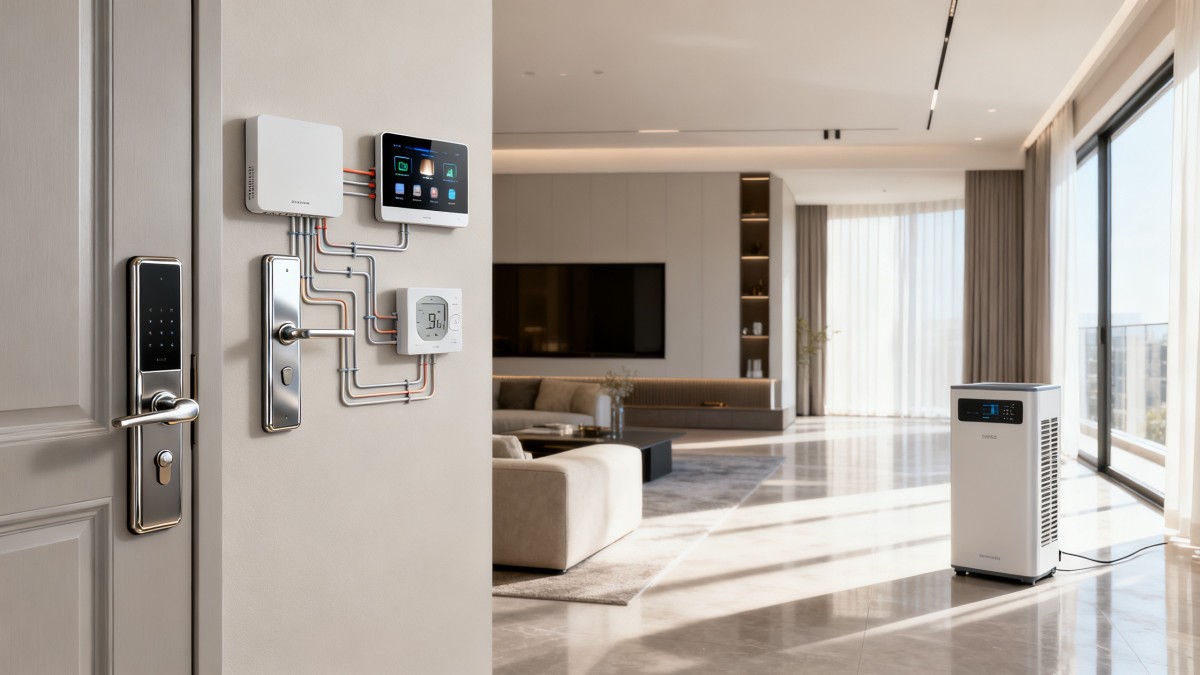
A smart home automation system becomes commercially meaningful when it converts connected devices into controlled, measurable outcomes. In residential projects, serviced apartments, and premium rental properties, evaluators usually compare 4 core factors: energy performance, safety, interoperability, and lifecycle cost.
The difference between a simple smart device package and a reliable automation system is orchestration. Lighting, HVAC, door access, sensors, curtains, alarms, and energy meters should communicate through a stable control layer, not operate as disconnected gadgets.
Why Business Evaluators Look at Total Cost of Ownership
Initial hardware cost can represent only 40%–60% of total project expense. Installation labor, gateway configuration, cloud subscription fees, firmware maintenance, replacement parts, and technical support may influence payback more than the device price itself.
A practical evaluation should cover at least 5 years, especially for property portfolios, apartment operators, and builders. A low-cost package may appear attractive but become expensive if it requires frequent manual resets, proprietary spare parts, or repeated technician visits.
Key Value Drivers for Procurement Review
The table below summarizes how a smart home automation system can be assessed from a commercial perspective. The goal is to connect each function with a measurable business impact rather than a vague lifestyle benefit.
The strongest business case usually appears when automation is planned as infrastructure, not an add-on. Buyers should treat connectivity, data security, installation documentation, and after-sales support as part of the same commercial package.
When the Investment Is Easier to Justify
- Multi-unit projects where configuration can be standardized across 20, 100, or 500 rooms.
- Properties with high energy consumption from HVAC, lighting, or standby appliances.
- Remote operation scenarios where staff cannot inspect every unit daily.
- Premium real estate where technology features support differentiation and resale value.
Core Technical Criteria That Define a Worthwhile System
A smart home automation system should be assessed through technical resilience before marketing features. For B2B buyers, the most important question is whether the solution can operate reliably during network changes, power interruptions, tenant turnover, and device expansion.
In practical deployments, a typical apartment may require 15–40 connected endpoints, while a villa or serviced residence may need 60–150 endpoints. The control architecture must handle this density without delayed responses or unstable pairing.
Protocol Selection and Interoperability
Wi-Fi devices are familiar and easy to source, but they may overload routers when too many endpoints are installed. Zigbee and Z-Wave are often used for low-power sensors, while KNX is common in higher-end wired building automation projects.
Matter is gaining attention because it aims to simplify cross-brand compatibility. However, evaluators should still verify device categories, firmware maturity, local support, and gateway requirements instead of assuming universal compatibility.
Cybersecurity, Privacy, and Access Control
A connected living environment expands the attack surface. Business evaluators should request encryption details, user permission levels, data storage practices, and update policies before approving any smart home automation system for multi-unit use.
At minimum, the solution should support role-based access, multi-factor account protection, secure device onboarding, and an update process that does not interrupt core functions. For rental operations, access logs and revocation within 1–2 minutes can be important.
Reliability Under Real Operating Conditions
- Test response latency for lights, locks, and alarms under normal and congested network conditions.
- Check whether local control remains available if cloud access is interrupted for 30–60 minutes.
- Confirm backup routines for settings, scenes, schedules, and user permissions.
- Review installation tolerances for concrete walls, metal doors, and long-distance sensor placement.
A worthwhile system should remain usable when one component fails. If a gateway outage disables lighting, access control, and climate scenes simultaneously, the risk profile may be unacceptable for commercial properties.
Procurement Factors Across the Global Supply Chain
Smart home products sit at the intersection of consumer electronics, electrical infrastructure, wireless communication, security equipment, and software services. This makes supplier evaluation more complex than buying standalone appliances.
For cross-border procurement, business evaluators should compare factories, integrators, distributors, and platform providers through a structured lens. A 2-week product sample test is useful, but it cannot replace compliance review, documentation checks, and service capacity assessment.
Supplier Capability Checklist
A smart home automation system is only as dependable as its sourcing ecosystem. Hardware quality, firmware continuity, spare part availability, and regional certification all influence whether the project performs after installation.
The key conclusion is straightforward: procurement should not focus only on unit price. A stable supplier with transparent specifications, traceable production, and realistic service terms often delivers better project economics.
Lead Time, MOQ, and Project Rollout Planning
Typical smart device sourcing may involve 7–15 days for sampling, 2–4 weeks for pilot configuration, and 30–60 days for volume production depending on customization, packaging, and certification needs.
Minimum order quantities vary by product type. Sensors and switches may have lower MOQ thresholds, while customized gateways, branded panels, or regionalized firmware may require larger commitments and longer validation cycles.
Questions to Ask Before Supplier Approval
- Can the supplier provide installation manuals, wiring diagrams, and protocol documentation in the required language?
- What happens if the mobile app, cloud server, or gateway model changes within 24 months?
- Are replacement parts available for at least 3 years after the initial project delivery?
- Can the system be tested in a mock-up unit before bulk installation begins?
Implementation Steps for Measurable ROI
A smart home automation system becomes worth it when deployment is planned as a controlled project. Poor scoping often causes avoidable costs, while a clear 5-step process can improve predictability and user adoption.
Business evaluators should involve procurement, engineering, IT, property operations, and end-user support teams early. Decisions about wiring, gateway placement, data policies, and device naming can affect the entire lifecycle.
A Practical 5-Step Deployment Framework
- Define the use case: energy control, security, comfort, elderly care, hospitality, or premium property positioning.
- Audit the site: wiring, router capacity, wall materials, electrical load, and local compliance constraints.
- Build a pilot zone: test 1–3 rooms or units before approving full procurement.
- Standardize installation: create device maps, naming rules, QR codes, manuals, and acceptance criteria.
- Monitor after handover: track error reports, energy trends, user complaints, and maintenance tickets for 90 days.
The pilot stage is especially important. A 30-day test can reveal interference issues, weak signal zones, confusing user flows, or device combinations that look good on paper but fail in daily operation.
Acceptance Criteria That Reduce Disputes
Acceptance should be specific. For example, light switching should respond within an agreed time, lock events should appear in logs, sensors should trigger scenes reliably, and administrator permissions should be tested before handover.
For commercial properties, it is reasonable to define 3 acceptance layers: device-level testing, room-level scene testing, and portfolio-level remote management testing. Each layer should include screenshots, serial numbers, and installation records.
Common Mistakes That Lower ROI
- Selecting devices before defining operational goals and maintenance responsibilities.
- Ignoring router capacity when more than 25–30 Wi-Fi endpoints are installed in one unit.
- Using too many apps or ecosystems, which increases training time and support tickets.
- Failing to document reset procedures, admin accounts, and warranty boundaries.
Market Trends and Strategic Outlook for Decision Makers
The smart living market is moving from isolated device sales toward integrated ecosystems. Business evaluators now need to track semiconductor supply, PCB assembly capacity, cloud platform continuity, electrical safety rules, and data protection requirements across regions.
This is where verified trade intelligence becomes valuable. A sourcing decision may involve electronics manufacturing, logistics, security hardware, green energy integration, and software service risk within one procurement cycle.
Where GTIIN Adds Decision Value
GTIIN supports business evaluators by converting fragmented global supply chain information into structured market insight. For smart home automation system decisions, this means monitoring supplier capability, compliance variation, export trends, and operational risk across relevant industrial clusters.
Because connected home projects combine consumer electronics, electrical infrastructure, green energy, security, logistics, and business services, evaluators benefit from multi-sector visibility rather than single-category product comparisons.
Final Procurement Guidance
A smart home automation system is worth it when it delivers measurable efficiency, credible security, flexible interoperability, and manageable lifecycle cost. It is less attractive when it depends on unclear software support, weak documentation, or unverified supply claims.
For evaluators, the best path is to compare at least 3 supplier options, test a pilot environment, verify compliance requirements, and model total cost over 36–60 months. This creates a defensible investment case instead of a feature-based purchase decision.
If your team is assessing connected living solutions, supplier risks, or cross-border procurement opportunities, GTIIN can help you clarify market signals and build a more reliable decision framework. Contact us to get a tailored solution, consult product and sourcing details, or learn more about relevant industry intelligence.
 How to verify sourcing intelligence data before selecting suppliersVerify sourcing intelligence data before choosing suppliers. Learn how to check company records, certifications, and capacity to reduce procurement risk and build a reliable shortlist.
 How to use supplier risk analysis to spot financial warning signsUse supplier risk analysis to spot cash flow pressure, debt risks, and delivery warning signs. Learn practical steps to reduce exposure and protect supply continuity.
 When dual sourcing makes sense in a sourcing strategy for manufacturersSourcing strategy for manufacturers: learn when dual sourcing strengthens supply continuity, reduces disruption risk, and protects production without adding unnecessary complexity.
 How bulk commodities pricing affects long-term supply contractsBulk commodities pricing shapes long-term supply contracts through index rules, freight, quality, volume, and currency risk. Explore strategies for resilient costs and supply security.
 Which global manufacturing trends by sector matter most for sourcing plans?Global manufacturing trends by sector: identify sourcing risks, supplier resilience, compliance demands, and cost drivers to build smarter, more reliable procurement plans.
 What industrial trade intelligence pricing should include before you subscribeIndustrial trade intelligence pricing explained: compare coverage, data quality, access rights, and workflow value before choosing a subscription that supports smarter trade decisions.
 How an industrial trade intelligence dashboard can identify new supplier marketsDiscover how an industrial trade intelligence dashboard helps identify new supplier markets by comparing capacity, landed cost, logistics resilience, and compliance risk.
 Which global market entry barriers should exporters assess first?Global market entry barriers exporters should assess first: tariffs, compliance, buyer qualification, logistics, and payment risk. Build a practical strategy for confident market entry.
 How trade data aggregation analytics can reveal emerging supplier marketsTrade data aggregation analytics reveals emerging supplier markets by connecting trade flows, capacity signals, logistics, and compliance insights for smarter sourcing decisions.
 When an export market analysis platform can validate demand in a new marketExport market analysis platform insights help validate new-market demand through buyer fit, regulations, logistics, competition, and profitable entry conditions.
 What is driving the beauty and personal care market in the USA?Beauty and personal care in USA is driven by targeted solutions, selective premiumization, digital discovery, clean-label trust, diverse needs, and compliance. Explore key growth opportunities.
 How trade flow monitoring reports reveal changing regional demandTrade flow monitoring reports reveal changing regional demand through import volumes, sourcing shifts, product mix, logistics signals, and regulatory trends. Explore actionable market insights.
 How international market intelligence for investors reduces market-entry riskInternational market intelligence for investors reduces market-entry risk by validating demand, regulations, logistics, and competition before capital is committed.
 How international sourcing intelligence helps identify supplier risk earlyInternational sourcing intelligence helps businesses spot supplier risks early, protect supply continuity, and make smarter global procurement decisions.
 How trade data aggregation analytics reveals emerging supplier marketsTrade data aggregation analytics reveals emerging supplier markets through export trends, input flows, logistics, and regulatory signals. Discover smarter sourcing insights.
 What industrial cluster monitoring in Vietnam reveals about site riskIndustrial cluster monitoring Vietnam reveals hidden site risks across labor, utilities, logistics, compliance, and supplier dependencies. Make smarter sourcing and expansion decisions.
 Food Technology Trends Reshaping Shelf Life, Safety, and Product InnovationFood technology is reshaping shelf life, safety, and innovation. Discover the trends helping food businesses cut risk, improve compliance, and unlock stronger global market growth.
 How electronics manufacturing services are changing with low-volume demandElectronics manufacturing services are evolving fast with low-volume demand. Learn how agile EMS partners improve flexibility, compliance, sourcing resilience, and speed to market.
 How Can Buyers Reduce Procurement Risks for Electronic Components?How to reduce procurement risks for electronic components: learn how buyers assess traceability, lead times, compliance, and supplier types to avoid costly sourcing mistakes.
 What Sourcing Intelligence India Reveals About Supplier Risk and Cost ShiftsSourcing intelligence India reveals hidden supplier risk, compliance gaps, logistics pressure, and real cost shifts—helping buyers compare vendors smarter and source with more confidence.
 Fashion Trends 2026: Which Materials, Colors, and Silhouettes Are Gaining Ground?Fashion trends 2026 spotlight tactile fabrics, mineral colors, and controlled volume. Explore the materials, shades, and silhouettes shaping smarter, more wearable style.





















Global Trade Insights & Industry
Our mission is to empower global exporters and importers with data-driven insights that foster strategic growth.
Search News
Popular Tags
Industry Overview
The global commercial kitchen equipment market is projected to reach $112 billion by 2027. Driven by urbanization, the rise of e-commerce food delivery, and strict hygiene regulations.