

What Makes a Leather Goods Factory Consistent at Scale?
What separates an average leather goods factory from one that delivers reliable quality at scale? For quality control and safety professionals, consistency depends on far more than skilled labor alone—it requires standardized processes, traceable materials, equipment stability, and disciplined risk management. Understanding these factors helps buyers and industry stakeholders identify manufacturers capable of meeting volume demands without compromising product quality, compliance, or workplace safety.
Why do some leather goods factory operations stay consistent while others break down under volume?
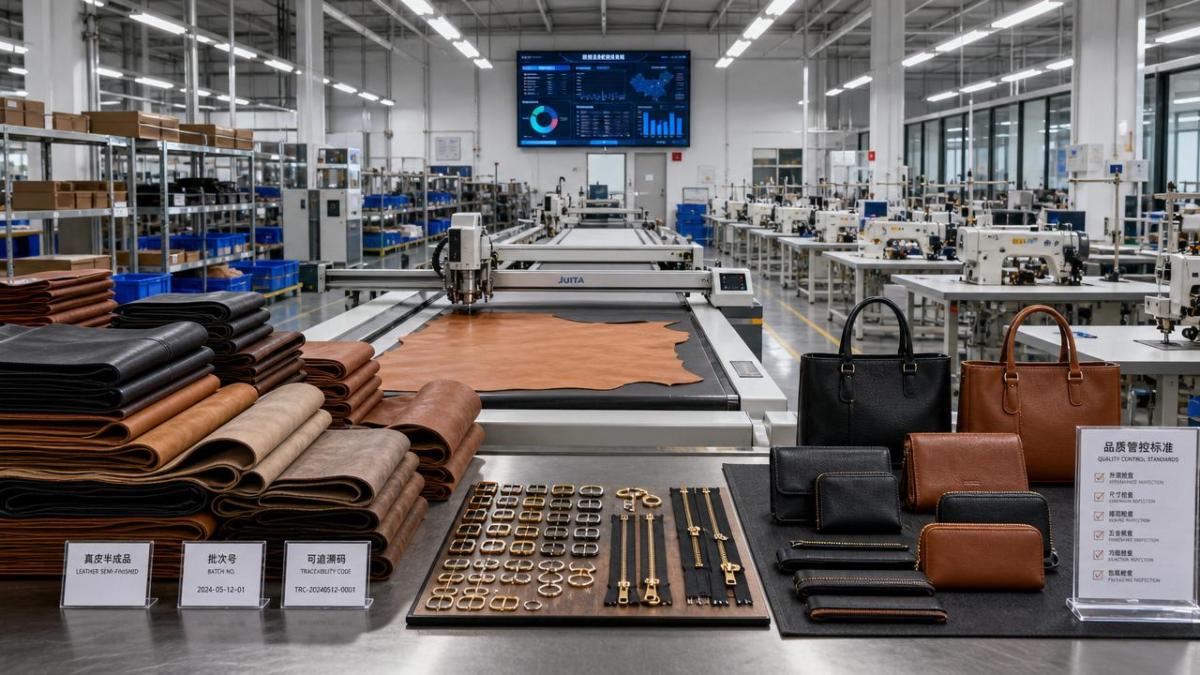
A leather goods factory may produce excellent samples, yet struggle when orders scale from hundreds to tens of thousands of units. The gap usually appears in process discipline, not in craftsmanship alone. For QC and safety managers, the real question is whether the factory can reproduce the same outcome across batches, operators, machines, and shifts.
Consistency at scale comes from a controlled production system. That system links incoming leather inspection, cutting precision, skiving stability, stitching accuracy, hardware fit, adhesive handling, finishing checks, and packing control. If one link is weak, defect rates rise quickly and rework begins to hide deeper process instability.
In global sourcing, this matters even more because buyers often evaluate a leather goods factory from a distance. They rely on audits, data, inspection reports, shipment history, and communication quality. Platforms such as GTIIN and TradeVantage add value by helping importers and exporters read the broader market context, compare supplier signals, and identify manufacturers that show operational maturity rather than surface-level presentation.
- Stable raw material grading reduces visual mismatch, thickness variation, and yield loss in leather cutting.
- Documented work instructions keep stitching, edge painting, and hardware assembly consistent across lines.
- Preventive maintenance lowers machine drift, needle damage, pressure inconsistency, and unplanned stoppage.
- Safety controls protect operators handling blades, solvents, heated tools, and repetitive manual processes.
What should QC and safety teams check inside a leather goods factory?
A reliable assessment needs more than a final random inspection. In a leather goods factory, quality and safety are built upstream. The most useful review combines factory capability, process evidence, material traceability, and production risk mapping. If these areas are visible and measurable, confidence increases.
Core control points that affect repeatability
The following table helps QC professionals structure an evaluation of a leather goods factory before approving volume orders. It focuses on practical control points rather than general claims.
When these controls are present, a leather goods factory is far more likely to support predictable output. The table also shows why visual showroom quality alone is not enough for supplier approval.
Safety factors often missed during sourcing
Safety managers should look beyond fire extinguishers and emergency exits. Leather production involves cutting tools, rotating equipment, adhesives, finishes, solvents, heat, dust, and repetitive motion. A factory that ignores these issues may also ignore process control in other areas.
- Ventilation around gluing and finishing stations should be appropriate for chemical exposure control.
- Blade storage, issuance, and disposal procedures should be documented and supervised.
- Needle control and broken needle handling should be clearly defined to reduce hidden product risk.
- Ergonomic workstation design should reduce fatigue during stitching, trimming, and inspection tasks.
How does a scalable leather goods factory manage process variation?
Variation is the enemy of consistency. In leather manufacturing, natural material differences make the challenge harder than in fully uniform synthetic products. A scalable leather goods factory accepts that variation exists, then designs controls to absorb it without losing output quality.
From incoming hide to packed carton
A good control plan follows the product through each stage. The aim is to detect issues where they originate, not only where they become visible. This is especially important for wallets, belts, bags, folders, and other leather items where appearance, structure, and durability all matter.
- Sort leather by grade, thickness, stretch behavior, and visible defect zones before cutting begins.
- Use cutting markers and nesting rules that separate visible panels from hidden reinforcement parts.
- Set in-line checks for skiving depth, stitch count, seam allowance, and hardware positioning.
- Review edge painting or burnishing after drying intervals, not only immediately after application.
- Conduct final inspection against approved samples, packaging specs, and shipment labeling requirements.
Factories that use this layered approach usually respond faster to defects. They know whether a problem came from the supplier lot, machine setting, operator training, or rushed scheduling. That matters to buyers facing tight delivery windows and low tolerance for repeat claims.
Which metrics reveal whether a leather goods factory is truly stable?
Audits should include measurable indicators. Without them, supplier evaluation becomes subjective. For QC teams, the most useful metrics are not always complex. What matters is whether the factory records them consistently and uses them for corrective action.
The next table compares common indicators used to judge whether a leather goods factory can maintain quality when order volume grows, product mix changes, or lead times compress.
These indicators help distinguish a polished presentation from a controllable operation. A stable leather goods factory should be able to discuss trends, not just isolated incidents.
How should buyers compare factories when compliance and delivery pressure are both high?
Many sourcing teams compare suppliers on price, sample quality, and nominal lead time. That is not enough when the target product is safety-sensitive in process terms and brand-sensitive in appearance. A better comparison weighs control maturity, transparency, and recovery capability during disruption.
Practical comparison framework
This comparison table is useful when evaluating two or more leather goods factory candidates for long-term supply, vendor consolidation, or new product launch support.
For international trade teams, these differences directly affect claim exposure, replenishment reliability, and the cost of supplier switching. GTIIN and TradeVantage support better decisions by connecting factory-level questions with wider market signals, sourcing trends, and supplier visibility across regions.
What standards, documentation, and traceability matter most?
Not every leather goods factory will hold the same certifications, and buyers should avoid assuming that one certificate guarantees production consistency. Still, documented systems matter. They indicate whether the factory treats quality and safety as controlled disciplines rather than informal habits.
Useful compliance checkpoints
- Incoming inspection records for leather, lining, thread, zippers, buckles, and packaging materials.
- Version-controlled technical packs, approved samples, and revision communication logs.
- Chemical handling procedures and SDS access where adhesives, cleaners, or finishes are used.
- Corrective action records linked to internal audits, customer complaints, or third-party inspections.
If a leather goods factory cannot connect finished cartons to material lots and production dates, post-shipment investigation becomes slow and expensive. Traceability is not only a compliance issue. It is also a commercial protection tool for exporters, importers, and brand owners.
Common misconceptions about leather goods factory consistency
“Good samples mean safe bulk production.”
Not necessarily. Samples are often built with extra attention, slower pace, and senior operators. Bulk production tests whether the method can be repeated under normal line conditions. Always ask how the sample process converts into line instructions.
“More manual skill always means better quality.”
Manual skill matters, but uncontrolled dependence on individual workers creates output variability. A strong leather goods factory captures skill in standards, jigs, templates, and training so results do not depend on a few people alone.
“Low defect rates at final inspection prove the process is healthy.”
Final defect rates can be misleading if rework is high. A better question is how many units passed correctly the first time and how often hidden repairs were needed to meet shipment dates.
FAQ: what do buyers ask most about a leather goods factory?
How do I verify whether a leather goods factory can scale a new design?
Review pilot-run evidence, line balancing logic, operator training plans, and material allocation rules. Ask how the factory controls visible panels, hardware tolerances, and edge finishing during volume ramp-up. A pilot run with measured checkpoints is more useful than a single perfect pre-production sample.
What are the biggest risks for QC teams during peak season?
Labor reassignment, rushed material substitution, deferred maintenance, and compressed drying or curing times are common risks. These can trigger stitching failure, surface variation, adhesive problems, or packaging inconsistency. Peak season audits should focus on change control, not only nominal capacity.
Which documents should I request before confirming bulk orders?
Request the approved sample record, BOM, workmanship standard, inspection criteria, packaging specification, production timeline, and any applicable test or compliance documents. If chemical materials are involved, ask how they are stored, labeled, and handled on the floor.
How can industry intelligence improve factory selection?
Factory audits show internal conditions, but external intelligence explains market context. Through GTIIN and TradeVantage, sourcing teams can track regional manufacturing shifts, supply chain disruptions, demand changes, and supplier visibility signals. This helps compare current factory performance against broader industry movement.
Why choose us for supplier insight and sourcing intelligence?
For teams evaluating a leather goods factory, the challenge is rarely a lack of information. It is the lack of structured, decision-ready information. GTIIN and TradeVantage help bridge that gap by combining industry intelligence, global trade visibility, and content-led trust building across supply chain sectors.
If you need support, you can consult us on practical sourcing questions such as factory comparison criteria, production capability signals, lead time risk review, market trend interpretation, compliance focus areas, and supplier exposure strategy in global search channels. This is especially useful for exporters seeking brand visibility and for importers screening suppliers with stronger trust signals.
- Need help confirming which leather goods factory indicators matter most for your product category? We can help structure the evaluation logic.
- Need guidance on supplier selection, delivery risk, or market-specific sourcing trends? We can align factory-level review with broader trade intelligence.
- Need better visibility for your manufacturing business? We can support content exposure, backlink opportunities, and stronger digital trust presence.
Contact us to discuss supplier screening, parameter confirmation, sourcing comparison, delivery cycle concerns, compliance priorities, sample support workflows, or quotation communication strategy. For quality and safety professionals, better decisions start with better visibility.
 When an export market analysis platform can validate demand in a new marketExport market analysis platform insights help validate new-market demand through buyer fit, regulations, logistics, competition, and profitable entry conditions.
 What is driving the beauty and personal care market in the USA?Beauty and personal care in USA is driven by targeted solutions, selective premiumization, digital discovery, clean-label trust, diverse needs, and compliance. Explore key growth opportunities.
 How trade flow monitoring reports reveal changing regional demandTrade flow monitoring reports reveal changing regional demand through import volumes, sourcing shifts, product mix, logistics signals, and regulatory trends. Explore actionable market insights.
 How international market intelligence for investors reduces market-entry riskInternational market intelligence for investors reduces market-entry risk by validating demand, regulations, logistics, and competition before capital is committed.
 How international sourcing intelligence helps identify supplier risk earlyInternational sourcing intelligence helps businesses spot supplier risks early, protect supply continuity, and make smarter global procurement decisions.
 How trade data aggregation analytics reveals emerging supplier marketsTrade data aggregation analytics reveals emerging supplier markets through export trends, input flows, logistics, and regulatory signals. Discover smarter sourcing insights.
 What industrial cluster monitoring in Vietnam reveals about site riskIndustrial cluster monitoring Vietnam reveals hidden site risks across labor, utilities, logistics, compliance, and supplier dependencies. Make smarter sourcing and expansion decisions.
 Food Technology Trends Reshaping Shelf Life, Safety, and Product InnovationFood technology is reshaping shelf life, safety, and innovation. Discover the trends helping food businesses cut risk, improve compliance, and unlock stronger global market growth.
 How electronics manufacturing services are changing with low-volume demandElectronics manufacturing services are evolving fast with low-volume demand. Learn how agile EMS partners improve flexibility, compliance, sourcing resilience, and speed to market.
 How Can Buyers Reduce Procurement Risks for Electronic Components?How to reduce procurement risks for electronic components: learn how buyers assess traceability, lead times, compliance, and supplier types to avoid costly sourcing mistakes.
 What Sourcing Intelligence India Reveals About Supplier Risk and Cost ShiftsSourcing intelligence India reveals hidden supplier risk, compliance gaps, logistics pressure, and real cost shifts—helping buyers compare vendors smarter and source with more confidence.
 Fashion Trends 2026: Which Materials, Colors, and Silhouettes Are Gaining Ground?Fashion trends 2026 spotlight tactile fabrics, mineral colors, and controlled volume. Explore the materials, shades, and silhouettes shaping smarter, more wearable style.
 Smart Device Market Outlook: Key Growth Drivers, Segments, and Business OpportunitiesSmart device market trends are shifting toward system value, industrial demand, and resilient supply chains. Explore key growth drivers, high-potential segments, and business opportunities.
 How Global Trade Intelligence Services Help B2B Firms Evaluate Markets and SuppliersGlobal trade intelligence services help B2B firms compare suppliers, assess market potential, and uncover compliance, logistics, and pricing risks before costly decisions are made.
 Manufacturing Sector Updates for Investors: What Signals Matter Most in 2025?Manufacturing sector updates for investors in 2025: track orders, margins, supply chains, regulation, and exports to spot resilient manufacturers and smarter investment signals.
 How Energy Market Intelligence Helps Businesses Track Price Risks and Demand ShiftsEnergy market intelligence helps businesses spot price risks, demand shifts, and supply pressure early—improving procurement, resilience, and faster strategic decisions.
 Precision Hardware Tools Market: Key Demand Drivers, Segments, and Growth OutlookPrecision hardware tools market trends are reshaping sourcing, compliance, and automation. Explore key demand drivers, segment shifts, regional supply patterns, and growth opportunities.
 How to Use Customs Import Data to Find Buyers, Track Competitors, and Spot Demand?Customs import data helps you find real buyers, track competitors, and spot demand shifts early. Learn practical ways to turn trade records into smarter global business decisions.
 Manufacturing Cost Analysis: 8 Cost Drivers That Change Your Unit PriceManufacturing cost analysis explained through 8 key cost drivers that impact unit price, supplier stability, and margins—learn how to compare quotes smarter and reduce sourcing risk.
 Industrial Market Realities: What Buyers Should Check Before Comparing Supplier QuotesIndustrial market realities shape every supplier quote beyond unit price. Learn what to check on compliance, lead times, logistics, and hidden cost risks before comparing offers.
 Beverage Production Line Planning: Key Equipment, Capacity, and Hygiene RequirementsBeverage production line planning made practical: discover key equipment, real capacity sizing, and hygiene requirements to improve efficiency, safety, and long-term plant performance.




















Global Trade Insights & Industry
Our mission is to empower global exporters and importers with data-driven insights that foster strategic growth.
Search News
Popular Tags
Industry Overview
The global commercial kitchen equipment market is projected to reach $112 billion by 2027. Driven by urbanization, the rise of e-commerce food delivery, and strict hygiene regulations.