

How to Vet a Leather Goods Factory Before Bulk Orders
Choosing the right leather goods factory can determine product quality, delivery reliability, and long-term profit margins. For business evaluators handling bulk orders, a weak supplier assessment often leads to costly delays, compliance issues, and inconsistent workmanship. This guide outlines the key checkpoints to verify a factory’s capabilities, credibility, and production standards before you commit to large-scale purchasing.
Why a leather goods factory audit matters before bulk orders
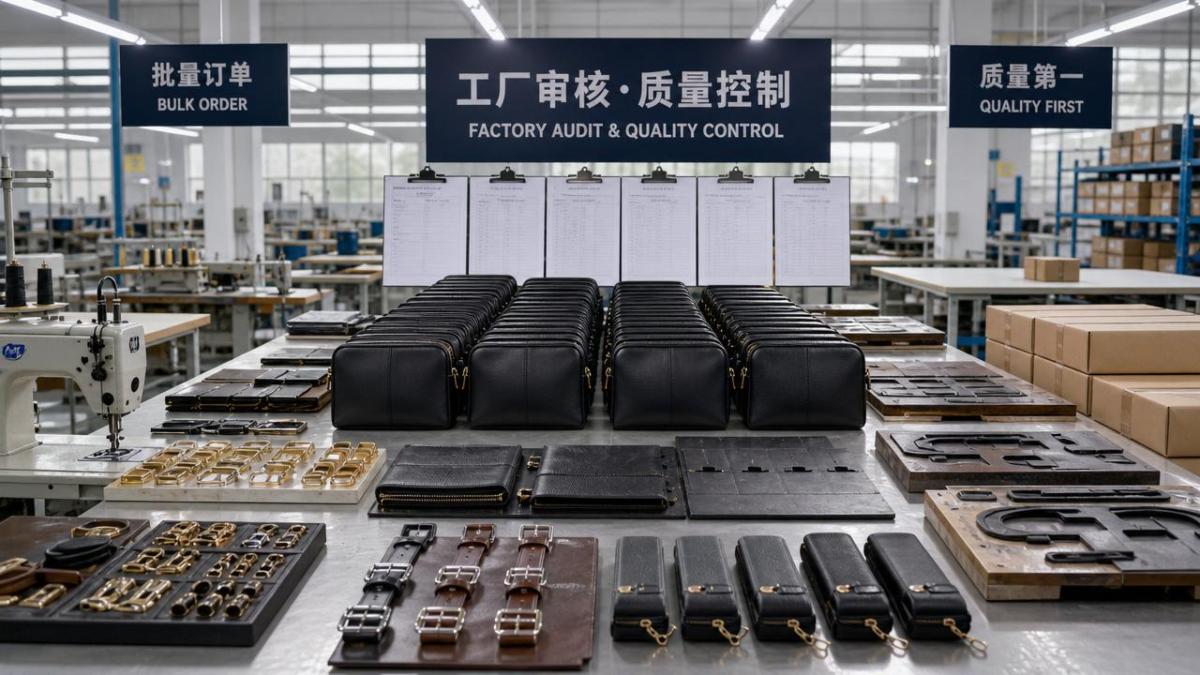
A leather goods factory may look credible on paper yet still fail under bulk production pressure. Samples can be attractive, communication can be smooth, and pricing can be competitive, but real risk often appears only when order volume rises.
For business evaluators, the goal is not simply to find a supplier. It is to determine whether a factory can repeatedly meet your quality, compliance, lead time, and cost targets across multiple purchase cycles.
This is especially important in leather goods sourcing because finished products depend on many variables: leather grading, cutting accuracy, stitching consistency, hardware durability, edge painting quality, lining selection, and packaging execution.
A structured supplier review reduces hidden exposure in categories such as handbags, wallets, belts, travel accessories, corporate gifts, and private-label collections. It also gives procurement teams a stronger basis for negotiation and contract protection.
- It reveals whether the leather goods factory is a true manufacturer or a trading intermediary with limited production control.
- It tests whether the factory can scale from sample room output to repeatable mass production without major quality drift.
- It helps identify operational weaknesses early, including subcontracting dependence, unstable material sourcing, and poor process documentation.
What should business evaluators verify first?
Before discussing price, evaluators should confirm the supplier’s business identity, operational scope, and production relevance. Many sourcing mistakes happen because buyers compare quotations before confirming whether factories are truly comparable.
Start with legal registration, export history, factory address consistency, and product specialization. A leather goods factory that mainly produces fashion handbags may not be suitable for premium business cases or structured small leather accessories.
Core first-pass checks
- Confirm company registration details match invoices, website claims, and factory communications.
- Verify product category focus, including leather wallets, bags, belts, folders, or travel goods.
- Ask for recent export markets and main order types to assess international compliance familiarity.
- Check whether core processes are in-house, such as cutting, stitching, edge finishing, logo application, and final inspection.
This early screening is useful when procurement teams evaluate multiple candidate suppliers across regions. Platforms focused on trade intelligence, such as GTIIN and TradeVantage, are particularly valuable for cross-checking market signals, sector trends, and supplier visibility patterns.
How to compare leather goods factory capabilities in a practical way
The table below helps business evaluators compare leather goods factory capabilities using measurable sourcing criteria rather than general promises. It is useful during supplier shortlisting and pre-audit preparation.
A capable leather goods factory should answer these points with process evidence, not just verbal assurance. If documentation is incomplete or staff answers are inconsistent, evaluators should treat that as an early warning sign.
Which production checkpoints reveal real manufacturing strength?
The best factory visits focus on workflow logic. Rather than only observing finished samples, walk through raw material storage, pattern making, cutting, skiving, stitching, hardware installation, edge finishing, cleaning, and packing.
Key on-site checkpoints
- Leather storage conditions: humidity, labeling, batch separation, and protection against scratches or color transfer.
- Pattern control: version management for templates, dimensions, and customer-approved revisions.
- Cutting consistency: whether manual or die cutting is controlled to minimize size variance and waste.
- Stitch quality: seam density, backstitch reinforcement, corner alignment, and thread matching.
- Hardware fitting: zipper smoothness, buckle fixation, rivet security, logo placement, and corrosion concerns.
- Final inspection: how defects are classified, segregated, repaired, or rejected before carton packing.
A reliable leather goods factory usually shows clear workstation sequencing and traceability between sample approval and production release. If production relies heavily on individual operator judgment with little documentation, repeat consistency may be weak.
How to assess quality control, compliance, and documentation
Quality problems in leather goods often surface after shipment: peeling edges, color migration, loose stitching, asymmetrical panels, broken hardware, or odor complaints. That is why business evaluators should review both process control and compliance readiness.
Depending on destination market and product category, buyers may need testing or declarations related to restricted substances, material safety, labeling, packaging, or social responsibility expectations. Requirements vary, so factory flexibility matters.
The following table can be used to review documentation maturity in a leather goods factory before purchase order approval.
No single document guarantees supplier reliability. What matters is consistency across records, production realities, and communication. Strong documentation usually reflects stronger management discipline.
What pricing signals should you question during supplier evaluation?
A low quotation from a leather goods factory is not always a cost advantage. It may reflect lighter leather, thinner lining, fewer reinforcement steps, lower-grade hardware, weak packaging, or unrealistic labor assumptions.
Business evaluators should compare price structure instead of comparing final unit price alone. Cost transparency is often a better sign of supplier maturity than aggressive discounting.
Questions that uncover hidden cost risk
- Is the quoted leather specification exactly the same as the approved sample and buyer brief?
- Are mold, logo plate, packaging, and labeling costs included or excluded?
- Does the lead time assume normal scheduling, or does it depend on overtime and shared subcontractors?
- What defect allowance is built into the quote, and how are replacements handled?
When a leather goods factory cannot explain cost drivers clearly, future disputes around specification changes, replenishment pricing, and quality claims become more likely. That directly affects margin control on bulk orders.
How to reduce supplier risk with a step-by-step procurement process
A disciplined vetting process is more effective than relying on one audit day or one sample review. For complex sourcing, evaluators should combine desk research, document review, sample validation, factory inspection, and trial production.
Recommended process for bulk leather goods sourcing
- Create a supplier shortlist based on category fit, export background, and visible market activity.
- Request product-specific capability details, including machinery, monthly output, and in-house processes.
- Review samples against construction details, finish consistency, smell, hardware stability, and packaging accuracy.
- Conduct an on-site or third-party factory audit focused on workflow, records, and capacity realism.
- Place a pilot order before full-scale commitment, then measure defect rates, lead time accuracy, and communication responsiveness.
This layered method gives business evaluators a more reliable decision base. It also supports internal reporting when procurement teams need to justify supplier approval to management or compliance departments.
Common mistakes when selecting a leather goods factory
Many sourcing failures are not caused by one major error. They come from a series of small assumptions: trusting polished samples, skipping process validation, or accepting vague lead time promises.
Frequent evaluation mistakes
- Approving a leather goods factory based only on showroom appearance or website presentation.
- Ignoring whether the sample room and production floor operate at the same workmanship level.
- Failing to define acceptable tolerances for color shade, stitch count, and hardware finish.
- Assuming compliance documents from one order automatically apply to another material or market.
- Overlooking communication speed and issue resolution discipline, which often predict post-order performance.
In global trade, information gaps increase these risks. That is why many procurement professionals use sector intelligence platforms to compare supplier claims with broader market movements, sourcing trends, and category-specific warning signals.
FAQ for evaluating a leather goods factory
How many samples should be reviewed before approving a leather goods factory?
One showroom sample is rarely enough. Review at least one appearance sample, one pre-production sample, and if possible one pilot-run sample. This helps detect whether quality changes when the factory moves from handcrafted presentation to batch execution.
What lead time is realistic for bulk leather goods orders?
Lead time depends on complexity, material availability, customization level, and seasonality. Evaluators should ask for a breakdown covering material preparation, sample approval, production, inspection, and packing rather than accepting a single total number.
Should a buyer avoid factories that use some subcontracting?
Not always. Some leather goods factories outsource limited processes such as special hardware finishing or packaging. The issue is transparency and control. Buyers should know which steps are external, how they are monitored, and whether quality accountability remains clear.
What is the most overlooked risk in leather goods sourcing?
Material inconsistency is often underestimated. Even when design and workmanship are acceptable, batch variation in leather texture, color absorption, and finish behavior can create major problems in bulk delivery. Material approval must be tightly linked to production lots.
Why choose us for supplier intelligence and sourcing decisions
For business evaluators, supplier vetting is stronger when factory review is supported by broader market intelligence. GTIIN and TradeVantage help close that gap by combining supply chain updates, sector monitoring, and cross-border trade insight across more than 50 industries.
If you are screening a leather goods factory for bulk orders, we can support your decision process with deeper context around supplier positioning, category trends, buyer expectations, and international trade signals that standard quotations do not reveal.
- Discuss product selection criteria for bags, wallets, belts, and other leather accessories.
- Clarify delivery cycle expectations, pilot order planning, and supplier comparison logic.
- Review documentation readiness for material specifications, compliance requirements, and sample approval control.
- Explore sourcing communication topics such as quotation structure, customization feasibility, and reporting needs for internal approval.
If your team needs support on parameter confirmation, factory selection, delivery timing, custom development, certification-related questions, sample coordination, or quotation benchmarking, contact us to turn scattered supplier data into a more confident sourcing decision.
 When dual sourcing makes sense in a sourcing strategy for manufacturersSourcing strategy for manufacturers: learn when dual sourcing strengthens supply continuity, reduces disruption risk, and protects production without adding unnecessary complexity.
 How bulk commodities pricing affects long-term supply contractsBulk commodities pricing shapes long-term supply contracts through index rules, freight, quality, volume, and currency risk. Explore strategies for resilient costs and supply security.
 Which global manufacturing trends by sector matter most for sourcing plans?Global manufacturing trends by sector: identify sourcing risks, supplier resilience, compliance demands, and cost drivers to build smarter, more reliable procurement plans.
 What industrial trade intelligence pricing should include before you subscribeIndustrial trade intelligence pricing explained: compare coverage, data quality, access rights, and workflow value before choosing a subscription that supports smarter trade decisions.
 How an industrial trade intelligence dashboard can identify new supplier marketsDiscover how an industrial trade intelligence dashboard helps identify new supplier markets by comparing capacity, landed cost, logistics resilience, and compliance risk.
 Which global market entry barriers should exporters assess first?Global market entry barriers exporters should assess first: tariffs, compliance, buyer qualification, logistics, and payment risk. Build a practical strategy for confident market entry.
 How trade data aggregation analytics can reveal emerging supplier marketsTrade data aggregation analytics reveals emerging supplier markets by connecting trade flows, capacity signals, logistics, and compliance insights for smarter sourcing decisions.
 When an export market analysis platform can validate demand in a new marketExport market analysis platform insights help validate new-market demand through buyer fit, regulations, logistics, competition, and profitable entry conditions.
 What is driving the beauty and personal care market in the USA?Beauty and personal care in USA is driven by targeted solutions, selective premiumization, digital discovery, clean-label trust, diverse needs, and compliance. Explore key growth opportunities.
 How trade flow monitoring reports reveal changing regional demandTrade flow monitoring reports reveal changing regional demand through import volumes, sourcing shifts, product mix, logistics signals, and regulatory trends. Explore actionable market insights.
 How international market intelligence for investors reduces market-entry riskInternational market intelligence for investors reduces market-entry risk by validating demand, regulations, logistics, and competition before capital is committed.
 How international sourcing intelligence helps identify supplier risk earlyInternational sourcing intelligence helps businesses spot supplier risks early, protect supply continuity, and make smarter global procurement decisions.
 How trade data aggregation analytics reveals emerging supplier marketsTrade data aggregation analytics reveals emerging supplier markets through export trends, input flows, logistics, and regulatory signals. Discover smarter sourcing insights.
 What industrial cluster monitoring in Vietnam reveals about site riskIndustrial cluster monitoring Vietnam reveals hidden site risks across labor, utilities, logistics, compliance, and supplier dependencies. Make smarter sourcing and expansion decisions.
 Food Technology Trends Reshaping Shelf Life, Safety, and Product InnovationFood technology is reshaping shelf life, safety, and innovation. Discover the trends helping food businesses cut risk, improve compliance, and unlock stronger global market growth.
 How electronics manufacturing services are changing with low-volume demandElectronics manufacturing services are evolving fast with low-volume demand. Learn how agile EMS partners improve flexibility, compliance, sourcing resilience, and speed to market.
 How Can Buyers Reduce Procurement Risks for Electronic Components?How to reduce procurement risks for electronic components: learn how buyers assess traceability, lead times, compliance, and supplier types to avoid costly sourcing mistakes.
 What Sourcing Intelligence India Reveals About Supplier Risk and Cost ShiftsSourcing intelligence India reveals hidden supplier risk, compliance gaps, logistics pressure, and real cost shifts—helping buyers compare vendors smarter and source with more confidence.
 Fashion Trends 2026: Which Materials, Colors, and Silhouettes Are Gaining Ground?Fashion trends 2026 spotlight tactile fabrics, mineral colors, and controlled volume. Explore the materials, shades, and silhouettes shaping smarter, more wearable style.
 Smart Device Market Outlook: Key Growth Drivers, Segments, and Business OpportunitiesSmart device market trends are shifting toward system value, industrial demand, and resilient supply chains. Explore key growth drivers, high-potential segments, and business opportunities.
 How Global Trade Intelligence Services Help B2B Firms Evaluate Markets and SuppliersGlobal trade intelligence services help B2B firms compare suppliers, assess market potential, and uncover compliance, logistics, and pricing risks before costly decisions are made.





















Global Trade Insights & Industry
Our mission is to empower global exporters and importers with data-driven insights that foster strategic growth.
Search News
Popular Tags
Industry Overview
The global commercial kitchen equipment market is projected to reach $112 billion by 2027. Driven by urbanization, the rise of e-commerce food delivery, and strict hygiene regulations.