

PLH Herbal Joint Product Backed by MRI Evidence at Vitafoods Europe 2026
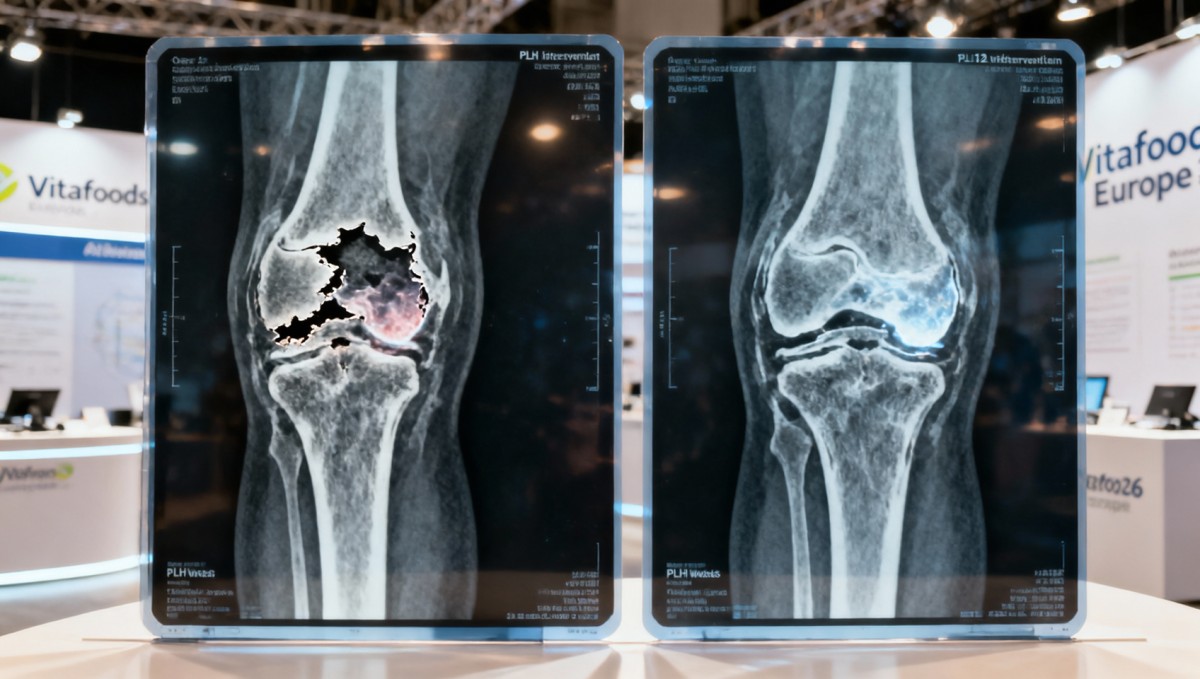
At Vitafoods Europe 2026 held in Spain on May 22, 2026, PLH—a long-established herbal health company—presented clinical MRI imaging evidence demonstrating structural improvement in osteoarthritis patients following use of its proprietary herbal formulation. This marked a notable shift from conventional reliance on biochemical or symptomatic endpoints toward objective, radiographic validation—a development with tangible implications for EU regulatory perception, buyer confidence, and market access pathways for plant-based health products originating from China and other emerging supplier regions.
Event Overview
In May 2026, at the Vitafoods Europe exhibition in Spain, PLH displayed side-by-side MRI scans of knee joints from a defined cohort of osteoarthritis patients before and after a 12-week course of its multi-herb joint support product. The images showed measurable reductions in cartilage defect volume and subchondral bone edema, as interpreted by an independent radiology review panel. No claims regarding disease modification were made; the presentation focused solely on observable imaging changes correlated with standardized clinical assessment protocols.
Industries Affected
Direct Exporters & Trade Enterprises: EU buyers—including pharmacy chains, specialty wellness distributors, and integrative clinic networks—are increasingly requesting third-party imaging or biomarker data to substantiate product positioning beyond general wellness claims. For exporters, absence of such evidence may now delay shelf placement or exclude participation in professional-tier procurement tenders.
Raw Material Sourcing Firms: Demand is rising for traceable, chemically characterized botanical batches linked to clinical cohorts. Suppliers able to provide batch-specific phytochemical profiles (e.g., harpagoside content in Devil’s Claw, curcuminoid ratios in turmeric extracts) alongside anonymized imaging correlation data gain competitive differentiation—not just in price or compliance, but in evidentiary coherence.
Contract Manufacturers & Formulators: Regulatory scrutiny on ‘clinical synergy’ between active ingredients and delivery formats (e.g., transdermal gels paired with pulsed electromagnetic field devices) is intensifying. Manufacturing partners are now expected to document formulation stability under conditions mimicking those used in cited imaging studies—particularly where excipients influence bioavailability or tissue penetration.
Supply Chain & Regulatory Support Providers: Logistics and certification firms report increased client requests for ‘evidence-readiness audits’—assessments covering documentation trails linking raw material sourcing, GMP-compliant processing, analytical testing, and alignment with endpoints used in clinical imaging trials. These are becoming prerequisites for CE marking submissions targeting Class IIa+ wellness devices combined with botanicals.
Key Focus Areas and Recommended Actions
Build Imaging-Aligned Product Dossiers
Exporters should prioritize partnerships with imaging-certified CROs or academic radiology departments capable of generating anonymized, DICOM-compliant datasets aligned with ISO/IEC 17025-accredited analysis workflows—not just narrative reports.
Adopt Batch-Level Phytochemical-Biomarker Mapping
For herbal extract suppliers, correlating HPLC/UPLC fingerprint data with functional outcomes (e.g., reduction in MRI-detected synovitis score) enables stronger scientific storytelling—and supports future QbD (Quality by Design) filings with EMA or notified bodies.
Integrate Clinical Evidence into Technical Files Early
Manufacturers of combination products (e.g., herbal supplements + wearable rehab devices) must embed imaging or biomarker endpoints into technical documentation from the design stage—not as post-hoc add-ons—to satisfy evolving MDR Annex II requirements for ‘intended purpose’ verification.
Editorial Perspective / Industry Observation
Observably, the PLH MRI presentation does not signal an immediate regulatory mandate—but rather reflects a maturing commercial expectation within professional health channels across the EU. Analysis shows that while EMA guidelines still classify most botanicals as food supplements or traditional herbal medicinal products (THMPs), purchasing decisions among hospital-affiliated pharmacies and sports medicine clinics now routinely weigh imaging evidence alongside safety dossiers. This trend is better understood as a de facto evidentiary threshold emerging from practice—not policy—yet its influence on tender criteria and formulary inclusion is accelerating. Current more relevant question is not whether imaging will become mandatory, but how quickly tiered evidence frameworks (e.g., Level 1: symptom scores; Level 2: biomarkers; Level 3: imaging/histopathology) will be adopted in commercial contracts.
Conclusion
The integration of objective clinical imaging into product demonstration at a trade show signals a broader recalibration of credibility standards in the global botanical and wellness device sector. It underscores that trust in cross-border health commerce is increasingly anchored in visualizable, reproducible physiological change—not just molecular composition or traditional use history. A rational interpretation is that evidence generation is shifting from a ‘differentiator’ to a baseline operational capability for serious market entrants.
Source Attribution
Vitafoods Europe 2026 Official Exhibition Program (Session: “Evidence Beyond Symptom Scores”, Hall 5, May 22); PLH Press Release #VF26-MRI-01 (May 22, 2026); EMA Reflection Paper on Clinical Evidence for Herbal Medicinal Products (EMA/HMA/CHMP/Herbal/484192/2023, Rev. 2 – pending update); Notified Body Guidance Note NB-2025-IMAGING-03 (issued April 2025, under public consultation). Ongoing monitoring recommended for upcoming revisions to EU Commission Delegated Regulation (EU) 2023/2007 on clinical evaluation of wellness devices.
 Which global manufacturing trends by sector matter most for sourcing plans?Global manufacturing trends by sector: identify sourcing risks, supplier resilience, compliance demands, and cost drivers to build smarter, more reliable procurement plans.
 What industrial trade intelligence pricing should include before you subscribeIndustrial trade intelligence pricing explained: compare coverage, data quality, access rights, and workflow value before choosing a subscription that supports smarter trade decisions.
 How an industrial trade intelligence dashboard can identify new supplier marketsDiscover how an industrial trade intelligence dashboard helps identify new supplier markets by comparing capacity, landed cost, logistics resilience, and compliance risk.
 Which global market entry barriers should exporters assess first?Global market entry barriers exporters should assess first: tariffs, compliance, buyer qualification, logistics, and payment risk. Build a practical strategy for confident market entry.
 How trade data aggregation analytics can reveal emerging supplier marketsTrade data aggregation analytics reveals emerging supplier markets by connecting trade flows, capacity signals, logistics, and compliance insights for smarter sourcing decisions.
 When an export market analysis platform can validate demand in a new marketExport market analysis platform insights help validate new-market demand through buyer fit, regulations, logistics, competition, and profitable entry conditions.
 What is driving the beauty and personal care market in the USA?Beauty and personal care in USA is driven by targeted solutions, selective premiumization, digital discovery, clean-label trust, diverse needs, and compliance. Explore key growth opportunities.
 How trade flow monitoring reports reveal changing regional demandTrade flow monitoring reports reveal changing regional demand through import volumes, sourcing shifts, product mix, logistics signals, and regulatory trends. Explore actionable market insights.
 How international market intelligence for investors reduces market-entry riskInternational market intelligence for investors reduces market-entry risk by validating demand, regulations, logistics, and competition before capital is committed.
 How international sourcing intelligence helps identify supplier risk earlyInternational sourcing intelligence helps businesses spot supplier risks early, protect supply continuity, and make smarter global procurement decisions.
 How trade data aggregation analytics reveals emerging supplier marketsTrade data aggregation analytics reveals emerging supplier markets through export trends, input flows, logistics, and regulatory signals. Discover smarter sourcing insights.
 What industrial cluster monitoring in Vietnam reveals about site riskIndustrial cluster monitoring Vietnam reveals hidden site risks across labor, utilities, logistics, compliance, and supplier dependencies. Make smarter sourcing and expansion decisions.
 Food Technology Trends Reshaping Shelf Life, Safety, and Product InnovationFood technology is reshaping shelf life, safety, and innovation. Discover the trends helping food businesses cut risk, improve compliance, and unlock stronger global market growth.
 How electronics manufacturing services are changing with low-volume demandElectronics manufacturing services are evolving fast with low-volume demand. Learn how agile EMS partners improve flexibility, compliance, sourcing resilience, and speed to market.
 How Can Buyers Reduce Procurement Risks for Electronic Components?How to reduce procurement risks for electronic components: learn how buyers assess traceability, lead times, compliance, and supplier types to avoid costly sourcing mistakes.
 What Sourcing Intelligence India Reveals About Supplier Risk and Cost ShiftsSourcing intelligence India reveals hidden supplier risk, compliance gaps, logistics pressure, and real cost shifts—helping buyers compare vendors smarter and source with more confidence.
 Fashion Trends 2026: Which Materials, Colors, and Silhouettes Are Gaining Ground?Fashion trends 2026 spotlight tactile fabrics, mineral colors, and controlled volume. Explore the materials, shades, and silhouettes shaping smarter, more wearable style.
 Smart Device Market Outlook: Key Growth Drivers, Segments, and Business OpportunitiesSmart device market trends are shifting toward system value, industrial demand, and resilient supply chains. Explore key growth drivers, high-potential segments, and business opportunities.
 How Global Trade Intelligence Services Help B2B Firms Evaluate Markets and SuppliersGlobal trade intelligence services help B2B firms compare suppliers, assess market potential, and uncover compliance, logistics, and pricing risks before costly decisions are made.
 Manufacturing Sector Updates for Investors: What Signals Matter Most in 2025?Manufacturing sector updates for investors in 2025: track orders, margins, supply chains, regulation, and exports to spot resilient manufacturers and smarter investment signals.
 How Energy Market Intelligence Helps Businesses Track Price Risks and Demand ShiftsEnergy market intelligence helps businesses spot price risks, demand shifts, and supply pressure early—improving procurement, resilience, and faster strategic decisions.





















Global Trade Insights & Industry
Our mission is to empower global exporters and importers with data-driven insights that foster strategic growth.
Search News
Popular Tags
Industry Overview
The global commercial kitchen equipment market is projected to reach $112 billion by 2027. Driven by urbanization, the rise of e-commerce food delivery, and strict hygiene regulations.