

Global Wheelchair Market Expansion Driven by Aging, New Compliance Barriers Emerge
On May 15, 2026, new regulatory developments in key export markets — particularly the EU and U.S. — tightened technical requirements for powered wheelchairs, directly impacting China’s rehabilitation care equipment exporters. These changes reflect accelerating demographic shifts globally, but also introduce layered compliance and service expectations that go beyond traditional product certification.
Event Overview
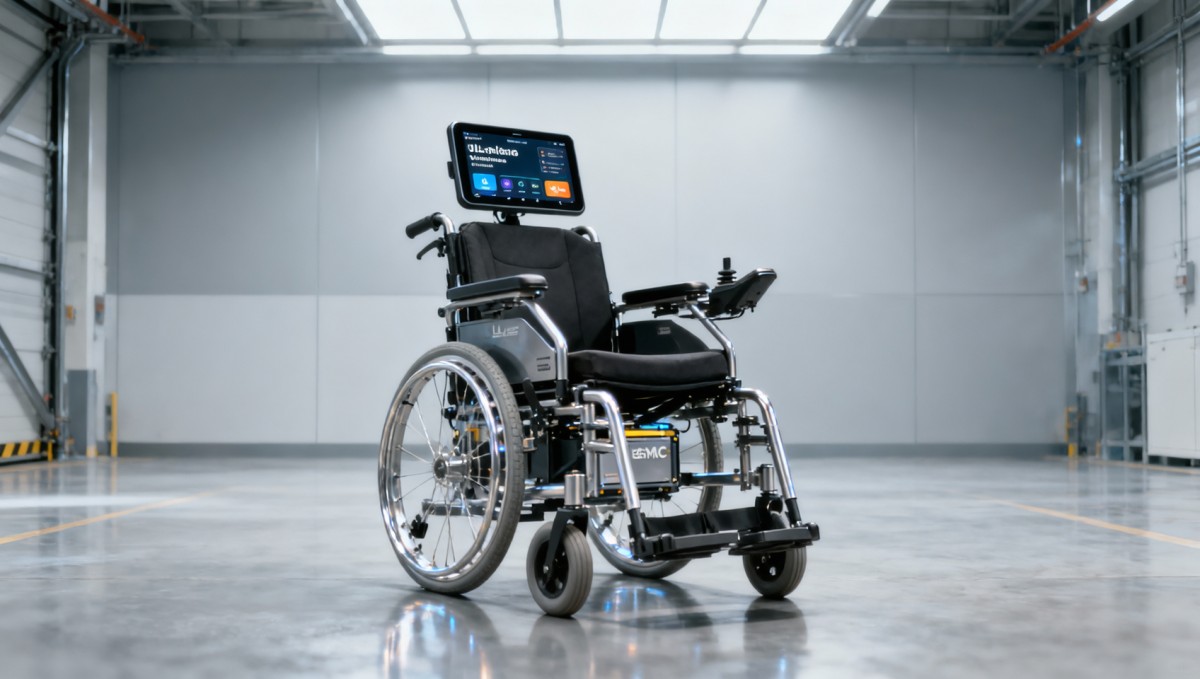
According to Forward Intelligence Network’s analysis published on May 15, 2026, global wheelchair demand is rising steadily due to population aging. Concurrently, updated regulatory frameworks in North America and Europe have strengthened electromagnetic compatibility (EMC), lithium battery safety, and accessible user interface (UI) standards for powered wheelchairs. Specific requirements now reference UL 2816 (U.S.) and EN 12184 (EU), with explicit emphasis on multilingual remote diagnostics capability as part of post-sale support.
Industries Affected
Direct Exporters
Chinese manufacturers exporting powered wheelchairs face delayed market entry and increased pre-market costs. Certification under UL 2816 or EN 12184 is no longer optional for premium-tier access; failure to meet UI accessibility benchmarks may trigger classification as non-compliant under EU MDR Annex I or U.S. FDA guidance. Impact manifests in longer time-to-market, higher third-party testing fees, and potential loss of distributor partnerships tied to service-level agreements.
Raw Material Suppliers
Suppliers of lithium-ion battery cells, EMC-shielded enclosures, and tactile UI components are seeing revised specification requests from OEMs. For example, battery suppliers must now provide UN 38.3 + IEC 62133-2 test reports aligned with UL 2816 Annex D, while display module vendors are asked to validate WCAG 2.1 AA-level contrast and voice navigation compatibility. This shifts procurement lead times and increases validation overhead.
Contract Manufacturers & OEMs
Manufacturers responsible for final assembly and firmware integration must adapt design control processes to include formal usability testing per ISO 13407 and cybersecurity risk assessments per IEC 62304. Firmware updates now require documented traceability across language variants — meaning embedded software teams need localization-ready architecture, not just translated menus. Engineering resource allocation is shifting toward certification engineering and human factors specialists.
Supply Chain Service Providers
Certification consultants, logistics firms offering CE/FCC marking support, and after-sales service platforms face demand for integrated offerings: e.g., coordinated UL/EN dual-certification pathways, multilingual remote diagnostic dashboards hosted on EU-based servers (to comply with GDPR data residency expectations), and technician training modules delivered in English, German, and Spanish. Standalone compliance advisory services are becoming insufficient.
Key Focus Areas and Recommended Actions
Prioritize Dual-Certification Roadmaps
Enterprises should map existing product lines against both UL 2816 and EN 12184 clause-by-clause gaps — especially battery thermal runaway protocols and UI operability without vision or fine motor control. A phased rollout (e.g., one platform certified to both standards by Q4 2026) reduces parallel testing costs.
Embed Localization into Product Lifecycle Management
Remote diagnostic interfaces must be designed for internationalization (i18n) from firmware architecture stage — not retrofitted. This includes modular language packs, scalable audio feedback systems, and API-level integration with regional telehealth platforms.
Strengthen Cross-Functional Certification Teams
Engineering, regulatory affairs, and customer support functions must co-develop certification evidence dossiers. For instance, usability test videos used for EN 12184 submission can simultaneously inform UL 2816 Section 9.3 ‘User Interface Safety’ documentation — reducing redundant effort.
Editorial Perspective / Industry Observation
Observably, this regulatory evolution signals a structural shift: compliance is no longer defined solely by hardware performance, but by the coherence of product, software, and service ecosystems. Analysis shows that leading EU distributors now score supplier bids using weighted criteria where ‘certification readiness’ accounts for 30% and ‘multilingual remote support capability’ for another 25%. From an industry perspective, the barrier isn’t merely technical — it’s organizational agility across R&D, quality, and service delivery. Current more relevant framing is not ‘meeting standards’, but ‘demonstrating systemic reliability across borders’.
Conclusion
The 2026 regulatory tightening does not signal market contraction — rather, it redefines competitiveness. Companies that treat certification as a static milestone will struggle; those treating it as a continuous capability-building process are better positioned to capture value in high-margin segments. The broader implication is clear: in mature assistive technology markets, trust is now engineered — not assumed.
Source Attribution
Primary source: Forward Intelligence Network, “Global Wheelchair Market Outlook & Regulatory Update”, May 15, 2026. Official references include UL Standard 2816 (2nd Ed., 2025), EN 12184:2024, and EU Commission Guidance Document MDCG 2023-4 (Rev.1). Note: Ongoing monitoring is advised for upcoming U.S. FDA draft guidance on AI-enabled assistive device cybersecurity (expected Q3 2026) and potential UKCA alignment adjustments post-Brexit transition review.
 Which global manufacturing trends by sector matter most for sourcing plans?Global manufacturing trends by sector: identify sourcing risks, supplier resilience, compliance demands, and cost drivers to build smarter, more reliable procurement plans.
 What industrial trade intelligence pricing should include before you subscribeIndustrial trade intelligence pricing explained: compare coverage, data quality, access rights, and workflow value before choosing a subscription that supports smarter trade decisions.
 How an industrial trade intelligence dashboard can identify new supplier marketsDiscover how an industrial trade intelligence dashboard helps identify new supplier markets by comparing capacity, landed cost, logistics resilience, and compliance risk.
 Which global market entry barriers should exporters assess first?Global market entry barriers exporters should assess first: tariffs, compliance, buyer qualification, logistics, and payment risk. Build a practical strategy for confident market entry.
 How trade data aggregation analytics can reveal emerging supplier marketsTrade data aggregation analytics reveals emerging supplier markets by connecting trade flows, capacity signals, logistics, and compliance insights for smarter sourcing decisions.
 When an export market analysis platform can validate demand in a new marketExport market analysis platform insights help validate new-market demand through buyer fit, regulations, logistics, competition, and profitable entry conditions.
 What is driving the beauty and personal care market in the USA?Beauty and personal care in USA is driven by targeted solutions, selective premiumization, digital discovery, clean-label trust, diverse needs, and compliance. Explore key growth opportunities.
 How trade flow monitoring reports reveal changing regional demandTrade flow monitoring reports reveal changing regional demand through import volumes, sourcing shifts, product mix, logistics signals, and regulatory trends. Explore actionable market insights.
 How international market intelligence for investors reduces market-entry riskInternational market intelligence for investors reduces market-entry risk by validating demand, regulations, logistics, and competition before capital is committed.
 How international sourcing intelligence helps identify supplier risk earlyInternational sourcing intelligence helps businesses spot supplier risks early, protect supply continuity, and make smarter global procurement decisions.
 How trade data aggregation analytics reveals emerging supplier marketsTrade data aggregation analytics reveals emerging supplier markets through export trends, input flows, logistics, and regulatory signals. Discover smarter sourcing insights.
 What industrial cluster monitoring in Vietnam reveals about site riskIndustrial cluster monitoring Vietnam reveals hidden site risks across labor, utilities, logistics, compliance, and supplier dependencies. Make smarter sourcing and expansion decisions.
 Food Technology Trends Reshaping Shelf Life, Safety, and Product InnovationFood technology is reshaping shelf life, safety, and innovation. Discover the trends helping food businesses cut risk, improve compliance, and unlock stronger global market growth.
 How electronics manufacturing services are changing with low-volume demandElectronics manufacturing services are evolving fast with low-volume demand. Learn how agile EMS partners improve flexibility, compliance, sourcing resilience, and speed to market.
 How Can Buyers Reduce Procurement Risks for Electronic Components?How to reduce procurement risks for electronic components: learn how buyers assess traceability, lead times, compliance, and supplier types to avoid costly sourcing mistakes.
 What Sourcing Intelligence India Reveals About Supplier Risk and Cost ShiftsSourcing intelligence India reveals hidden supplier risk, compliance gaps, logistics pressure, and real cost shifts—helping buyers compare vendors smarter and source with more confidence.
 Fashion Trends 2026: Which Materials, Colors, and Silhouettes Are Gaining Ground?Fashion trends 2026 spotlight tactile fabrics, mineral colors, and controlled volume. Explore the materials, shades, and silhouettes shaping smarter, more wearable style.
 Smart Device Market Outlook: Key Growth Drivers, Segments, and Business OpportunitiesSmart device market trends are shifting toward system value, industrial demand, and resilient supply chains. Explore key growth drivers, high-potential segments, and business opportunities.
 How Global Trade Intelligence Services Help B2B Firms Evaluate Markets and SuppliersGlobal trade intelligence services help B2B firms compare suppliers, assess market potential, and uncover compliance, logistics, and pricing risks before costly decisions are made.
 Manufacturing Sector Updates for Investors: What Signals Matter Most in 2025?Manufacturing sector updates for investors in 2025: track orders, margins, supply chains, regulation, and exports to spot resilient manufacturers and smarter investment signals.
 How Energy Market Intelligence Helps Businesses Track Price Risks and Demand ShiftsEnergy market intelligence helps businesses spot price risks, demand shifts, and supply pressure early—improving procurement, resilience, and faster strategic decisions.





















Global Trade Insights & Industry
Our mission is to empower global exporters and importers with data-driven insights that foster strategic growth.
Search News
Popular Tags
Industry Overview
The global commercial kitchen equipment market is projected to reach $112 billion by 2027. Driven by urbanization, the rise of e-commerce food delivery, and strict hygiene regulations.