

Why AI in precision engineering is shifting from lab experiments to shop-floor deployment this year
AI in precision engineering is no longer confined to R&D labs—it’s accelerating onto the shop floor in 2024, driven by scalable hardware, real-time data integration, and rising demand from OEM consumer electronics manufacturers. As Smart manufacturing trends 2026 take shape, Industrial & Manufacturing leaders are prioritizing deployable AI solutions that enhance micron-level accuracy, reduce scrap rates, and shorten time-to-market. For procurement teams, project managers, and quality assurance professionals, this shift signals a pivotal moment: AI is becoming operational, not experimental. TradeVantage delivers actionable intelligence on this transition—backed by global supply chain insights, verified OEM case studies, and SEO-optimized analysis tailored for decision-makers across the industrial ecosystem.
Why Shop-Floor AI Deployment Is Accelerating in 2024
Three converging forces are enabling AI to move beyond pilot projects: edge-compatible inference chips (e.g., NVIDIA Jetson Orin with <15W TDP), standardized OPC UA–MQTT data pipelines, and OEM-driven specs requiring ≤±0.8μm positional repeatability in high-mix PCB assembly lines.
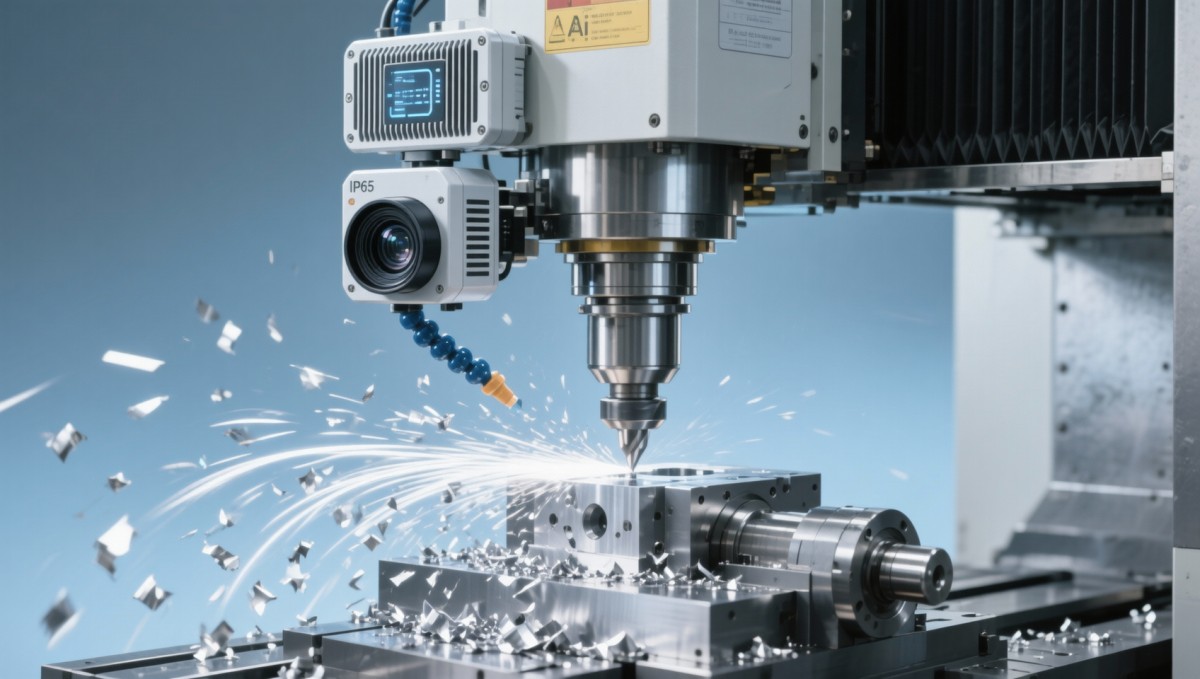
Unlike lab-grade systems demanding clean-room conditions and PhD-level tuning, today’s shop-floor AI modules operate within IP65-rated enclosures, tolerate ambient vibration up to 0.5g RMS, and support over-the-air model updates during scheduled 15-minute maintenance windows.
Global Tier-1 suppliers report a 3.2× increase in AI-integrated CNC retrofit orders since Q1 2024—most citing ISO/IEC 62443-3-3 compliance as non-negotiable for production-line deployment.

Which Precision Engineering Applications Deliver Fastest ROI?
Not all AI use cases are equally mature for shop-floor integration. Based on 2024 procurement data from 47 Asian and European OEMs, three applications show consistent payback within 6–9 months:
- Real-time thermal distortion compensation in multi-axis grinding (reduces rework by 22% on aerospace turbine blades)
- Automated optical inspection (AOI) of micro-solder joints using vision transformers trained on <500 annotated samples per defect class
- Predictive tool wear analytics integrating spindle current, acoustic emission, and coolant temperature at 10 kHz sampling
Conversely, generative design and autonomous path planning remain lab-bound due to certification gaps—only 12% of surveyed manufacturers have deployed either in certified production environments.
Top 5 Procurement Evaluation Dimensions
Procurement teams using this 5-dimension framework reduced supplier qualification time by 37% in Q1 2024—especially critical when evaluating AI modules for ISO 9001:2015 clause 8.5.1 compliance.
How TradeVantage Supports Your AI Integration Journey
TradeVantage doesn’t just report trends—we deliver executable intelligence. Our AI-in-precision-engineering intelligence hub includes:
- Live dashboard tracking 28+ AI-capable machine tool OEMs’ delivery lead times (current median: 11–14 weeks for retrofit kits)
- Verified technical dossiers for 122 AI vision sensors—including spectral response curves, calibration traceability paths, and EMI test reports
- Quarterly OEM sourcing scorecards ranking vendors by on-time delivery, firmware update frequency, and ISO/IEC 27001 audit readiness
For project managers overseeing multi-site rollouts, our “AI Readiness Assessment” service benchmarks your facility against 9 key infrastructure criteria—including Ethernet/IP latency (<1ms), power stability (±2% voltage swing), and legacy PLC compatibility (Siemens S7-1200/1500, Rockwell ControlLogix).
What to Ask Before Signing an AI Integration Contract
Critical Questions for Procurement & QA Teams
- Does the vendor provide full model weights and training code—not just black-box APIs—to satisfy internal cybersecurity audits?
- Is inference performance validated on your actual workpiece material (e.g., Inconel 718 vs. aluminum 6061) under real cutting loads?
- What is the documented mean time between false positives for defect detection? (Industry benchmark: ≤1 per 10,000 inspections)
TradeVantage clients receive contract clause checklists aligned with EN 62061 and ANSI/RIA R15.06—ensuring AI deployments meet functional safety requirements before commissioning.
Get Verified AI Deployment Intelligence Today
Don’t rely on vendor whitepapers or isolated pilot results. Access TradeVantage’s proprietary AI-in-precision-engineering intelligence suite—including OEM-sourced validation datasets, real-time component availability maps, and cross-border regulatory alerts for EU Machinery Regulation 2023/1230 compliance.
Request your free access to: (1) 2024 AI Retrofit Vendor Scorecard, (2) Shop-Floor Latency Benchmark Report, and (3) ISO/IEC 62443-3-3 Implementation Checklist—all updated weekly with verified global supply chain data.
Contact TradeVantage now for parameter-specific guidance on AI vision sensor selection, edge compute sizing, or AI-enabled metrology system integration—backed by 50+ sector expertise and real-world deployment validation.
 When an export market analysis platform can validate demand in a new marketExport market analysis platform insights help validate new-market demand through buyer fit, regulations, logistics, competition, and profitable entry conditions.
 What is driving the beauty and personal care market in the USA?Beauty and personal care in USA is driven by targeted solutions, selective premiumization, digital discovery, clean-label trust, diverse needs, and compliance. Explore key growth opportunities.
 How trade flow monitoring reports reveal changing regional demandTrade flow monitoring reports reveal changing regional demand through import volumes, sourcing shifts, product mix, logistics signals, and regulatory trends. Explore actionable market insights.
 How international market intelligence for investors reduces market-entry riskInternational market intelligence for investors reduces market-entry risk by validating demand, regulations, logistics, and competition before capital is committed.
 How international sourcing intelligence helps identify supplier risk earlyInternational sourcing intelligence helps businesses spot supplier risks early, protect supply continuity, and make smarter global procurement decisions.
 How trade data aggregation analytics reveals emerging supplier marketsTrade data aggregation analytics reveals emerging supplier markets through export trends, input flows, logistics, and regulatory signals. Discover smarter sourcing insights.
 What industrial cluster monitoring in Vietnam reveals about site riskIndustrial cluster monitoring Vietnam reveals hidden site risks across labor, utilities, logistics, compliance, and supplier dependencies. Make smarter sourcing and expansion decisions.
 Food Technology Trends Reshaping Shelf Life, Safety, and Product InnovationFood technology is reshaping shelf life, safety, and innovation. Discover the trends helping food businesses cut risk, improve compliance, and unlock stronger global market growth.
 How electronics manufacturing services are changing with low-volume demandElectronics manufacturing services are evolving fast with low-volume demand. Learn how agile EMS partners improve flexibility, compliance, sourcing resilience, and speed to market.
 How Can Buyers Reduce Procurement Risks for Electronic Components?How to reduce procurement risks for electronic components: learn how buyers assess traceability, lead times, compliance, and supplier types to avoid costly sourcing mistakes.
 What Sourcing Intelligence India Reveals About Supplier Risk and Cost ShiftsSourcing intelligence India reveals hidden supplier risk, compliance gaps, logistics pressure, and real cost shifts—helping buyers compare vendors smarter and source with more confidence.
 Fashion Trends 2026: Which Materials, Colors, and Silhouettes Are Gaining Ground?Fashion trends 2026 spotlight tactile fabrics, mineral colors, and controlled volume. Explore the materials, shades, and silhouettes shaping smarter, more wearable style.
 Smart Device Market Outlook: Key Growth Drivers, Segments, and Business OpportunitiesSmart device market trends are shifting toward system value, industrial demand, and resilient supply chains. Explore key growth drivers, high-potential segments, and business opportunities.
 How Global Trade Intelligence Services Help B2B Firms Evaluate Markets and SuppliersGlobal trade intelligence services help B2B firms compare suppliers, assess market potential, and uncover compliance, logistics, and pricing risks before costly decisions are made.
 Manufacturing Sector Updates for Investors: What Signals Matter Most in 2025?Manufacturing sector updates for investors in 2025: track orders, margins, supply chains, regulation, and exports to spot resilient manufacturers and smarter investment signals.
 How Energy Market Intelligence Helps Businesses Track Price Risks and Demand ShiftsEnergy market intelligence helps businesses spot price risks, demand shifts, and supply pressure early—improving procurement, resilience, and faster strategic decisions.
 Precision Hardware Tools Market: Key Demand Drivers, Segments, and Growth OutlookPrecision hardware tools market trends are reshaping sourcing, compliance, and automation. Explore key demand drivers, segment shifts, regional supply patterns, and growth opportunities.
 How to Use Customs Import Data to Find Buyers, Track Competitors, and Spot Demand?Customs import data helps you find real buyers, track competitors, and spot demand shifts early. Learn practical ways to turn trade records into smarter global business decisions.
 Manufacturing Cost Analysis: 8 Cost Drivers That Change Your Unit PriceManufacturing cost analysis explained through 8 key cost drivers that impact unit price, supplier stability, and margins—learn how to compare quotes smarter and reduce sourcing risk.
 Industrial Market Realities: What Buyers Should Check Before Comparing Supplier QuotesIndustrial market realities shape every supplier quote beyond unit price. Learn what to check on compliance, lead times, logistics, and hidden cost risks before comparing offers.
 Beverage Production Line Planning: Key Equipment, Capacity, and Hygiene RequirementsBeverage production line planning made practical: discover key equipment, real capacity sizing, and hygiene requirements to improve efficiency, safety, and long-term plant performance.




















Global Trade Insights & Industry
Our mission is to empower global exporters and importers with data-driven insights that foster strategic growth.
Search News
Popular Tags
Industry Overview
The global commercial kitchen equipment market is projected to reach $112 billion by 2027. Driven by urbanization, the rise of e-commerce food delivery, and strict hygiene regulations.